VSELÉNSKYI

SPAZIO D’ARTE

ADMIRATIO

$9,400.00 (tax included)

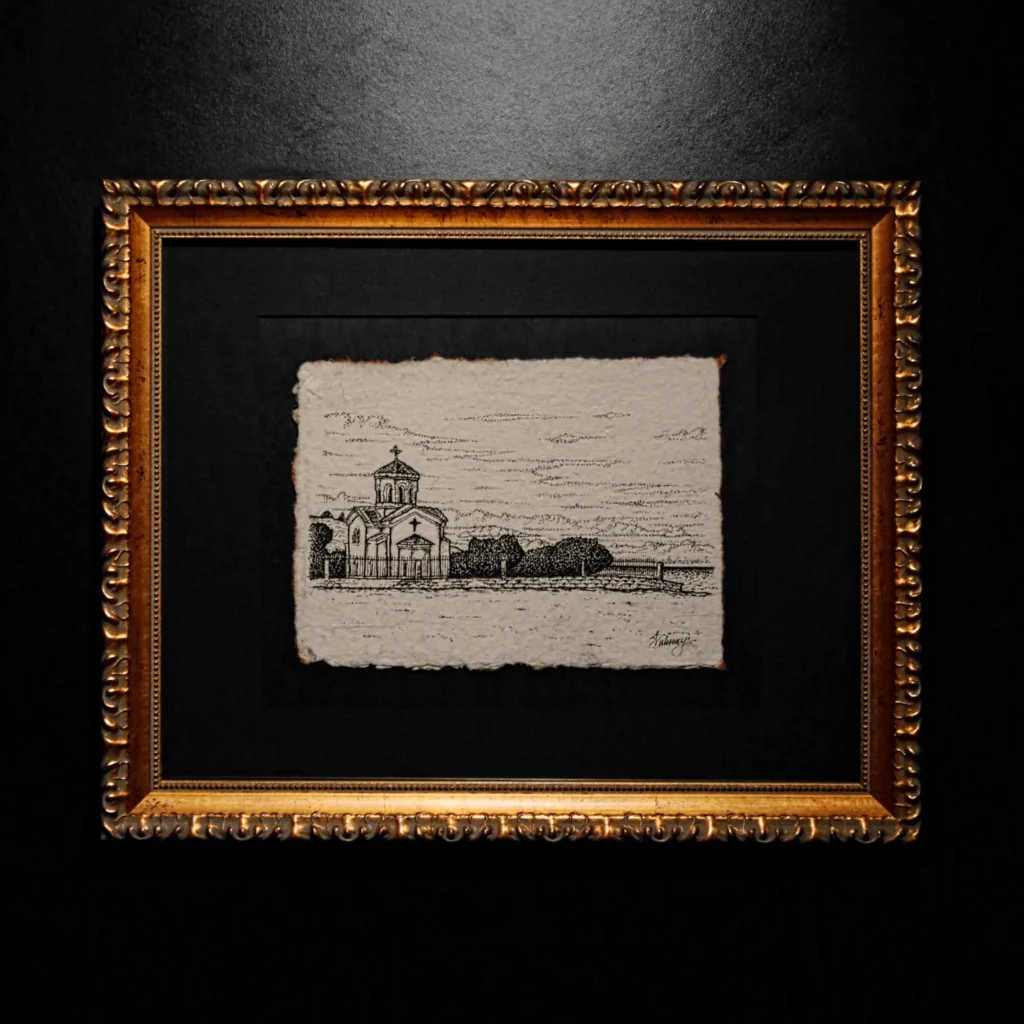
“Admiratio” is part of Vselenskyi’s early cycle of works, created on handmade Indian craft paper using ink and a dip pen. The story behind this piece is truly touching, revealing the profound journey undertaken by the artist.

SKU: 754
Category:
Brands:

Technical Profile


Attributes Value
Contents

– Original Ink Art Object
– Custom frame with black mount and plaster molding
– Certificate of Authenticity
– 15-minute "Making of" short film

Specifications

– Sketch Size: 5 x 9 in, 12.7 x 22.8 cm
– Frame Size: 11 x 14 in, 27.9 x 35.5 cm
– Weight: 1 kg, 2.2 lbs

Materials & Origin

– Paper: 300 gsm Handmade Paper (India)
– Frame: Handcrafted Artisan Baguette (Estonia)
– Ink: Classic Carbon-Based Ink (Non-Waterproof, Traditional formula)


HISTORY OF ART OBJECT

ADMIRATIO


“Admiratio: The beauty of a secret one never seeks to uncover.”

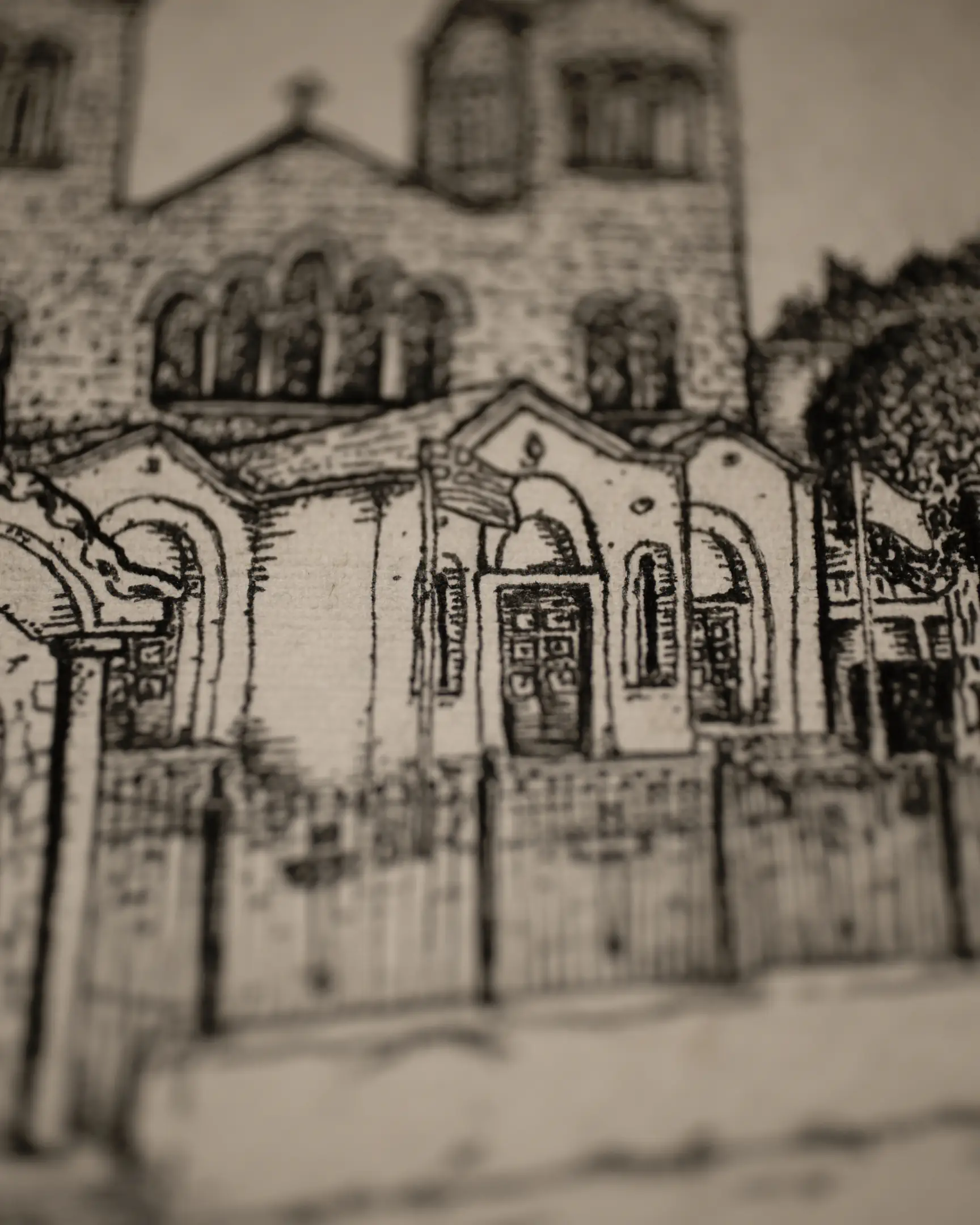
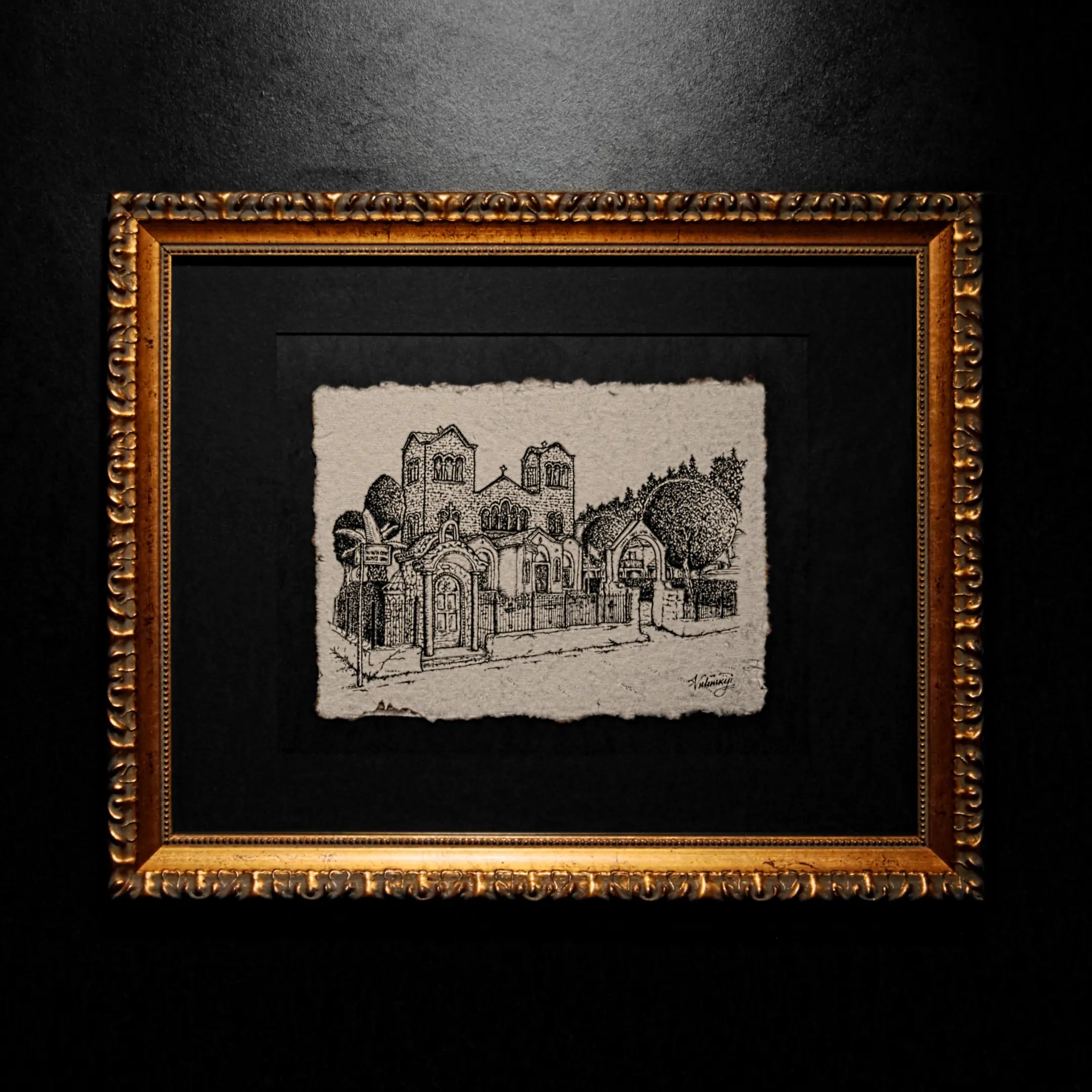
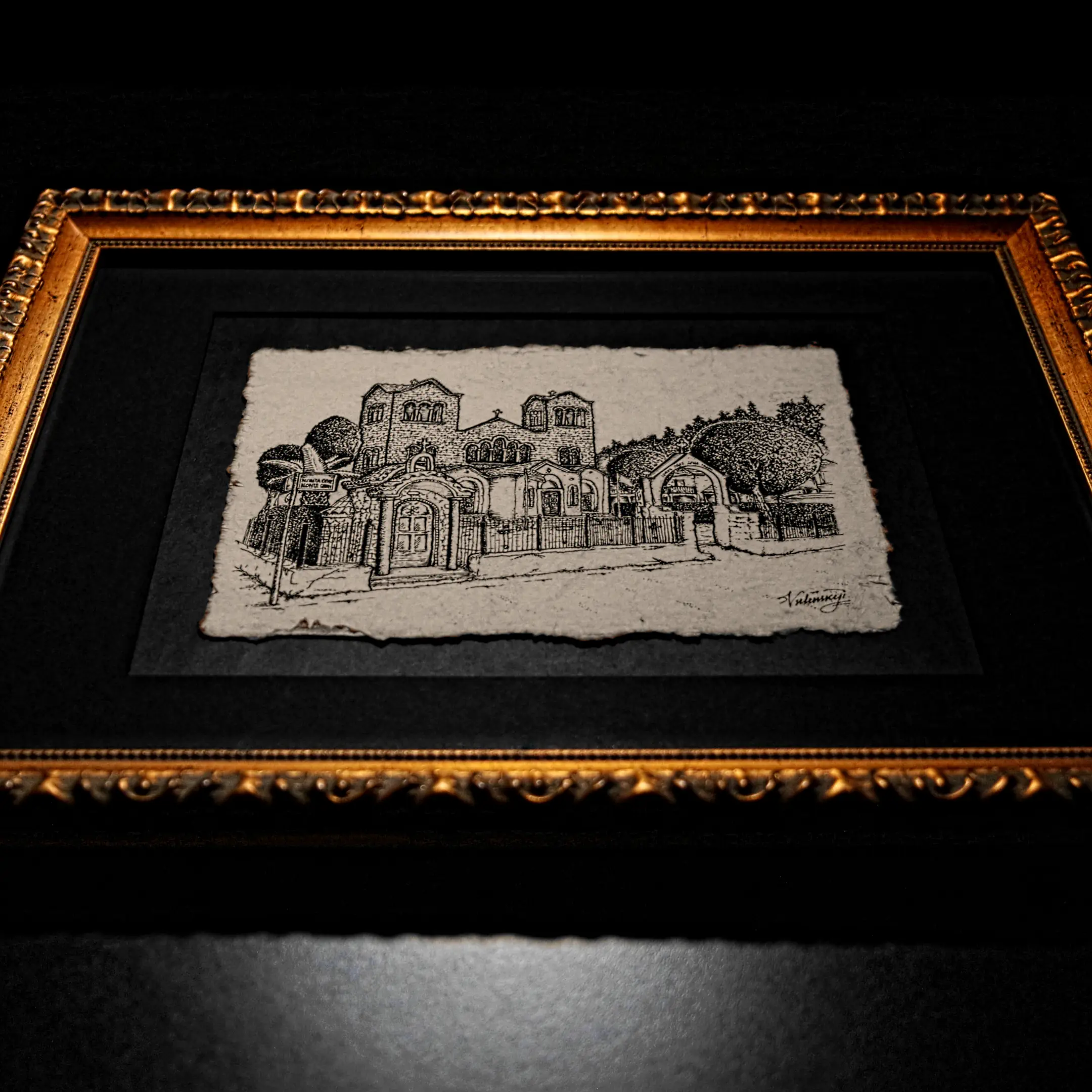
Original ink drawing Admiratio by Vselenskyi, depicting a Greek Orthodox church in Agia Triada, framed in gold
Admiratio: An authentic work from the Vestigia Collection, capturing the sacred silence of Agia Triada.

Visum: Historical Context

The Holy Church of Agia Triada stands as a spiritual lighthouse in a seaside village near Thessaloniki. Originally, Greek refugees from Asia Minor and Eastern Thrace established this church in the early 20th century. The settlement represents a profound story of resettlement and faith. This church is not merely an architectural landmark. Indeed, it is the heart of the community near the blue waters of the Thermaic Gulf.

Over the decades, the church has witnessed the transformation of Agia Triada into a serene retreat. Its white walls serve as a bridge between the ancient past and the present. It offers a sense of sanctuary that feels eternal. To be sure, these traditional lines have been part of the landscape since the dawn of time.

The Work and the Author

This painting depicts a Greek Orthodox church. Vselenskyi lived for a long time in a small village on the coast of the Aegean Sea. He worked in this picturesque suburb of Thessaloniki for several years. In the evenings, he would bypass the noisy cafes and bars. He simply wandered through the local streets.

These lanes resembled fine cobwebs woven many centuries ago. He was fascinated by the Greek rural life of this small village. By all appearances, the village seemed to live a life of its own. Walking through the streets of Agia Triada, Vselenskyi discovered a new way of life.

It seemed as if the whole world was somewhere far away beyond the northern mountains. The crescent moon rose behind those peaks. It is here that one feels the true value of simplicity. A local fisherman sitting near his door holds more meaning than the turmoil of the vast world.
Vselenskyi Art — Admiratio art work
A work by Vselenskyi from the Vestigia Collection titled Admiratio

The Intoxicating Silence of Siesta

Silence and tranquility meet the intoxicating summer scents of flowers. Small houses with sun canopies resemble white chocolate bars melting under the sun. Vselenskyi would stroll unhurriedly through these streets with a silk shirt thrown over his body. He listened to the silence of the afternoon siesta. This is a time when noise is forbidden.

Many locals put life on pause to enjoy a midday dream. The village of Agia Triada is like one continuous museum of ancient architecture. You will see snow-white buildings, window shutters, and balconies. Vibrant roses and orange trees appear like splashes of paint near the entrances.

If you spend enough time flaneuring, you will inevitably come across this church. It looks as if it has stood here since the creation of the world. There is a feeling that the village was built only because the church was here. It embodies a blessing for the people of this place.

Majestic walls and a snow-white entrance proudly represent this nation. They personify an aspiration toward faith and love. Vselenskyi would stop and savor the lines of the structure. Scratches and scuffs added charm and stripped away any modern gloss.

Vselenskyi knew that one day he would have to leave this village. He desperately wanted to preserve that feeling of timeless peace. Above all, he wanted to capture the scent of roses and the sensation of life on pause. This work is a fragment of that very feeling escaping through the ink onto the paper.

GALLERY
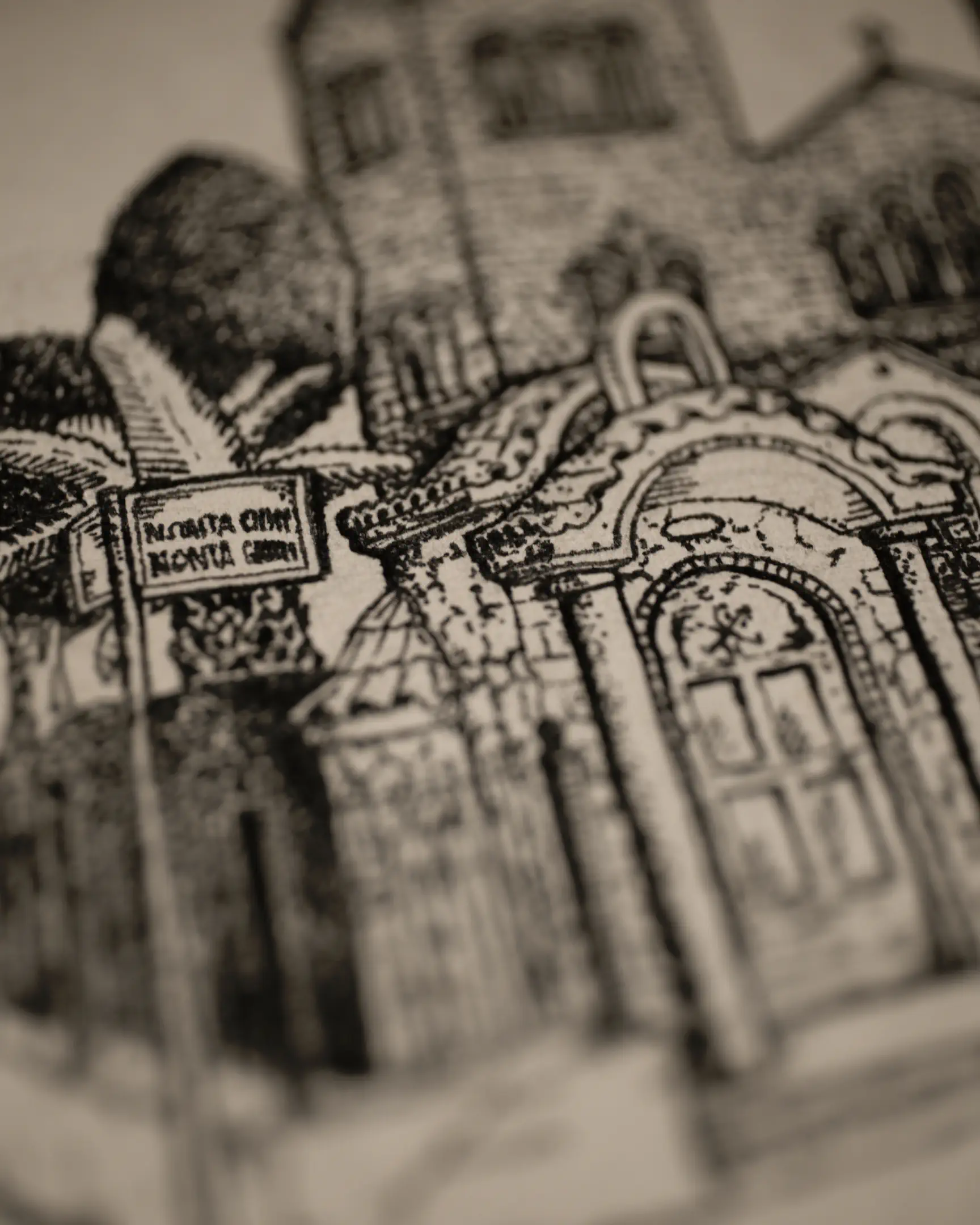
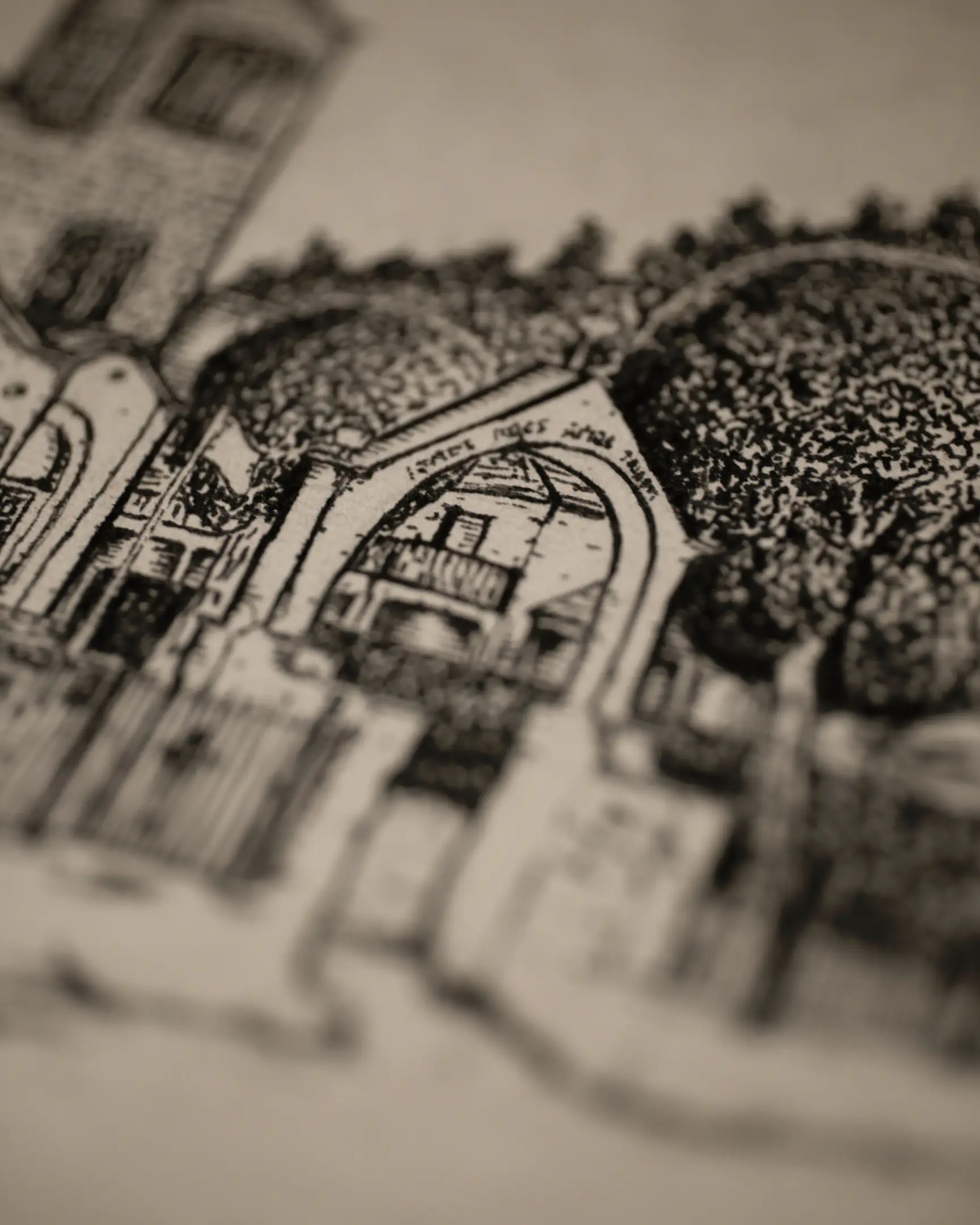
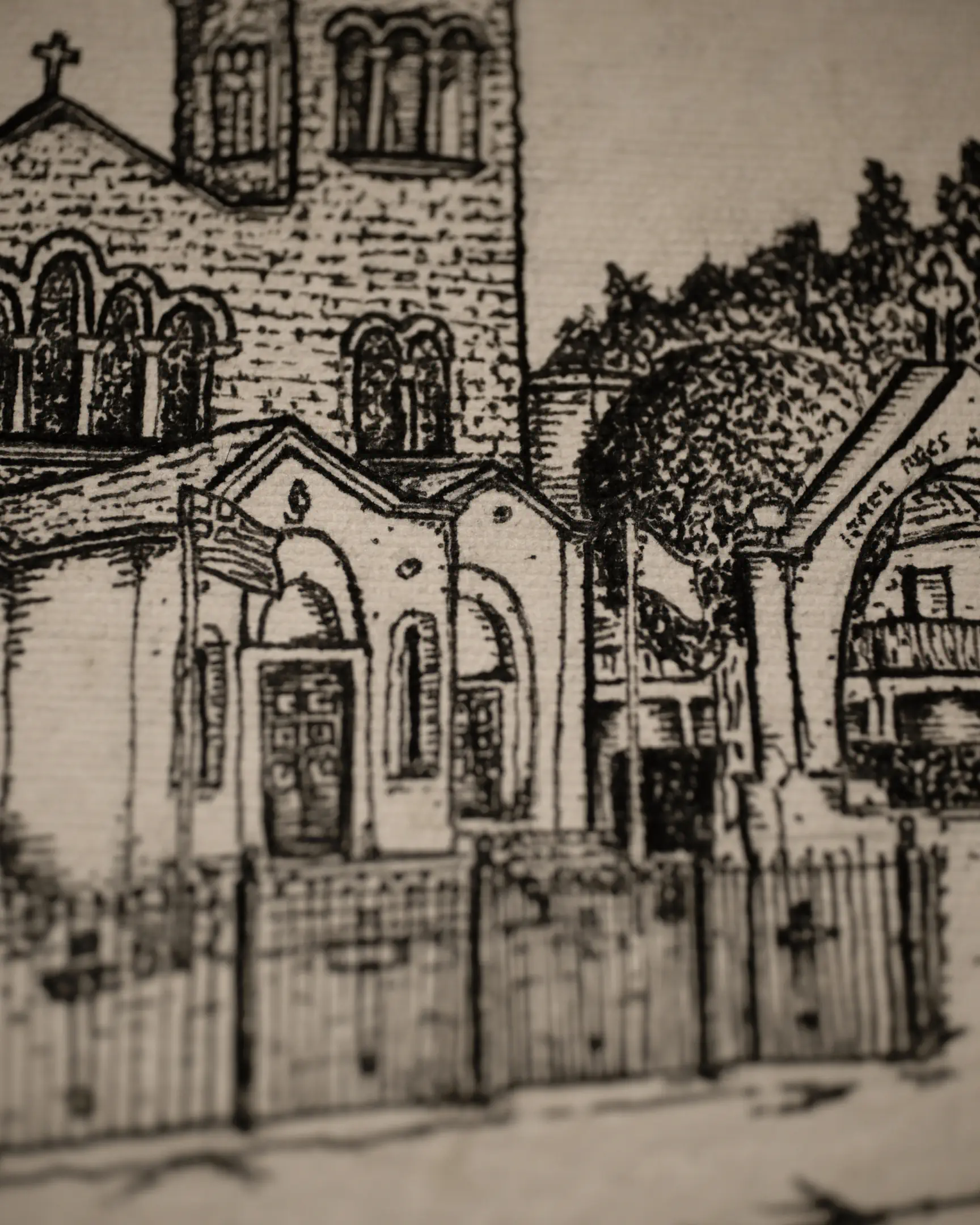
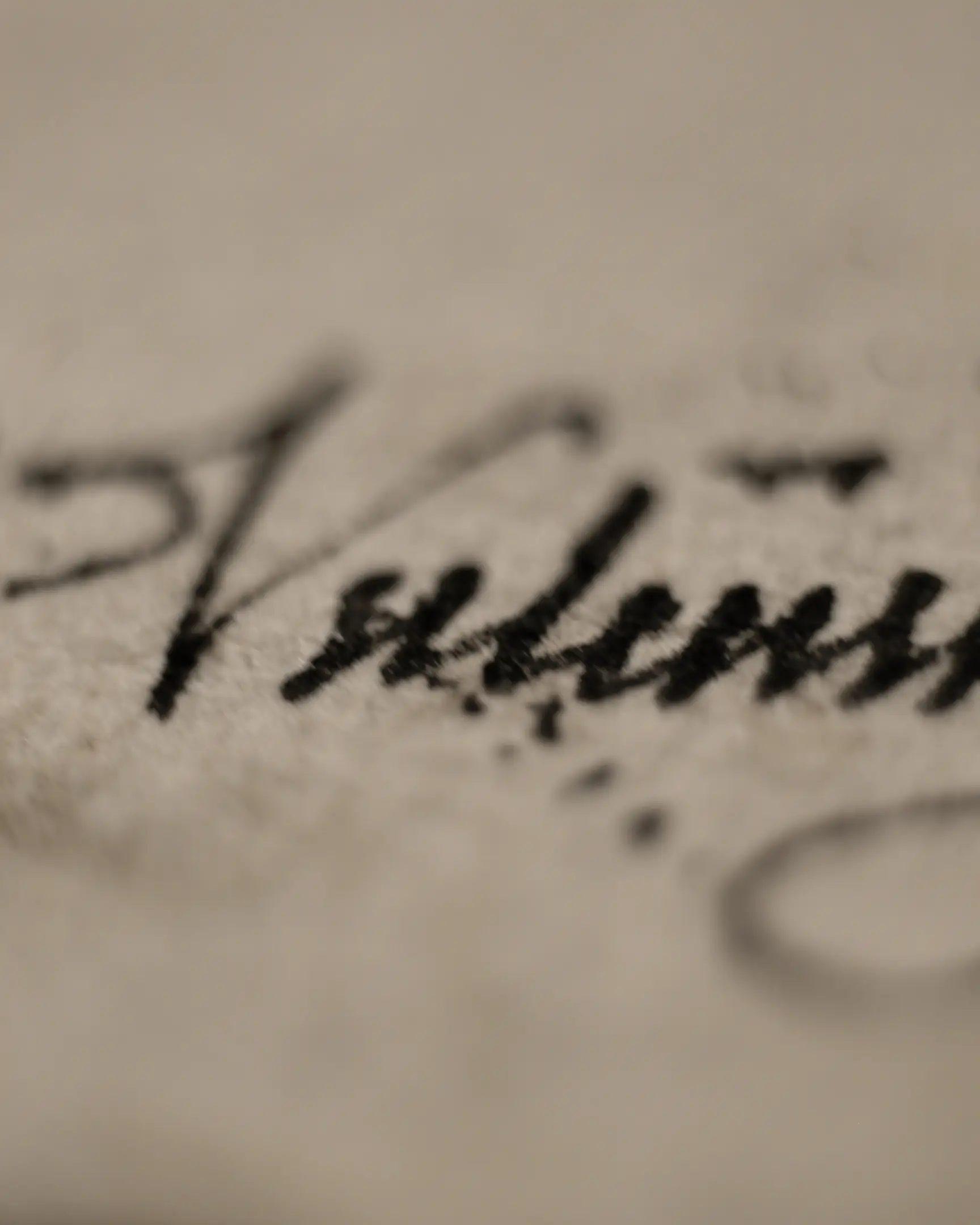
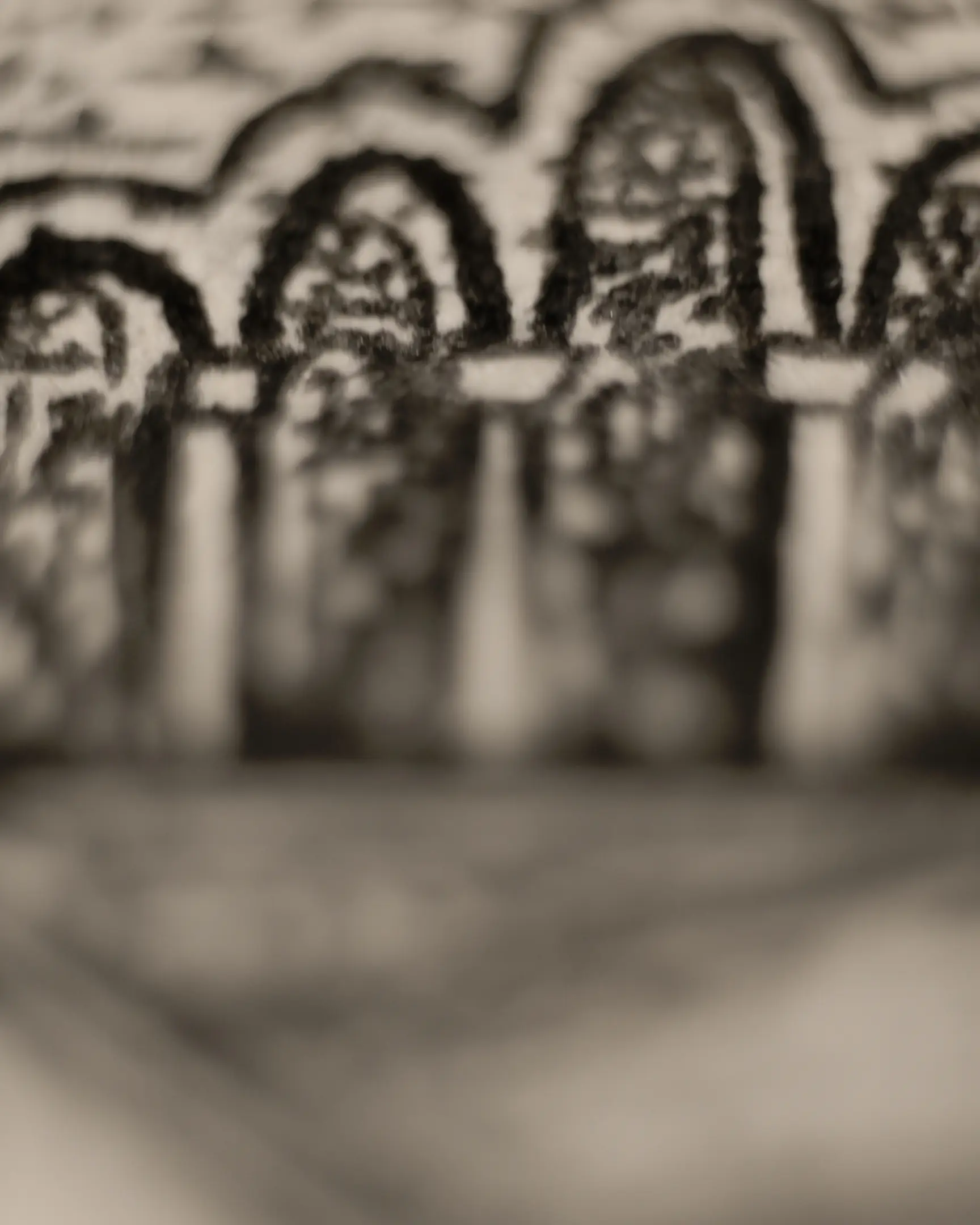
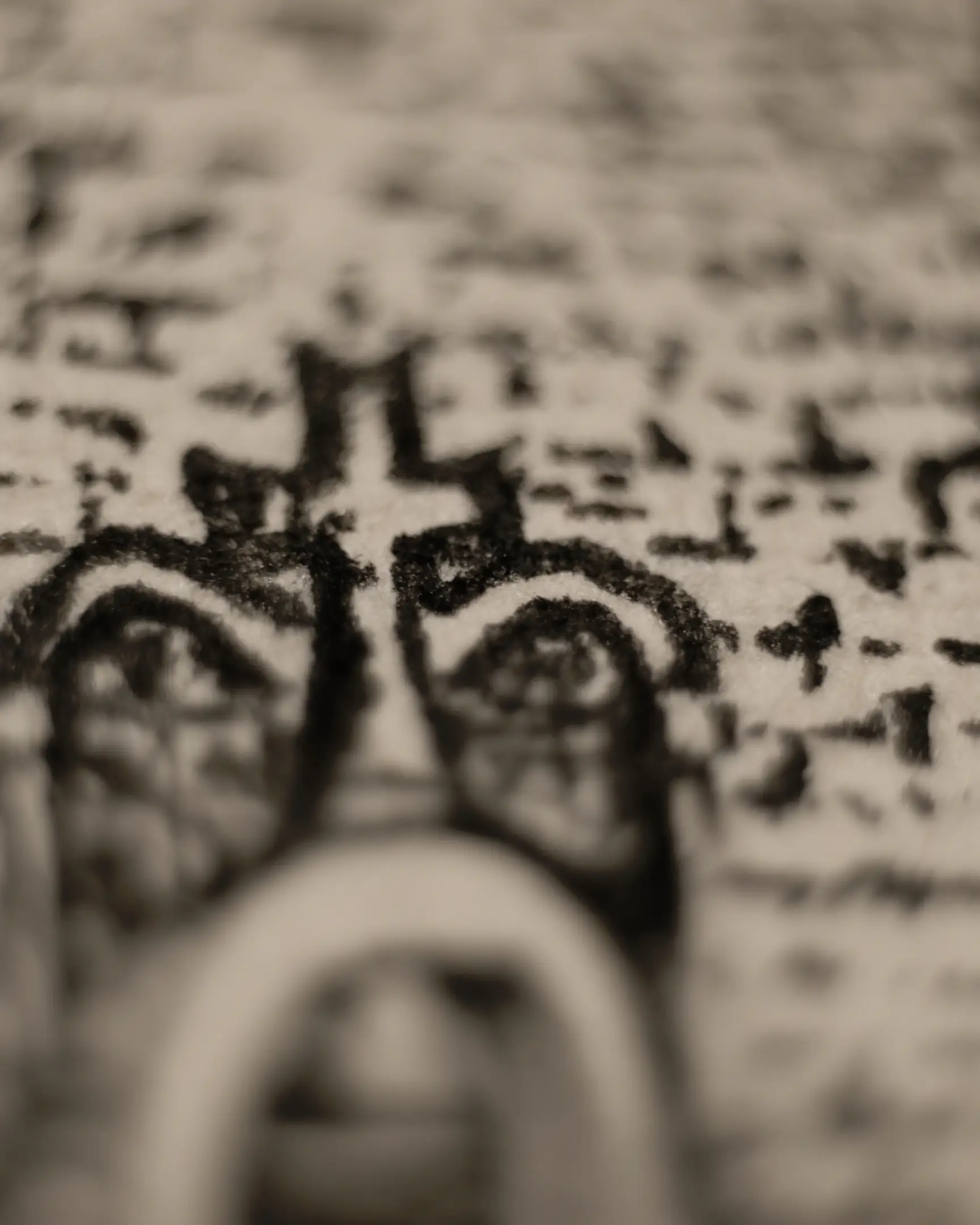
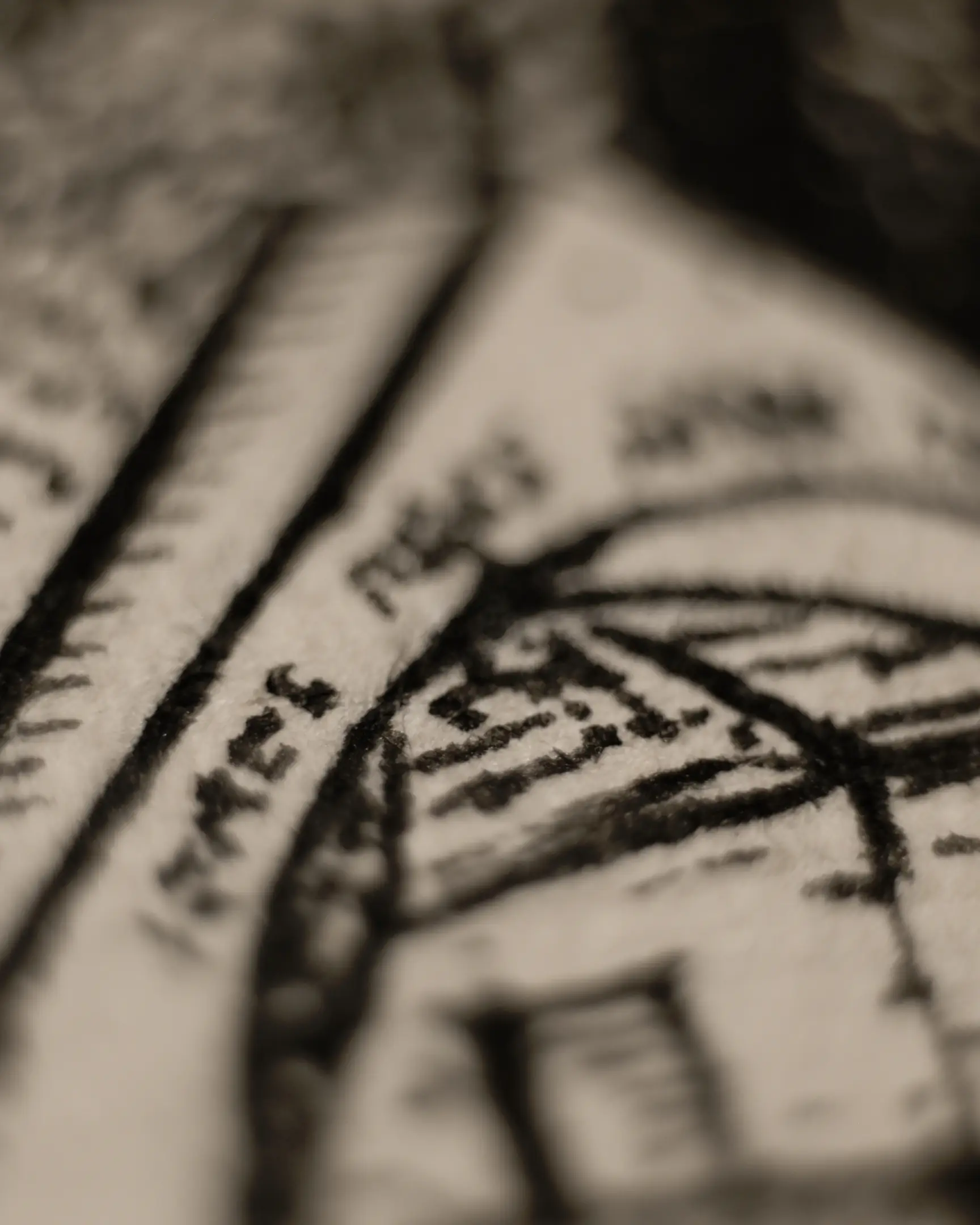
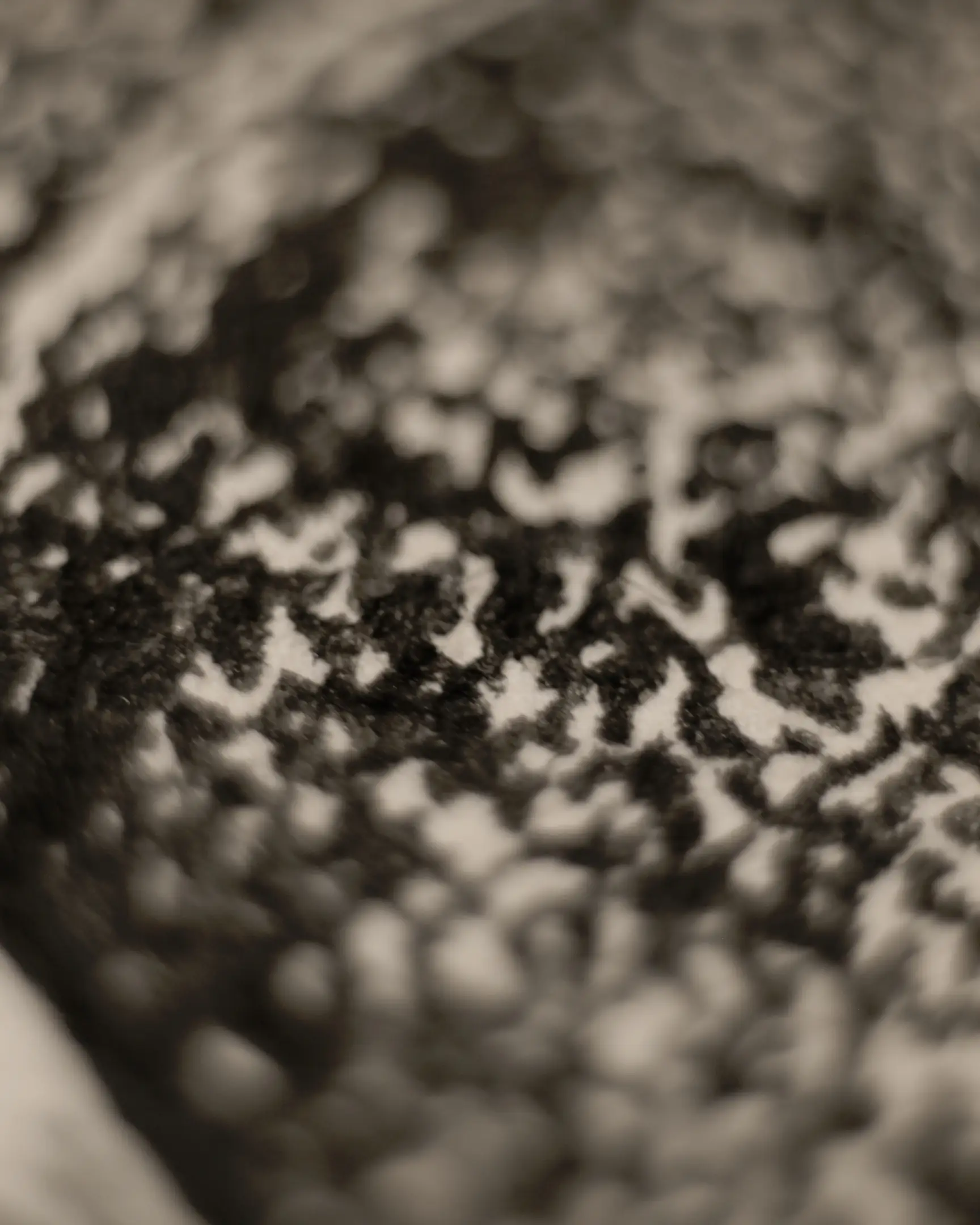
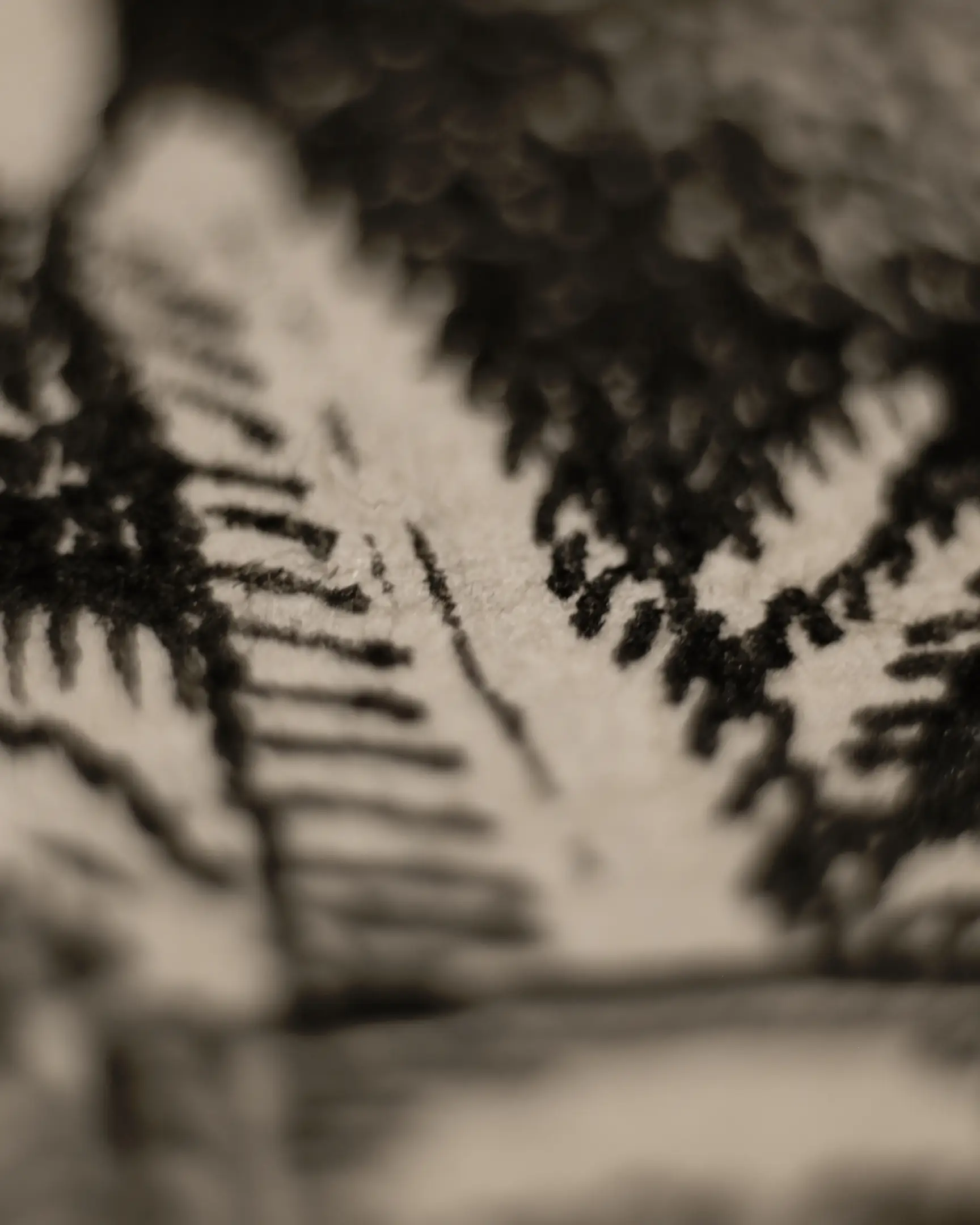
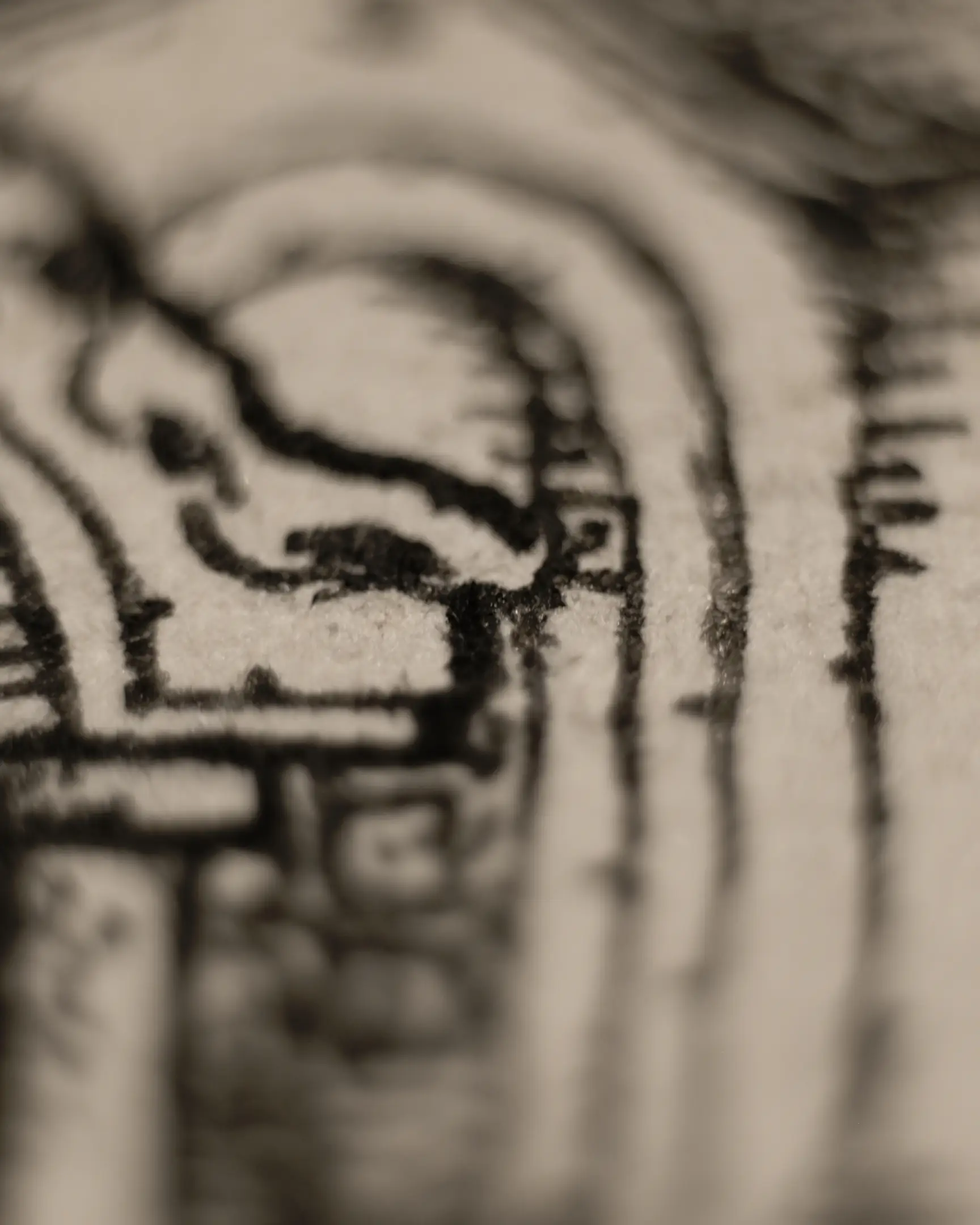
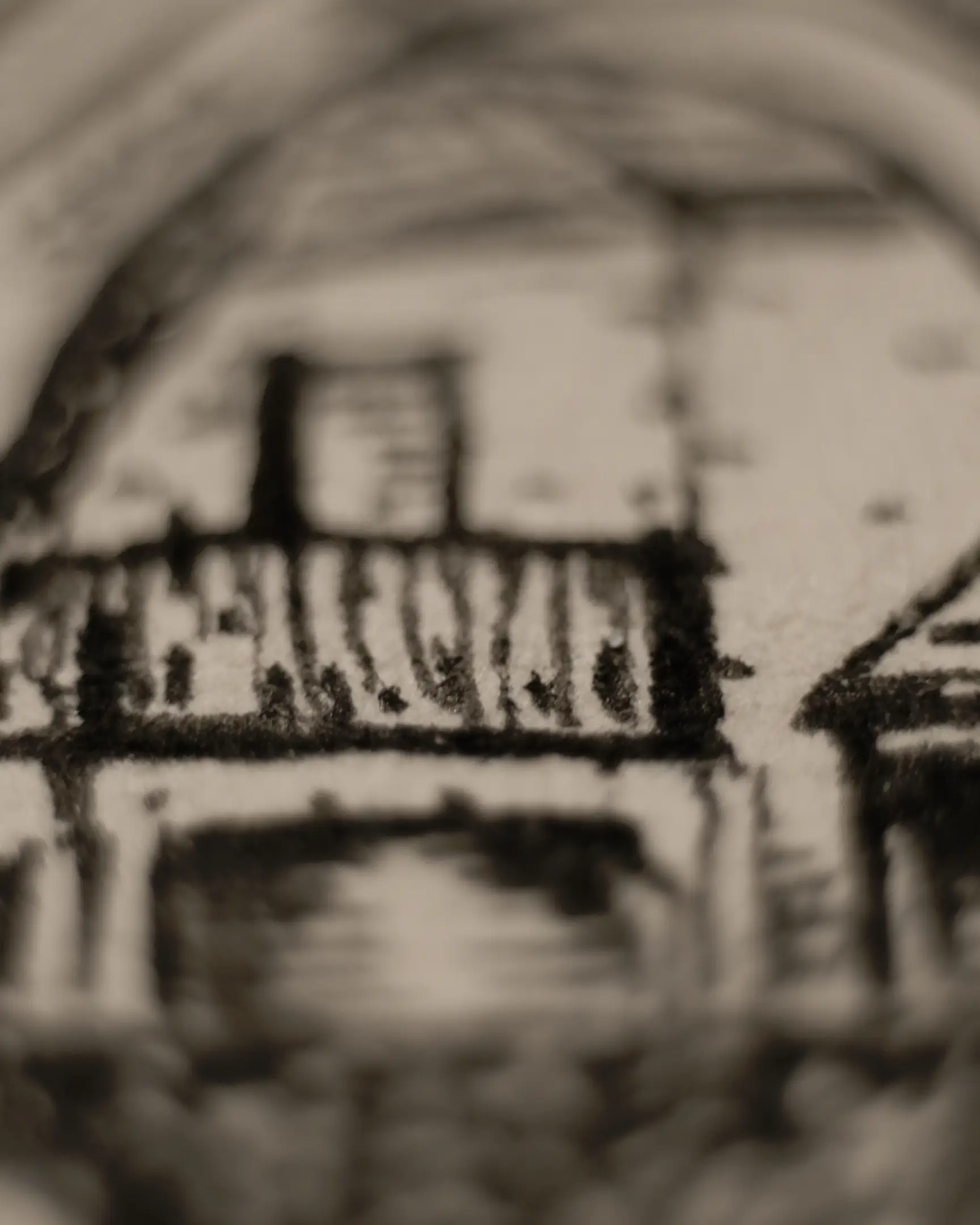
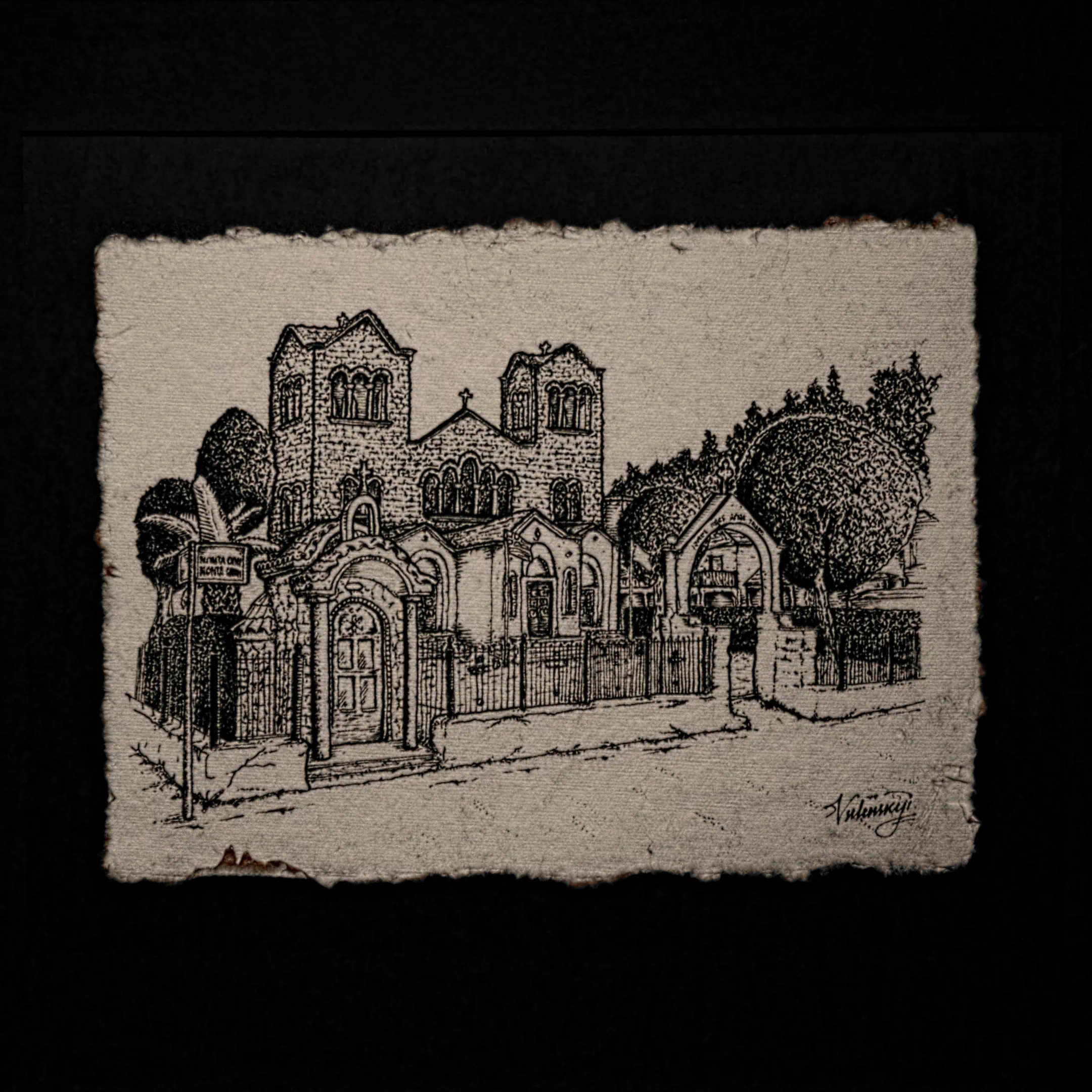
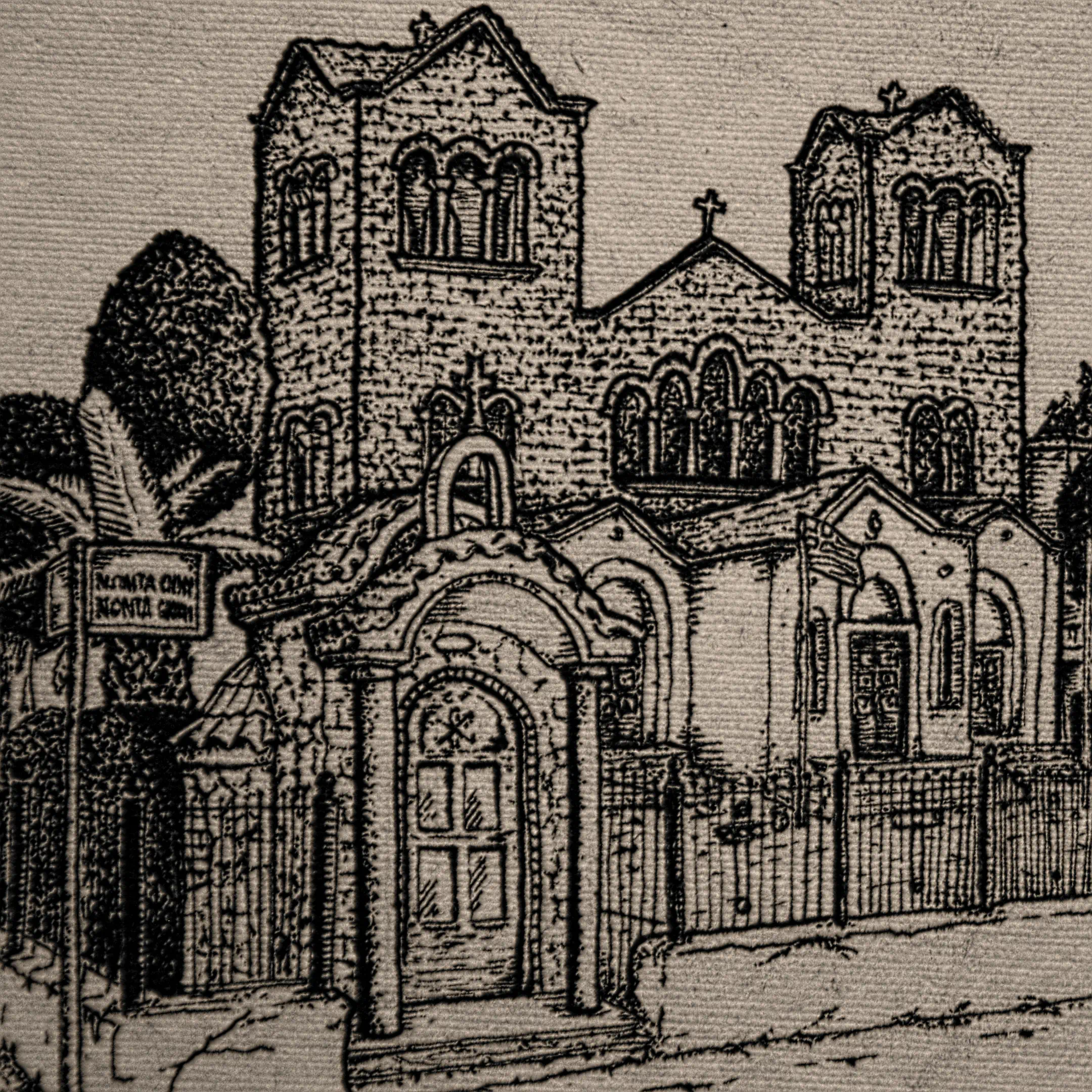
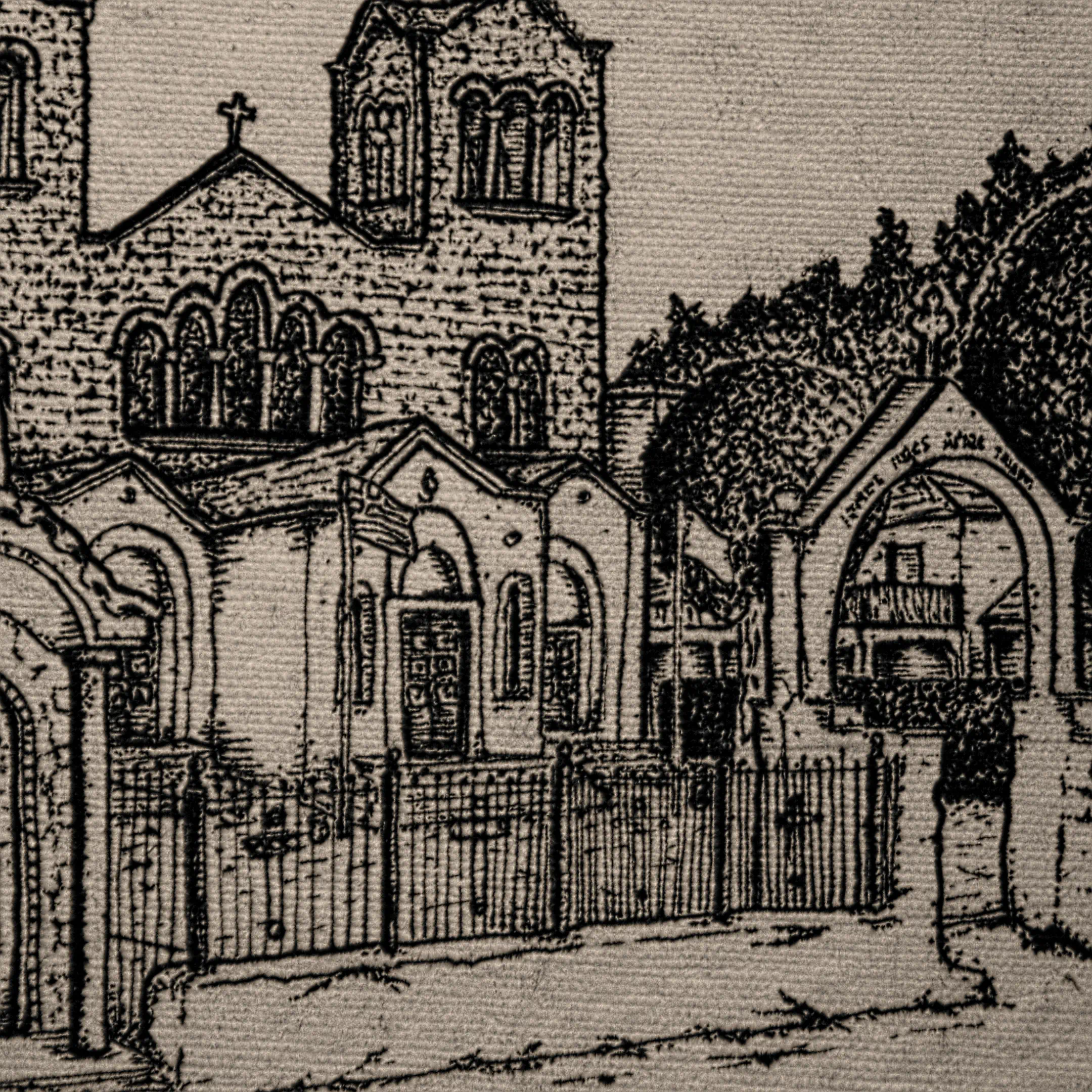
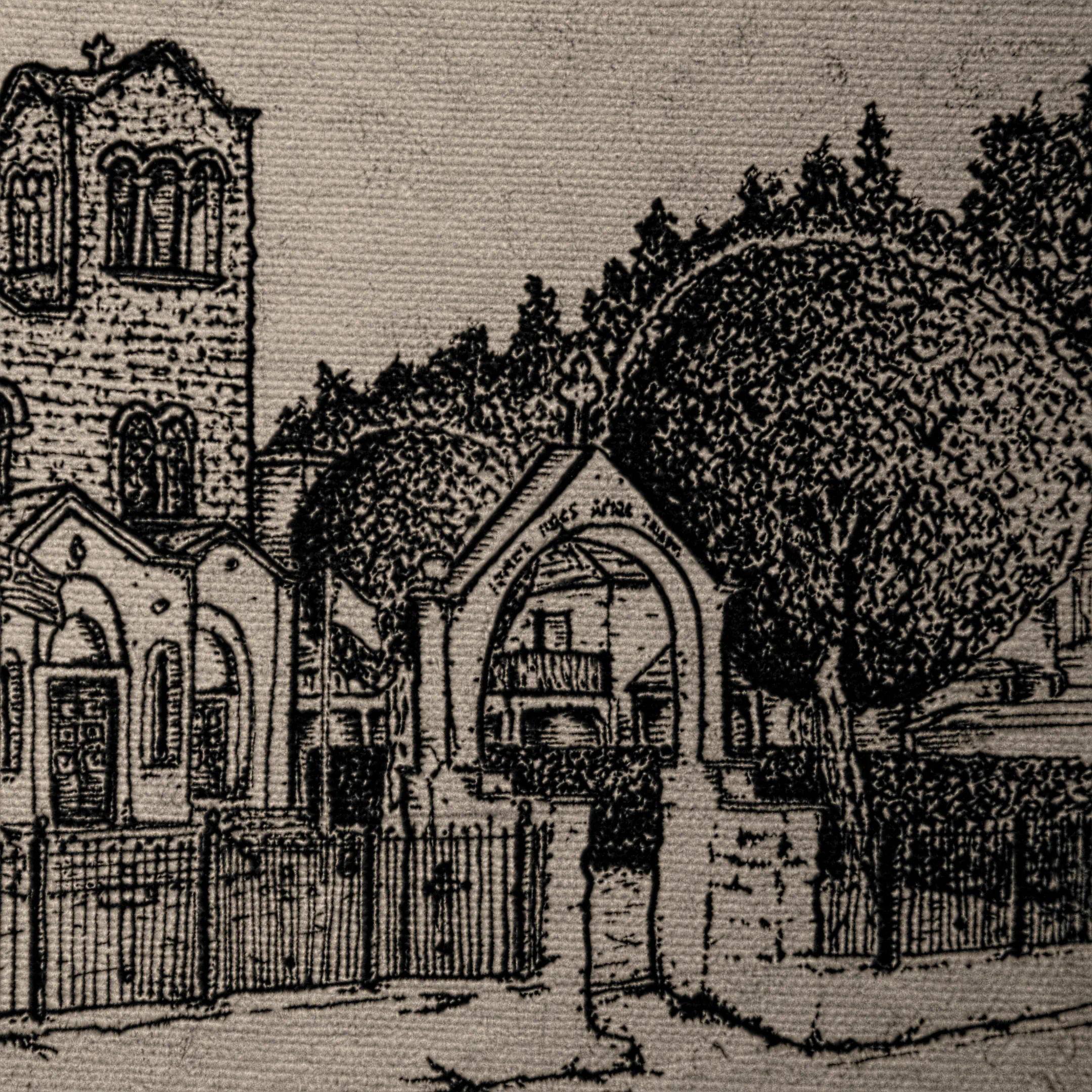
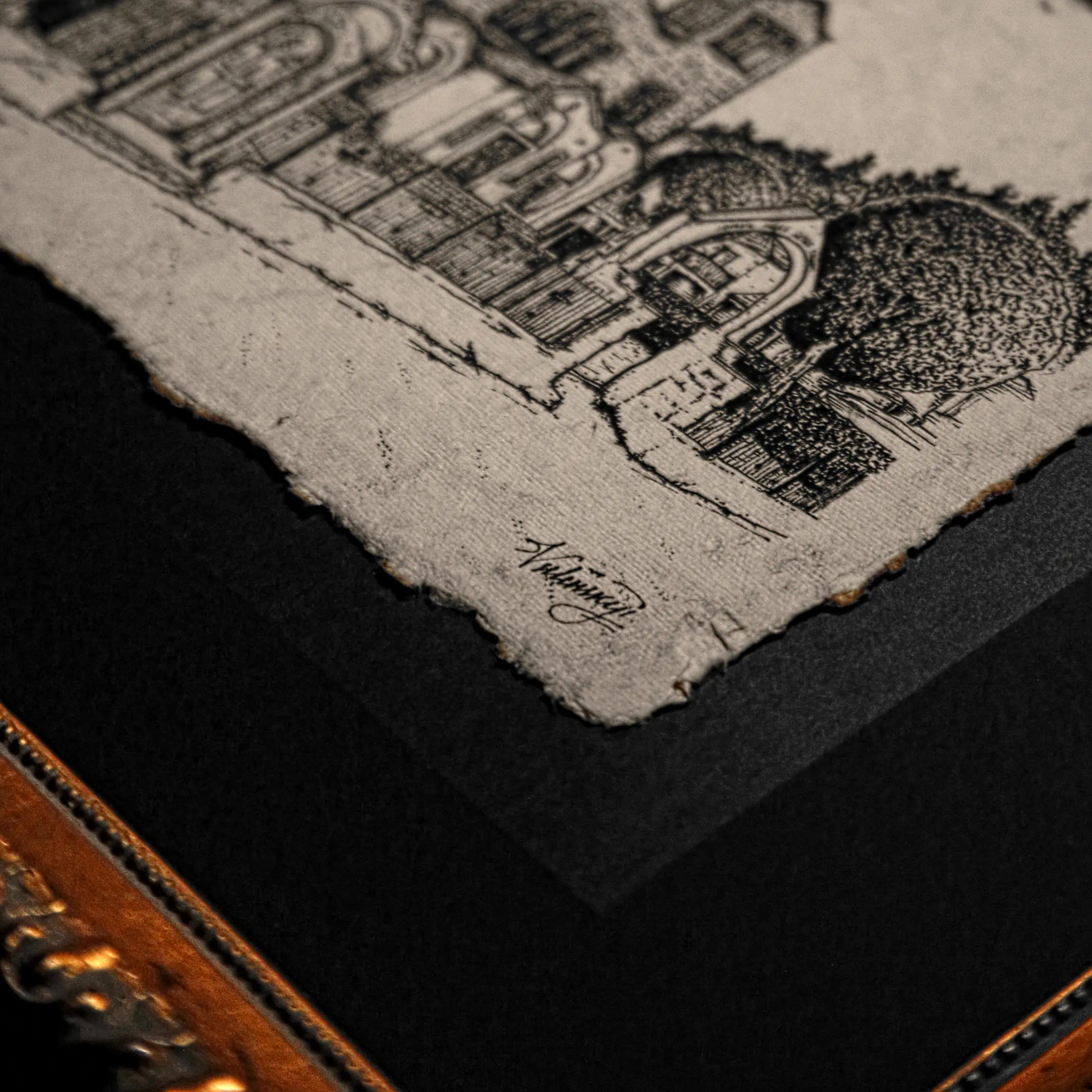
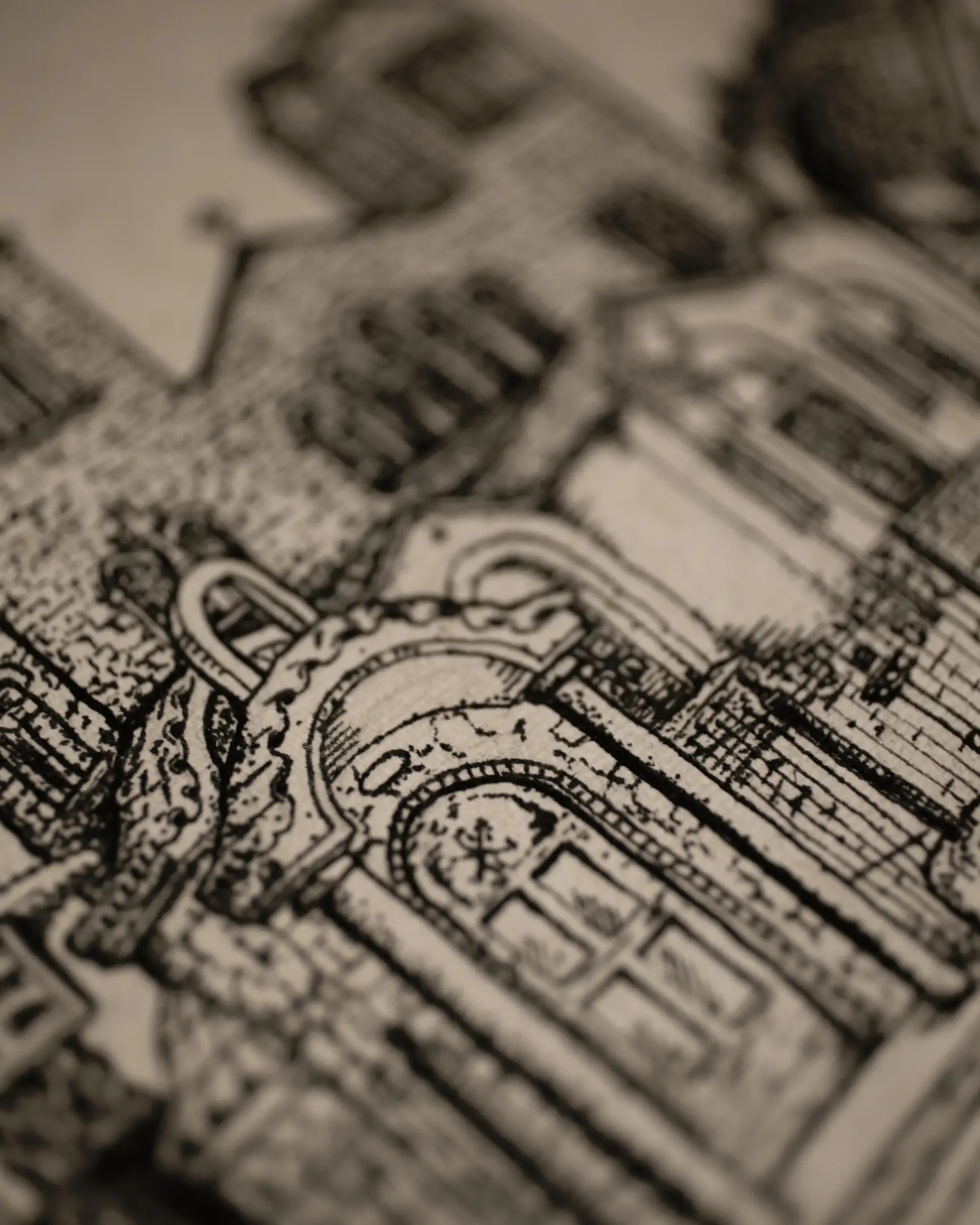
This artwork features a detailed pen-and-ink illustration of a grand building, likely a church or a villa, characterized by its twin towers and arched entrance. The drawing is executed on a rectangular piece of cream-colored, textured paper with rough, unfinished edges, which provides a rustic contrast to the precise linework. It is professionally matted against a deep black background and enclosed in a luxurious, carved golden frame with a vintage aesthetic.This close-up view highlights the fine architectural details of a building with Romanesque or Byzantine influences, featuring arched windows and two prominent towers. The artist, Vselenskyi, uses stippling and fine lines to create depth and shadow. The drawing is centered on a piece of thick, cream-colored artisan paper with distinctively rough, torn edges, floating against a matte black backdrop. The artist's signature is visible in the bottom right corner.This extreme close-up reveals the technical mastery of artist Vselenskyi. The fragment shows the central entrance and the upper towers of the building, where every stone is represented by individual ink strokes. The image highlights the contrast between the sharp black ink and the visible horizontal fibers of the beige, heavy-grain paper, giving the architectural sketch a tactile and historical feel.This close-up captures the central fragment of Vselenskyi’s "Admiratio." The drawing features a detailed iron fence decorated with small crosses, a flag mounted on the building's facade, and a secondary arched gateway to the right. The heavy texture of the artisan paper is prominent, with its horizontal grain adding a rhythmic, organic quality to the precise architectural linework. The use of varied ink density creates a convincing sense of depth and southern light.This fragment highlights the right side of the composition. In the center is a classic stone arch with an inscription and a small cross at its peak. Behind the arch, a meticulously drawn round tree and dense foliage create a sense of privacy and nature. The coarse, ribbed texture of the beige handmade paper is clearly visible, adding a physical depth to the delicate pen strokes and the intricate metalwork of the fence.This photograph shows the artwork from a slight perspective, highlighting the tactile quality of the deckled-edge paper. The architectural ink drawing is set deep within a thick black mat, which creates a dramatic contrast with the cream-colored paper. The ornate, vintage-style gold frame catches the light, adding a sense of luxury and historical weight to the contemporary graphic work. The dark, minimalist background ensures all focus remains on the interplay of gold, black, and the fine ink details.
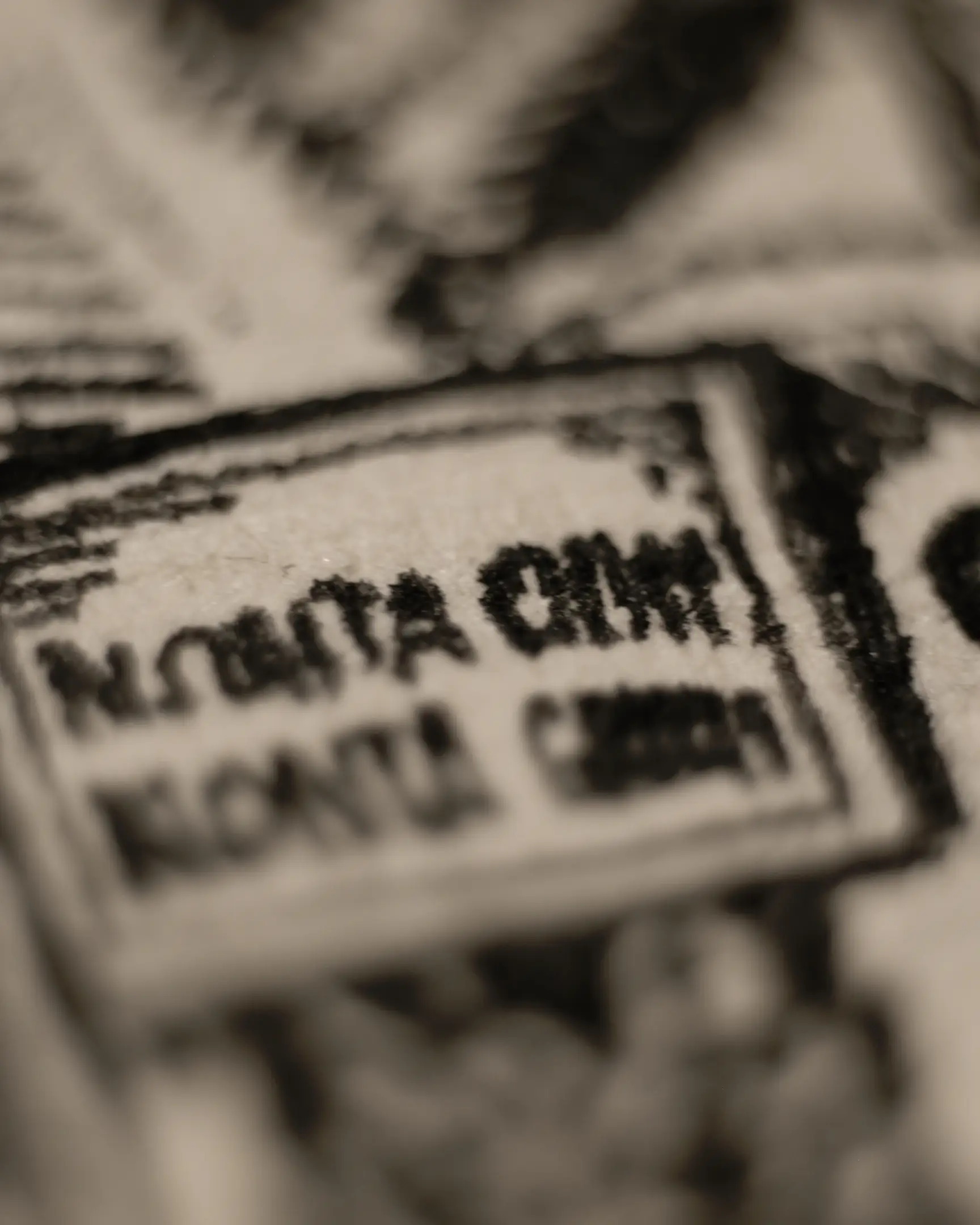
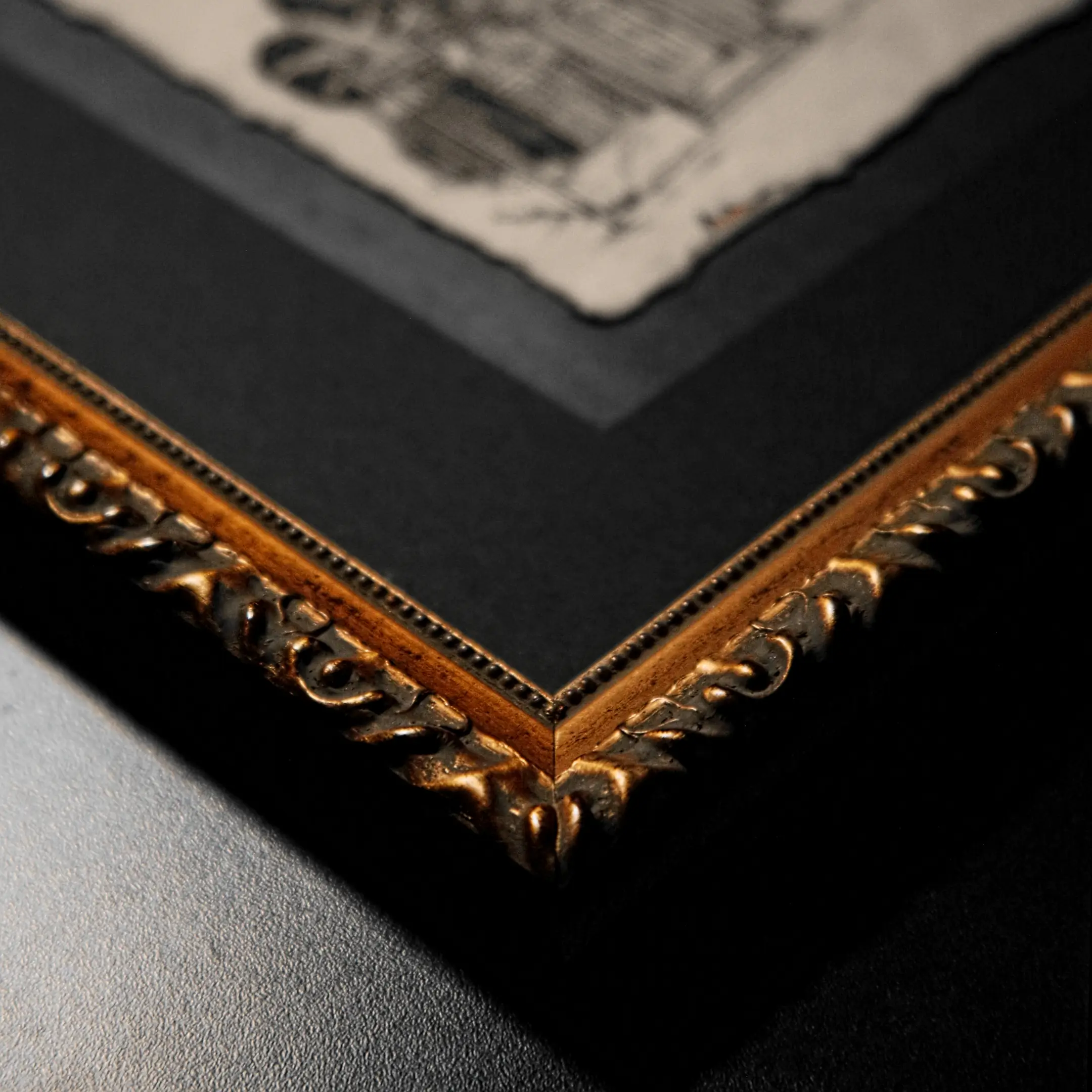
This photograph captures the corner of a high-end, classic picture frame, viewed from a close-up, low-angle perspective. The frame is gilded with an embossed, patterned relief that creates intricate light and shadow patterns. Within the frame, a black mat is visible, separating the viewer from the textured edge of the handcrafted paper artwork. The dark, minimalist background ensures all focus is on the golden texture and construction of the corner joint.A close-up photograph of an ink illustration on heavy, textured paper with raw, torn edges. The artwork depicts intricate architectural elements and stippled trees. The artist's signature, "Vselenskyi," is prominently displayed in the bottom corner. The piece is professionally matted in black and set within an ornate gold frame.An ancient inscription on a road sign in a small Hellenic town informs us of the setting, shrouding it in mystery. Though the words are difficult to read—it does not matter. The sign is devoid of documentary dryness; it simply tells us that this beautiful "somewhere" is just nearby, around the corner of our imagination. Before us is the main entrance to a coastal town's church, beyond which lies a view of lush, boundless greenery. Nature here lives in absolute unison with man-made beauty, creating an atmosphere of profound peace. This is a place where turmoil falls silent, giving way to the stillness and tranquility frozen in every architectural curve.Contrast in Vselenskyi’s work serves as a tool, emphasizing the internal movement of architectural forms. We do not merely contemplate a static texture; we feel the dynamics of the gaze as it slides across the canvas, guided by thousands of fine lines. This is the directed movement of the artist's thought, captured in a strict black-and-white execution.In these works, the imperfection of lines and dots becomes the primary narrator. The uneven texture and living, trembling strokes tell us of authentic life, devoid of artificial smoothness. Every painting is a unique path traveled by the artist and viewer together through quiet courtyards and ancient walls, where every flaw is beautiful.The Greek flag, fluttering in the wind before the viewer’s eyes near the ancient church, does more than mark the location—it whispers of the unseen. Gazing at these living strokes, one physically feels the sea breeze blowing from the left, from the direction of the vast blue sea. The flag becomes an instrument, measuring the will of the elements and filling the static drawing with the movement of salty air. Vselenskyi’s ink works reveal a unique level of detail to the viewer, comparable to a macro-world. This is the second, hidden layer of the painting, offering no less delight than the main subject. Here, at an intimately close range, it becomes clear how every microscopic dot plays its vital role in the great graphic ensemble.The artist's signature is a sacred final stroke, crowning long hours of labor. Looking at this portion of the paper, one can physically feel the moment when the master whispered: "It is done." It is a moment of triumph frozen in ink, which has spread through the finest fibers of the Indian paper, forever sealing the creative energy.Every painting is a vast sea of billions of fine lines and dots, so tiny they merge into one when viewed from afar. But step closer, and the viewer plunges into the depths of textures, finding true beauty in the chemistry of ink and the relief of paper. It is an immersion into the abyss of detail where true mastery hides.
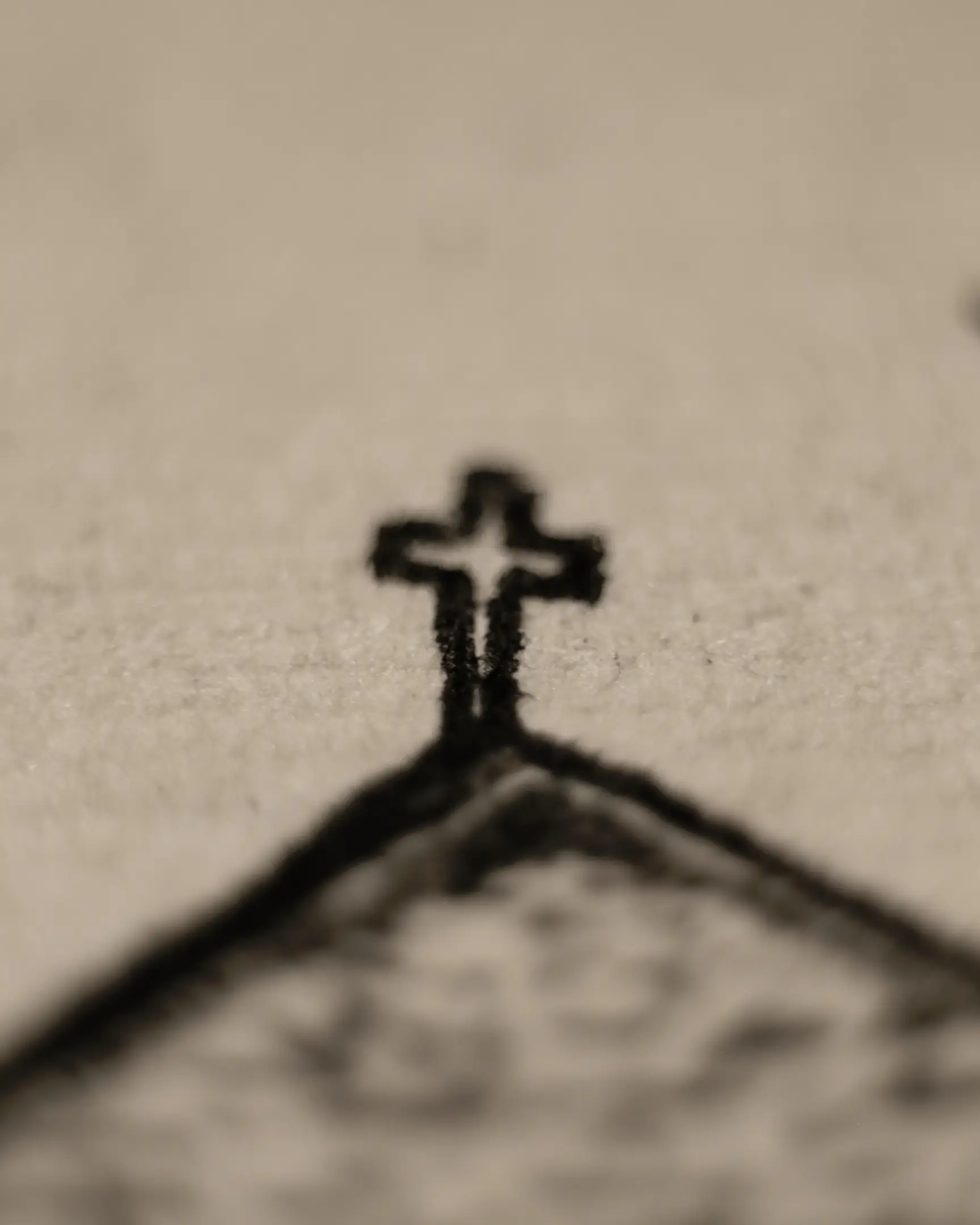
 It is fascinating how Vselenskyi reinterprets inscriptions on ancient temple walls, stripping them of documentary dryness. He draws more than just letters or phrases—he captures the very sensation of the ancient word, filtered through the prism of personal experience. It is an artistic interpretation of reality, where the spirit of the inscription outweighs its literal meaning.The art of ink graphics is a mystical union of materials: here, the substance of Indian paper, the density of ink, and the sharpness of the pen merge in a single impulse with the artist's hand. Upon closer inspection, the drawing’s texture resembles slices of noble granite or wild stone, where nature itself traces whimsical patterns. It is a triumph of natural textures, transforming paper into the solid rock of art.Drawing on handmade paper is always a path where a sterile ideal is unattainable, and therein lies the highest truth. Every millimeter of space possesses its own character and temper, forcing the artist into a constant dialogue where struggle yields to a complete union. It is not a matter of luck; it is existence itself—authentic and unpredictable, much like human life in its eternal motion.The most remarkable aspect of Vselenskyi’s work is how honestly and imperfectly the ink settles onto the paper surface. There is no room for mechanical repetition; every stroke and every dot is an entirely new, unique experience. No one knows what the finale will be, for every touch of the pen carries a seed of the unknown, giving birth to a living, pulsing art.Even in the smallest fragments, we see the magic of how the ink penetrates the paper fibers. This is more than just an image of a cross on a roof—it is the contemplation of how every drop of ink slowly spreads across the surface, resembling a divine radiance. The symbol of faith here gains substance, becoming one with the relief of the ancient building.Vselenskyi’s sketches are not merely fleeting drawings, but a detailed narrative of the artist's innermost thoughts and the beauty he yearns to reveal to the world. In moments of creation, the pen occasionally slips from the rough texture, giving birth to unique fractured lines. These accidents become letters in a long graphic narrative, telling of the master's feelings at the moment of work. It is striking how concise ink on handmade paper can convey the sweltering atmosphere of Hellas and the sound of the tropical wind. We feel the heat of the Greek sun and the coolness of ancient columns with our skin. The stone texture and strict silhouettes of coastal architecture come alive, transporting us to the narrow streets of small port towns lost in time.

Related products