A METHOD (1834) Book Art
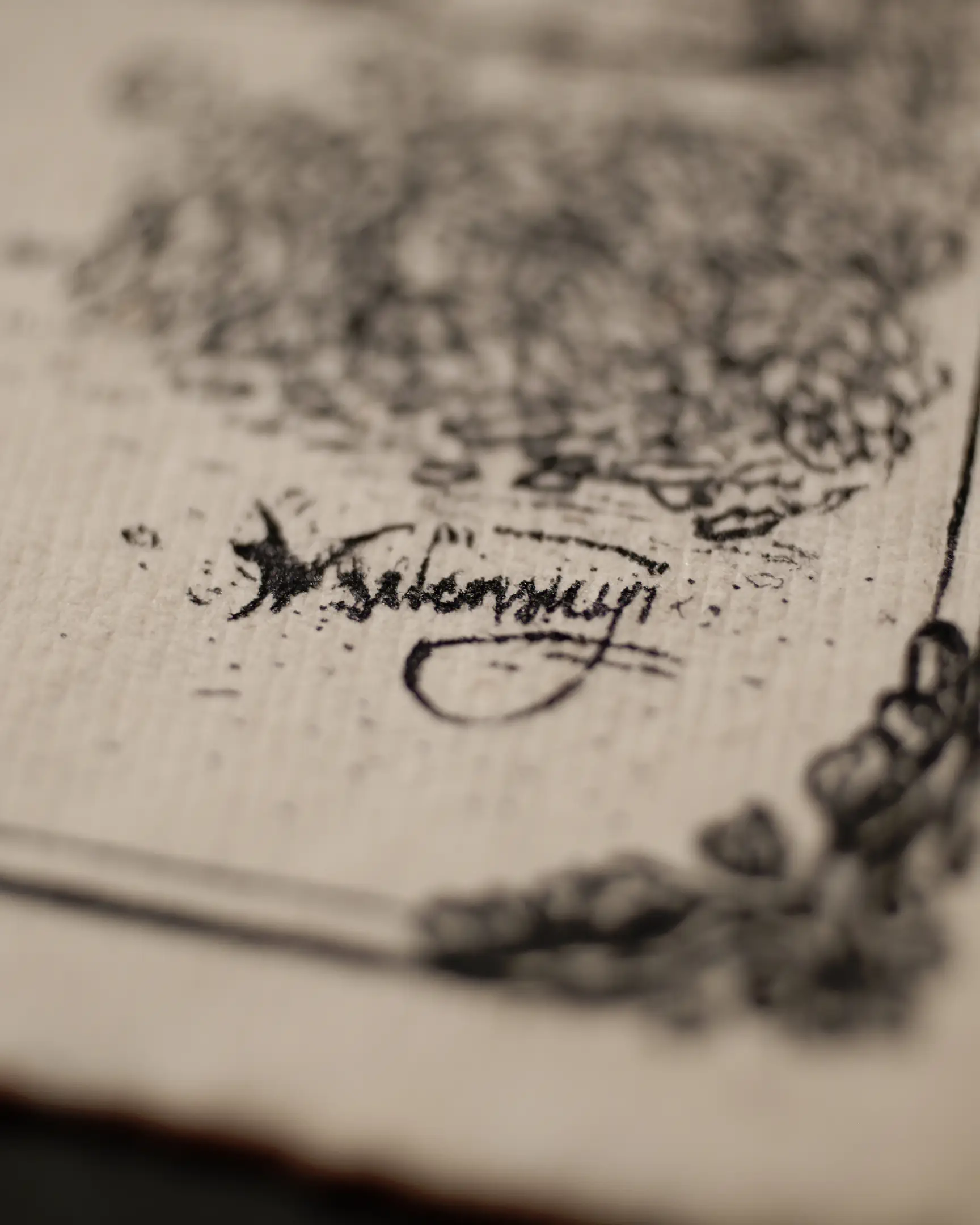
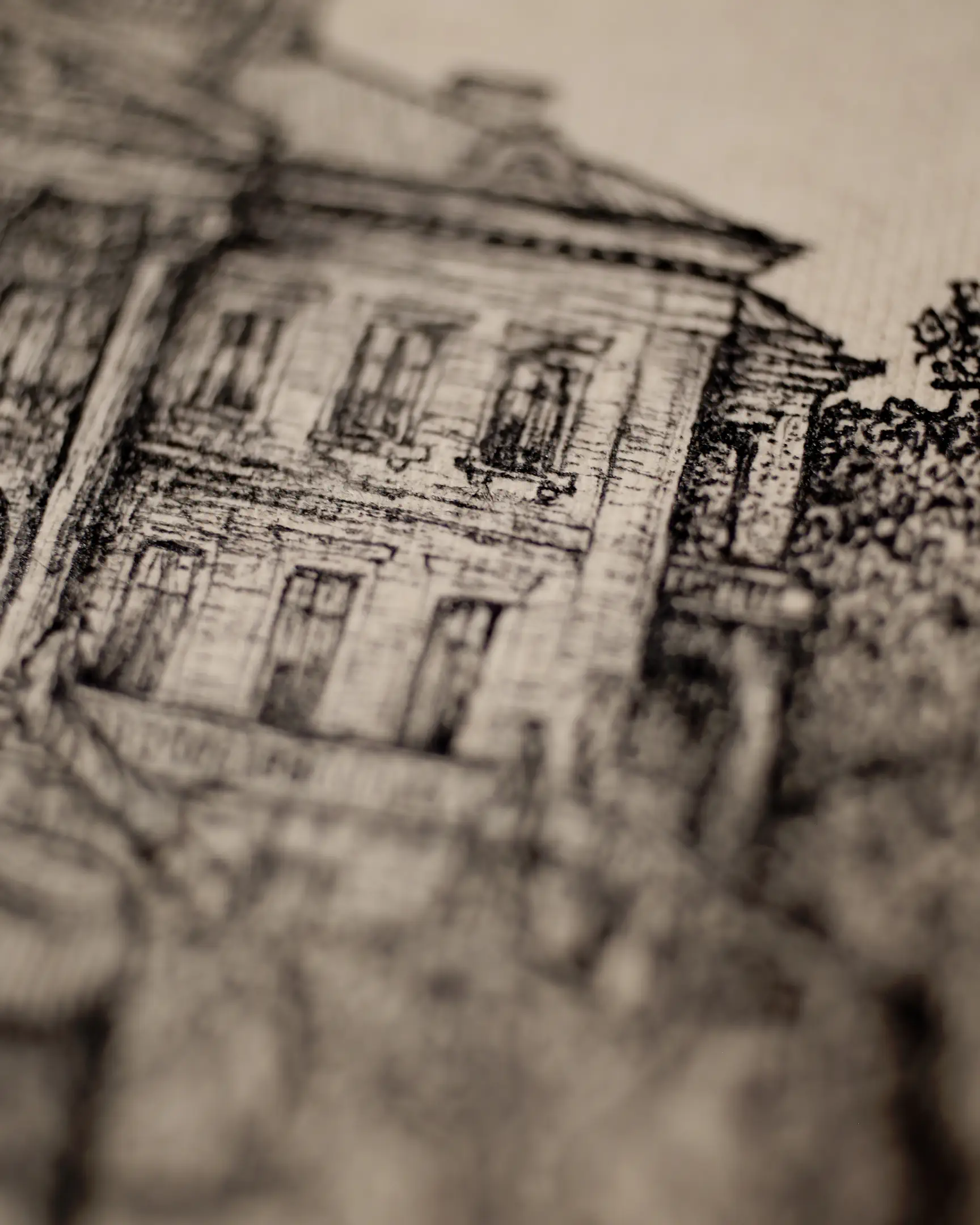
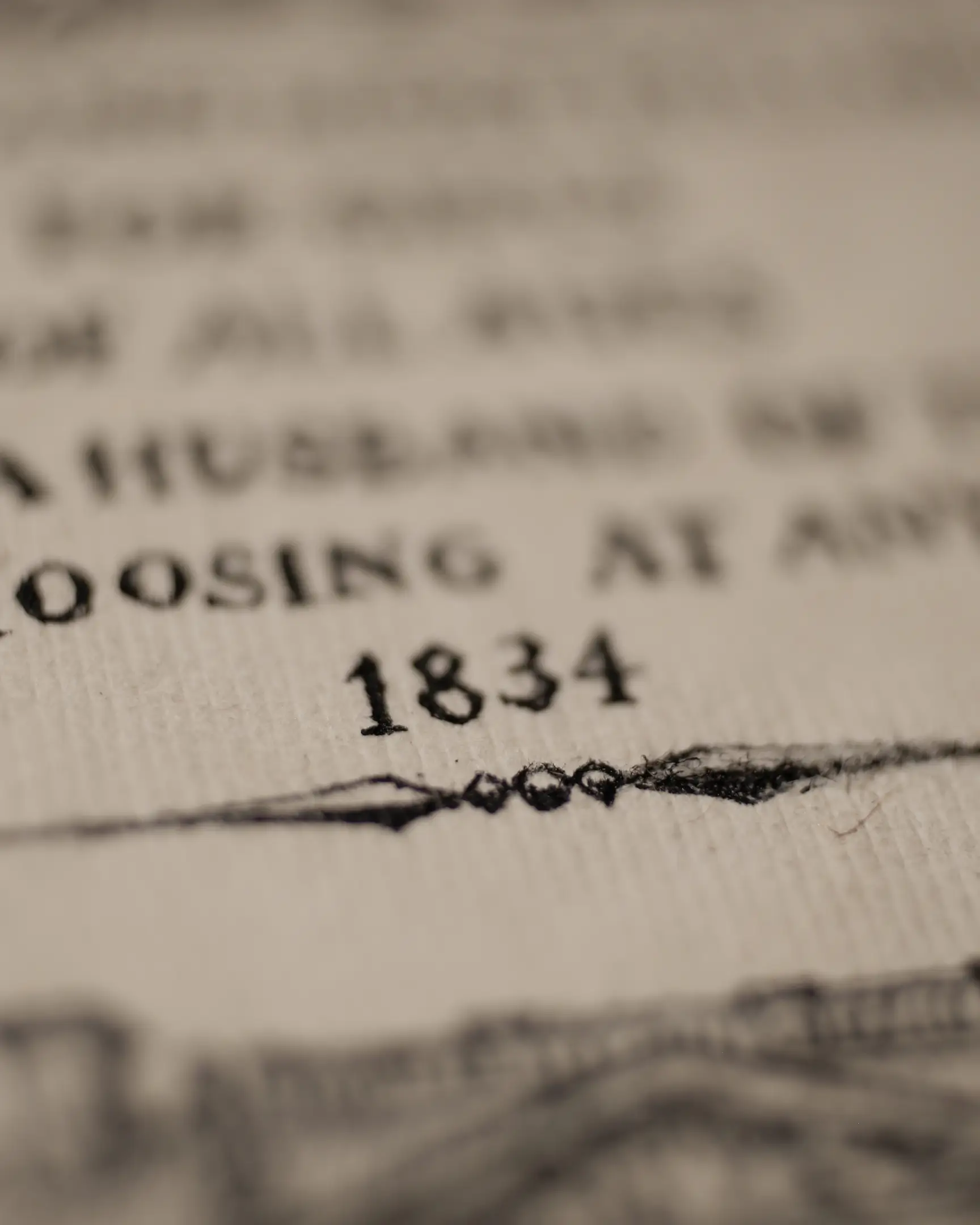
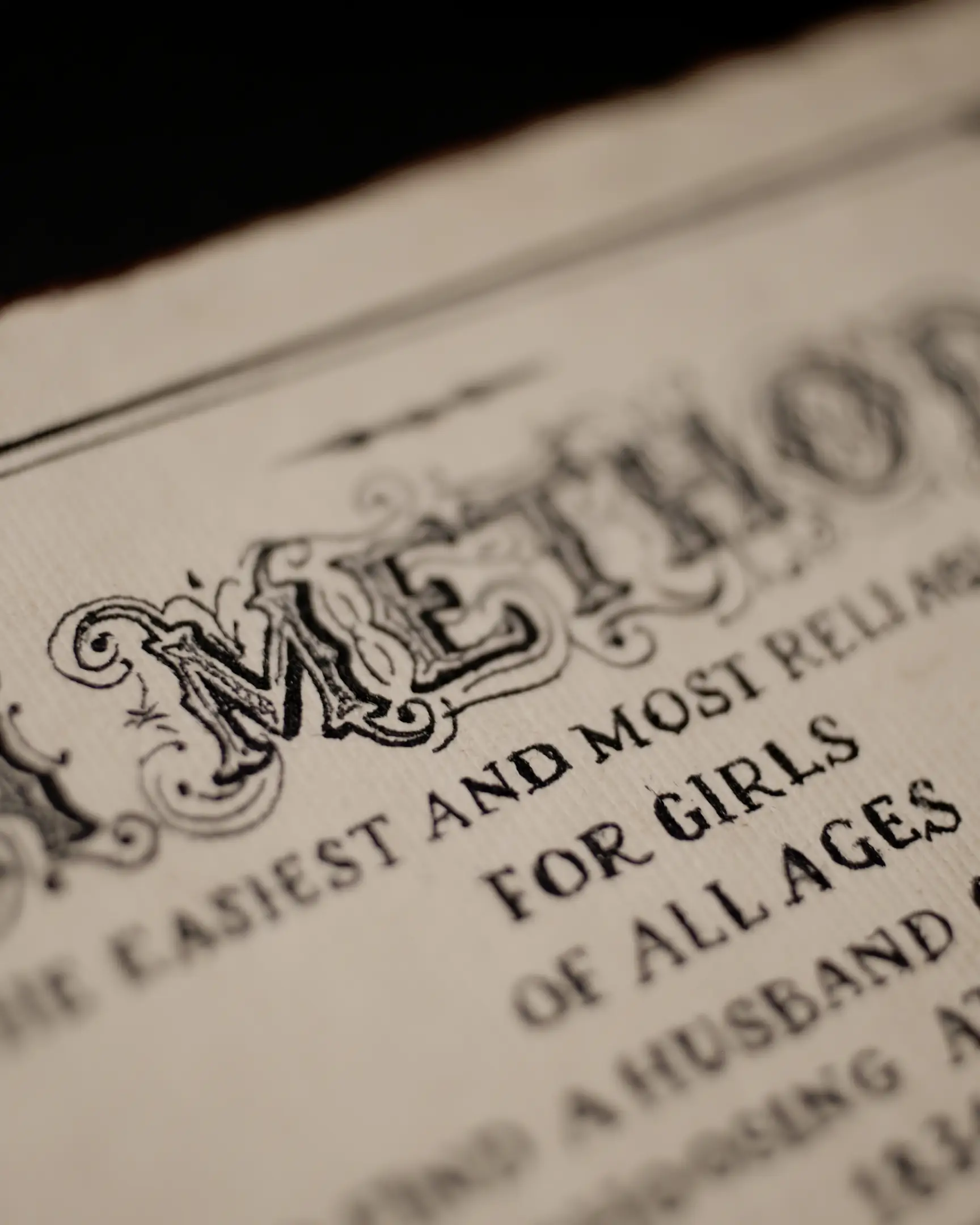
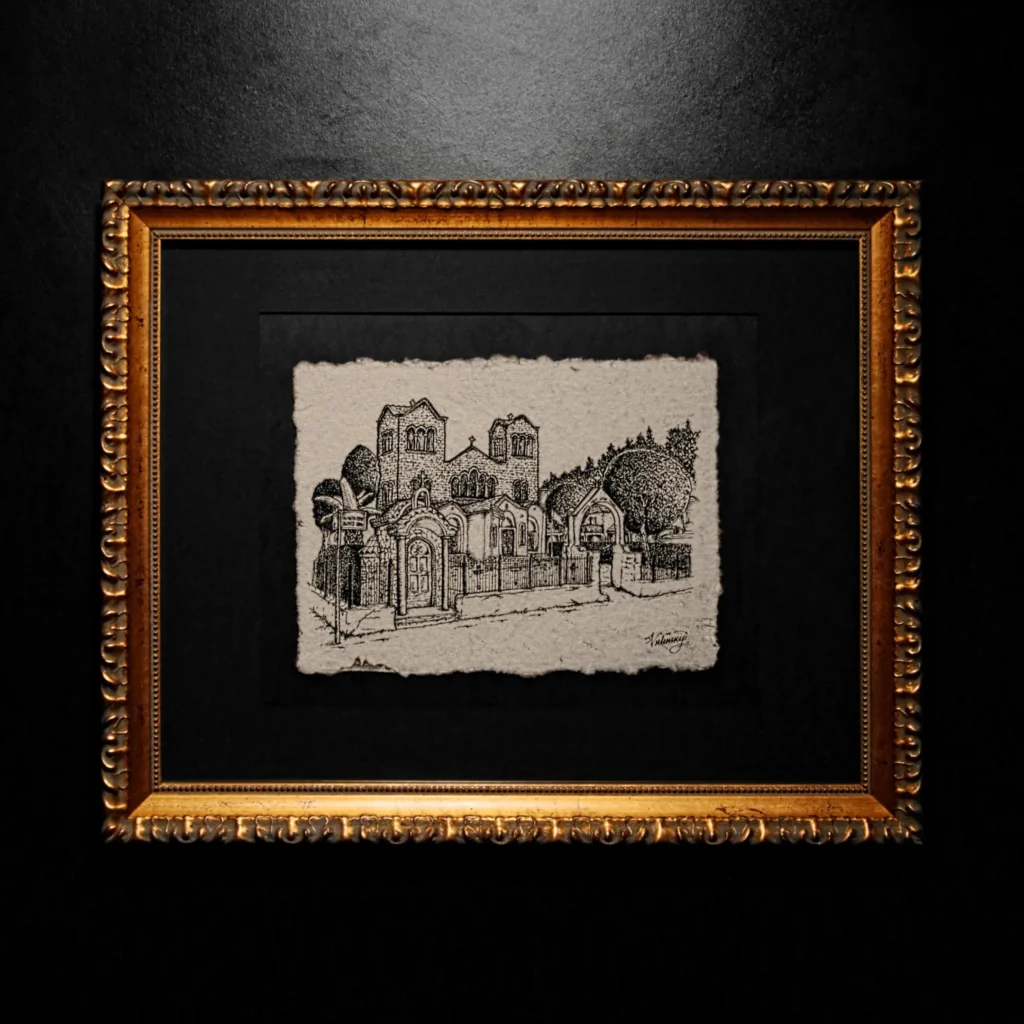
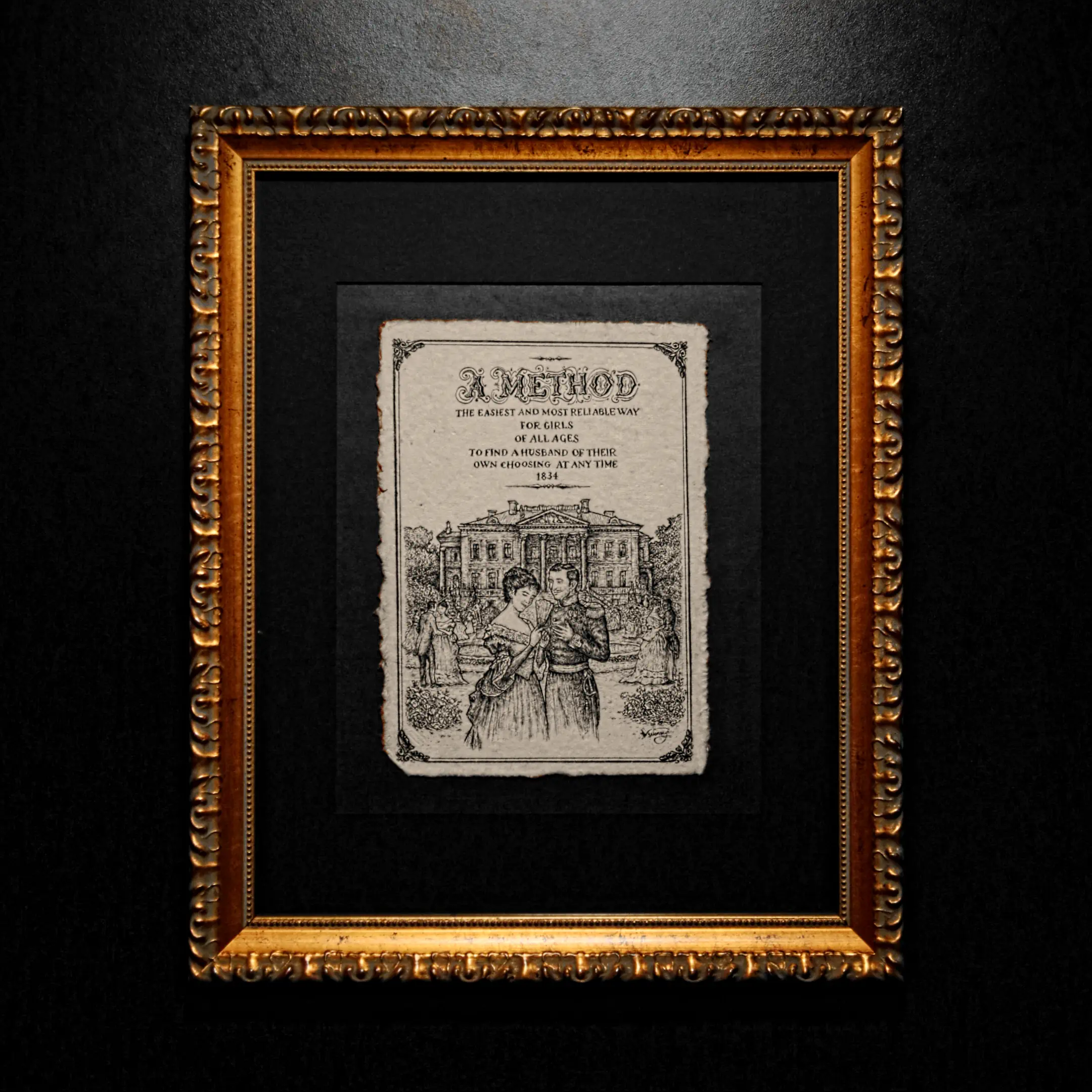
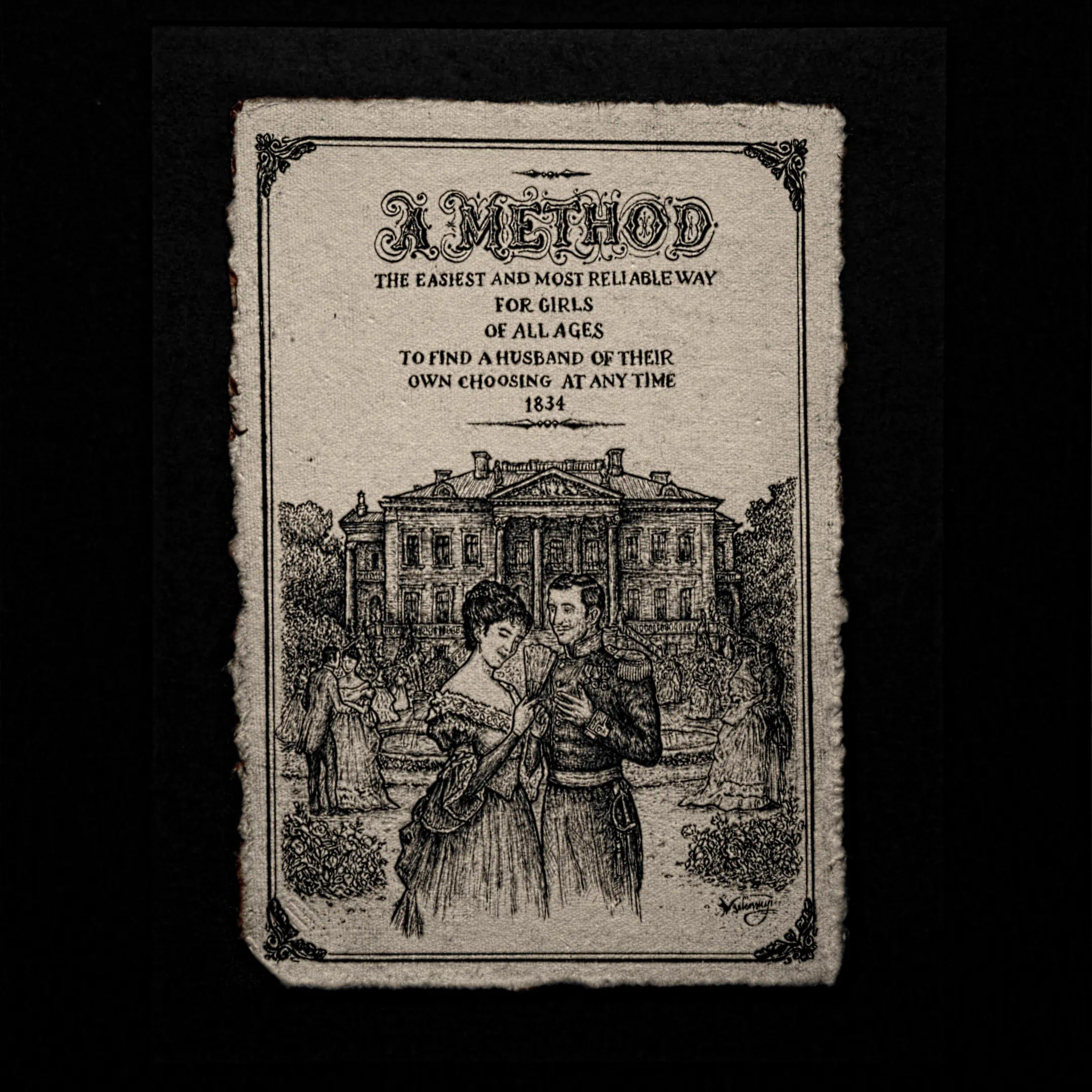
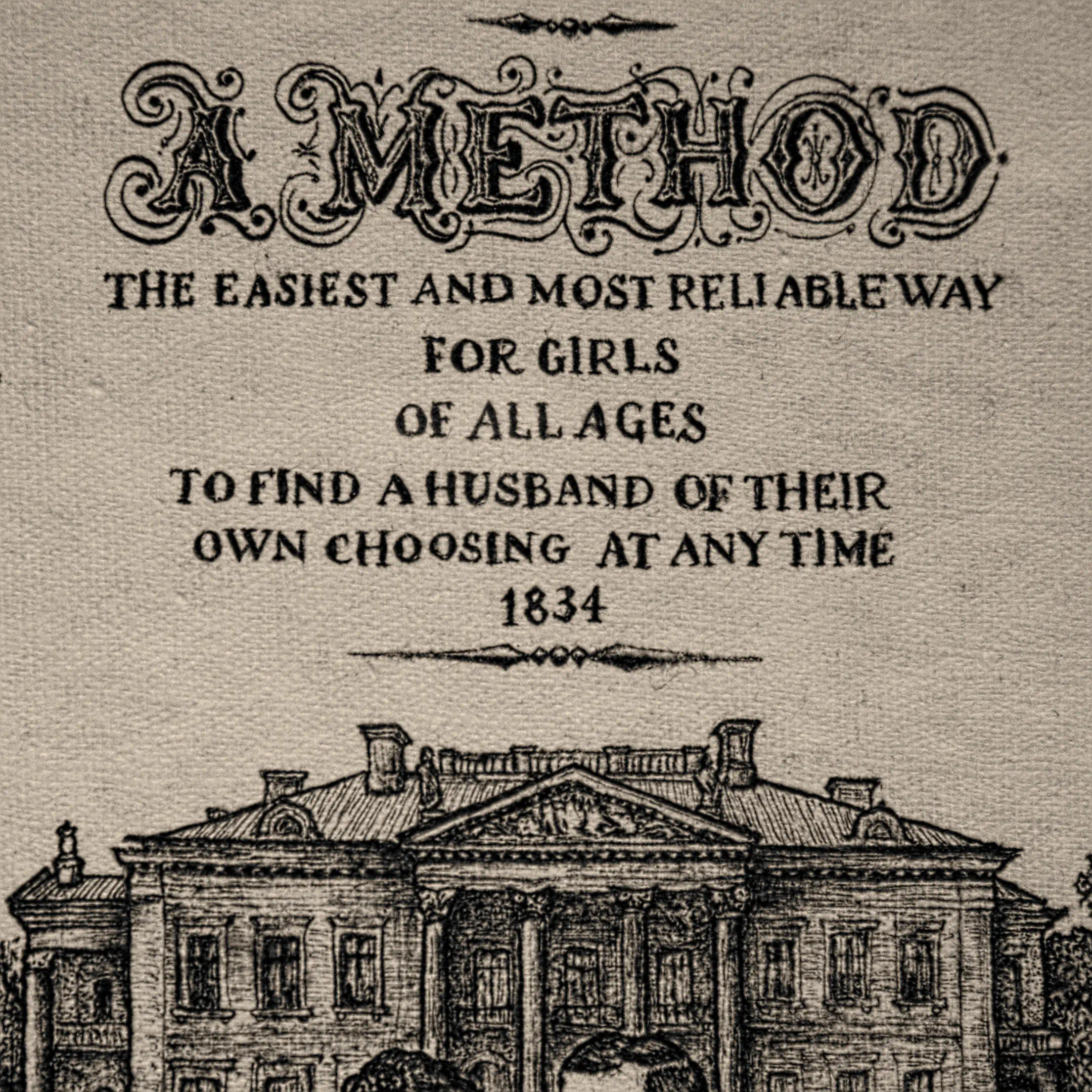
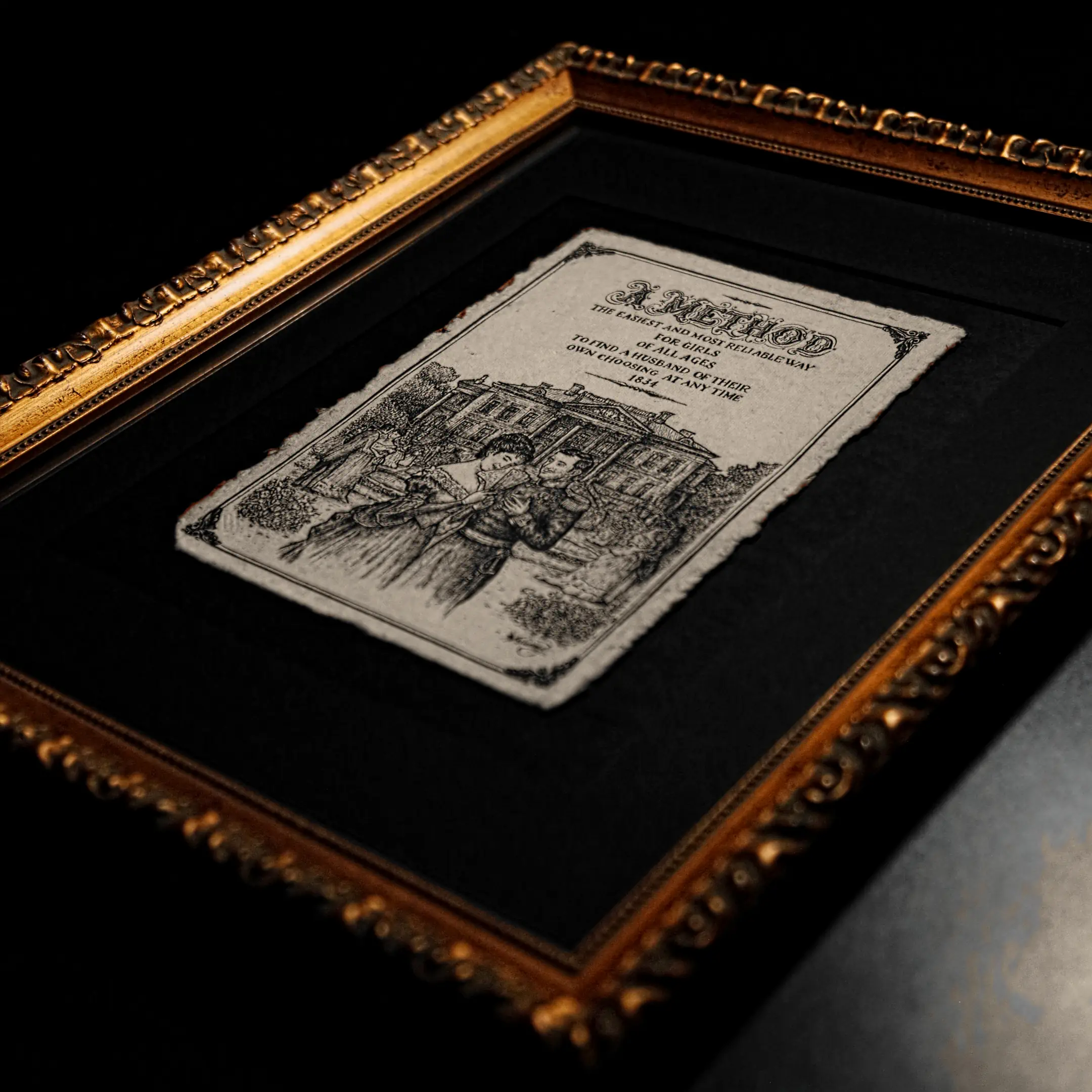
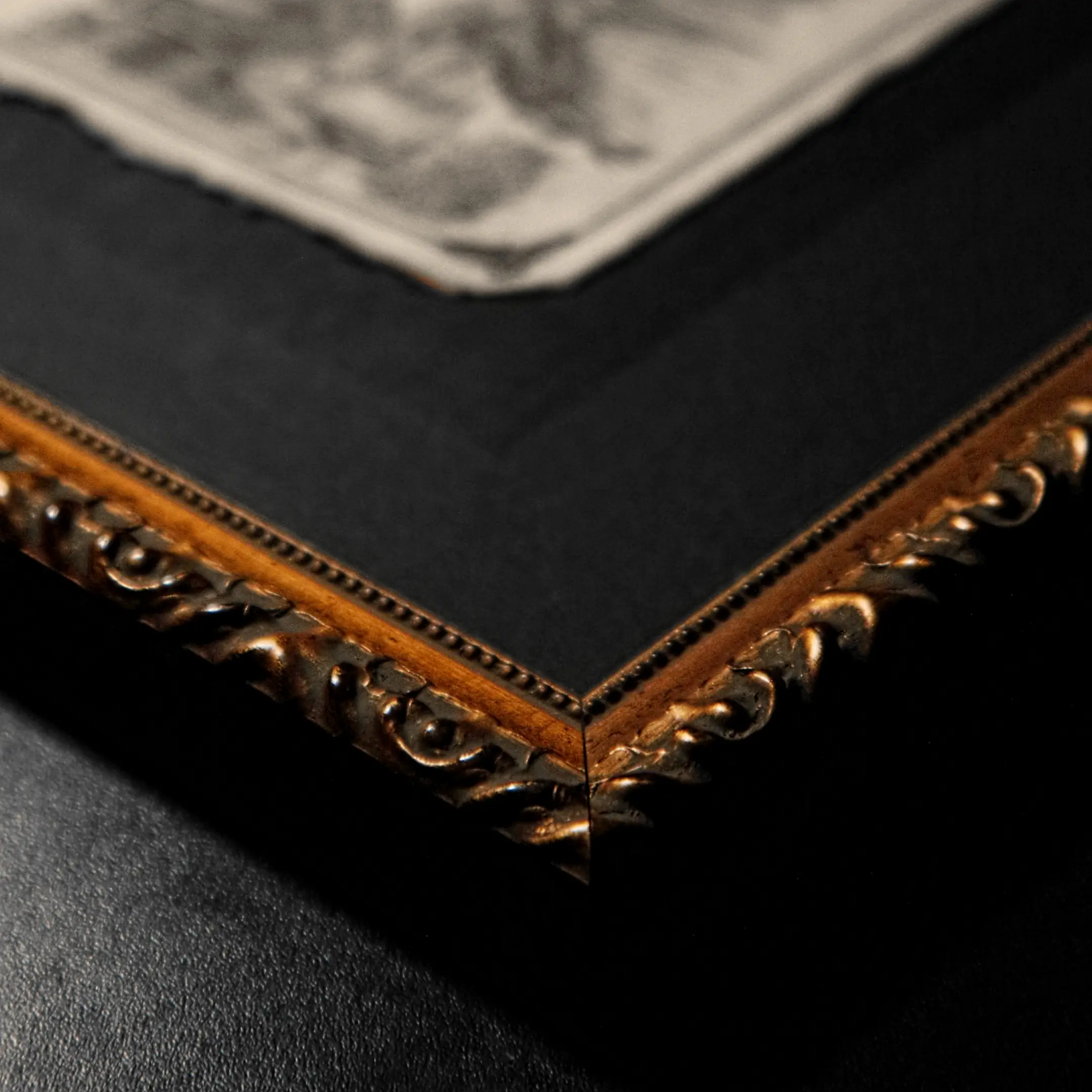
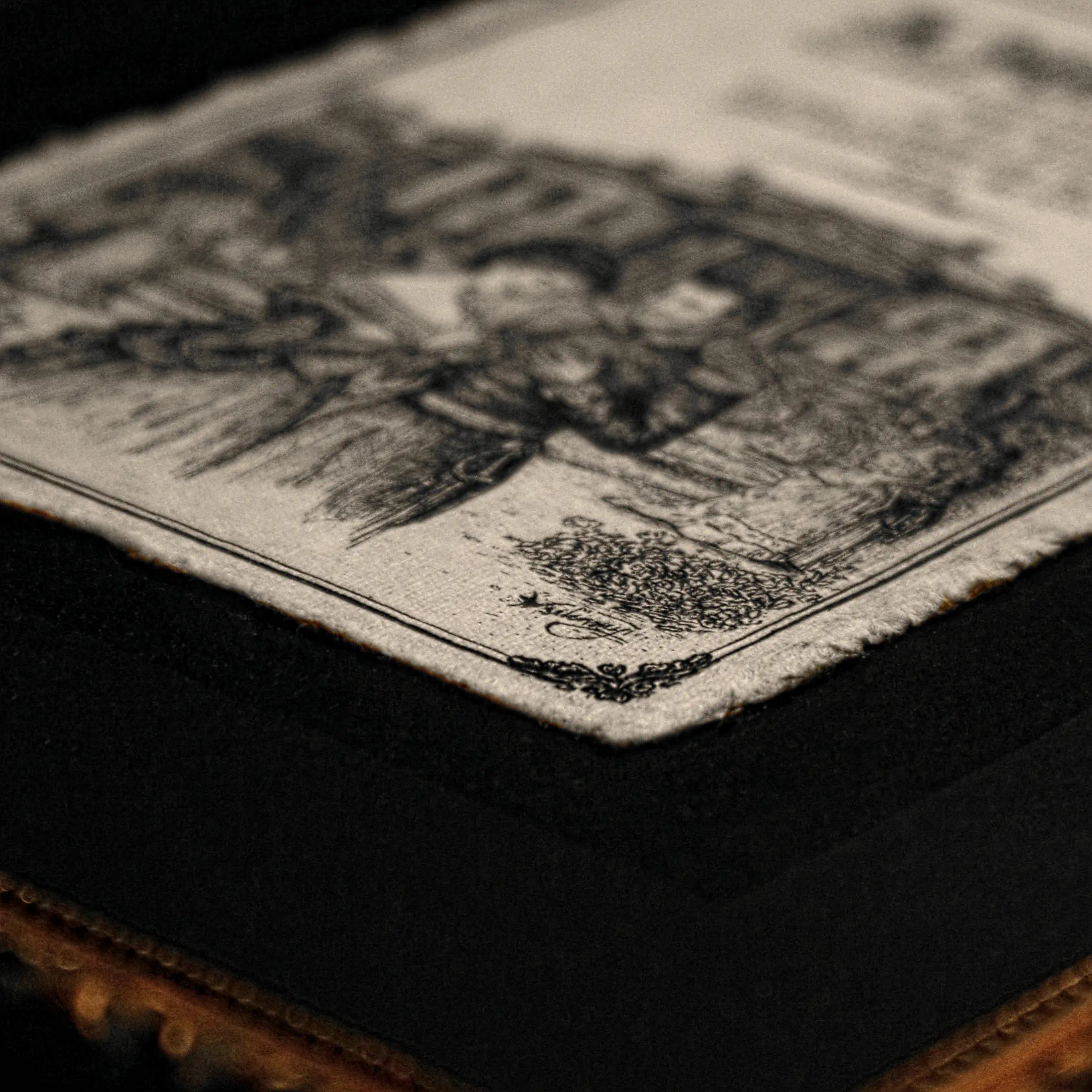
This original illustration is a singular tribute to the 1834 edition of The Method of Obtaining a Wife. Meticulously rendered with a 19th-century dip pen and iron gall ink on kraft paper, the piece is housed in a handcrafted frame with UV-protective glass and a 100-year guarantee. This artwork is offered within an exclusive collection, accompanied by a hand-transcribed volume of the original text, rewritten by the artist using identical historical materials.
Technical Profile
| Attributes | Value |
|---|---|
| Contents: |
• Original Ink Art Object |
| Specifications: |
• Sketch Size: 5 x 9 in, 12.7 x 22.8 cm |
| Materials & Origin: |
• Paper: 300 gsm Handmade Paper |
| Style & Artistry: |
• Technique: Classic dip pen and ink sketching. |
| Longevity: |
• 100-Year Archival Display Guarantee (Under UV-protected conditions) |
HISTORY OF ART OBJECT
A METHOD (1834) Book Art
“Other Times, Other Manners: The Vanished Breath of 1834”

The Art of Domestic Narrative: Guide to Choosing a Wife
A profound analysis and translation of the 1834 manual: “A Method for Girls of All Ages to Find a Husband of Their Own Choosing”
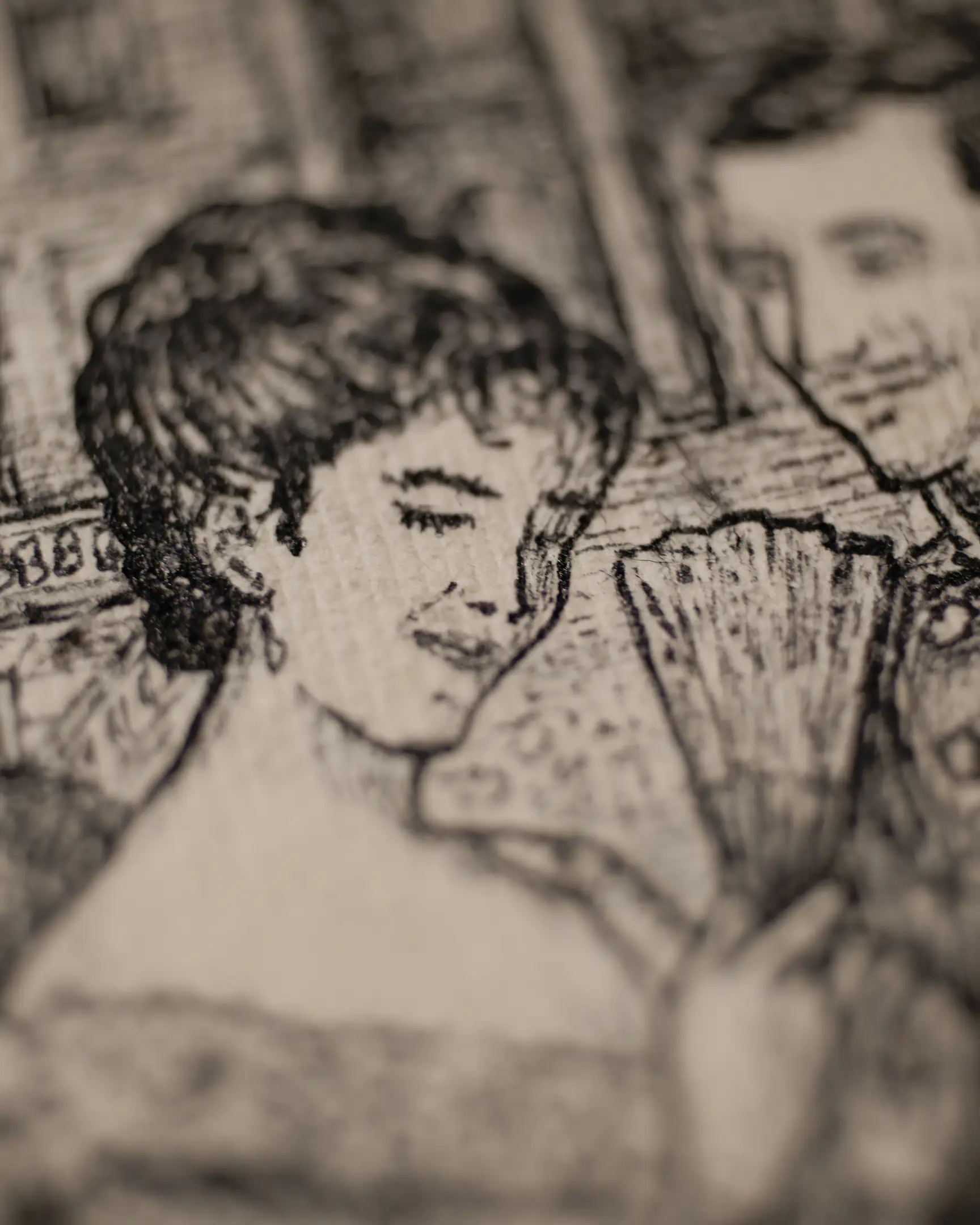
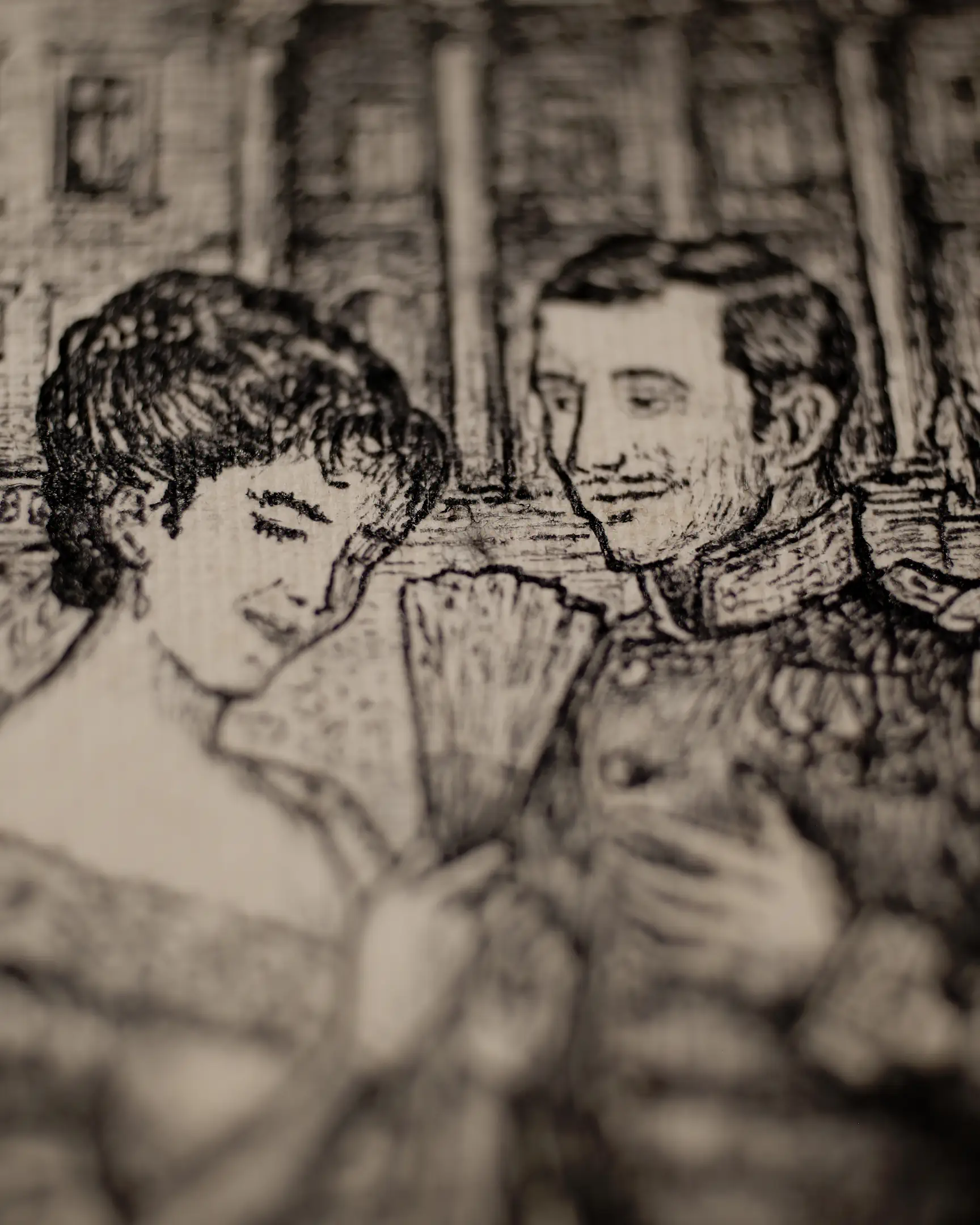
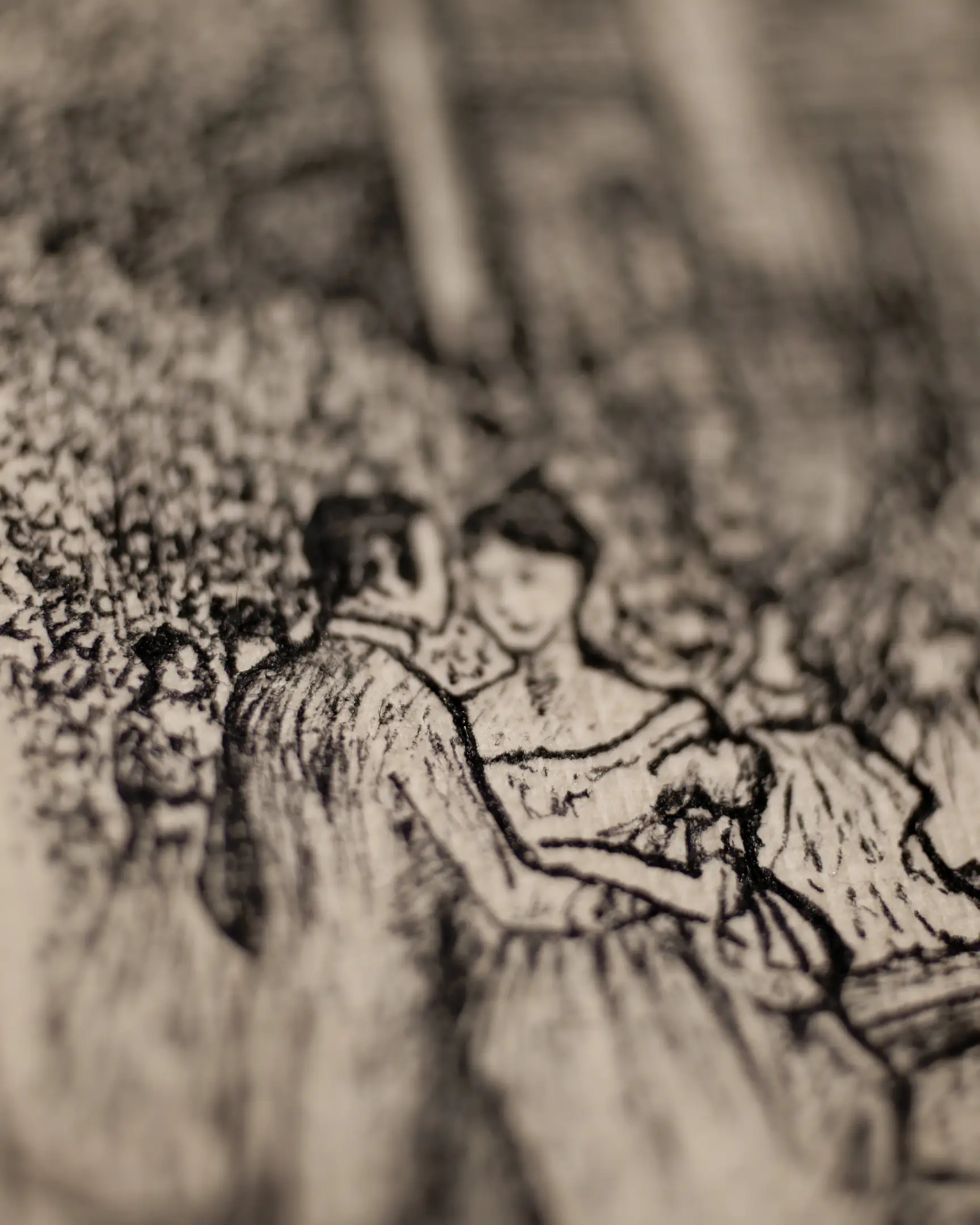
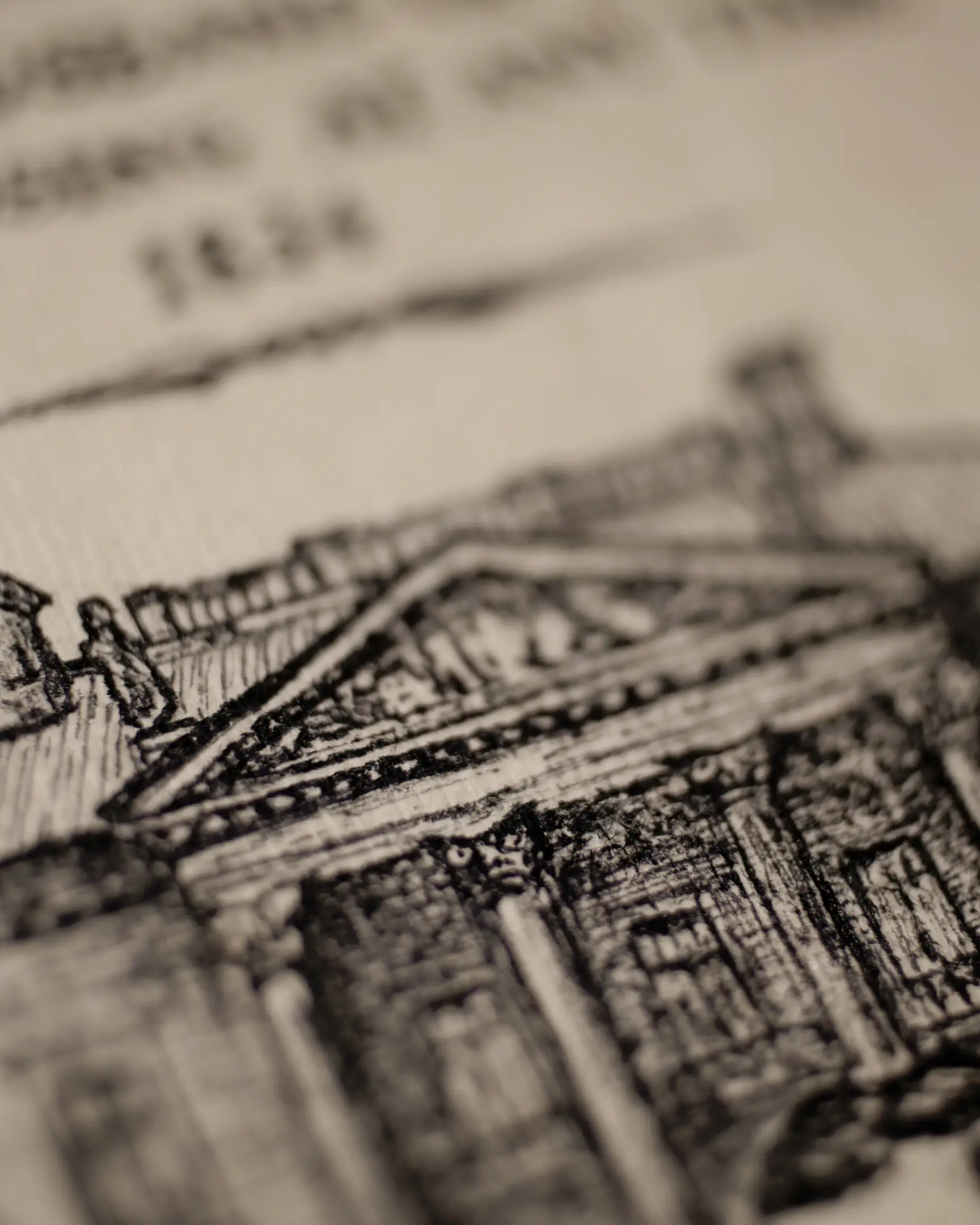
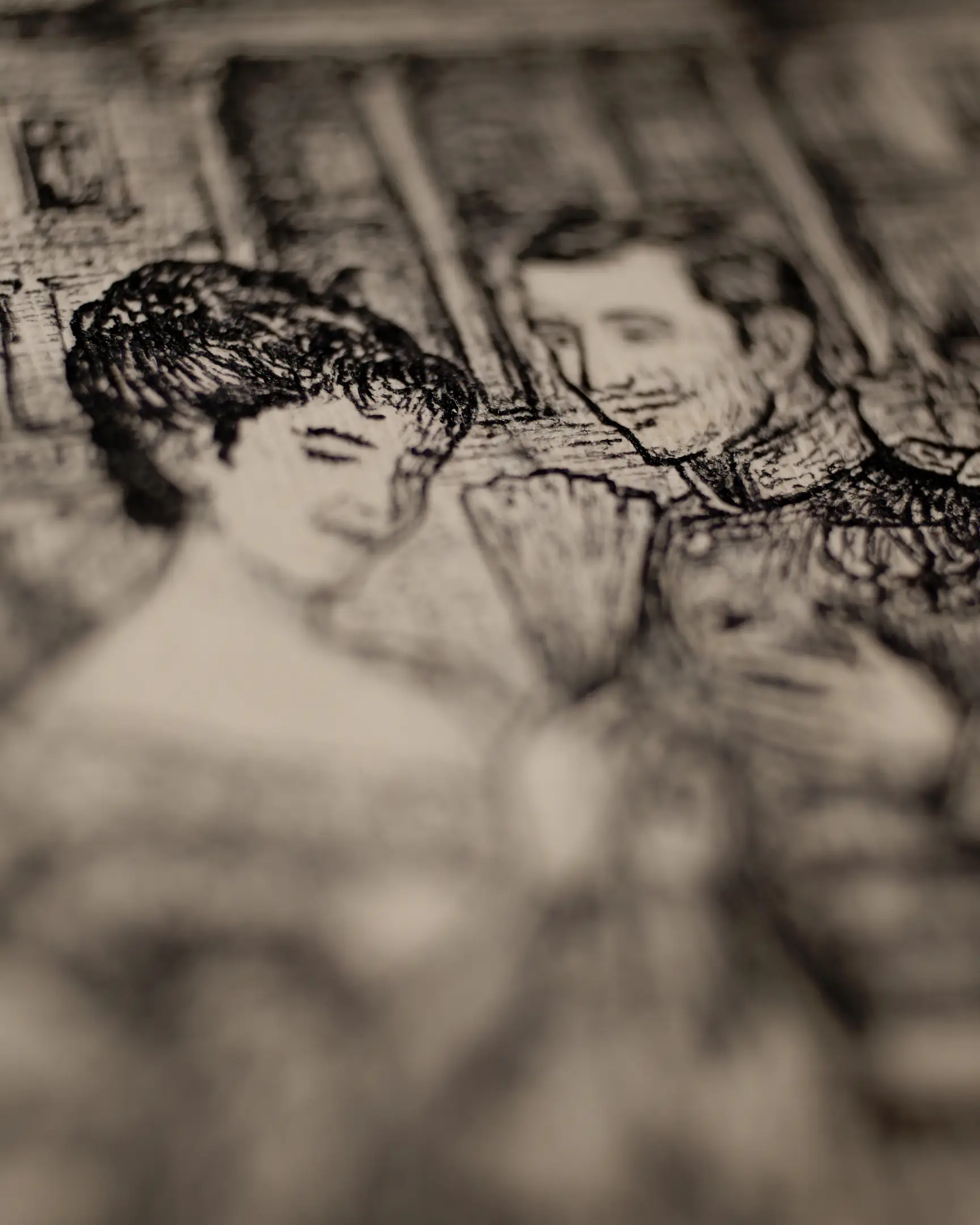
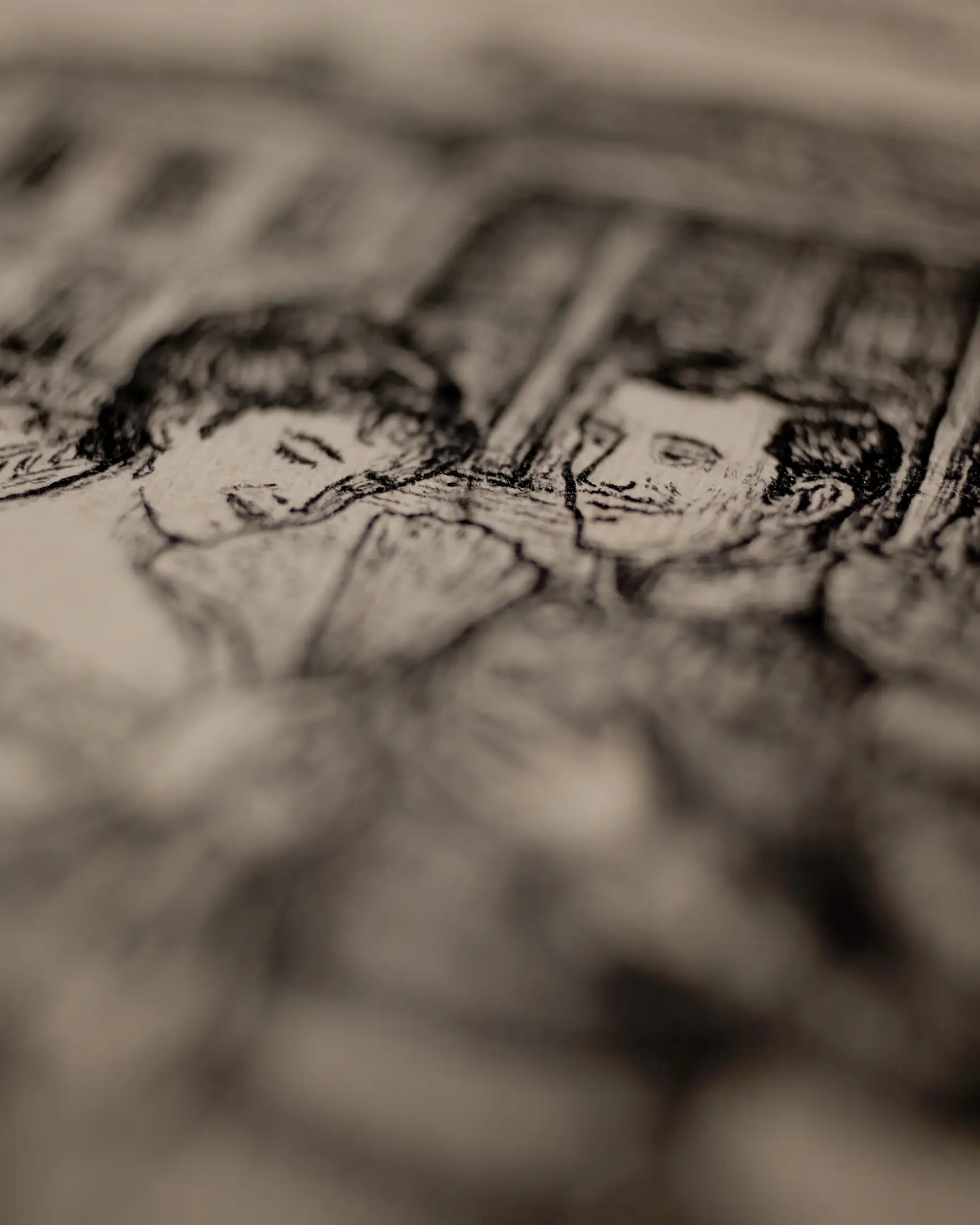
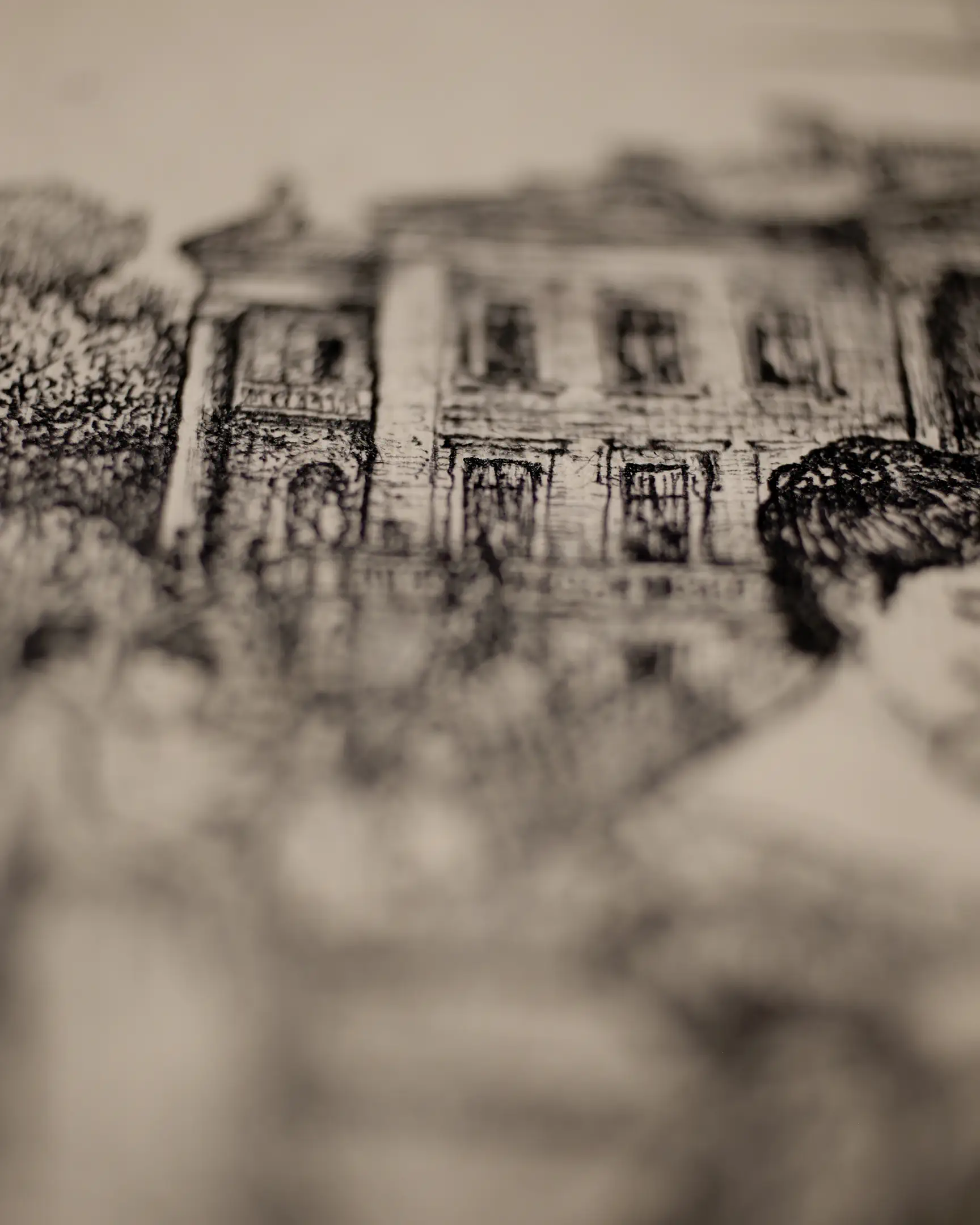
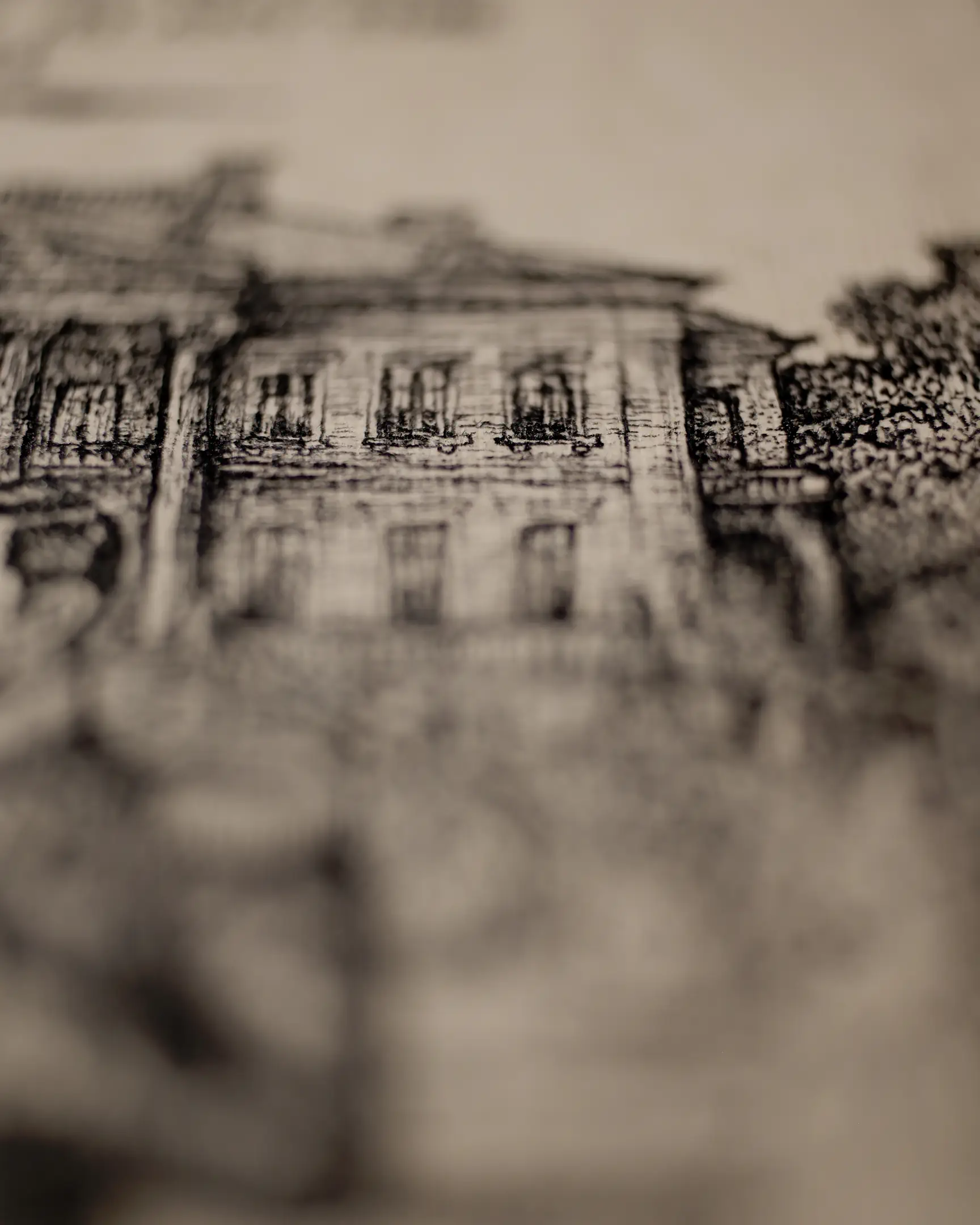
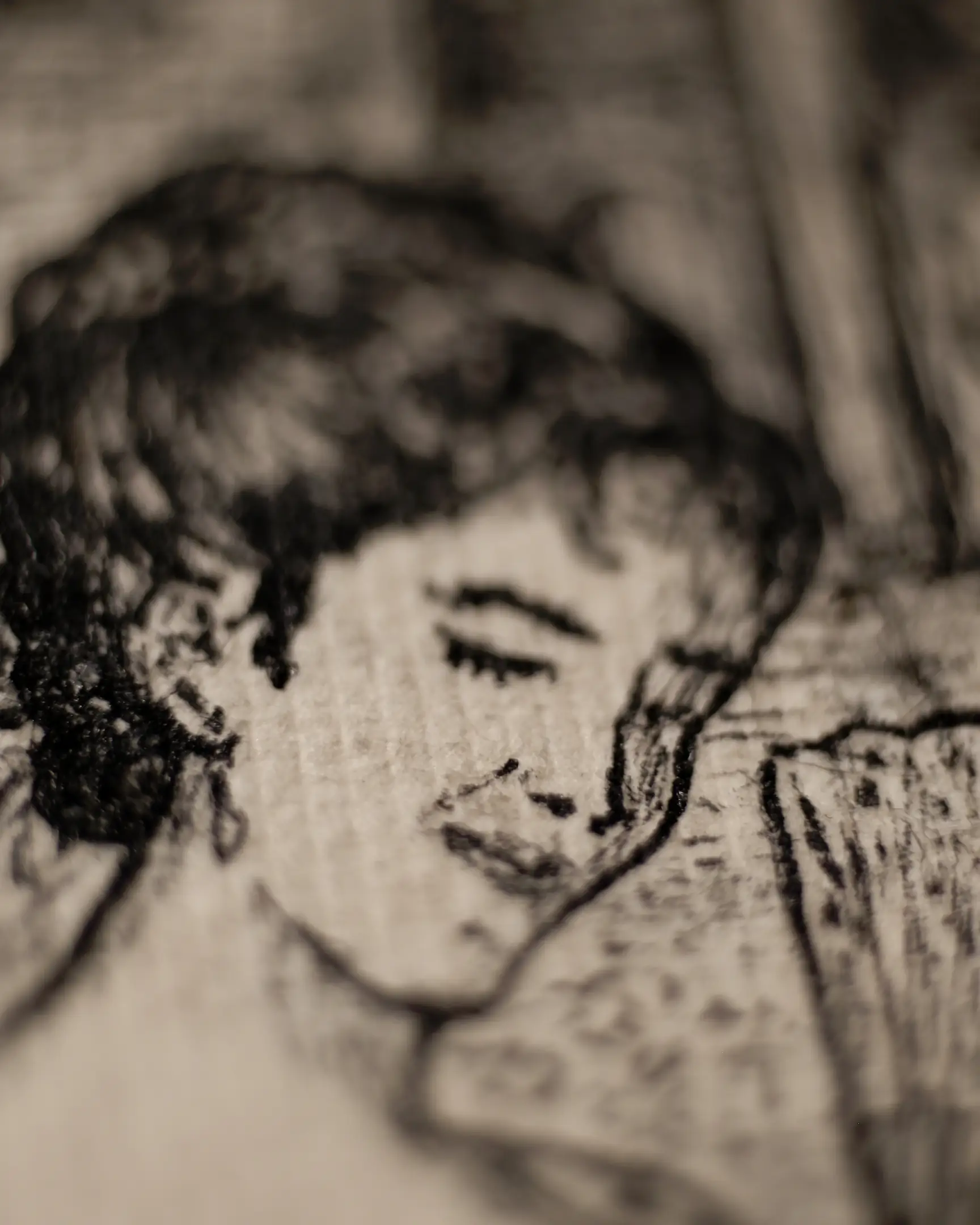
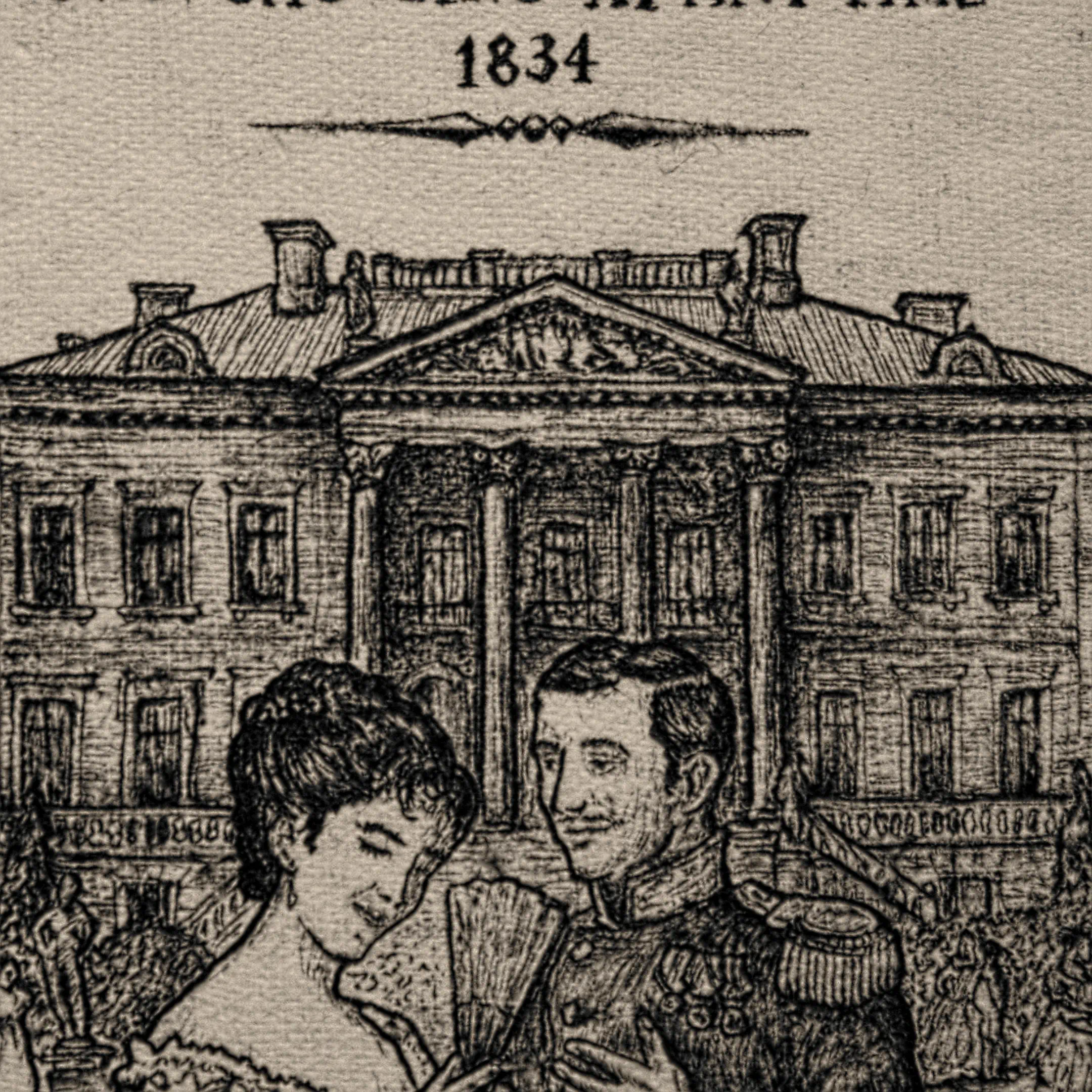
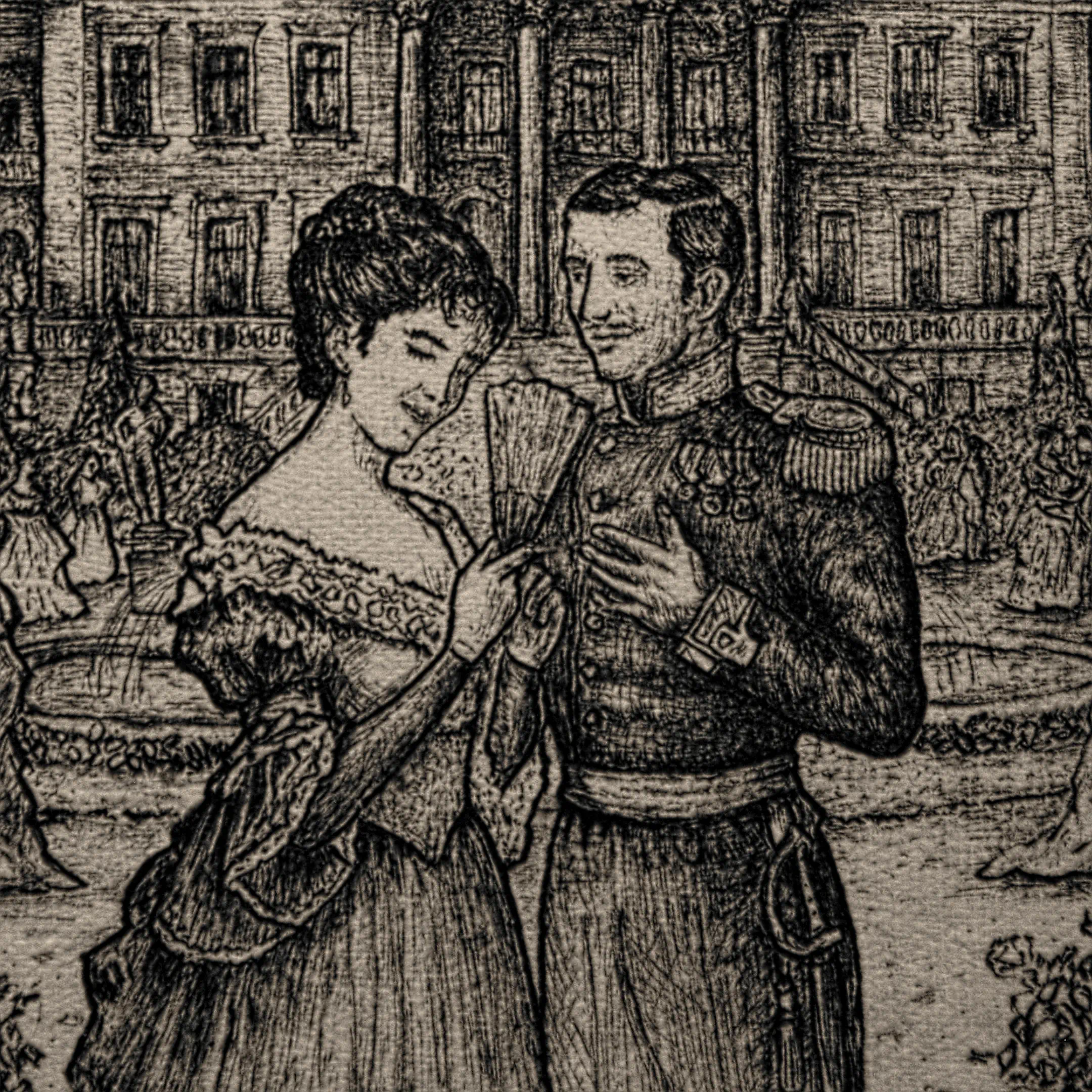
This sketch, rendered on time-worn paper and encased in a lavishly gilded frame, breathes life into a scene from 1834 Moscow, serving as a visual threshold to the forgotten manual. The narrative centers on a pivotal moment of social choreography: a young woman in a flowing gown, poised between modesty and intent, receives the attention of a dashing officer. Behind them, the hazy silhouettes of a ball at a grand manor evoke the “marriage market” of the era, a world of strict codes and hidden desires. This composition is more than an illustration; it is a visual epigraph to the text, embodying the bold spirit of a woman taking command of her destiny in a world of rigid tradition.
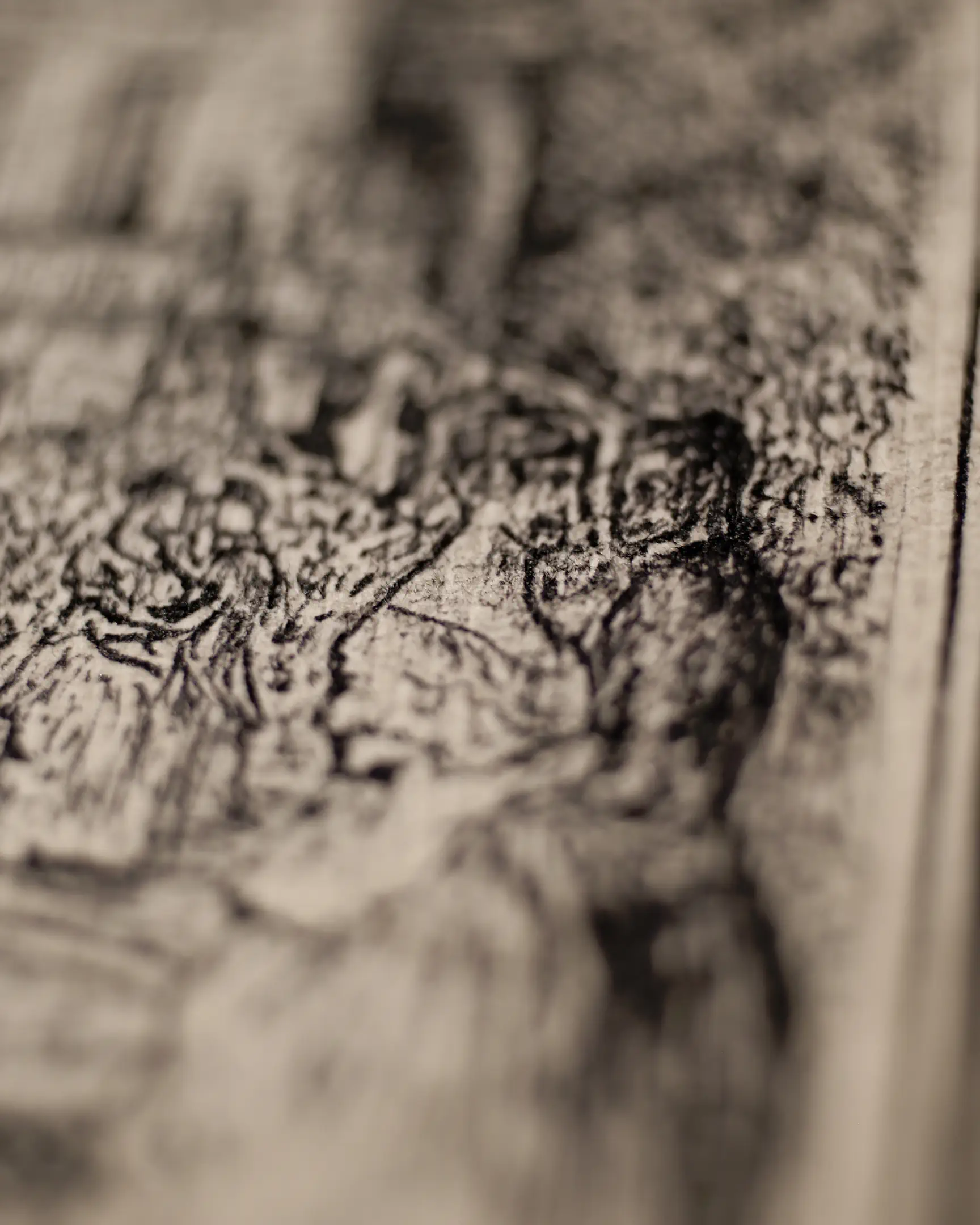
The deliberately “hasty” and expressive manner of the sketch, with its raw, rapid lines and unrefined shadows, is a conscious nod to the artistic traditions of the 19th century. In that era, such sketches were the heartbeat of creative life, found in the private travel albums of the aristocracy and the preparatory studies of the masters. This unpolished aesthetic grants the work the soul of a rediscovered artifact, making the scene feel immediate, intimate, and lived-in, rather than a frozen, formal portrait. The heavy, ornate frame provides a sacred contrast, elevating this “rough” cover sketch into a profound object of art and bridging the gap between the ephemeral moment and the permanence of history.