VSELÉNSKYI

SPAZIO D’ARTE

PANE NERO

$18,600.00 (tax included)

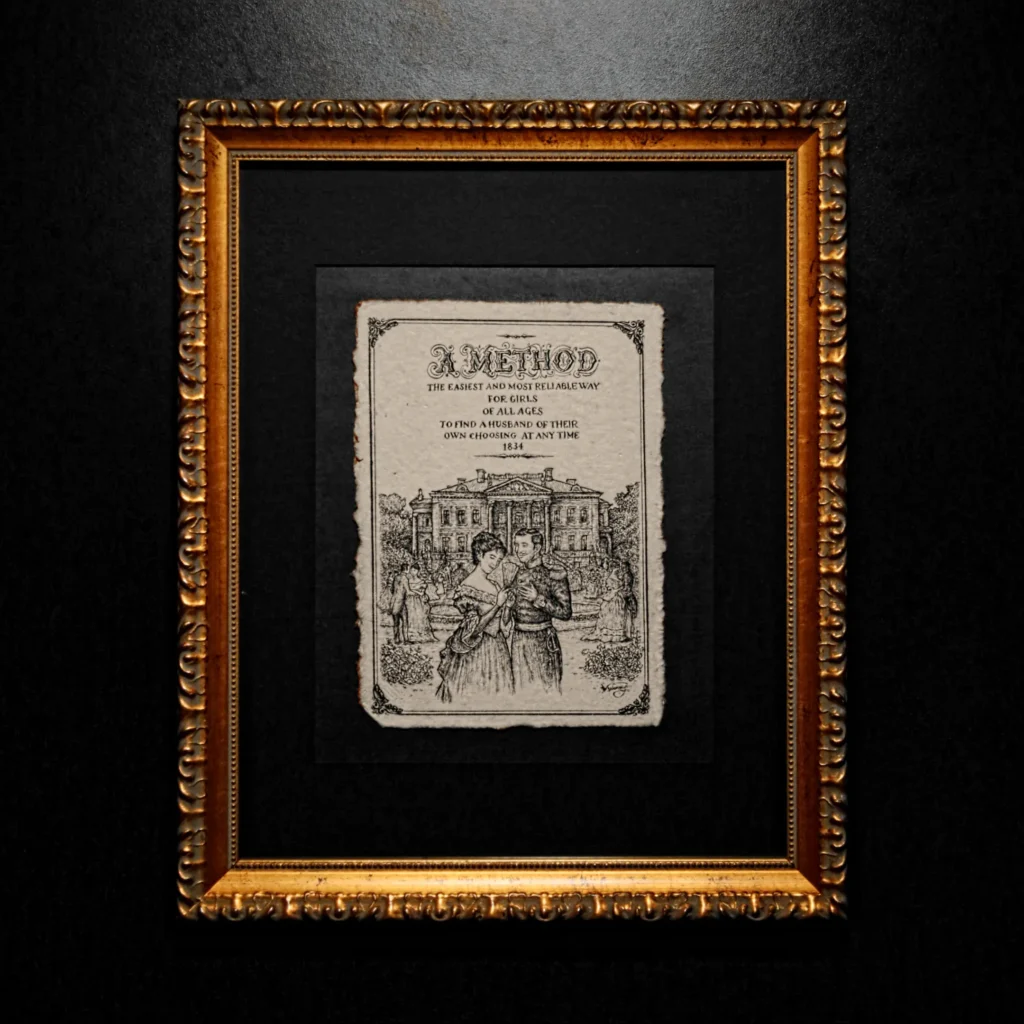
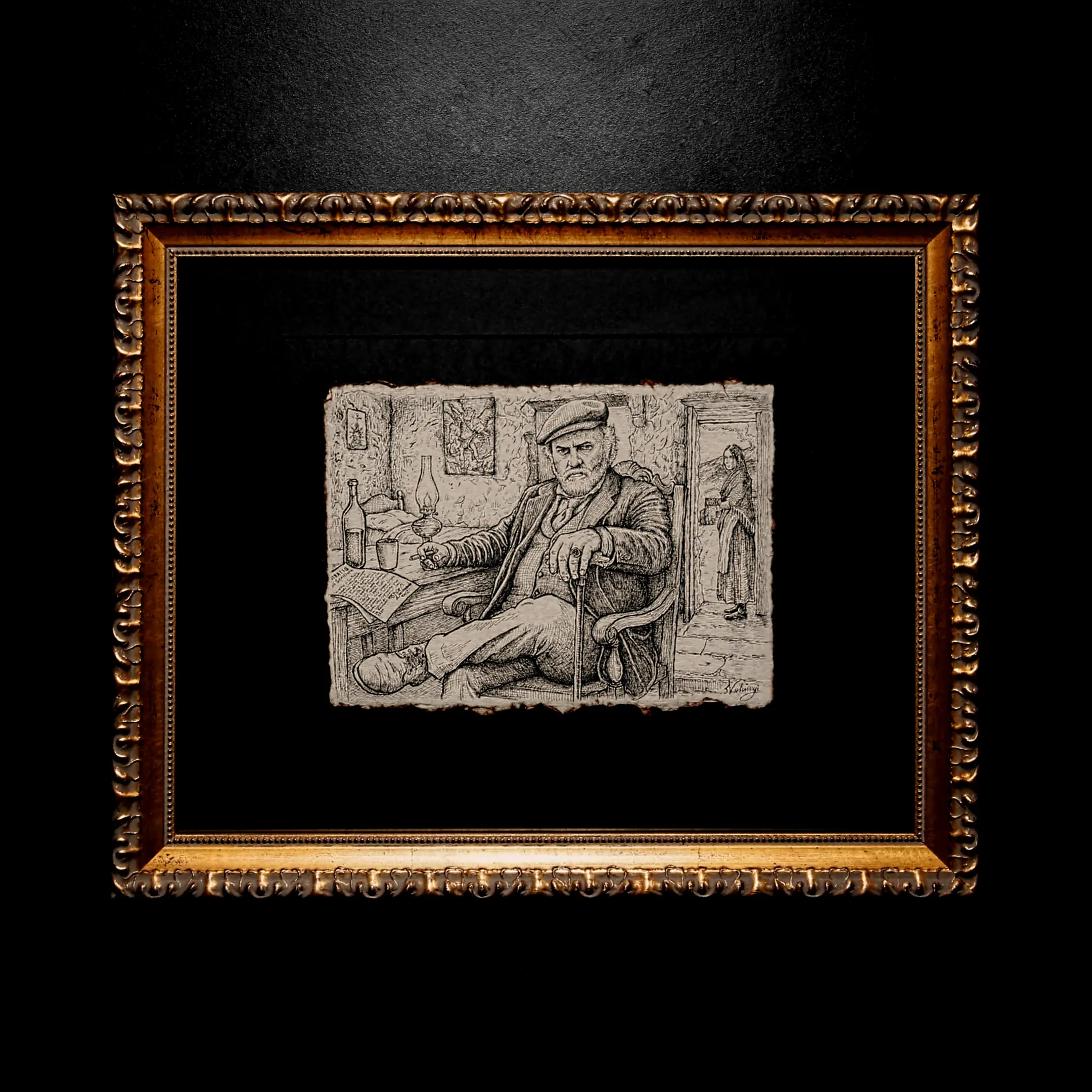
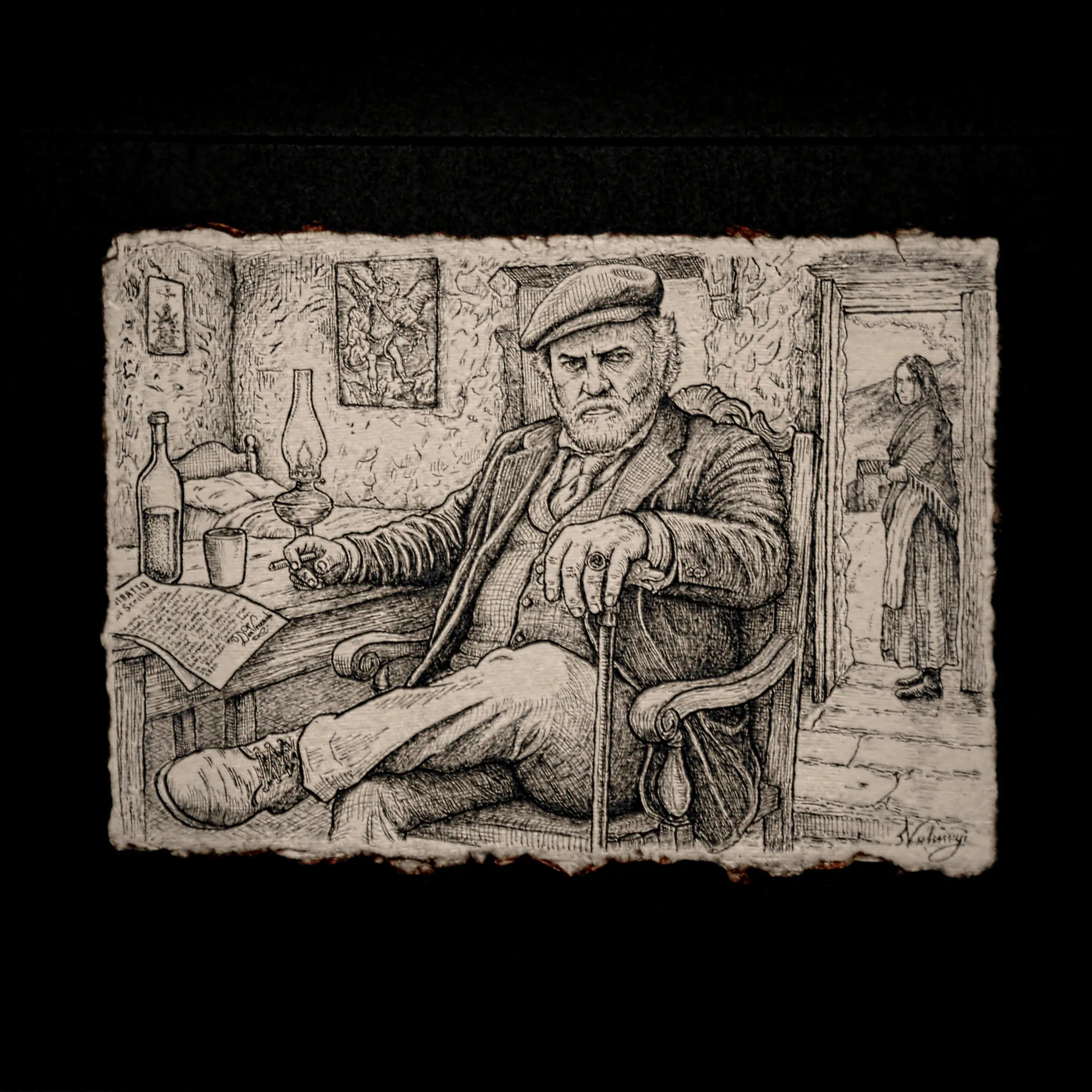
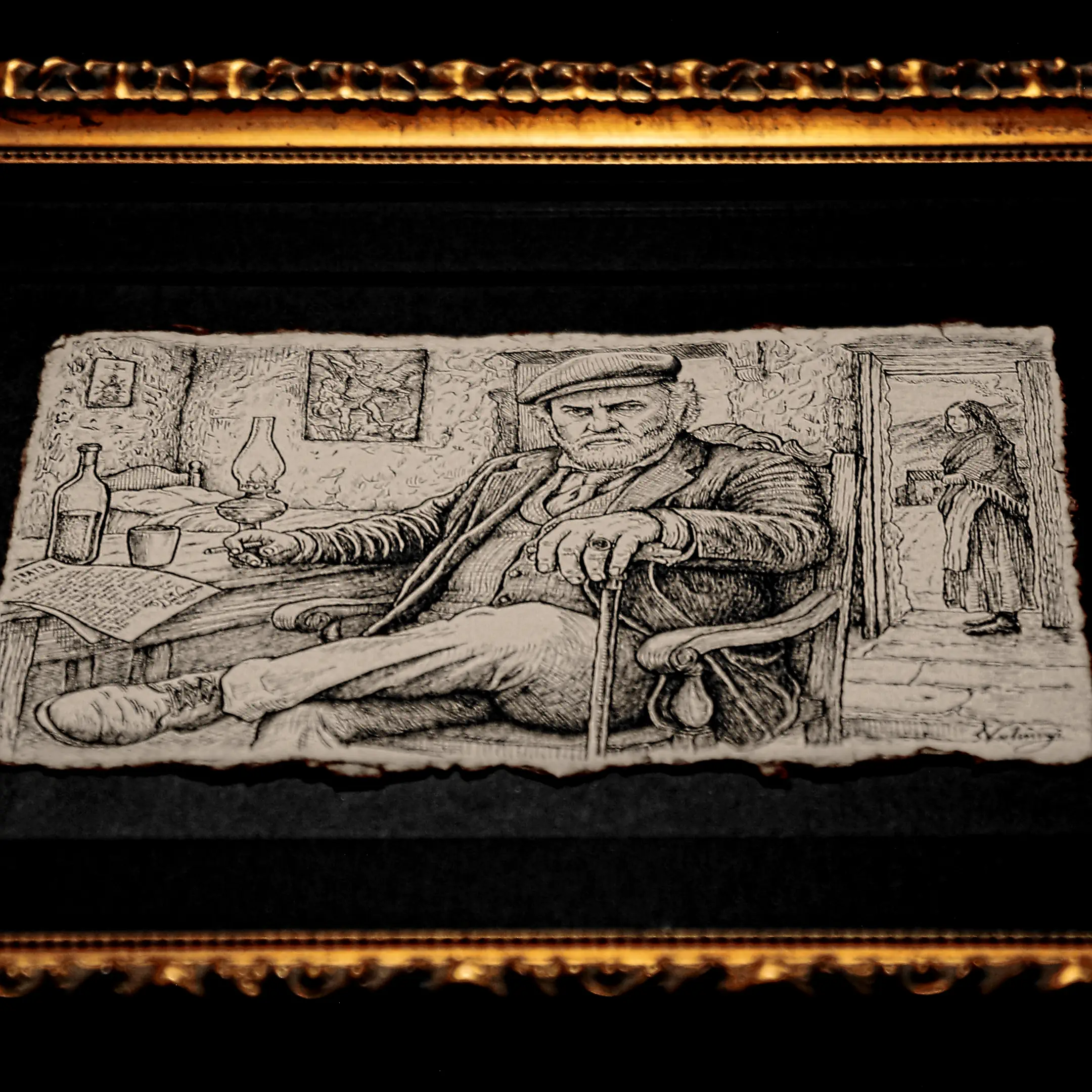
A unique portrait of raw, enduring authority. The subject is Don Fernando from the novella ‘Pano Nero’ by Giovanni Verga. Rendered on heavy 300 gsm handmade paper with iron gall ink and a dip pen, this singular object anchors the viewer with a gaze of absolute certainty. The composition includes 19th-century Sicilian icons and a finalized contract – a visible, undeniable pact of intent. Zero corrections were allowed; every mark is an irreversible statement of finality. Fully encased in a museum-grade archival housing for a century of display.

SKU: 854
Category:
Brands:

Technical Profile


Attributes Value
Contents:

• Original Ink Art Object · Professionally mounted on a museum-grade archival backing using traditional wheat starch and japanese paper hinges (reversible mounting)
• The Literary Volume · Vselenskyi’s "Sicilian History," featuring a comprehensive analysis and the complete translation of Giovanni Verga’s "Pane Nero"
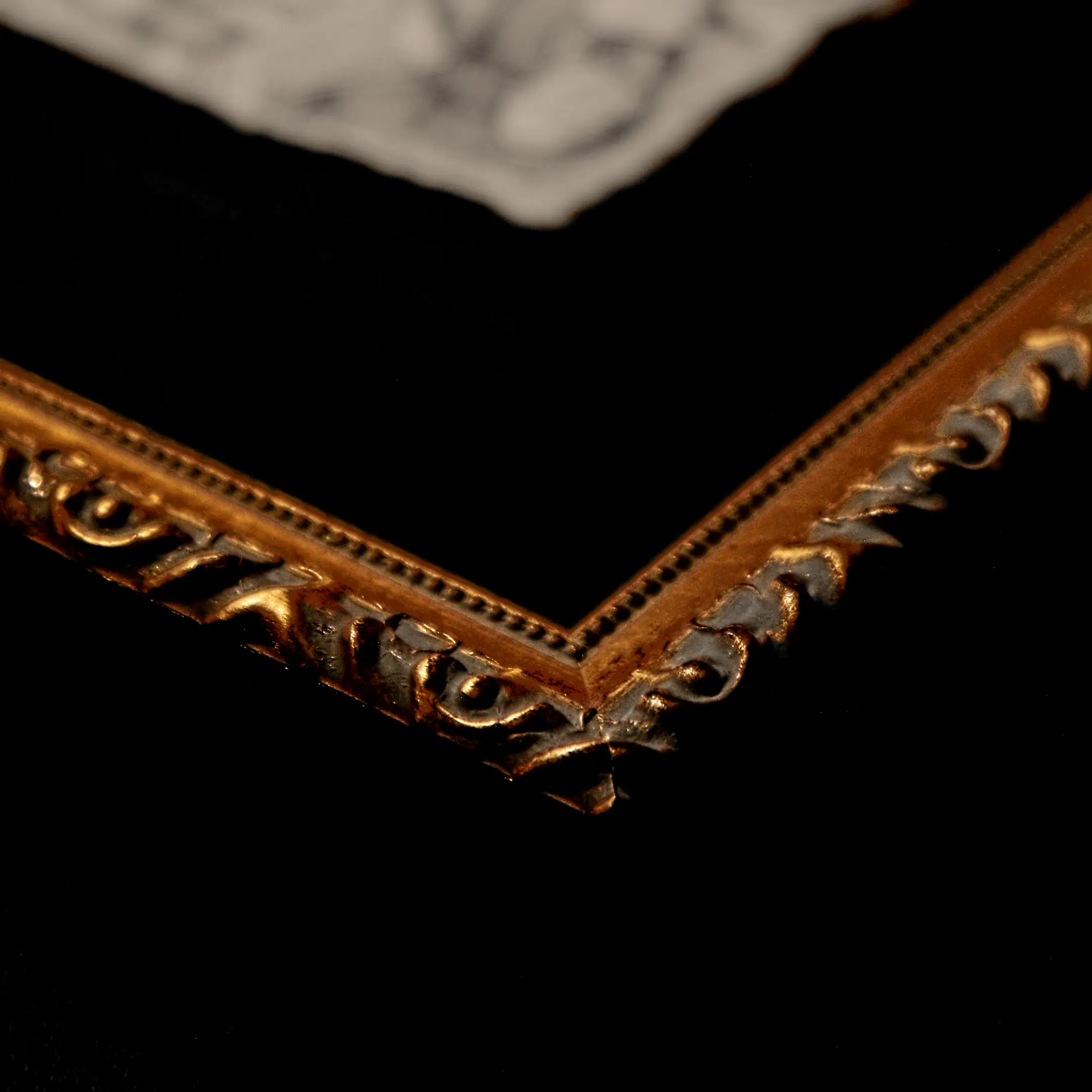
• Archival Housing Kit · Handcrafted artisan baguette with Museum-grade UV-filter glass and a neutral-pH black mount (passe-partout).
• Certificate of Authenticity · A formal document confirming the provenance and uniqueness of the work.
• The Cinematic Chronicle · A 40-minute "Making of" short film delivered on a physical SD card.
• Restoration & Reversal Protocol · A detailed guide on the archival mounting technique and instructions for safe removal of the artwork from its backing without damage.
• Assembly & Preservation Guide · Step-by-step instructions for the final assembly of the frame and recommendations for long-term display.

Specifications:

• Sketch Size: 5 x 9 in, 12.7 x 22.8 cm
• Frame Size: 11 x 14 in, 27.9 x 35.5 cm
• Weight: 1 kg, 2.2 lbs

Materials & Origin:

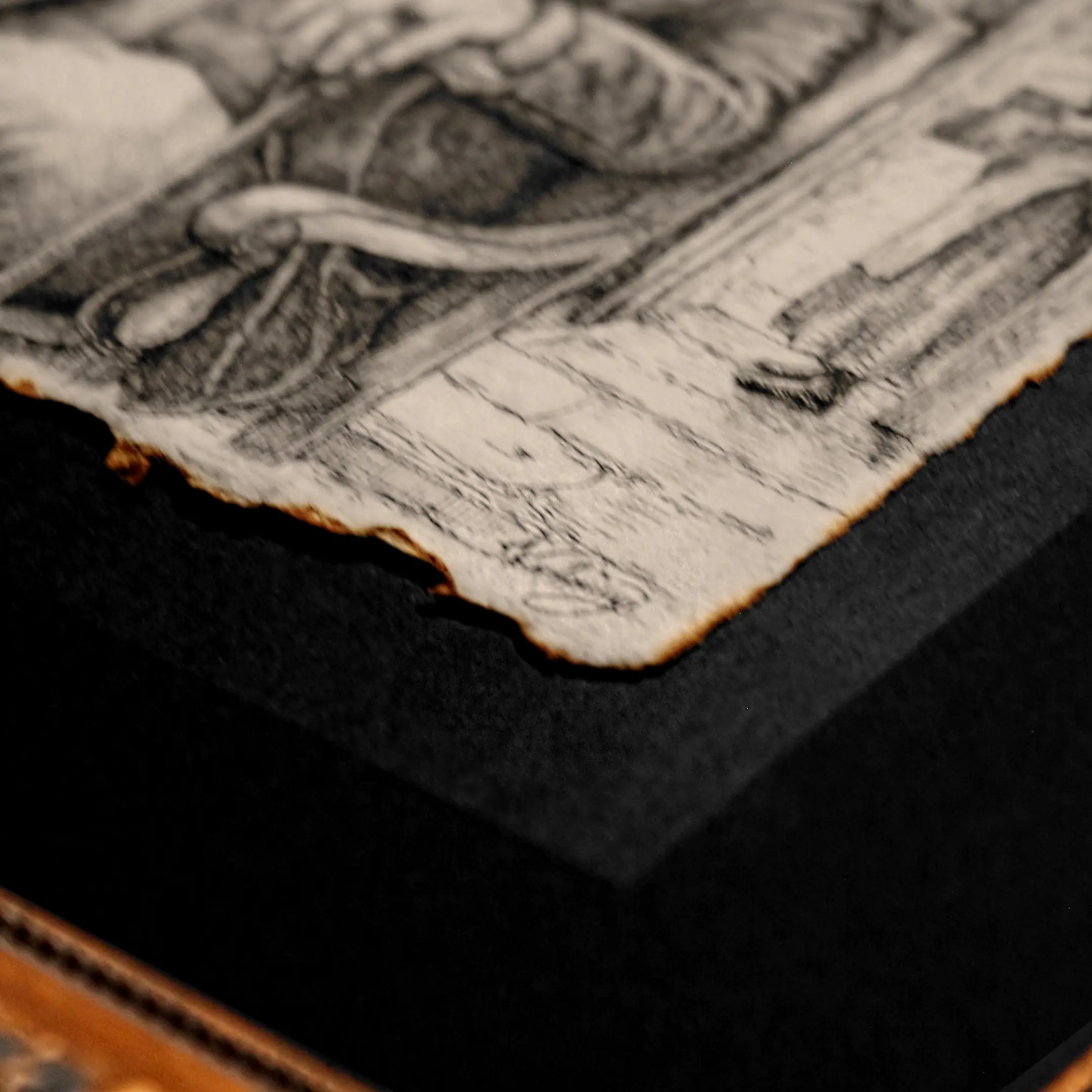
• Paper: 300 gsm Handmade Paper (India)
• Frame: Handcrafted Artisan Baguette (Estonia)
• Ink: Authentic Iron Gall Ink (Traditional 19th-century formula)

Style & Artistry:

• Technique: Classic dip pen and ink sketching.
• Originality: A unique, signature composition by the artist.
• Exclusivity: A singular work of art; one of one.
• Heritage: Executed in strict adherence to authentic 19th-century artistic traditions.
• Provenance: Anno Domini 2026.

Longevity:

• 100-Year Archival Display Guarantee (Under UV-protected conditions)


HISTORY OF ART OBJECT

PANE NERO


“19th-Century Sicily with the Bitterness of Lemon”

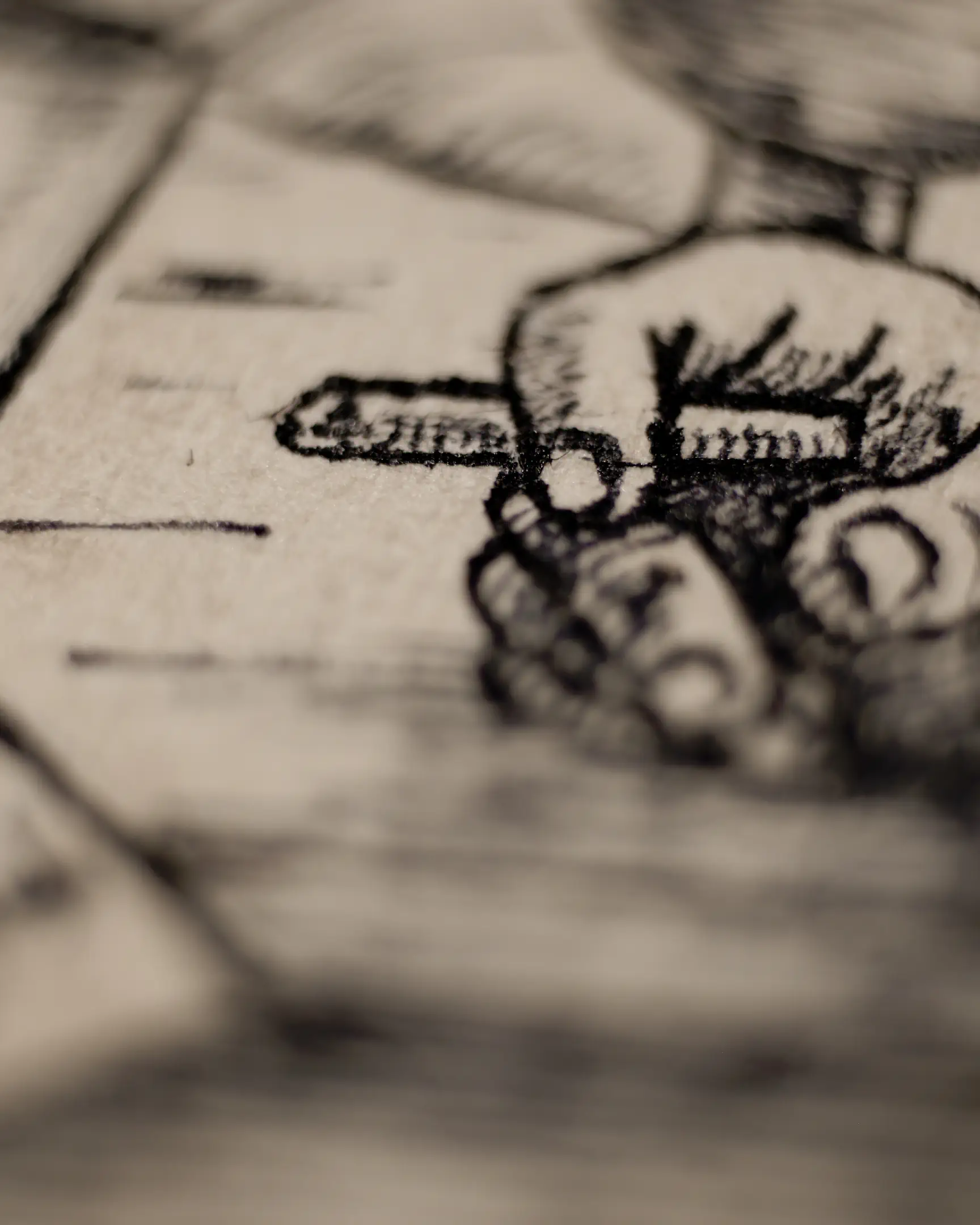
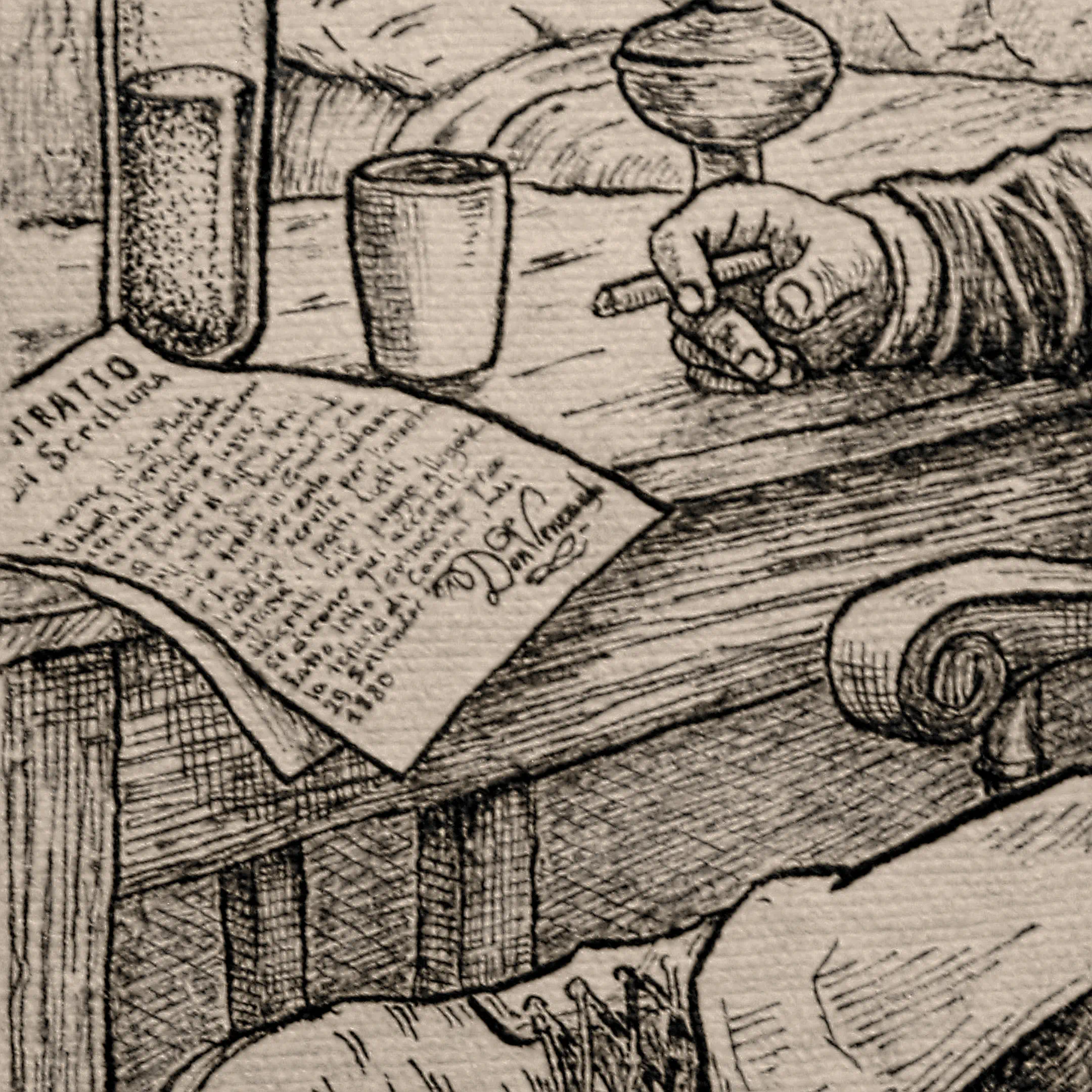
ink detail of a handwritten document and signature on a table next to a glass and cigar in the pane nero artwork
Don Venerando in Vselenskyi’s painting, inspired by Verga’s ‘Pane Nero’

The Grandeur of the Don

This is one of Vselenskyi’s most profound works, executed with ink prepared according to a 19th-century recipe. This is an authentic masterpiece, created using a traditional dip pen and ink with no preliminary pencil sketches. Every mark on the paper is pure ink – waterproof iron gall ink applied with a 19th-century French nib. A singular, handcrafted original, it serves as the fourth and final work in the artist’s MONUMENTA collection.

The painting offers a visual meditation on Giovanni Verga’s “Pane Nero” (Black Bread), set in Sicily in 1880. Late 19th-century Sicily is a space frozen in time, where the dazzling Mediterranean sun contrasts with the deep shadows of social injustice. It is a land of rugged cliffs and scorched fields, where ancient traditions of honor and faith intertwine with harsh economic realities. In the 1880s, the island endured an era of transition while remaining under the rule of unspoken laws and a centuries-old order where land was the only measure of life and death.

At the heart of the composition is a Sicilian farm estate where we see Don Venerando, the embodiment of local authority. His expensive boots, jacket, tie, and cane speak to his power and the path he has traveled. One can read notes of arrogance and self-assurance in his features, yet they rest on a solid foundation of wealth. At the same time, Don Venerando is not a wasteful man – he counts every coin. Thus, his estate appears modest for a man of such means, a testament to his austere functionality.
The estate is a fortress of practicality. Thick stone walls designed to hold the cool air are devoid of excessive decor. Every object serves a purpose: the darkened, hand-hewn ceiling beams and humble furnishings emphasize a character for whom luxury is not found in gilding, but in the right of ownership over every stone and every ear of grain.
ink detail of a handwritten document and signature on a table next to a glass and cigar in the pane nero artwork
19th-century Sicily in the finest detail

The Sicilian Household Way of Life

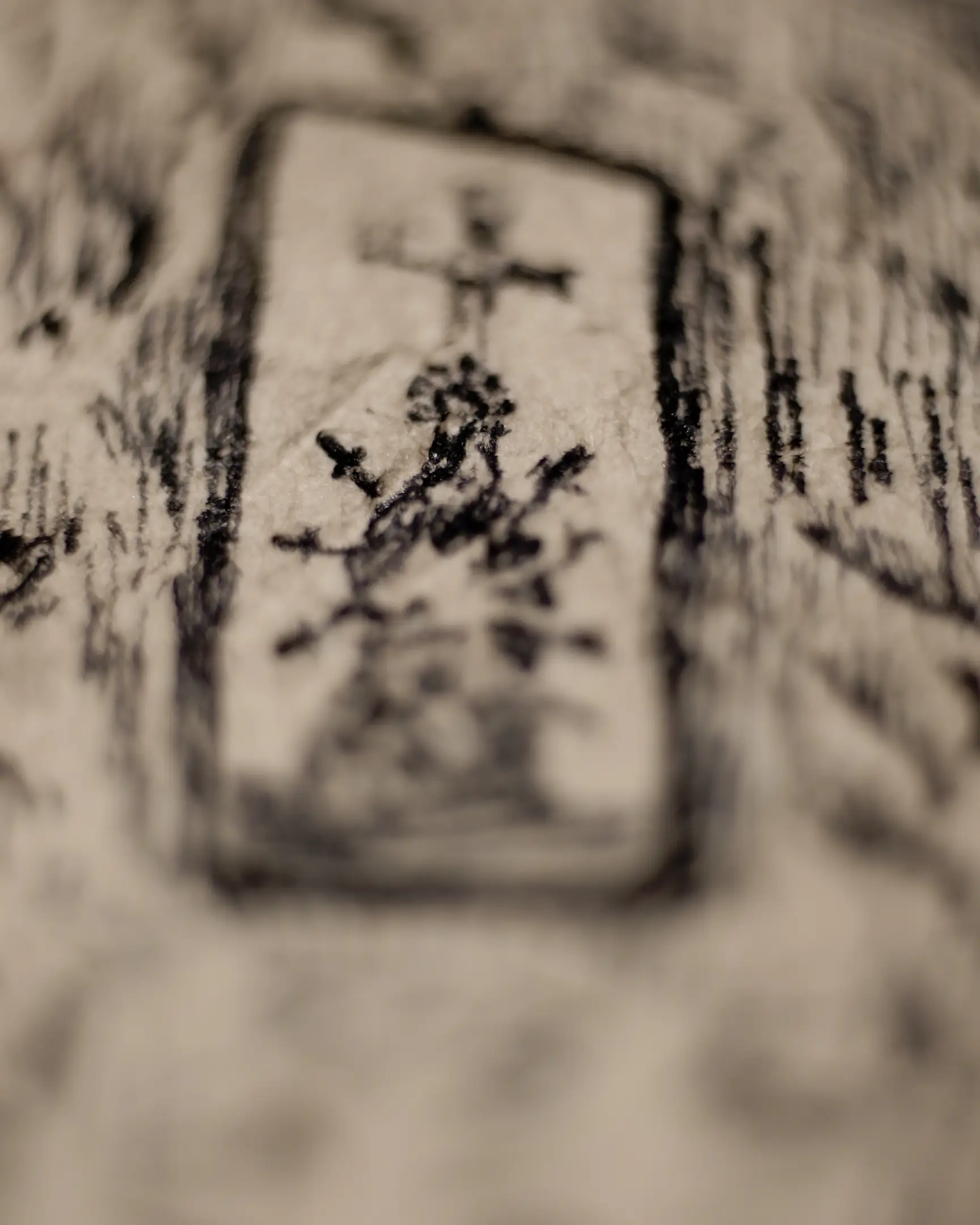
The room contains a bottle of wine, a kerosene lamp, and two traditional Sicilian icons. To the left is the Sorrowful Mother (Mater Dolorosa), and to the right, Archangel Michael trampling Satan. Their presence is a manifesto of the Don’s worldview. The Mater Dolorosa represents the acceptance of suffering, which serves as the padrone’s justification for the hardship of his servants. Archangel Michael symbolizes the triumph of order over chaos and the iron hand of authority. Hanging beside the contract, these images transform a mundane deal into a form of divine predestination.
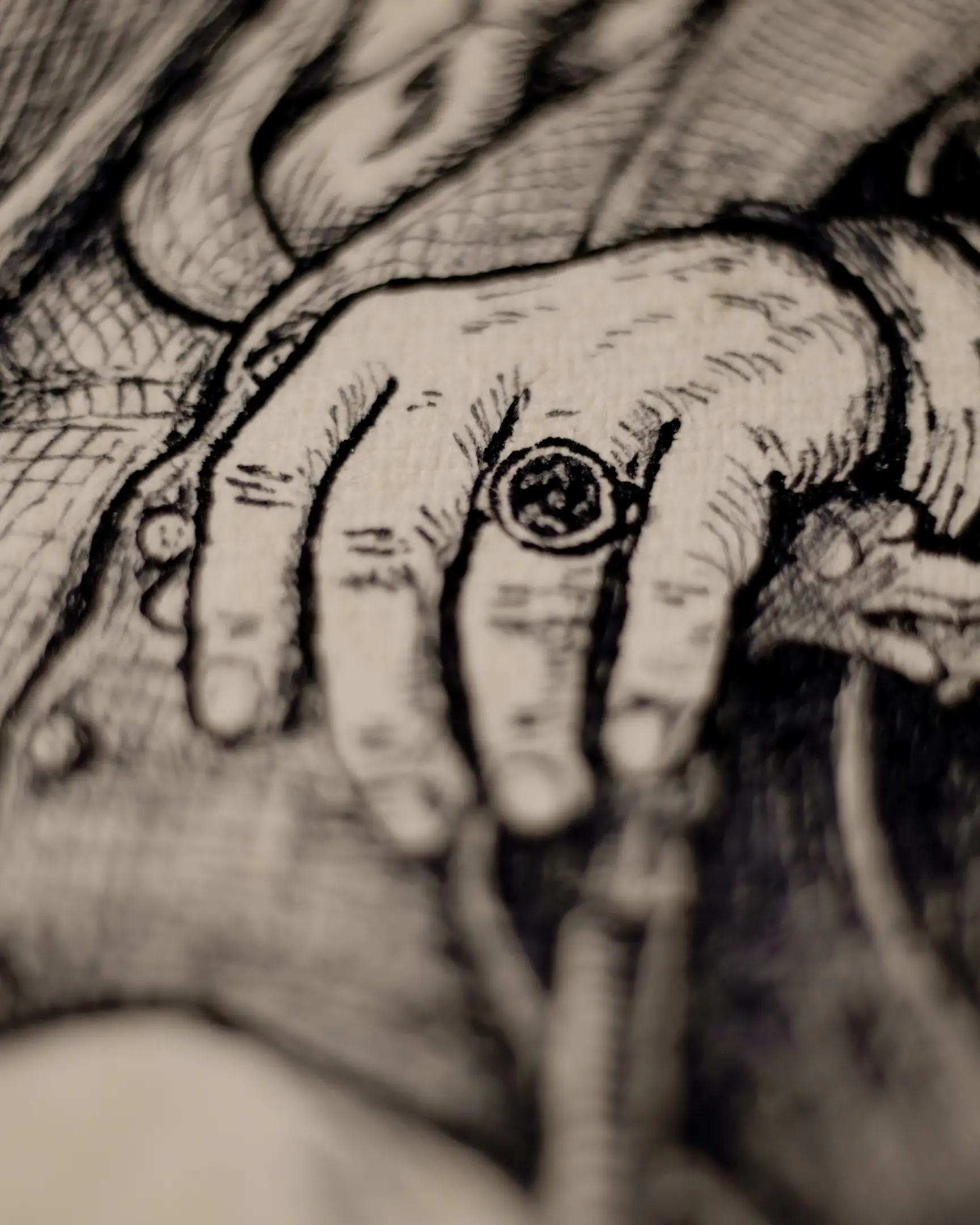
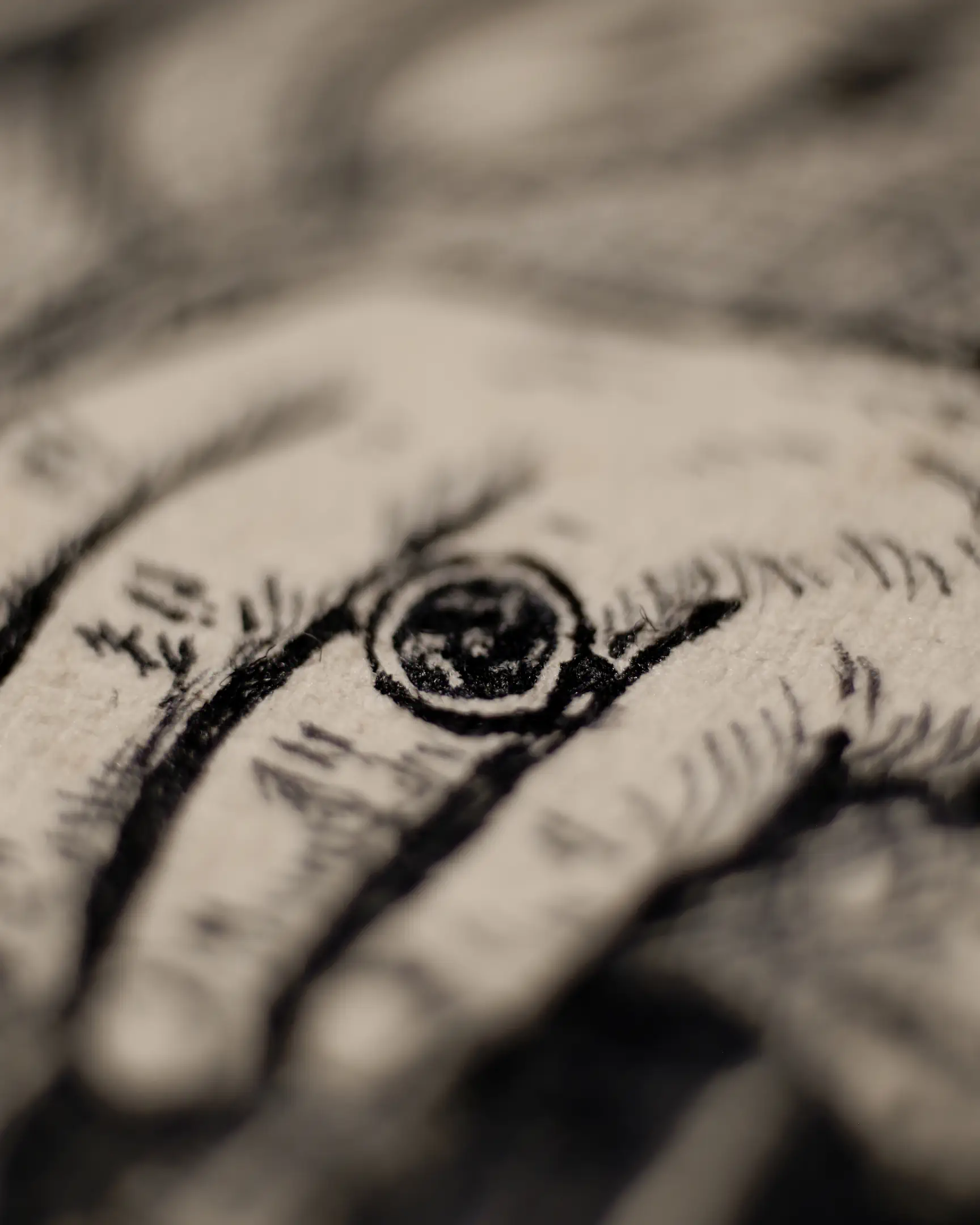
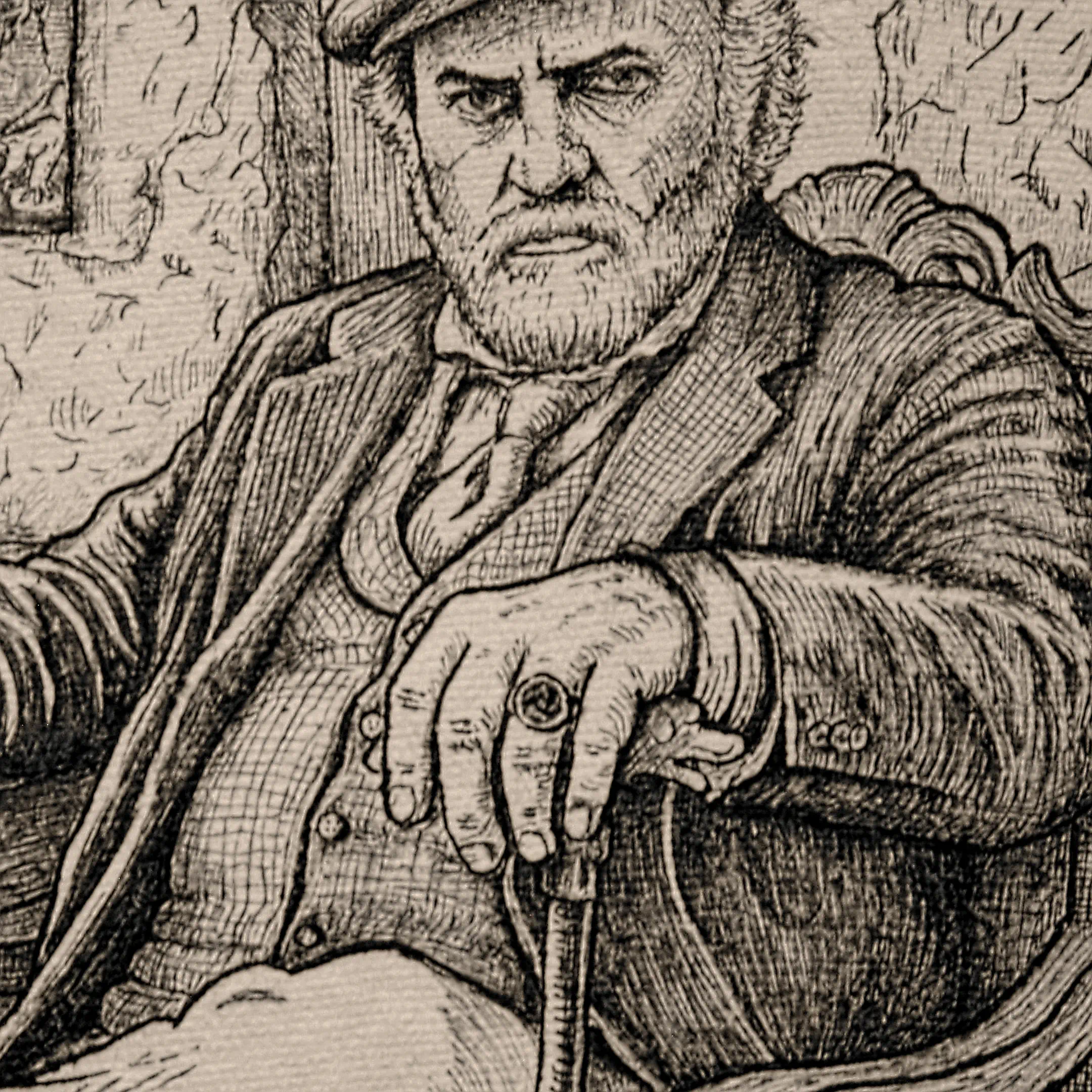
On Don Venerando’s finger is a ring bearing the “Sicilian Trinacria.” This ancient symbol of Medusa’s head with three running legs signifies eternal movement and protection. It serves as a seal of his connection to the roots, myths, and rugged nature of the island.
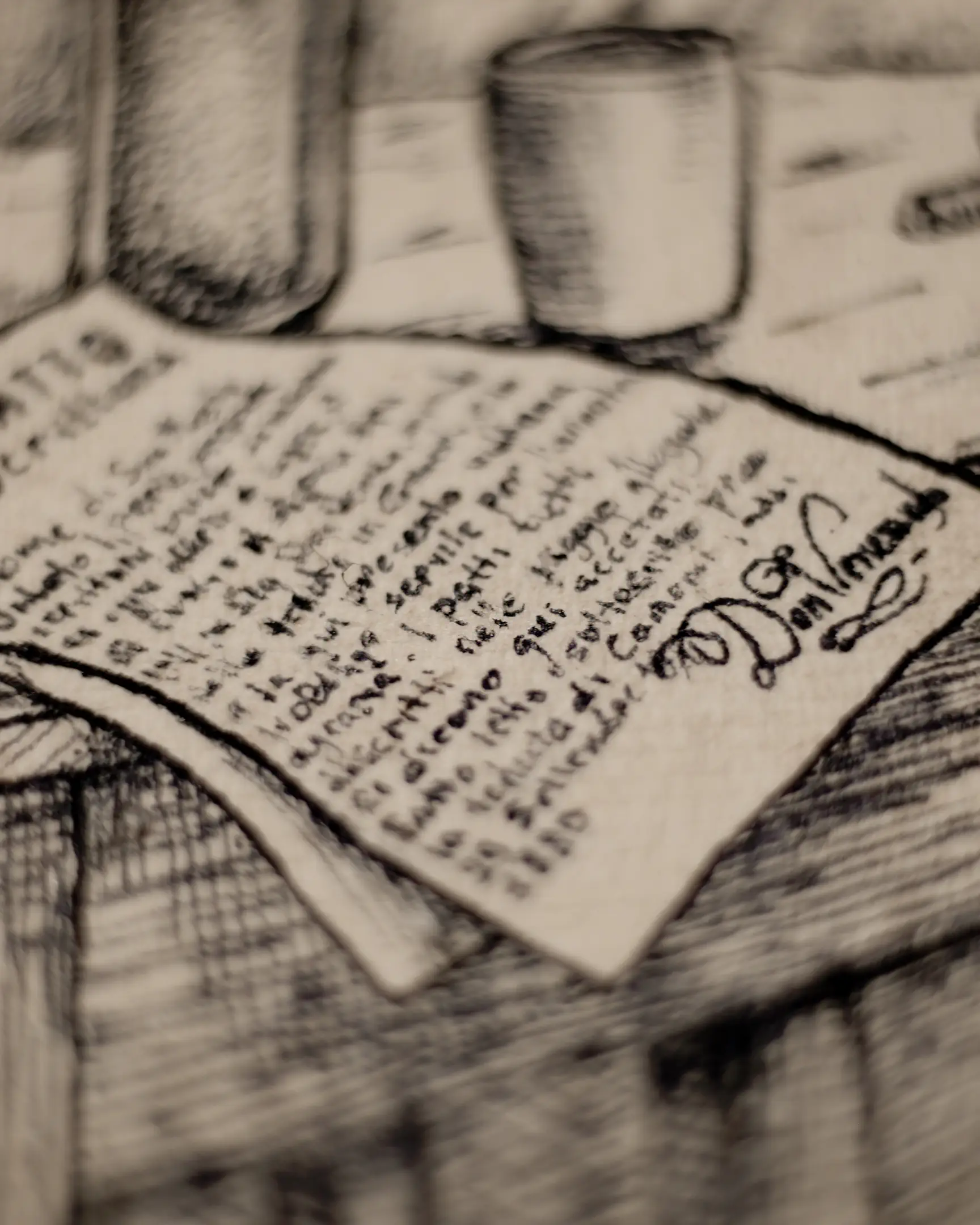
ink detail of a handwritten document and signature on a table next to a glass and cigar in the pane nero artwork
Attention to historical fact in Vselenskyi’s works

The Duality of the Painting

This work captures the atmosphere of 1880s Sicily – the social inequality and the struggle for survival. It is a study of duality in all things:
Duality in wealth and austerity
Duality in the predatory contract and the will to survive
Duality in authority and compassion
Duality in the silence of the room and the storm of internal decisions
Duality in the sanctity of icons and the ruthlessness of the deal
Duality in the fragility of paper and the eternity of the ink trace

Acquisition Details: This work is offered as a complete set, including: the original drawing in a professional frame with assembly and care instructions, a certificate of authenticity, a 40-minute documentary film on a memory card, and Vselenskyi’s book “Sicilian History,” featuring a full analysis and translation of Giovanni Verga’s “Pane Nero.”
Should you require custom framing, a light-colored frame, or a vertical format, please let us know. We specialize in a strictly individual approach.

GALLERY

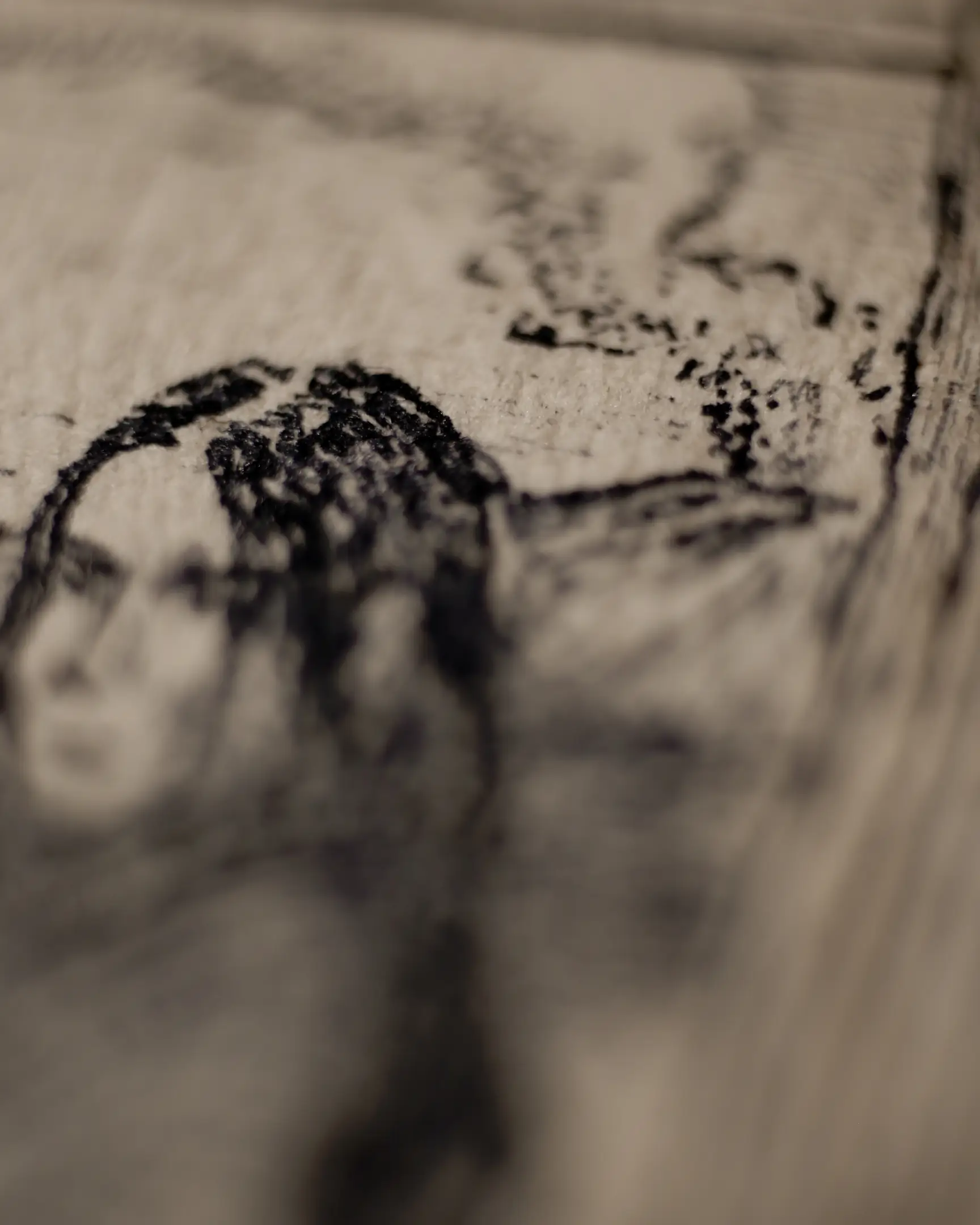
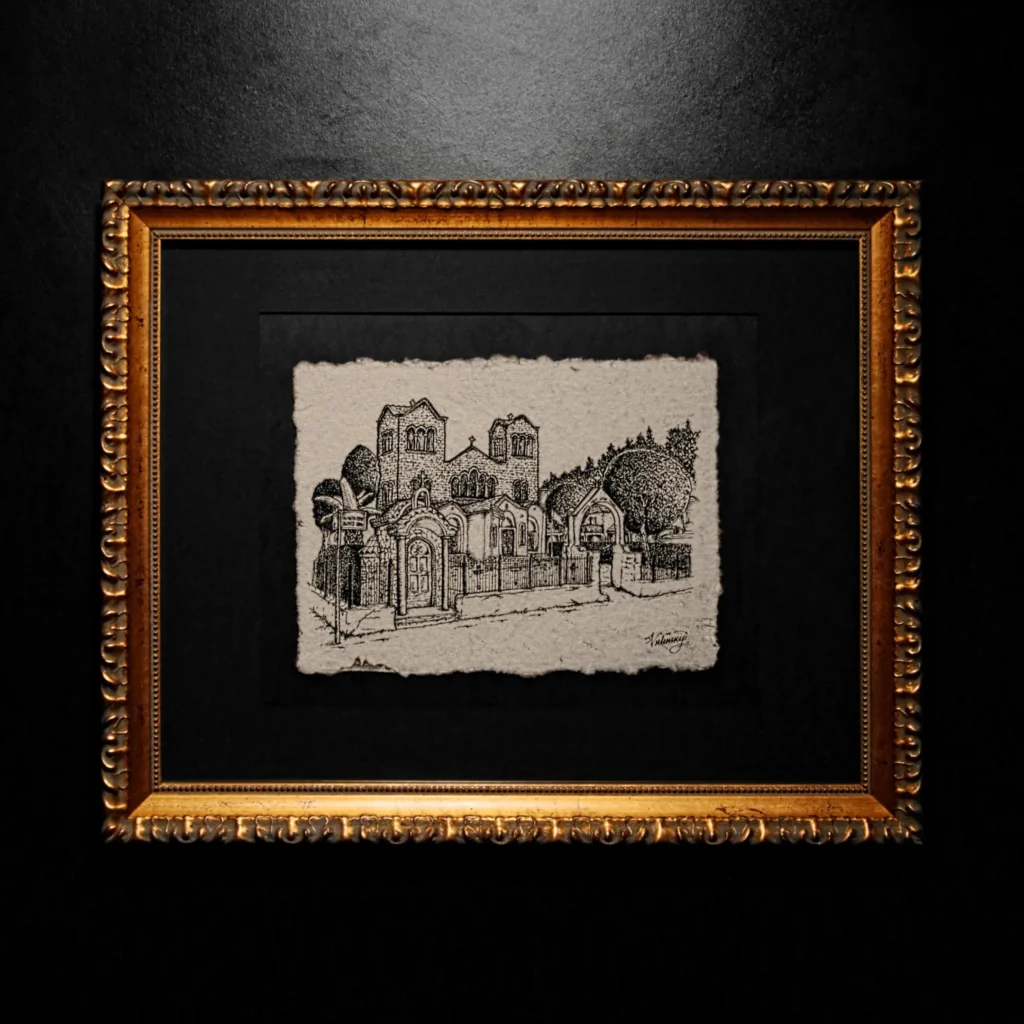
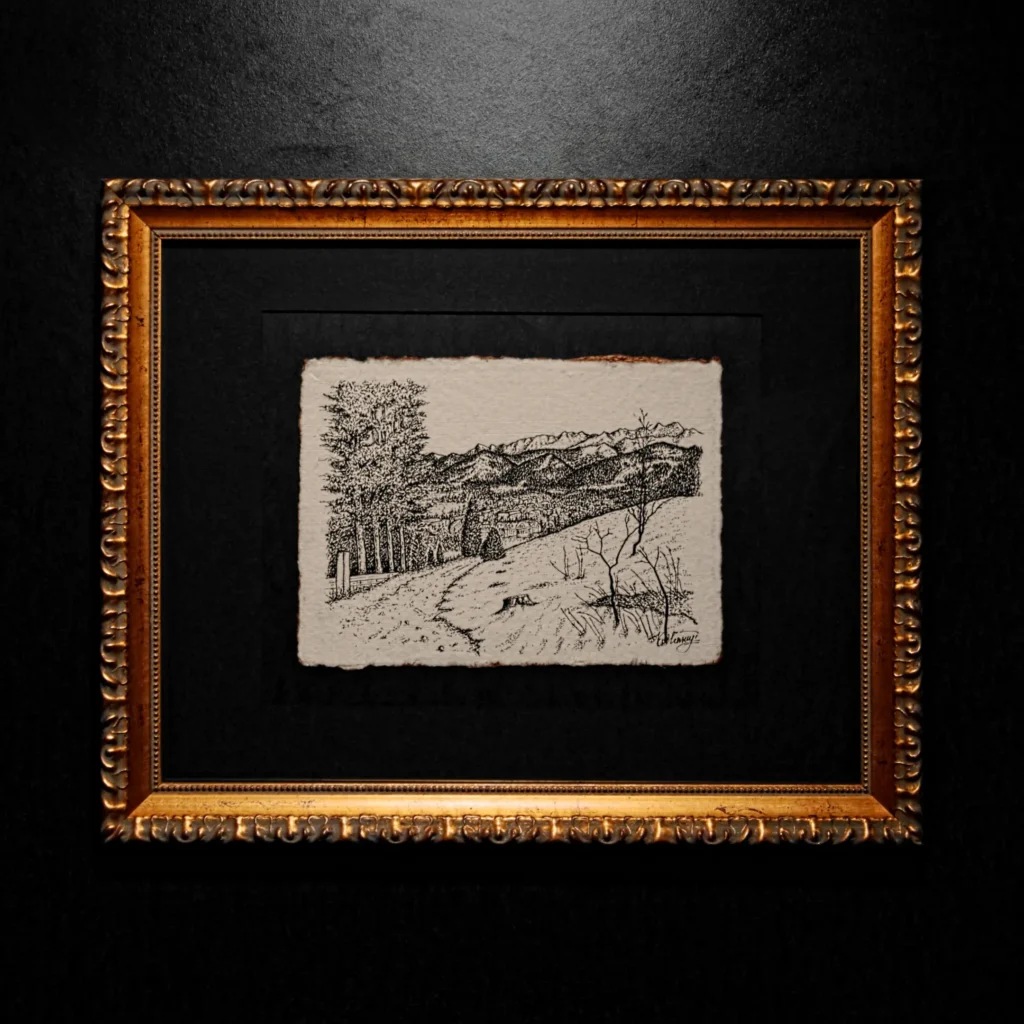
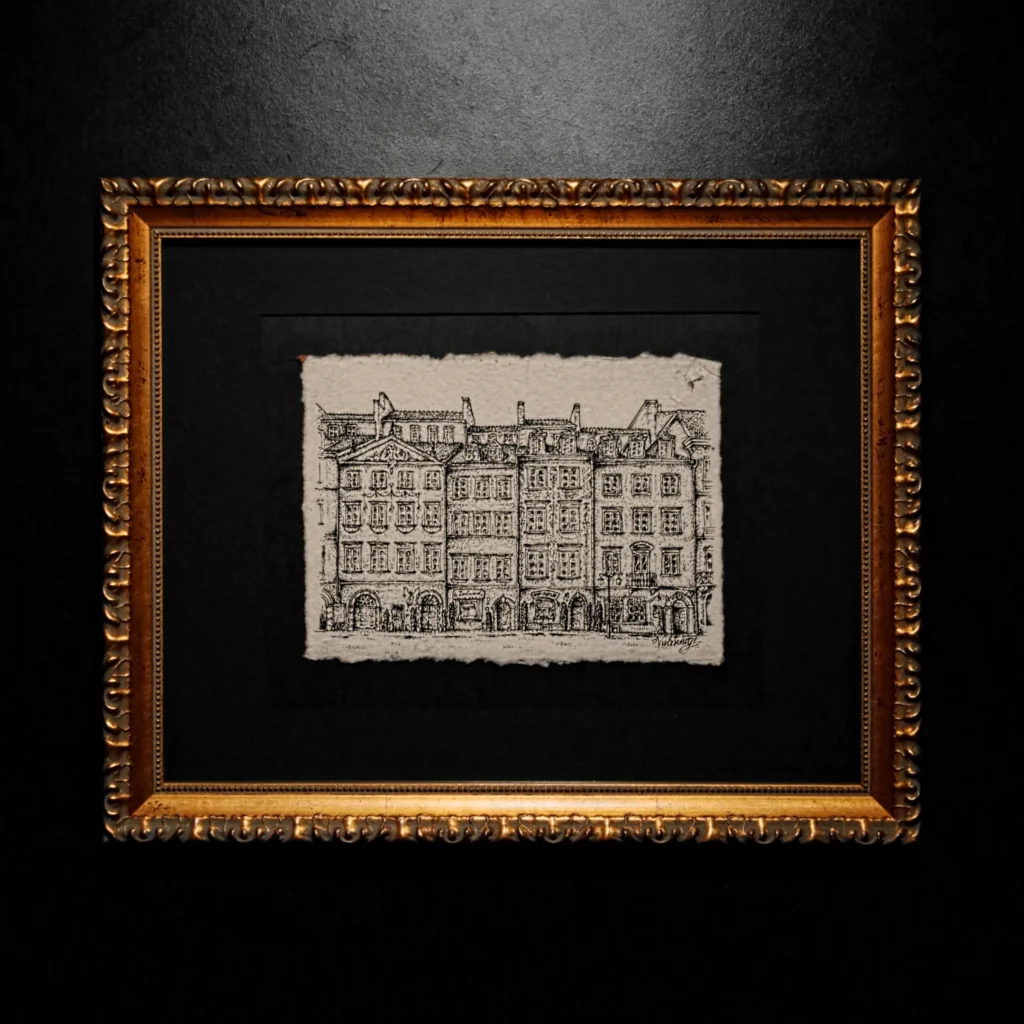
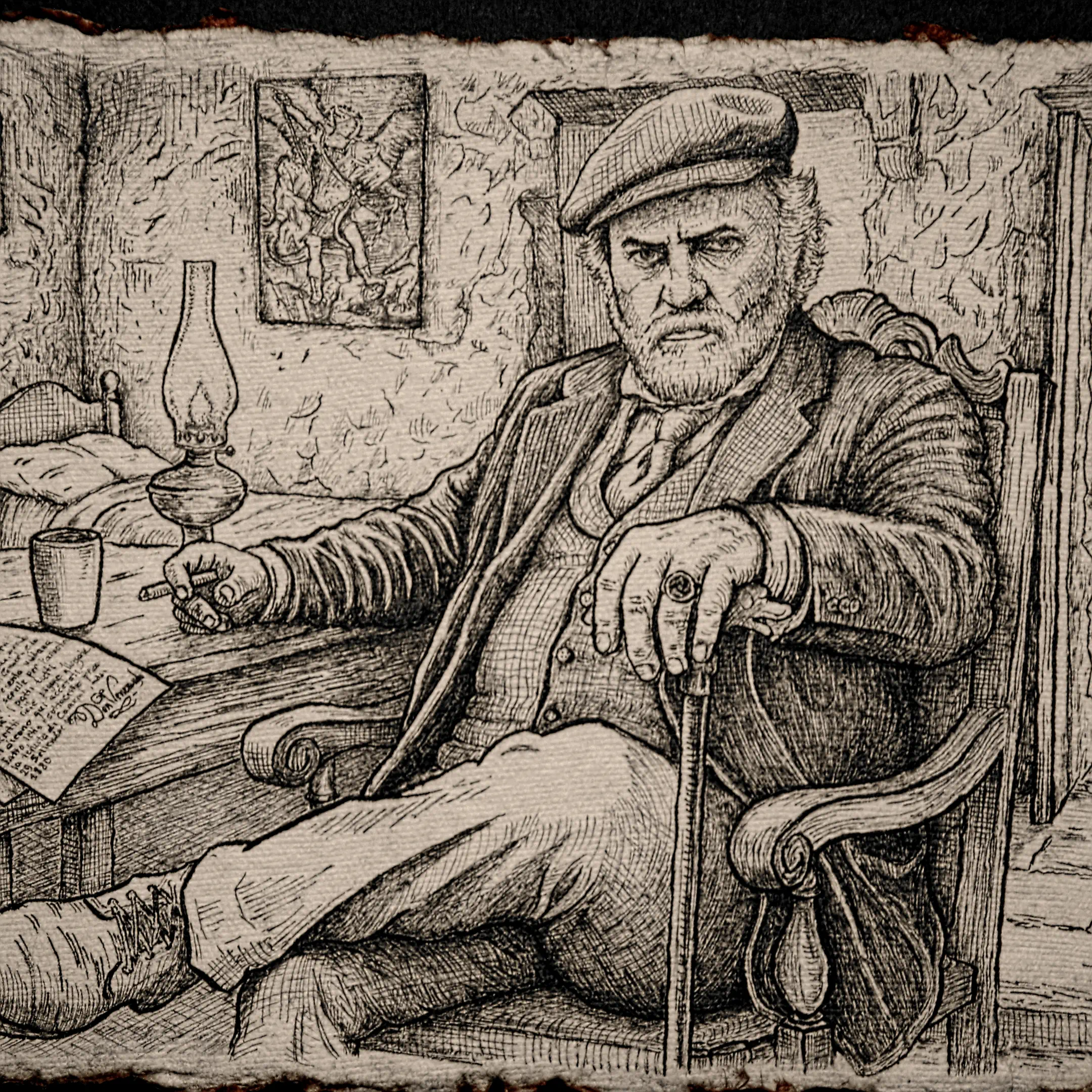
This fine art piece is executed with traditional dip pen techniques on deckle-edged paper. The dramatic black mount and ornate classical frame elevate the rustic subject matter, emphasizing the "museum-quality" presentation of the VSELÉNSKYI® brand.This close-up highlights the meticulous cross-hatching and line work characteristic of traditional etching styles. The deckle-edged paper adds an organic, archival feel to the composition, evoking the spirit of a vintage illustration from the era of Italian Verismo.This fragment showcases masterful steel pen technique. Varying densities of cross-hatching create volume and depth, while focused details like the signet ring and cane handle emphasize the character's social standing within the framework of historical realism.This detailed photograph allows the viewer to appreciate the artist's skill in rendering distinct textures using only pen and ink: the coarse wool of the jacket, the aged skin of the hand with its veins, and the hard wood of the cane. Intense hatching emphasizes the physicality of each object.This close-up showcases the artist's mastery of the vintage dip pen. The text on the paper mimics 19th-century handwriting, which, combined with the skillful depiction of glass surfaces and wooden textures, creates an immersive experience of the Verismo era.This three-quarter perspective shot emphasizes the collectible quality of the piece. It illustrates how the graphic sheet interacts with the deep black mount and the classical frame, creating a striking "museum-quality" visual presence.This close-up showcases the intricate gilding and texture of the frame selected for "Pane Nero." The combination of a deep matte mount and gleaming metal creates a prestigious, museum-like setting for the delicate cabinet-style ink drawing.
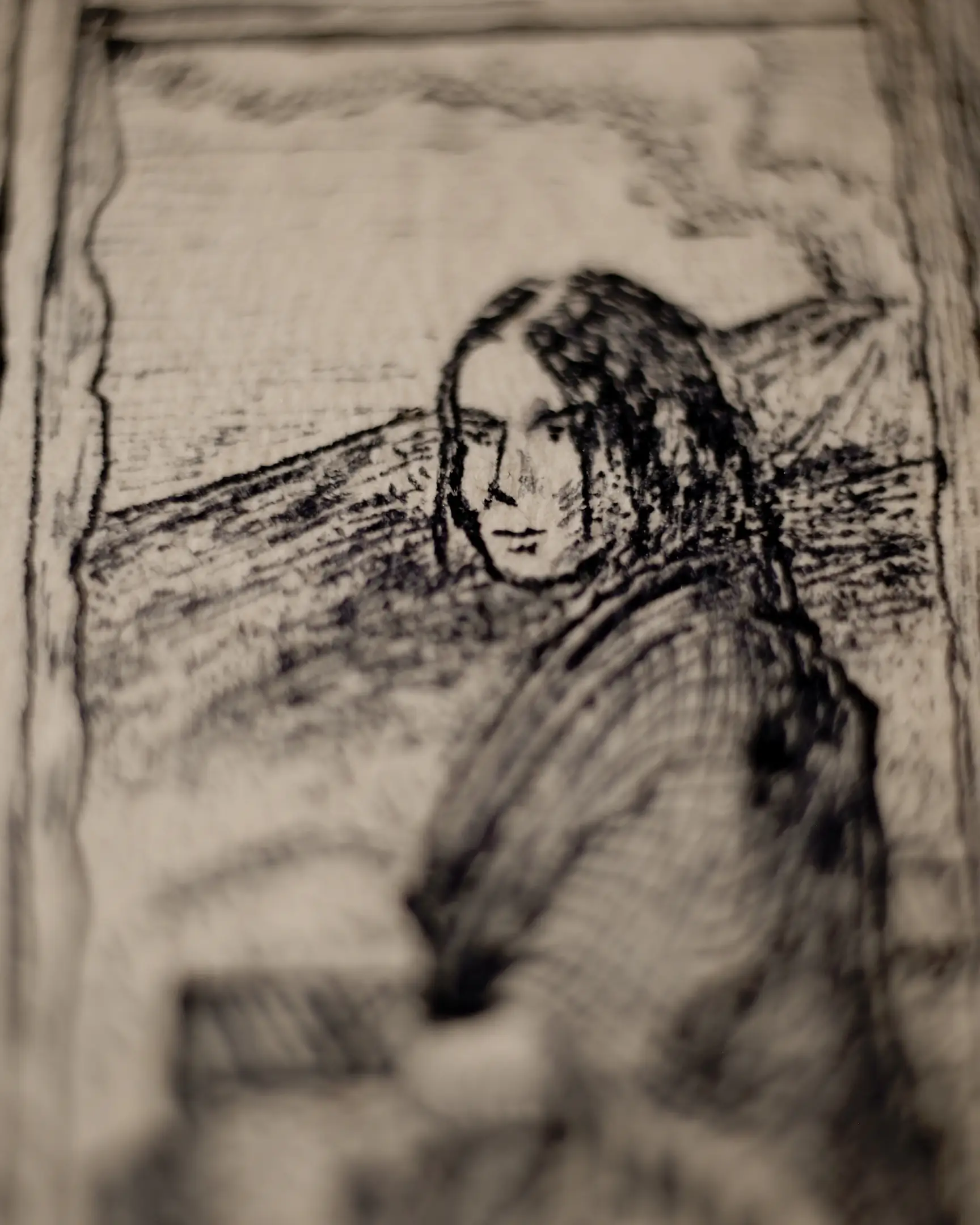
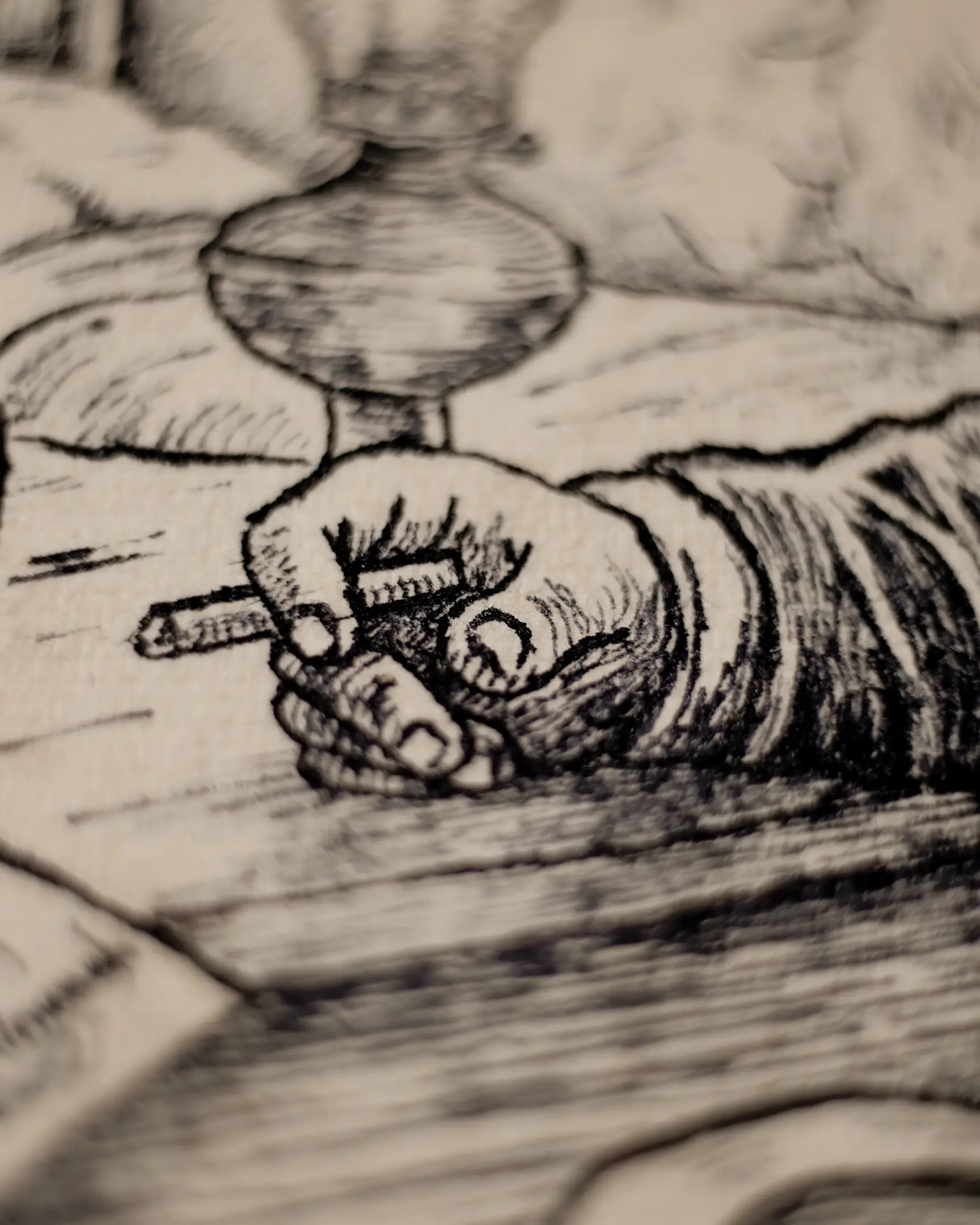
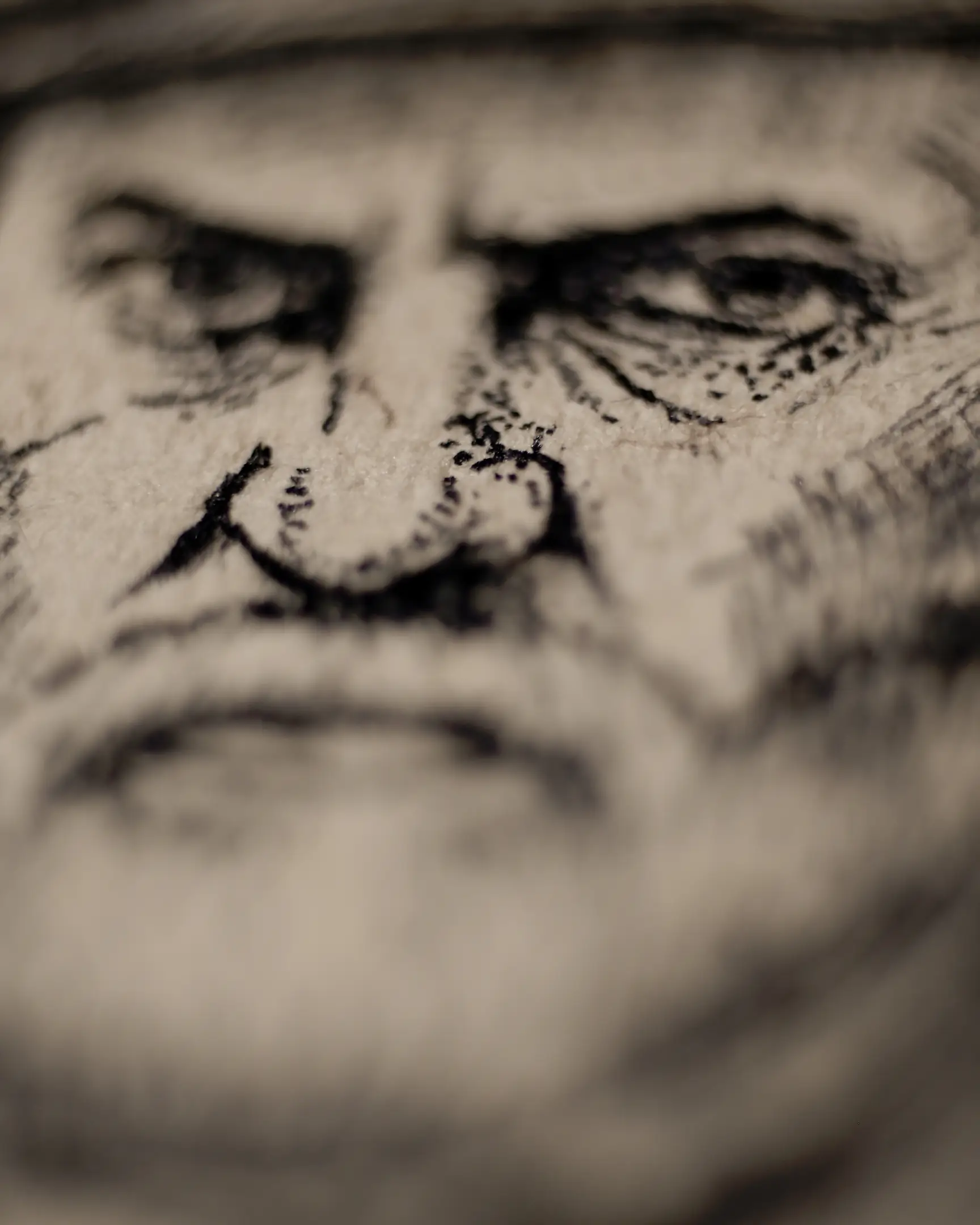
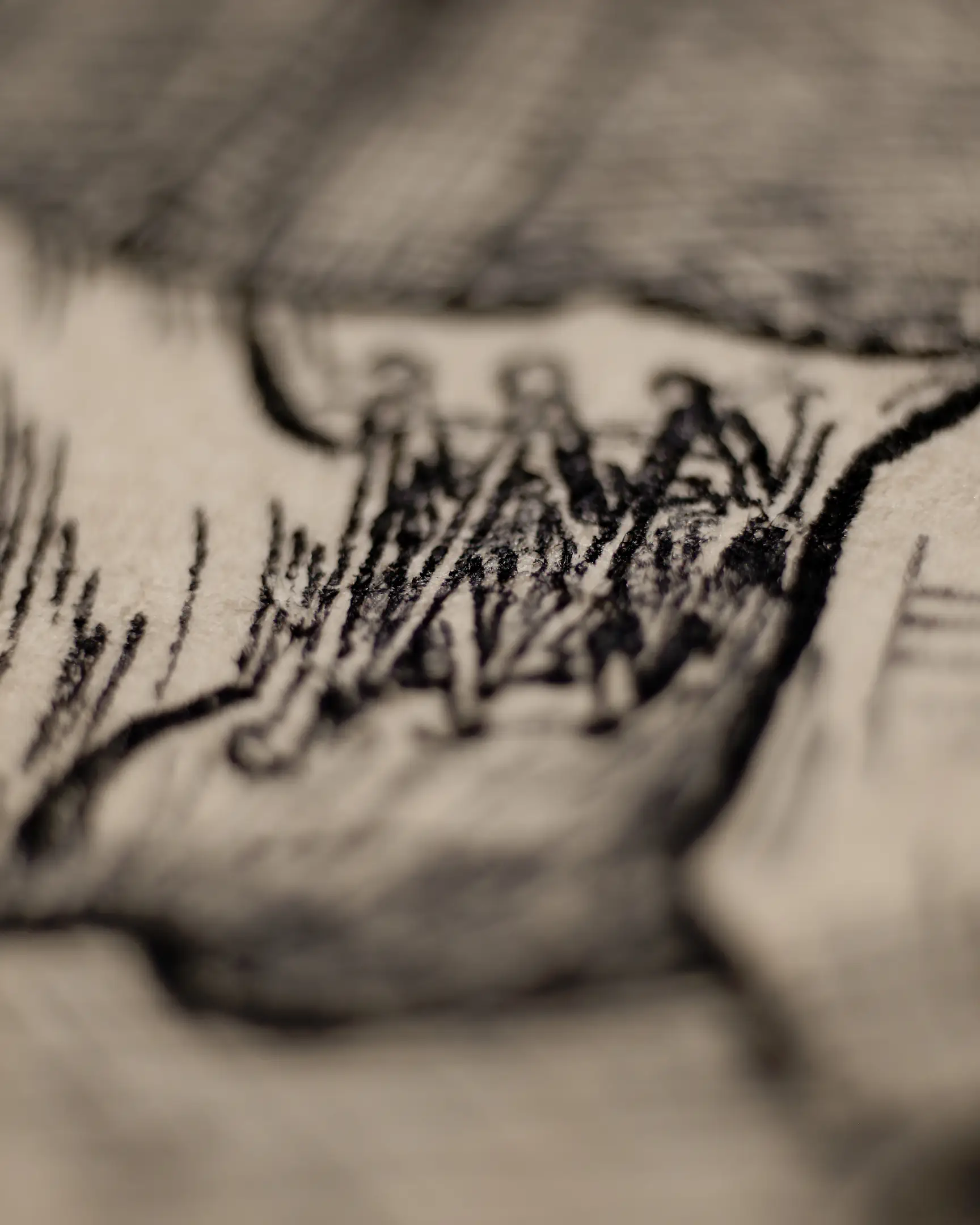
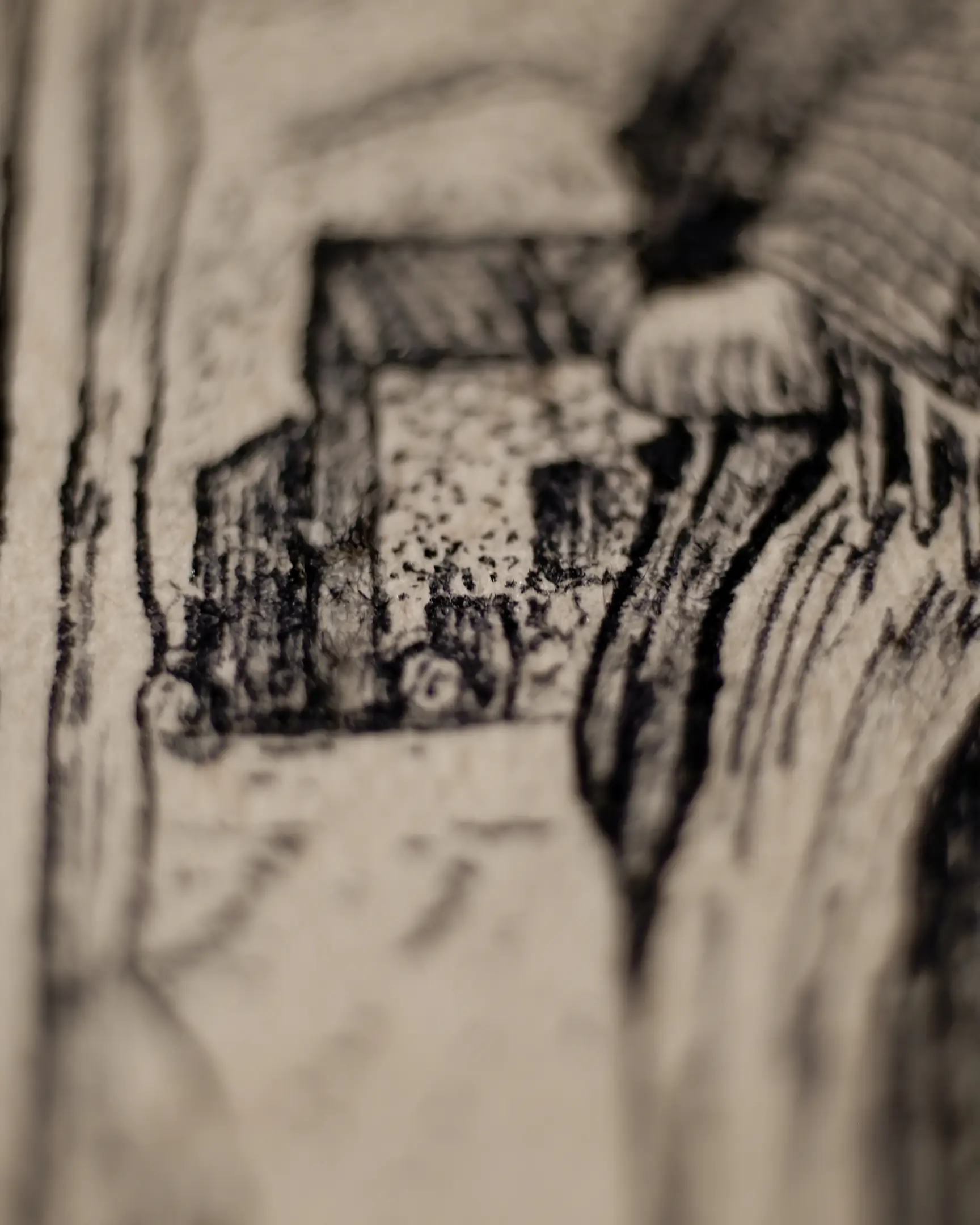
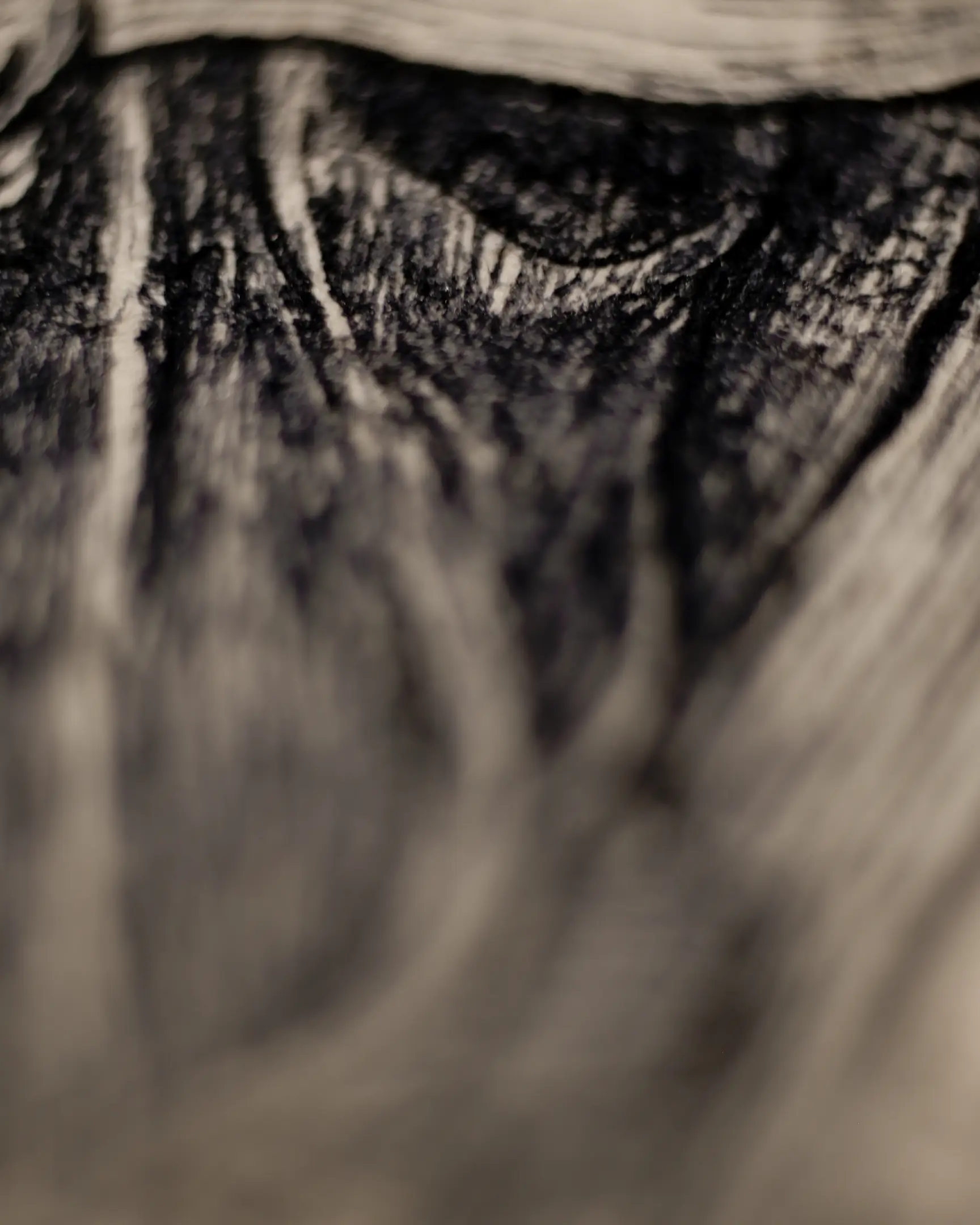
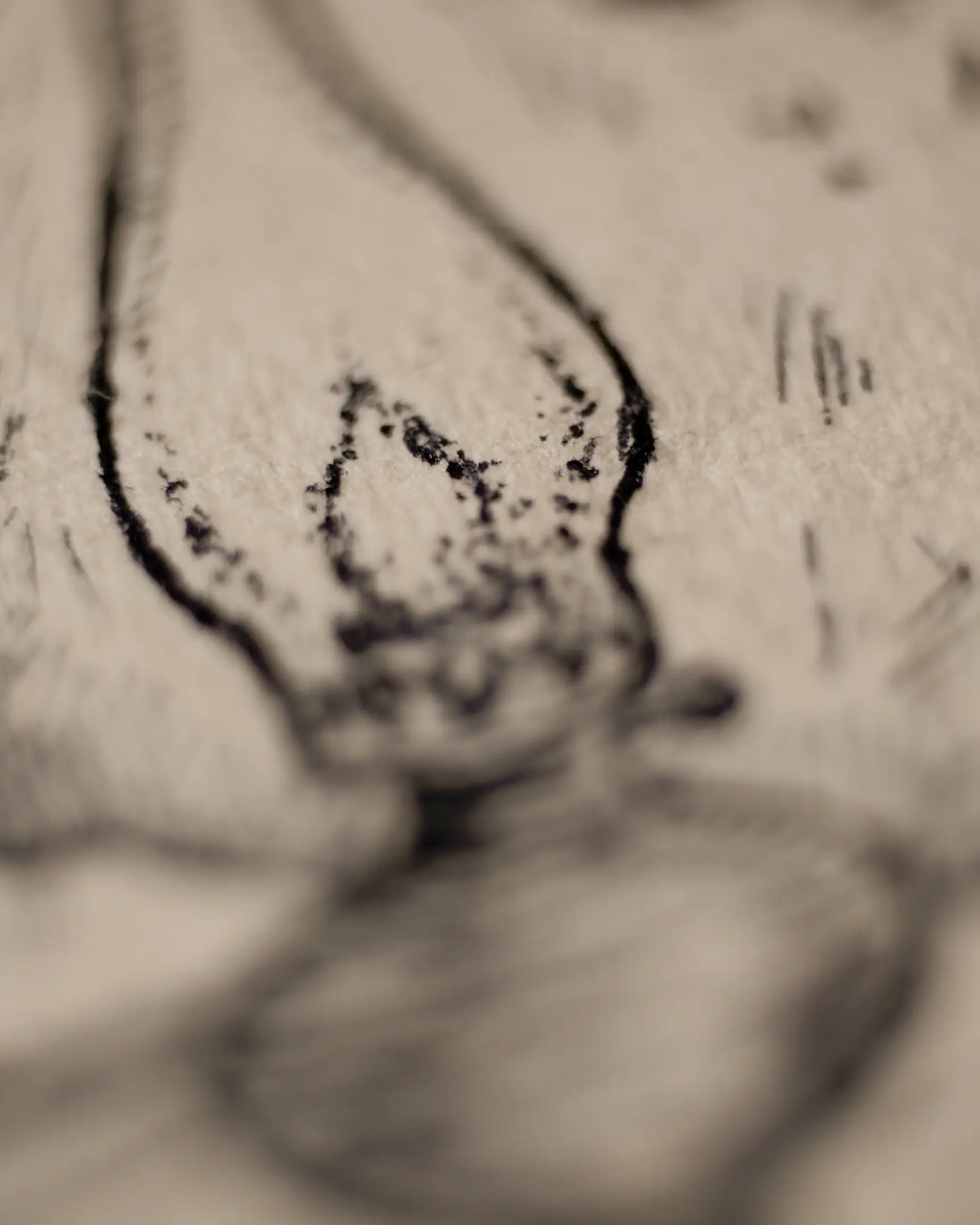
This detailed photograph showcases the quality of the materials. It is clear how the handmade paper with its characteristic uneven edge is elevated above the deep black mount, creating depth and a shadow effect. This emphasizes the premium status and exclusivity of the framing.This macro photograph of a VSELÉNSKYI painting fragment allows the viewer to look into the very structure of the ink stroke. It is a tight close-up of an elderly man's face, where the focus is deliberately narrowed to highlight the intensity of his gaze. We see how dense ink cross-hatching forms the volume of his forehead, nose, and deep-set eyes. Straight lines and small ink stipples convey the uneven texture of his rugged skin and thick mustache. The soft bokeh at the periphery of the frame emphasizes the precision of the central strokes, demonstrating mastery of the tool. The photograph's quality even conveys the grain of the paper on which the work is created.This close-up focuses on a portrait enclosed within a graphic frame. Unlike the sharp detailing of the first photo, here the artist uses a softer, almost watercolor-like approach to working with ink. The facial features are rendered concisely, emphasizing the deep shadows in the hair and clothing, created with dense but less regular hatching. This shot highlights how the ink interacts with the paper surface, creating rich tonal transitions and a sense of mystery. The focus is slightly softer, adding to the atmospheric quality of the shot.It features a hand rendered in a signature technique: a blend of confident contours and delicate hatching that evokes a sense of light and shadow. The centerpiece is a signet ring, which feels almost tactile due to the high contrast of the ink. The shallow depth of field draws the viewer’s eye to the texture of the drawing at the center, while the masterfully executed background—a fine mesh of ink lines—gradually blurs, adding a sense of depth and atmospheric layering to the piece.This shot showcases the mastery of micro-graphics. The focus is on a handwritten document, which serves as a crucial narrative element of the painting. Every letter and flourish of the pen is executed with striking precision, mimicking vintage handwriting. The contrast between the crisp lines of the text and the soft hatching of the objects in the background creates volume and a sense of realism. The photograph emphasizes the tactility of the work: through the lens, one can almost feel the texture of the paper and the way the ink anchors into its fibers.This shot captures one of the most atmospheric fragments of the canvas. At the center of the composition is a hand, rendered with the artist's signature anatomical precision. The use of deep black ink in the hand's outlines contrasts with the light tone of the paper, creating a striking 3D effect. In the background, the subtle silhouette of a kerosene lamp adds historical context and a cozy yet tense silence to the scene. This perspective allows one to appreciate how masterfully VSELÉNSKYI uses hatching to convey different textures: from the organic feel of human skin to the glass and metal of everyday objects.This macro photograph highlights the psychological depth of VSELÉNSKYI graphics. By focusing the lens on the eye area, the artist emphasizes the drama of the subject. We see jewelry-like precision: microscopic dots and the finest ink strokes coalesce into a stern facial expression. The shallow depth of field turns the rest of the drawing into a soft haze, creating a sense of presence and lifelike contact. The quality of the shot allows one to see how the ink pigment penetrates the pores of the paper, creating a unique relief for the art object.In this shot, the focus is shifted to the background of the composition. This allows for an appreciation of how the artist handles perspective: the mountain is drawn with less saturated but highly precise lines, creating an atmospheric haze effect. The micro-detailing is particularly captivating—tiny houses on the slope and smoke that feels almost kinetic due to the stippling technique. The shallow depth of field in this photograph emphasizes the multi-layered nature of the canvas, where the background lives its own equally vital life.This photo in the series blurs the line between visual art and physical matter. This perspective focuses exclusively on the ring, transforming it into a graphic monolith. One can clearly see how the ink saturates the paper fibers, creating a vibrant, slightly irregular line edge. The shallow depth of field turns the surrounding hatches into rhythmic graphic noise, forcing the viewer to focus on the magic of the pen meeting the surface. It is a testament to the meticulous process where even a millimeter-sized detail carries its own weight and character.This perspective transforms a utilitarian detail—shoelaces on boots—into an object of graphic exploration. The weight and density of the material are masterfully conveyed: through the layering of ink strokes, the viewer can almost physically feel the stiffness of the tightened knot. The shallow depth of field concentrates attention on the intersection of lines, turning a mundane detail into a symbol of a journey taken and readiness for the road ahead. The shot emphasizes that in the world of VSELÉNSKYI, there are no secondary elements—even the lacing of a boot demands flawless precision.
This macro photograph of a VSELÉNSKYI painting fragment highlights the role of symbolism in the work. The camera focuses on a small rectangular object that could be a Tarot card, a religious amulet, or a family crest. It is rendered concisely but with the artist's characteristic textural ink density. The angle and shallow depth of field create a sense of mystery, turning this fragment into a key narrative element. The shot perfectly conveys the interaction of ink with the paper's texture, making the image tangible.This photograph showcases a triumph of micro-detailing. The artist embeds a full narrative miniature within the painting, matching the complexity of the main work itself. It depicts a liberator warrior in the spirit of classical European engravings. The scale is astounding: within a space of just a few centimeters, VSELÉNSKYI manages to convey anatomy, movement, and the drama of battle. This perspective allows one to appreciate how the density of ink strokes creates the illusion of an antique print on aged, textured paper.This image in the series focuses on the "technical" side of graphics—conveying materiality through line. This perspective allows one to see how VSELÉNSKYI constructs the volume of clothing: there are no accidental strokes here; every line works to create the form and weight of the fabric. The layering of ink creates an almost palpable roughness. The shallow depth of field transforms a functional detail—a sleeve or a jacket lapel—into an independent abstract composition, where the main character is the rhythm of the graphic execution itself on textured paper.In this shot, we see how VSELÉNSKYI handles architectural forms on a minute scale. This depiction of a hut demonstrates a contrast of techniques: deep, dark blocks of hatching give the structure stability and mass, while delicate stippling in the lighter areas mimics the play of natural light. The shallow depth of field separates this background element from the foreground, creating a multi-dimensional space within the page. The photograph perfectly captures the "archival" mood of the work, where every object feels like a witness to a bygone era.This image in the series demonstrates the work with absolute shadow. This perspective reveals the artist’s "inner workings": how hundreds of finest intersecting lines transform into a deep, saturated black. Through macro photography, it becomes evident that shadow in VSELÉNSKYI’s works is not a flat spot—it breathes and possesses a complex internal architecture. The paper grain adds tactility to the image, turning a graphic fragment into something resembling a macro shot of a natural landscape or tree bark.This photograph brings the concept of macro photography to a climax. Here, the character's hand ceases to be mere anatomy and becomes a landscape of lines and dots. Due to the specific camera angle and blur, the viewer concentrates on the very act of fingers touching an object. This image emphasizes the materiality of the MONUMENTA collection: we see not just a digital copy, but a physical object where ink and paper engage in a complex dialogue. The shot captures the "archival" atmosphere and stark aesthetic that permeates the entire project.This image in the series is a deep dive into the painting's atmosphere. This macro perspective focuses on the heart of the kerosene lamp—its flame. VSELÉNSKYI masterfully utilizes the texture of ink and paper: the fire is not drawn with a solid line, but with a collection of microscopic dots and broken strokes, visually conveying motion and heat. The fragile, crisp outline of the glass chimney contrasts with the soft blur of the object's bottom, creating an effect of a fleeting glance. The photograph's quality allows one to feel the roughness of the archival paper, transforming a graphic element into a tangible object.

Related products