E. J. WIRTZ DIP PEN

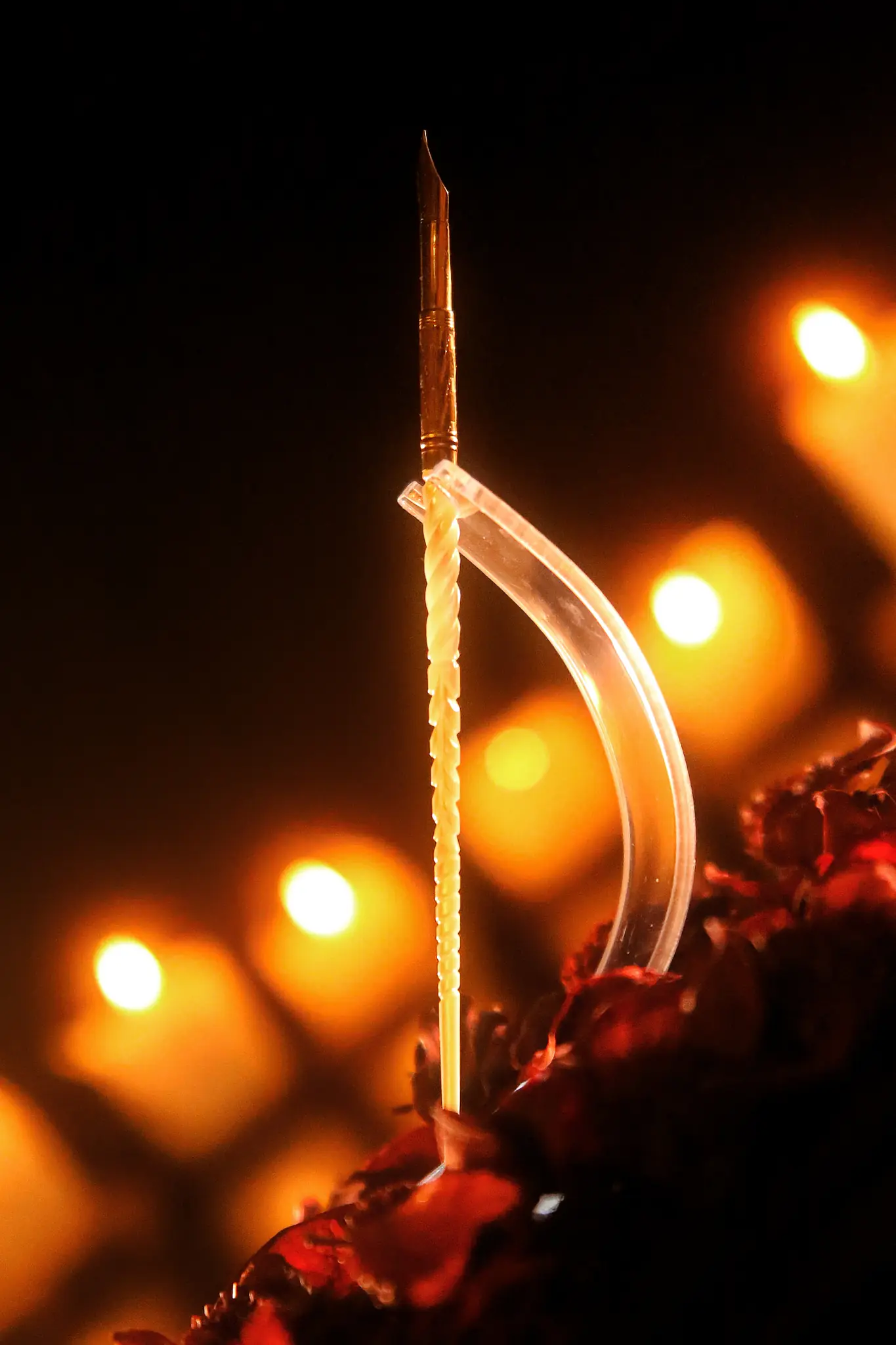
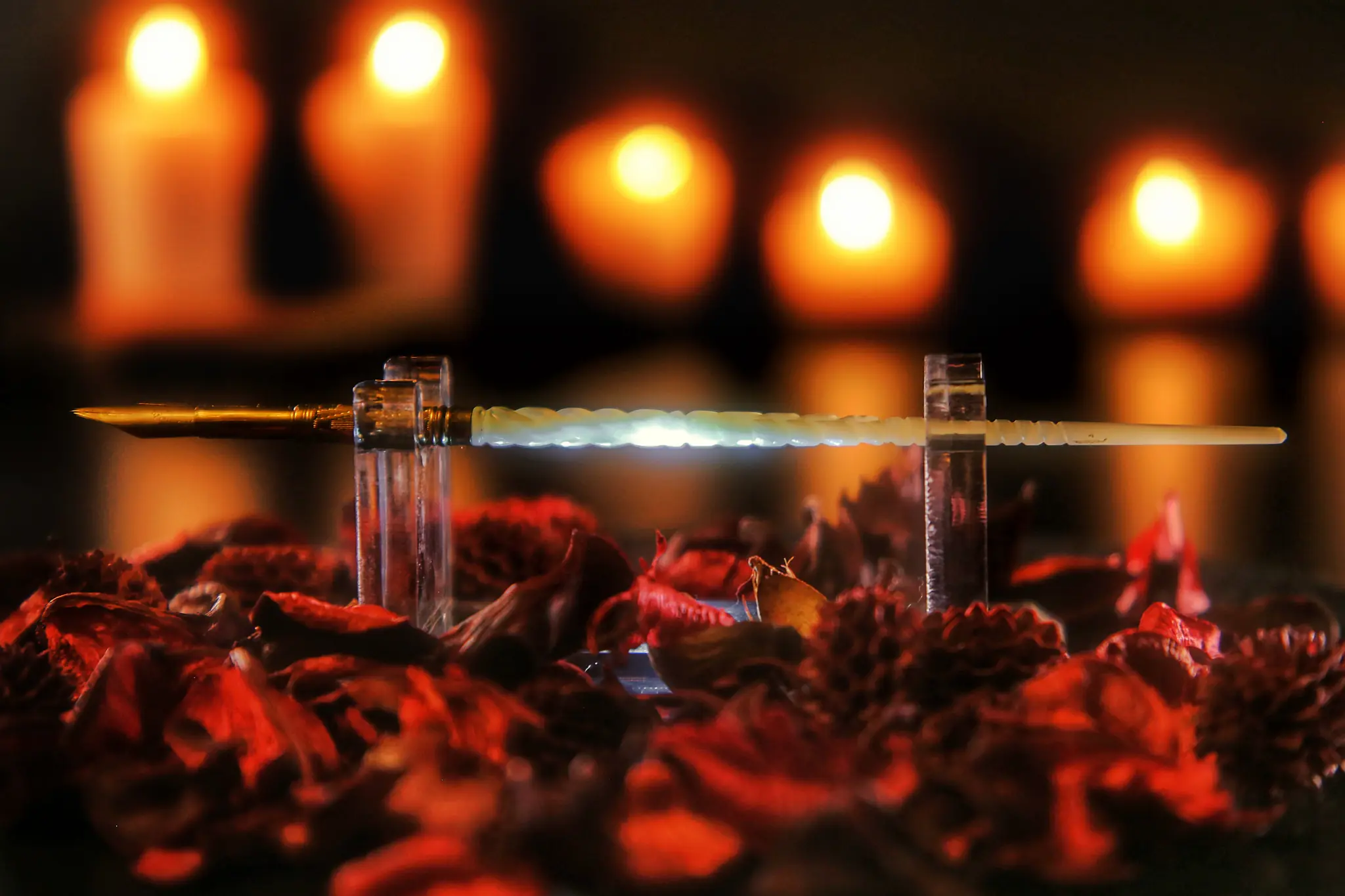
At just over six inches, this elegant dip pen is a genuine late 19th-century artifact with a fascinating past.
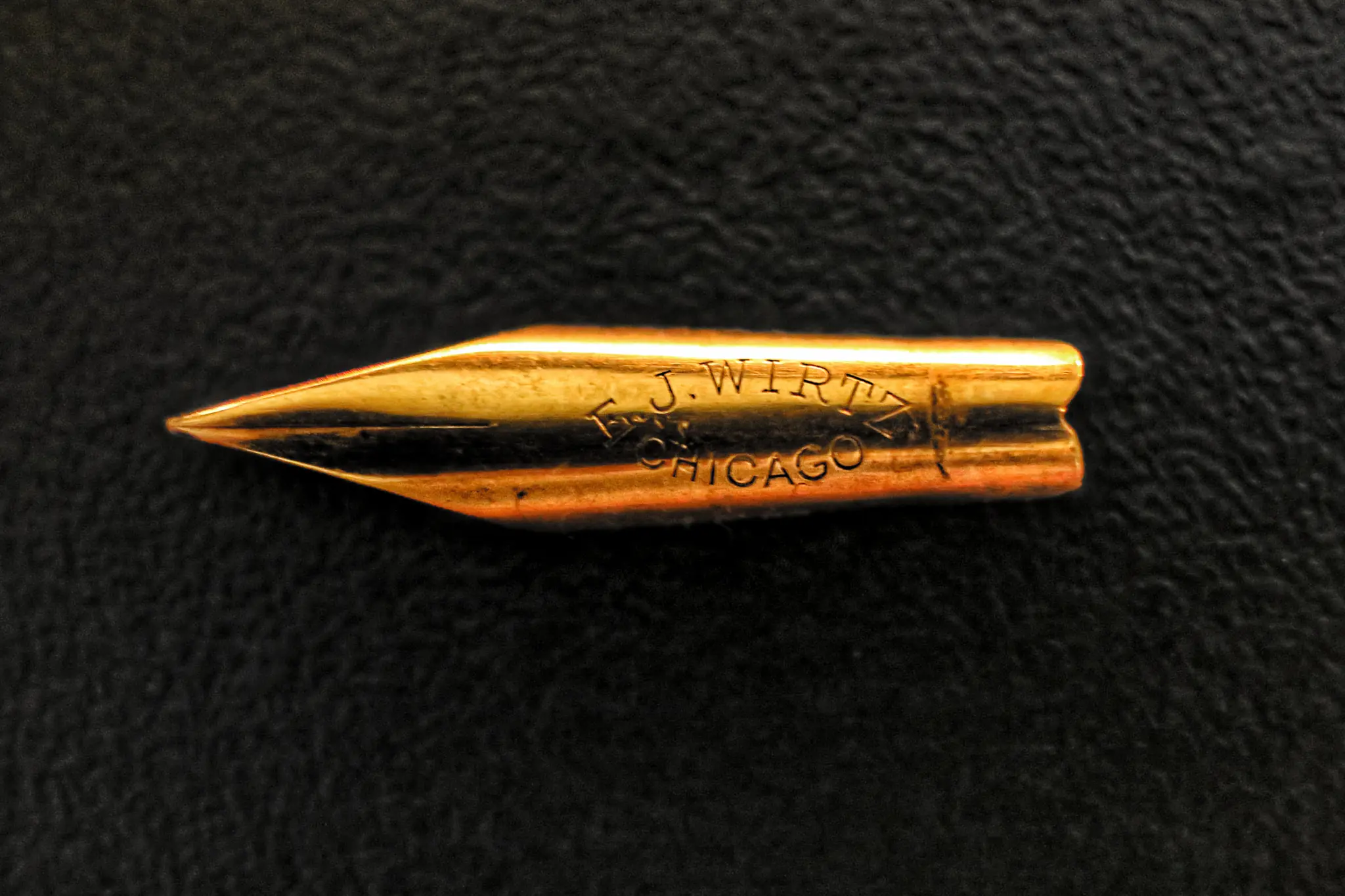
The stamp on the nib indicates that this pen is the work of Chicago craftsman Edward J. Wirtz. Although Wirtz’s operation did not grow into a massive international company, it left a profound mark on the history of American writing instruments, producing, between the 1860s and 1890s, bespoke tools for connoisseurs of aesthetics and status.
Here is a truly legendary pen with a mother-of-pearl handle and a gold nib, once favored by prominent writers and publishers. The 14-karat gold nib is highly valued for its exceptional softness and its ability to respond to the slightest change in pressure.
These pens were often given as gifts and found their way into the private collections of many famous public figures. For instance, one such pen belonged to Eliza Jane Nicholson, who holds the distinction of being the first woman in the United States to own a major newspaper. Defying her family’s wishes, Eliza moved to New Orleans to pursue her dream of becoming a professional journalist. In 1870, she became the literary editor of the Daily Picayune under the pseudonym Pearl Rivers. Two years later, she married the newspaper’s owner, inheriting the publication upon his death. Despite the paper’s financial struggles, Nicholson’s leadership brought it back to profitability. She was a fierce advocate for women in the workplace and equal pay. Nicholson also helped establish the Louisiana Society for the Prevention of Cruelty to Animals in 1884 and co-founded the Society for the Prevention of Cruelty to Children in 1892, an organization that remains active today.
An Edward J. Wirtz pen held a place of honor in her private collection. Today, that very pen is housed in the Historic New Orleans Collection.
Finding detailed photographs of Eliza’s pen is nearly impossible, as museums rarely publish high-resolution images of their artifacts. But why settle for museum displays when you can admire and examine a real E.J. Wirtz pen in finest detail right now? This particular dip pen comes from the exact same production line as Eliza’s; the only difference being that the mother-of-pearl handle of the pen in the New Orleans museum has a simpler, smoother shape without any contours.
We invite you to explore this extraordinary dip pen, a genuine relic of the 19th century.
Click on the images to the left to view them in maximum quality. Our team is the first to extensively document this 19th-century masterpiece.
Elegant mother-of-pearl
A closer look at this pen immerses us in the entire realm of Victorian craftsmanship, where writing instruments were elevated to the level of fine jewelry. In the second half of the 19th century, the choice of materials for writing tools was driven not only by practicality, but also by deep aesthetic symbolism and a desire to surround oneself with beauty, even in the smallest details.
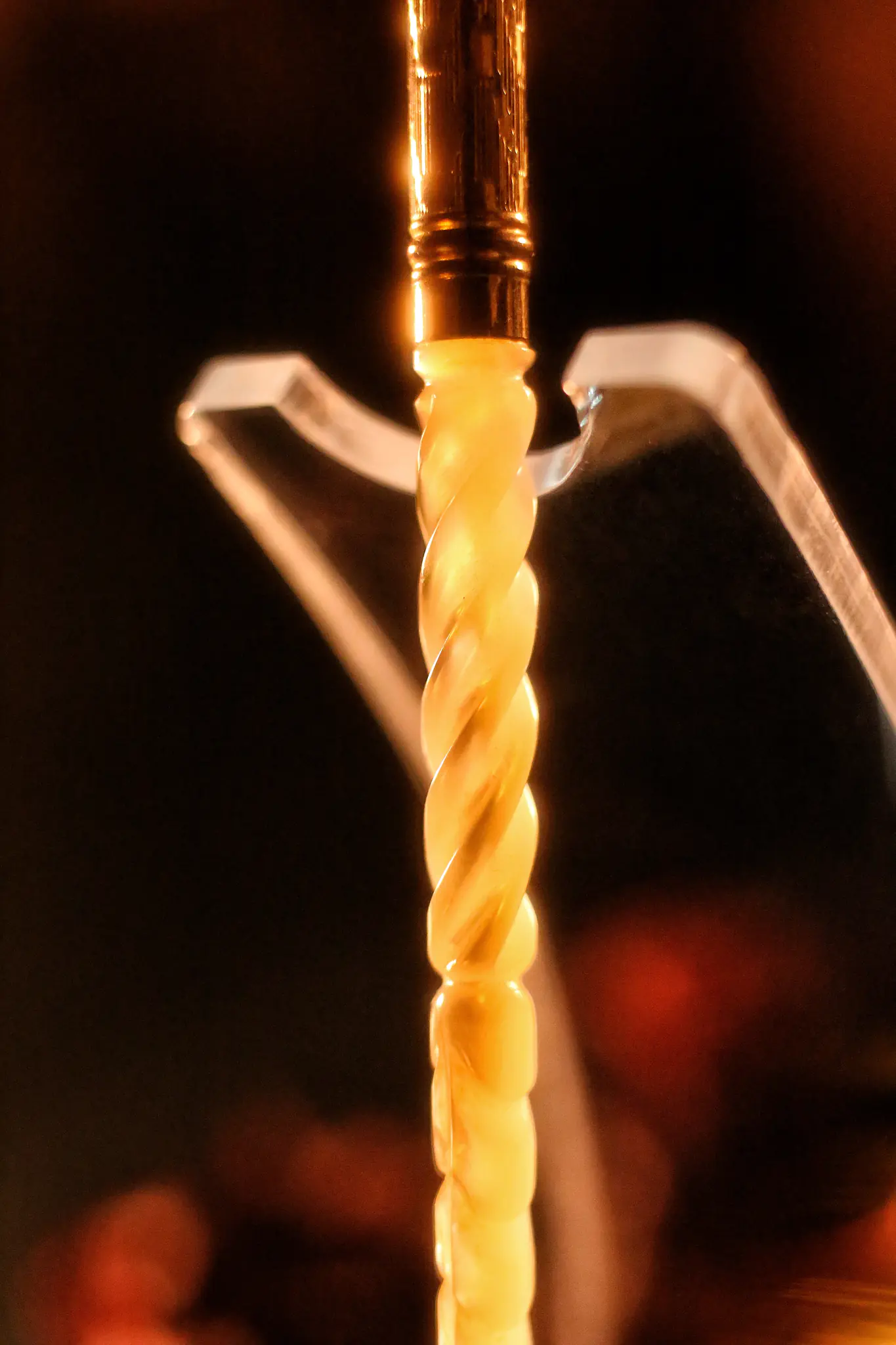
Featuring a handle made of natural mother-of-pearl, representing the luminous inner lining of marine mollusk shells, this E. J. Wirtz pen beautifully reflects the light. Victorian artisans prized this material for its one-of-a-kind texture, rich with warm honey and cream tones. Despite its delicate thinness, it is remarkably durable and ideal for a fine writing instrument. The silky, cool handle sits perfectly in the hand, offering a secure and effortless grip.
Crafting these items was a process done entirely by hand, requiring a jeweler’s precision. First, a blank was carved from a large shell, after which the artisan shaped the intricate profile. The pen features a spiral carving, known as a twist, which was formed using specialized chisels. This elegant shape undoubtedly catches the eye and beautifully interacts with the light. More importantly, however, it provides a perfectly ergonomic grip. Gradually tapering toward the base, the body is detailed with ridged notches before smoothly transitioning into the gold-plated section, seamlessly connecting the mother-of-pearl handle with the nib assembly.
Over decades of use, time and ink have inevitably left their marks upon this precious surface, which is evident in its light scratches and refined patina. This stands as proof that this extraordinarily beautiful dip pen was no mere souvenir, but a true instrument of creation, helping shape the modern world we know today.
Industrial touch
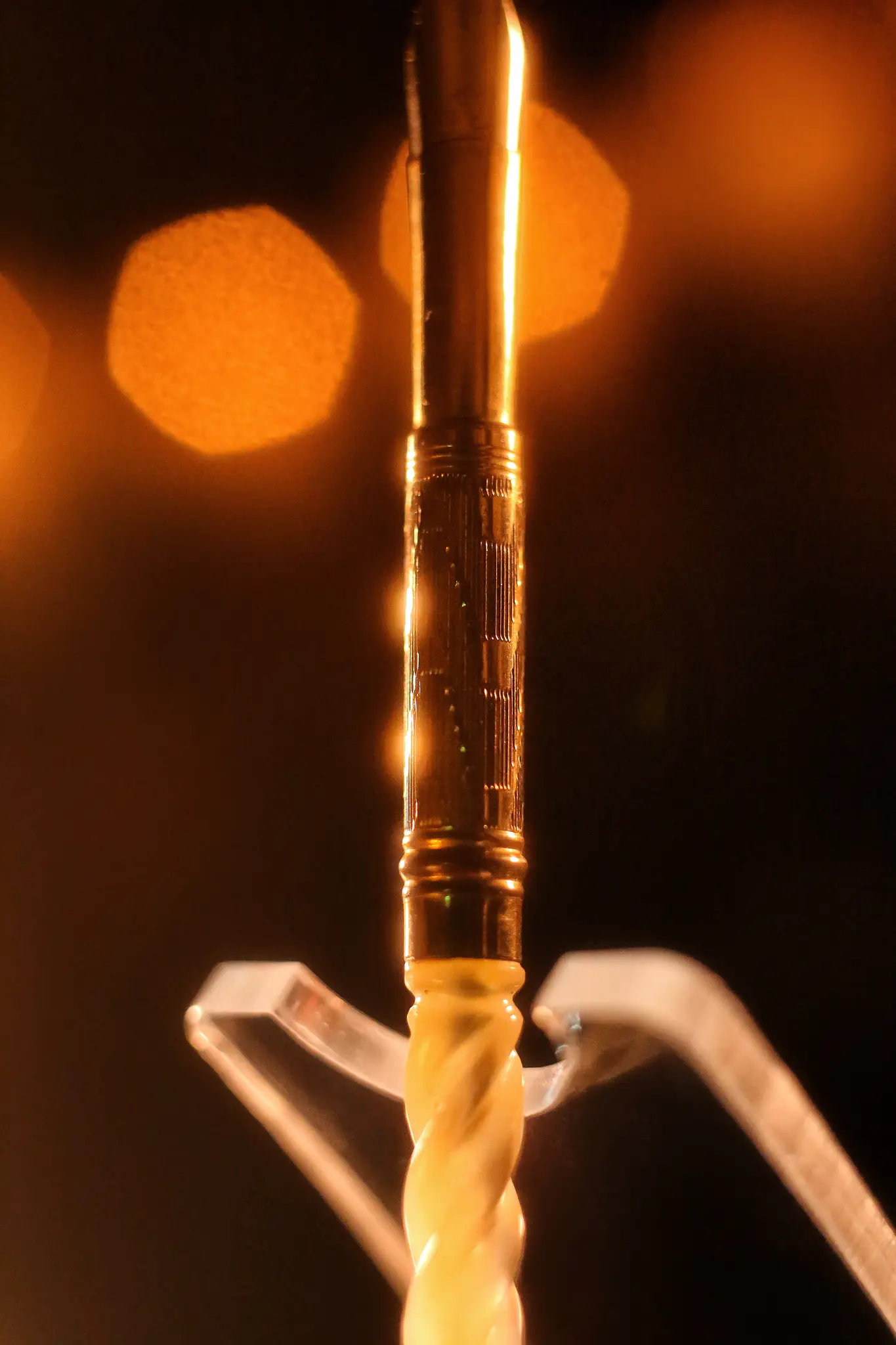
This intricate metal assembly, which connects the mother-of-pearl handle to the nib, is a genuine masterpiece of Victorian engineering and jeweler’s craftsmanship. In assembling these parts, the craftsman had to do more than simply connect two elements; it required the utmost precision, as even the slightest mismatch in diameter could cause the delicate shell to crack under temperature shifts or the pressure of writing.
The core of this section is crafted from traditional brass with high-quality gold plating. Its surface features ultra-fine geometric micro-engraving, consisting of alternating vertical lines and grooves that create a striking contrast and catch the light beautifully. Each line of this pattern was applied by hand using miniature lathes, making it a truly handcrafted effort. As you can see, this texture not only lends the instrument a sophisticated, luxurious look, but also improves the writer’s grip.
The lower portion of the metal section, where it meets the pearl spiral of the handle, is especially noteworthy. Here, the craftsman had to seamlessly fit the edges, using rounded protruding ridges and circular grooves to create a flawless transition from mother-of-pearl to metal. Over decades of active use, this exact zone bore the greatest stress, allowing micro-droplets of ink to accumulate. This left behind a refined patina and a faint amber hue that serves as proof of the item’s authenticity today.
Every line of this section reflects the philosophy of a bygone era, when a writing instrument was elevated to a true work of art. There is an endless beauty in the contrast between the cream mother-of-pearl and the golden gleam of the metal section, whose textured surface shimmers in the light, bearing the unmistakable touch of a master craftsman.
The highest industry standard
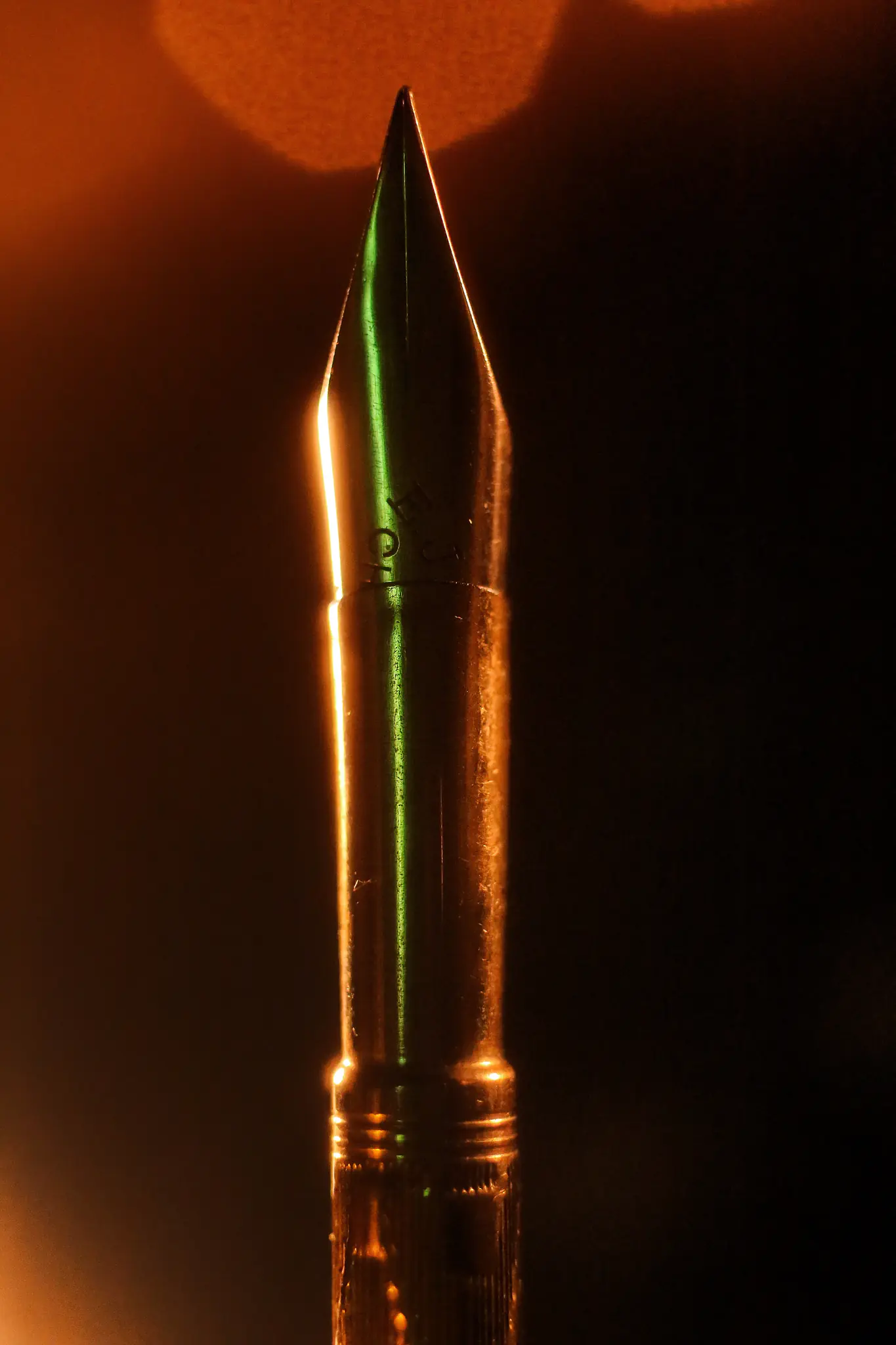
The pinnacle of engineering and the key element of a dip pen is the magnificent nib, crafted from precious 14-karat gold. In an era when most clerks and writers had to settle for fast-rusting steel nibs, and some still relied on quill pens, the aristocracy and professionals sought gold nibs as the ultimate writing luxury. Far from being a mere status symbol, this noble metal was highly resistant to the aggressive chemicals in Victorian inks, which could literally corroде base metals in a matter of months.
In the 19th century, manufacturing these gold nibs was a highly complex craft, combining metallurgy with the precise skills of a jeweler. The 14-karat gold blank was repeatedly rolled to achieve the desired density and elasticity before being stamped. Because a nib’s performance is paramount, meticulous care went into shaping the central breather hole and feed channel where ink is retained. Next, a slit was cut with mathematical precision to regulate the ink flow. It is this exact geometry, combined with the natural elasticity of gold, that provides the comfortable, soft feel for which these nibs are famous. At the slightest change in pressure, the tines separate, allowing the writer to smoothly vary line width from a hairline to a rich, bold stroke. This responsive flexibility is precisely why vintage dip and fountain pens remain so highly prized. Yet, that is not all: to prevent the gold from wearing down against rough paper, microscopic beads of iridium were fused onto the very tip.
The mechanism for securing the nib is also a testament to the distinct ingenuity of that era. Unlike other mounting systems, this pen utilizes a classic sleeve retention design for interchangeable nibs. The upper part of the metal section is a cylindrical sleeve with an inner diameter designed to tightly clamp the shank (tail) of the nib. This sleeve is shaped with mathematical precision, allowing the interchangeable nib to slide in perfectly and be held in place by the metal’s natural tension. This design makes it easy to remove the nib for cleaning or replacement while ensuring it remains completely secure during writing. Remarkably, this was virtually the only nib attachment method in the 19th century that did not rely on complex clips or external clamps. And while it might theoretically seem that such a friction-fit mount would be unreliable or cause the sleeve to loosen over time, it has stood the test of a century without any degradation.
Combining the uncombinable
Now, let us take a closer look at the nib itself. The fine, filigree engraving on its face is partially hidden when the nib is inserted into the metal sleeve. This inscription is more than just a decorative element; it is a definitive record of the artifact’s journey, seamlessly connecting the present day, the pen’s former owners, and the artisan who crafted this masterpiece. Stamped onto the gleaming surface is the maker’s hallmark, bearing the legendary E. J. Wirtz name and its place of origin, Chicago. This crisp stamping, executed in the late 19th century, immortalized a manufacturer whose limited editions of fine writing instruments were highly prized for their quality and impeccable taste. Today, well over a century later, this pen stands as a flawless testament to that enduring quality.
Viewed as a whole, the instrument reveals itself not as a mere writing tool, but as a complex work of art defined by a unique combination of materials. The cool, elegantly shaped mother-of-pearl, the intricate metal section with its ultra-fine micro-engraving, and the 14-karat gold nib serve as the crowning glory of the design. It is a flawless harmony of forms and textures, standing as a profound testament to the immense skill and vision of its creator.
The contrast of shapes and materials is particularly striking. The elegant and subtly feminine mother-of-pearl beautifully juxtaposes with the industrial, textured precision of the metal section. From this union emerges the gold nib, representing the ultimate culmination of technology and physical beauty. It is as though the artisan is weaving a love story that unfolds right before our eyes.
Thus, the fusion of Chicago craftsmanship, precious metals, and the iridescent shell makes this pen not merely a relic of the past, but a timeless portal into the breathtaking elegance of the 19th century.
We take pride not only in introducing you to this work of art while preserving cultural heritage, but also in breathing new life into these historic instruments. Today, more than a century later, this nib is dipped into classic ink once again, drawing lines that continue to captivate audiences in the modern world. As far as we know, we are unique in specializing in this level of vintage pen restoration, and we are delighted to make these educational insights accessible to everyone. We hope you enjoyed this journey into 19th-century history, discovered through the magnificent E. J. Wirtz dip pen.