“PERRY & CO DIP PEN”

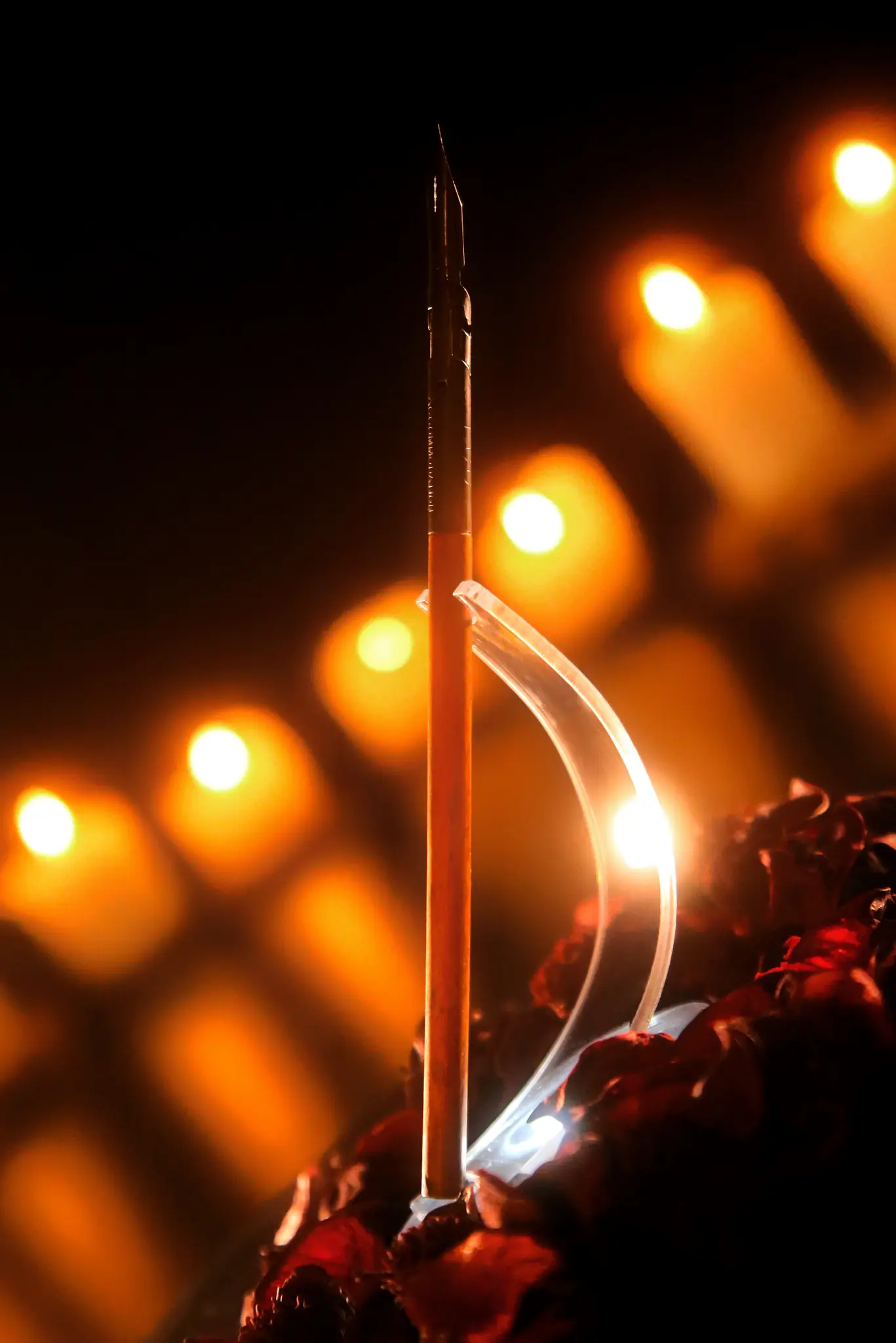
The history of material culture holds many artifacts that let us step back into the quiet old offices of the 19th century, where thoughts, literature, and documents were born.
Before you is a true masterpiece of British stationery craftsmanship. This is an antique fountain pen that combines the work of two outstanding craftsmen from the Victorian and Edwardian eras.
This exquisite tool is a classic pen holder fitted with a legendary steel nib from the famous Birmingham manufacturer Perry & Co. This dip pen looks much simpler than our other tools, but you can feel the onset of global industrialization in it. Pens like this made up the core workspace setup of officials, clerks, writers, and artists.
The history of Perry & Co. began in 1824 when schoolteacher James Perry, unhappy with the quality of the tools available at the time, started making steel nibs by hand. The future company opened in Manchester under the name James Perry and Co. Soon, the company moved to London and expanded its lineup to pen holders, pencils, erasers, and ink. But the real breakthrough started in 1829 when production was taken over by Josiah Mason. Thanks to top-notch quality, the products quickly won over the global market, and by 1876, the company’s production volume matched American giants.
In 1847, the brand established itself under the shortened name “Perry and Co.” And in 1876, Josiah Mason’s enterprise merged with Wiley & Son and James Perry & Co into a joint-stock company called “Perry & Co Ltd” with a large manufacturing base on Lancaster Street in Birmingham. At this time, surprisingly to many, the company began manufacturing steel chains and accessories for bicycles, which were gaining popularity.
Over the following decades, the business went through different phases, including financial struggles in the late 1890s. By 1914, the company’s headcount reached 2,000 people, and their product catalogs were mind-blowing, ranging from steel and gold nibs to bicycle hubs and tobacco products.
After World War II, in 1945, the company structure changed: chain production spun off into a subsidiary called Perry Chain Co Ltd, while stationery production continued under the Perry and Co (Pens division) Ltd branch. The final transformation of the British pen industry happened in 1961, when British Pens bought the manufacturing rights for nibs from Perry & Co, as well as from other legendary brands like John Mitchell and Joseph Gillott. Today, the traditions of this great British craft live on in the West Midlands, reminding us of the days when every word on paper was born thanks to the brilliant engineering of Birmingham and London craftsmen.
Now let’s take a closer look at this company’s product.
The quiet of old office spaces
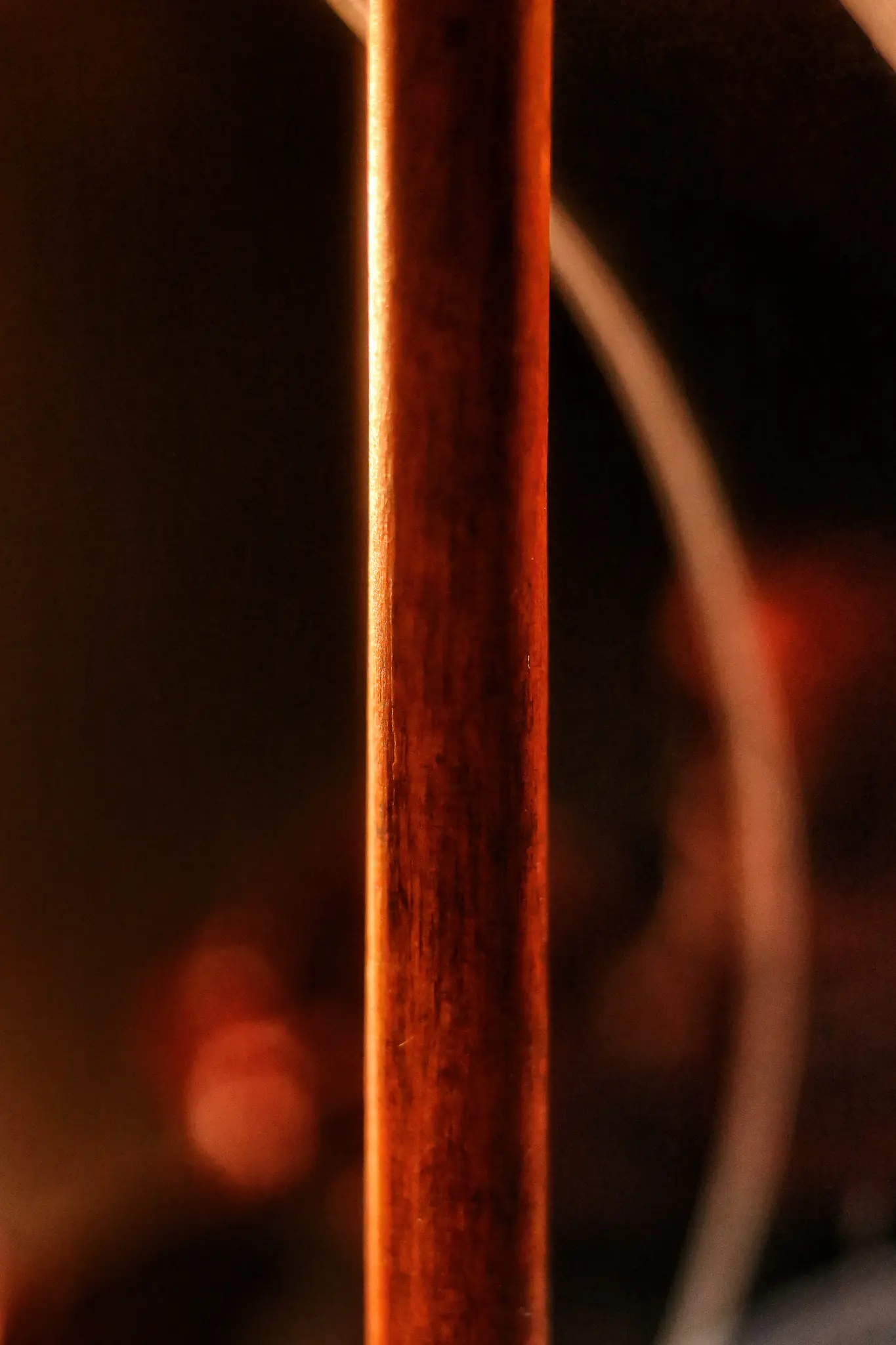
First, we see the wooden dip pen holder. The wooden part of this nib holder is not just a basic stick, but a technical and aesthetic product of the Victorian era. In those days, stationery production was run on an industrial scale, but it still kept the artisanal traditions of selecting raw materials.
To make high-quality holders like this, British manufacturers used dense, stable, and fine-grained types of wood. Most often, European hardwoods like beech, maple, boxwood, or ash were used as raw materials. Pricier models used mahogany, ebony, or rosewood, which were shipped to London ports from all corners of the British Empire. The choice of wood came down to its ability to stay unchanged over time, resist moisture from fingers, and keep the shaft’s perfect geometry.
The process of creating such a holder in the 19th century combined lathe woodworking and fine finishing. Wood blocks were made first, and then turned on specialized lathes until they formed a perfectly straight cylindrical profile, or one that tapered slightly toward the end. After this processing, special abrasive sandpapers were used to sand the surface. Then the body was coated with special protective finishes like natural linseed oil, shellac varnish, or wax polishes, followed by a buffing with cloth. It is this layer that gives the wood its classy matte or even amber tint.
This shaft, even though it looks simple, is designed with the anatomy of the human hand and the standards of Victorian calligraphy in mind. The flexibility of the wood absorbed micro-vibrations during fast writing, while the ideal diameter and weight made it easy to hold the pen without extra strain.
The fact that this wooden shaft has reached us in flawless condition after more than a century is due to the quality of wood seasoning in the Victorian era. The right choice of varnish coating and storage in dry writing desks or boxes kept this pen in perfect shape.
19th-century engineering
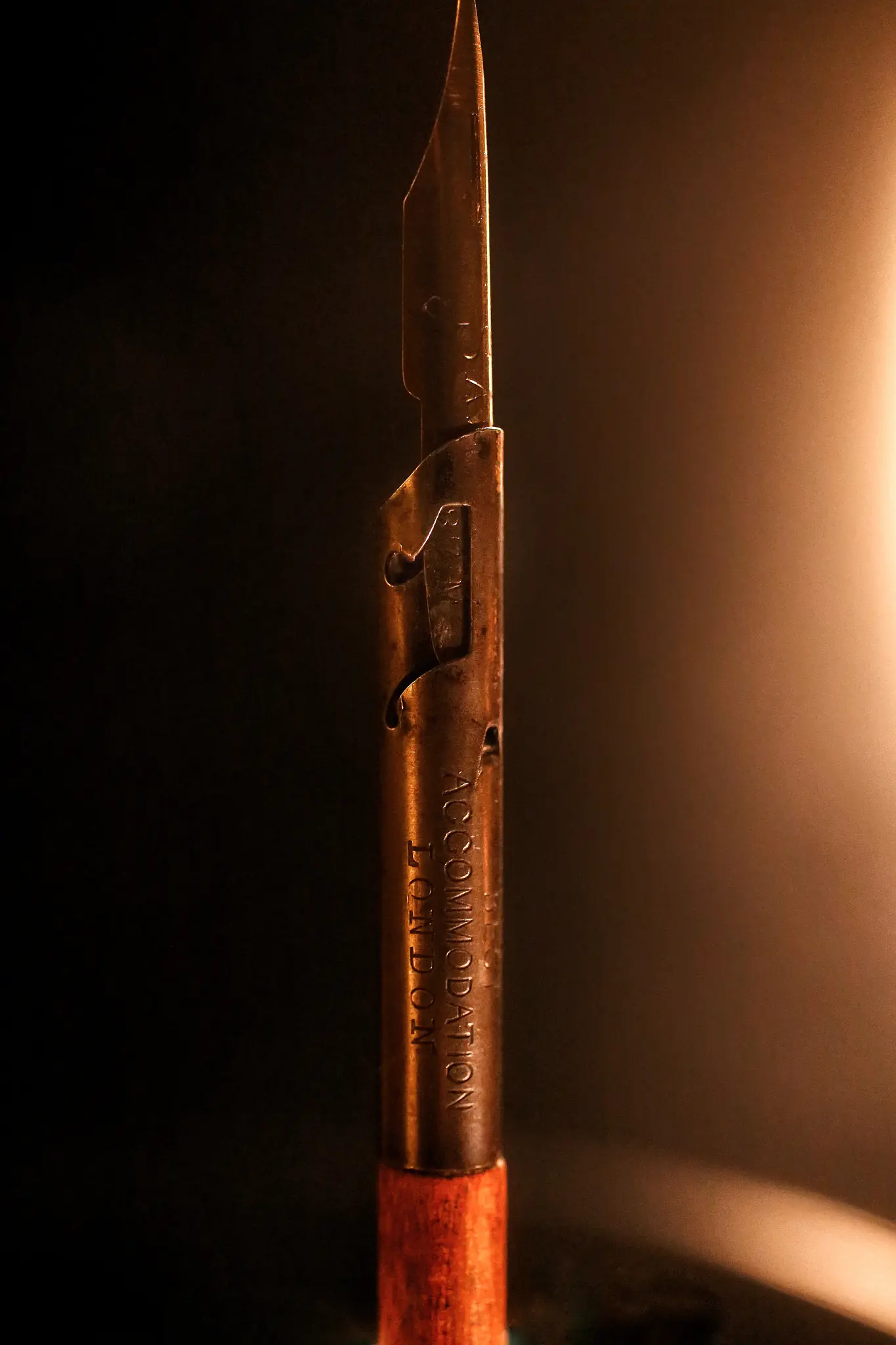
Next, we see the metal tip of this holder. This is not just a tube, but a fine piece of 19th-century mechanical engineering that turned a simple wooden stick into a tool.
On this pen, we see what is already a third type of nib attachment mechanism. Inside the metal sleeve, flexible tabs made of thin spring steel are hidden. When a writer inserts the shank of a steel nib inside, the tabs gently push apart, creating a constant outward pressure. Thanks to the flexibility of the metal, the nib is securely clamped between the outer wall and the inner tongue, preventing any twisting during fast writing.
On the sides, you can see characteristic cutouts and curved slots on the side of the sleeve. They give the metal the necessary amount of flexibility, turning a rigid tube into a springy system.
Before these universal holders came along, nibs were often permanently fixed into wooden sticks with a set inside diameter, which meant you needed a separate holder for every type of nib. But these pens allowed clerks and artists to use one single favorite pen while swapping nibs in seconds: you just pull out the worn-nib and slide in a new one. This saved both time and money, making it the peak of comfort for people who used a pen like this every day.
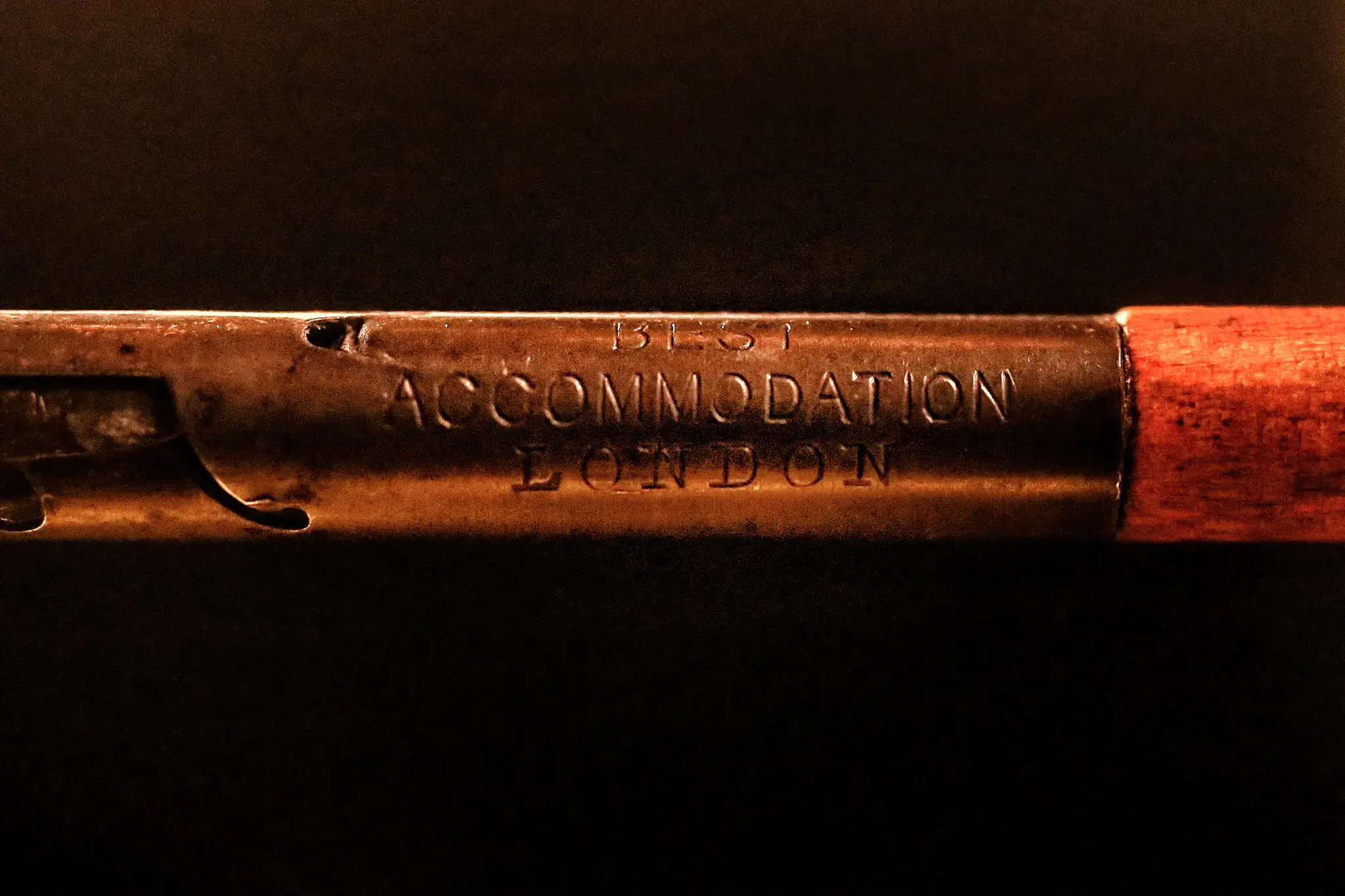
On the metal sleeve of the holder, you can see the words “BEST ACCOMMODATION LONDON” stamped for the ages. In the stationery world of the late 19th and early 20th centuries, every inscription like this served several purposes. It took the place of modern advertising, worked as a mark of flawless reputation, and protected against counterfeits.
Best Accommodation
In the British trade terminology of that period, the word “Accommodation” had nothing to do with hotels or housing. Its meaning in the engineering and commercial vocabulary stood for “adaptability,” “helpfulness,” or “the convenience of bringing different elements together.”
By leaving such an inscription on a writing tool, the manufacturer was declaring a major technological breakthrough: this pen was built to adapt perfectly to nibs of any shape or brand, whether it was products like Perry & Co., C. Brandauer, or Joseph Gillott.
Adding the proud word “London” completed the image. The capital of the empire acted as the trendsetter for styles, standards, and flawless taste in the office work industry.
Why was the manufacturer’s name never stamped on pens like this? The thing is, most pen holders were made in small, specialized factories but sold through large London trading houses. Wholesalers ordered batches of generic blanks from the factories and put their own brands or descriptive tags like “BEST ACCOMMODATION LONDON” on them to build customer loyalty specifically to their trading house. In the 19th century, buyers did not choose a product by a corporation’s name, but by its practical features. And of course, since nibs were made by some companies and holders by others, holder manufacturers avoided tying themselves strictly to specific nib brands. A universal label allowed them to sell the exact same type of pen for a Saxon nib just as easily as for any other popular brand.

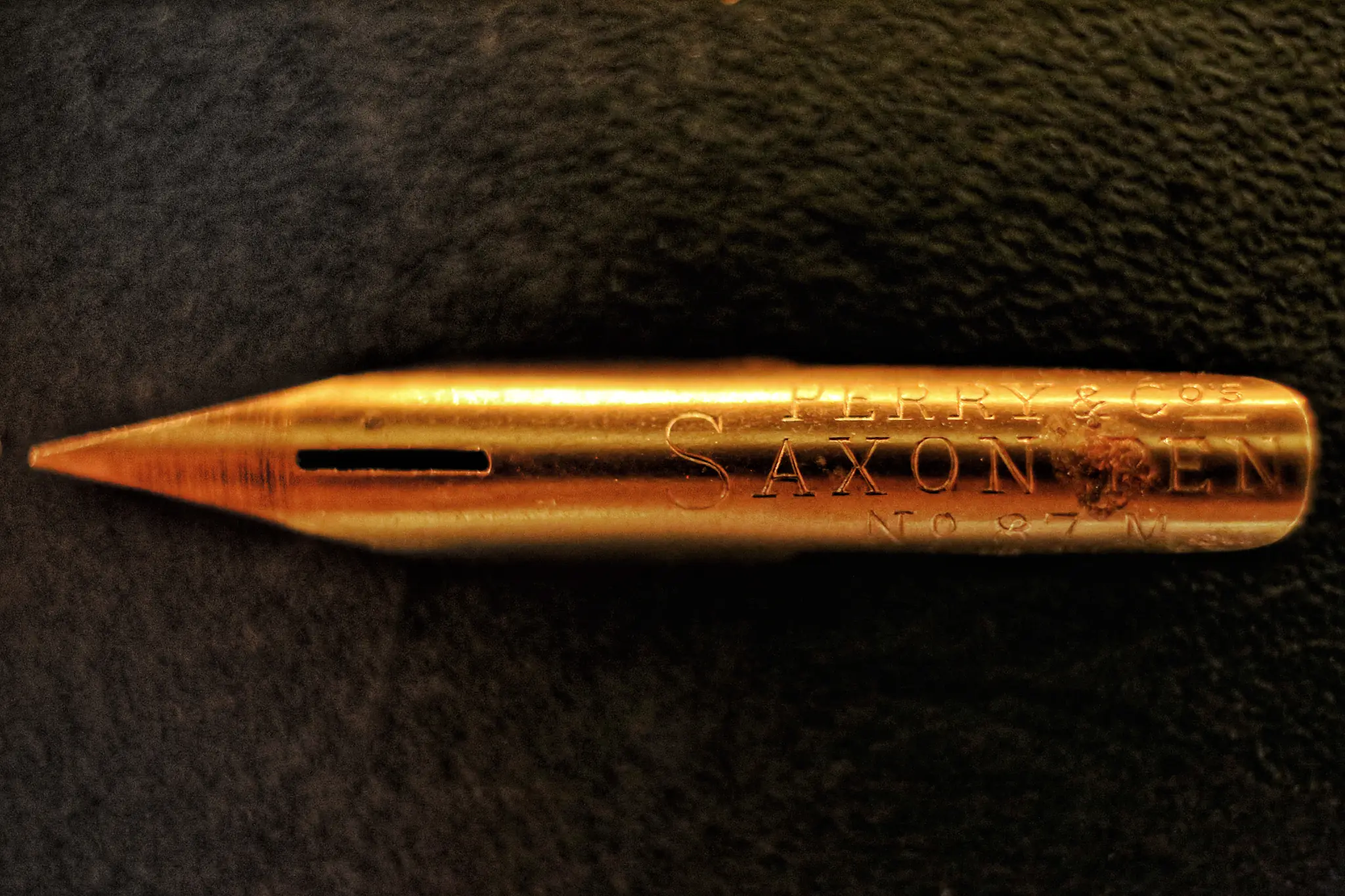
Saxon Pen N.27
The crown jewel of this antique dip pen is the steel nib itself, the pride of the legendary Birmingham industry, embodied in the “Saxon Pen” No. 27 M model created by the era’s titan Perry & Co. On the surface of the metal, the stamps can be clearly read: the creator’s name (Perry & Co.) is at the top, the proud line name (Saxon Pen) is featured in the center, and the serial number and index (No. 27 M) are stamped at the bottom.
Every steel nib of that era was born from a highly complex, multi-stage process: sheet steel was rolled at Birmingham factories, cut by presses, punched with a central breather hole, heat-treated, and given a protective polish.
The letter “M” in the No. 27 M marking usually stood for a medium level of flexibility or line width (Medium), making the nib a versatile tool for both fast business correspondence and neat bookkeeping.
The slit running from the central hole to the tip was ground with jewelry-like precision to ensure a perfect, measured capillary flow of ink onto the paper.
Brought together, the London “Best Accommodation” collet holder and the Birmingham “Saxon Pen” No. 27 M by Perry & Co. are not just a beautiful vintage pen. This is a true time machine from the era of the long 19th century, when every movement of a person at a desk involved physical labor, focus, and material culture of the highest order.
This pen does not burst with gold or bright flash, but it endlessly radiates the quiet, peace, and serenity that filled 19th-century offices. And after the lunch break, a well-fed office clerk would take this pen in his hand again, and his gaze would drift for a minute toward the city street visible from the window. What was he thinking about? What was he dreaming about? Then he would snap out of it, and his hand would reach for the inkwell. And did he ever think that more than 100 years later, this very same pen would be creating works of art?
And today, this pen continues its new life. We use this pen to create artworks using authentic iron gall ink.