“LE GRAND FRENCH FLAIR”

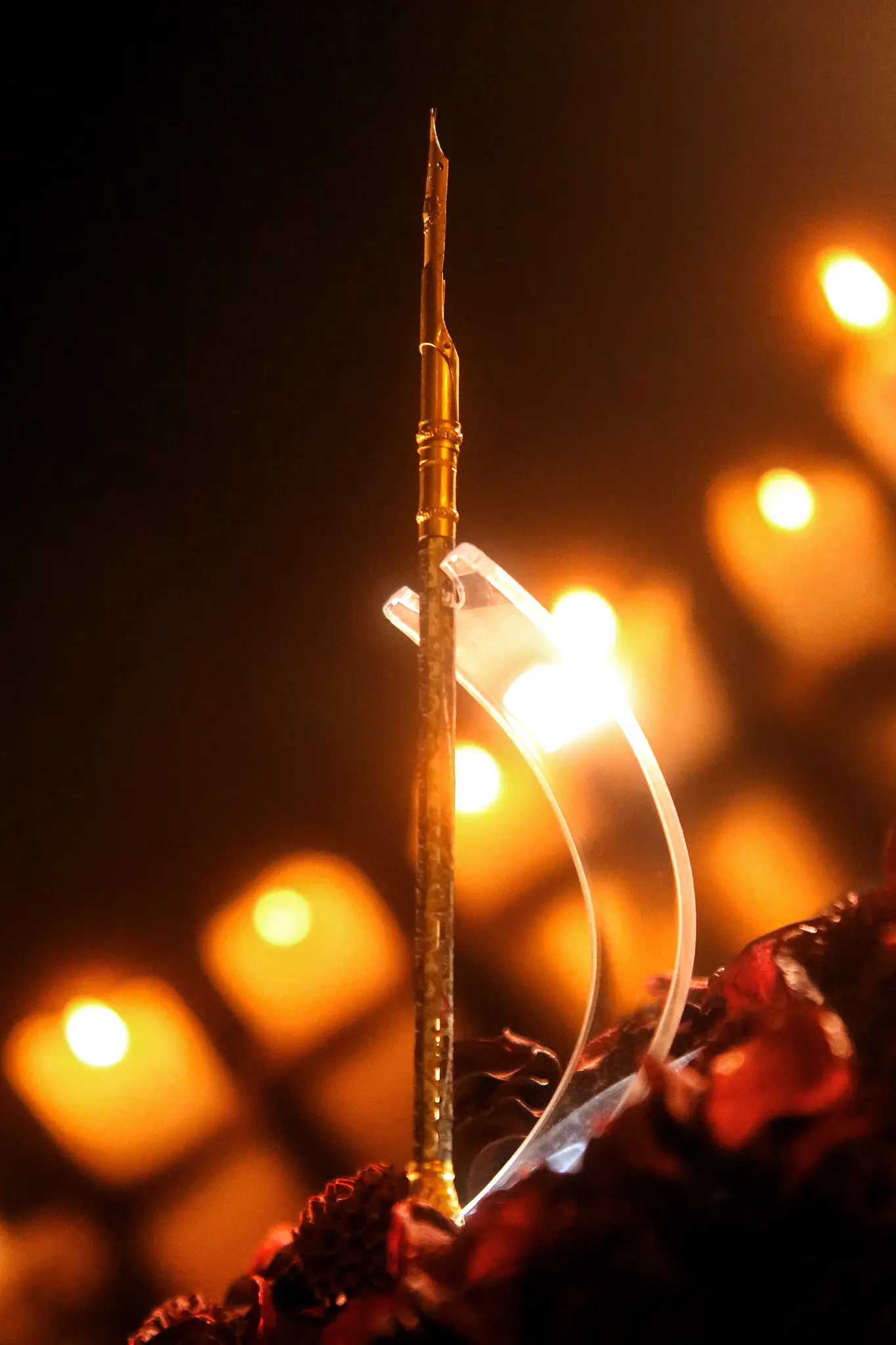
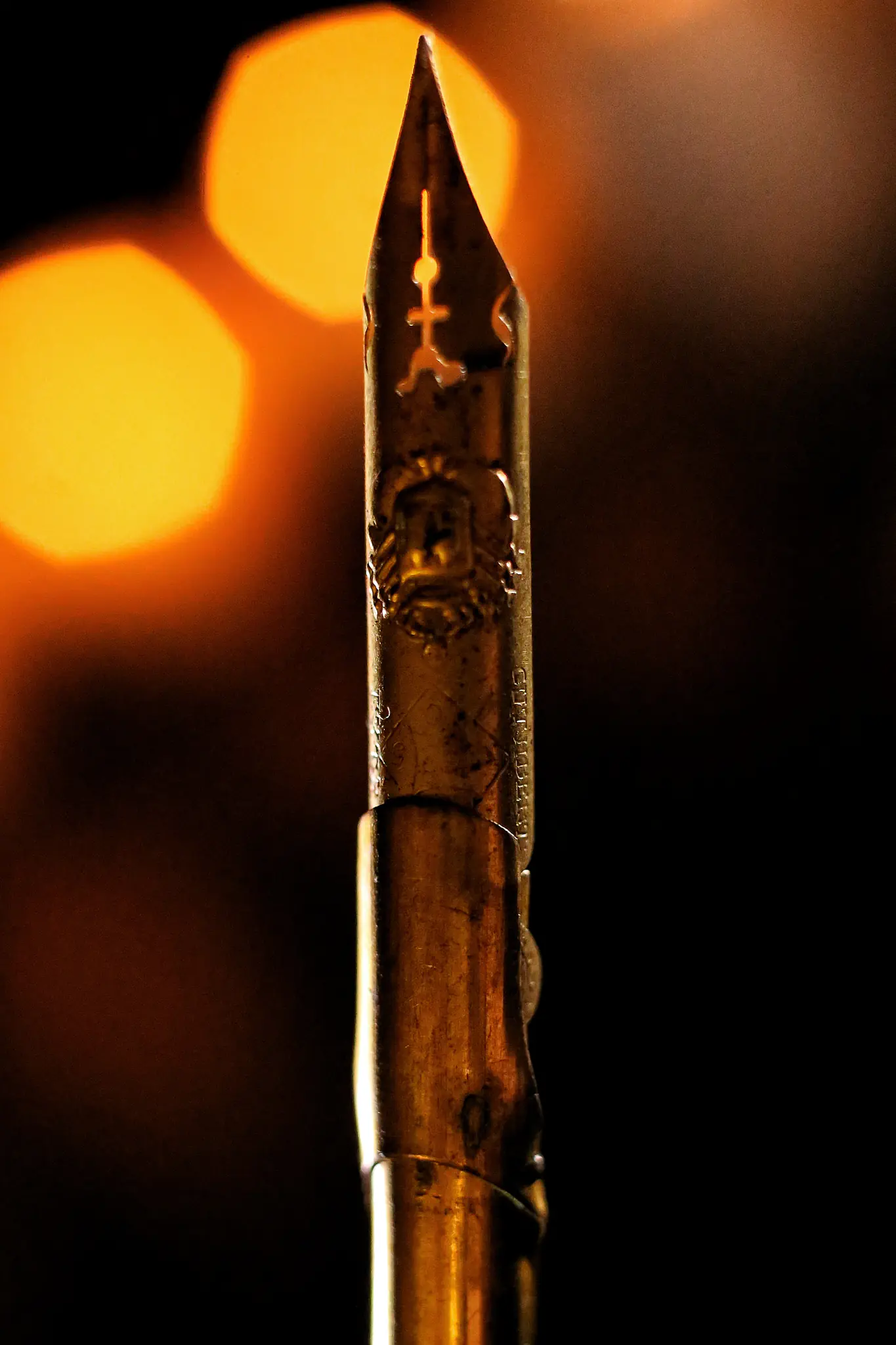
This dip pen, which we have affectionately nicknamed Le Grand French Flair, is far more than a simple everyday writing tool. It is a genuine cultural artifact from 19th-century France, offering a glimpse into an era when the writing desk was the very heart of life for intellectuals, writers, and officials. Throughout the long 19th century, craftsmanship flourished, and the art of designing writing accessories reached its absolute peak. Writing back then was a slow, ritualistic process that required deep focus. Every detail reflecting a person’s aesthetic taste mattered, starting from the quality of the paper all the way to the design of the dip pen and the inkwell.
Le Grand French Flair is a stunning creation by French artisans of the late 19th century, famous for their ability to turn ordinary household items into true works of art. During this period, the private studies of the bourgeoisie and aristocracy were filled with eclectic pieces that blended elements of Neo-Baroque, Rococo, and Historicism. This dip pen perfectly captures that spirit, beautifully balancing the clean, geometric lines of its faceted barrel with intricate, jewelry-like details.
Dip pens like this were made for the educated elite of the day: professional authors, poets, and lawyers, as well as high-ranking officials and wealthy travelers. In 19th-century France, the culture of writing was woven into the fabric of the middle and upper classes. An elegant writing instrument like this was a clear status symbol, marking its owner as part of the world of intellectual work and refined culture. Naturally, having such a piece on one’s desk reflected the owner’s deep appreciation for writing.
The rise of mass-produced steel nibs in the first half of the 19th century created a need for universal holders. This allowed writers to easily swap out worn or damaged nibs while preserving the beautiful base. Le Grand French Flair features exactly this kind of hinged mechanism, which deserves a closer look.
A Canvas of Miniature Art
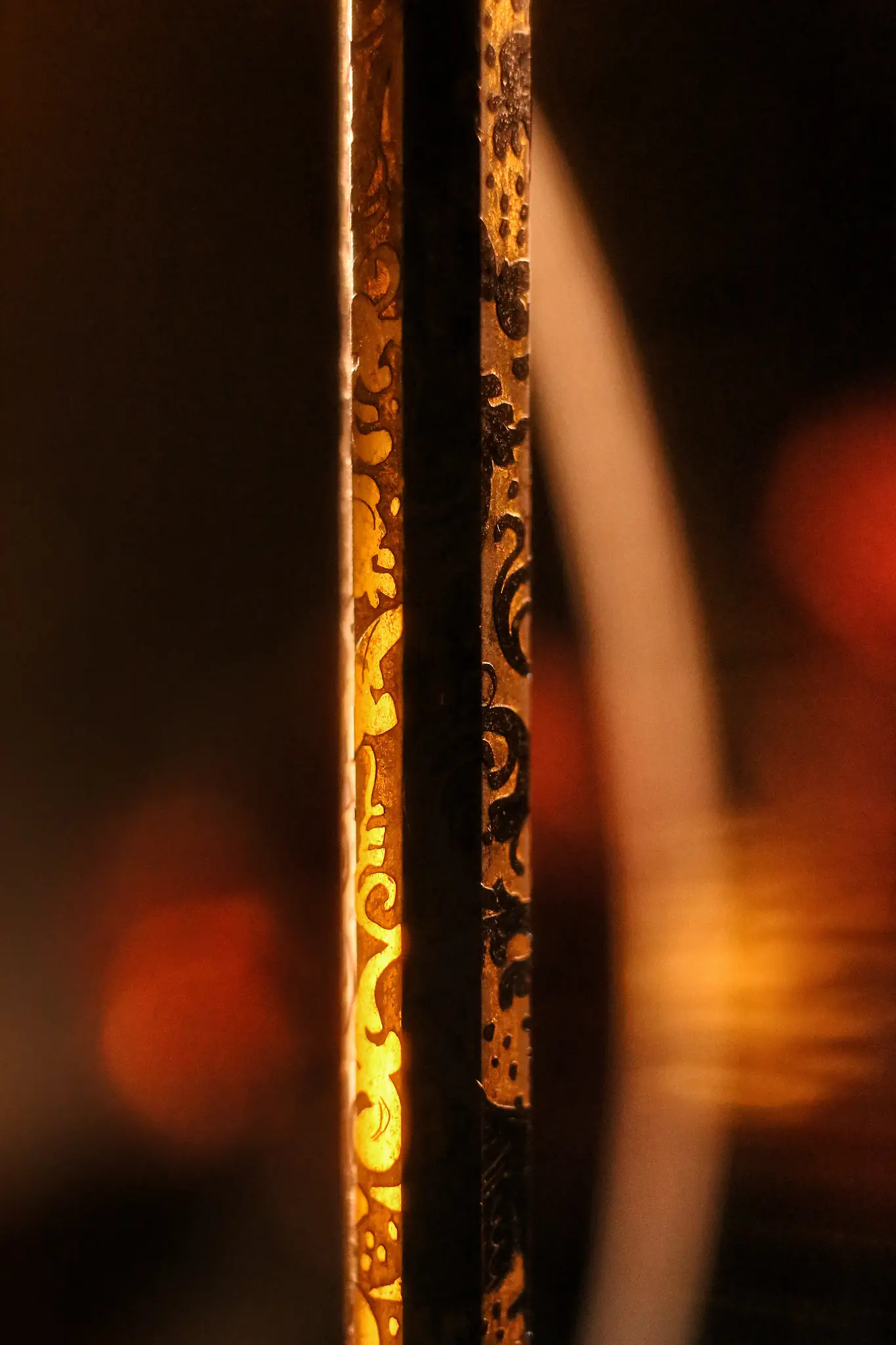
A closer look at Le Grand French Flair reveals a surface that acts as a canvas for miniature art. The dark, near-blued finish of the body creates the perfect backdrop for incredibly delicate inlay work. Drawing inspiration from Rococo design, the intricate pattern weaves endless arabesques into soft floral garlands, stylized rocaille shells, and abstract flourishes. Because the gold was applied unevenly, the surface carries a unique, slightly weathered character that speaks to its age and authenticity. Under a macro lens, the engraver’s mastery comes alive, as the finest cuts and textures give the entire motif a vivid, three-dimensional depth. As light plays across the barrel, the gold catches the eye in sudden flashes before receding into the dark base, creating a beautiful interplay of contrasts.
The holder itself features a crisp, octagonal geometry. Beyond offering a comfortable grip, these eight faces provide distinct planes to showcase the exquisite decoration. Every single facet holds its own unique piece of the overall ornament, while the sharp edges are traced with fine lines that emphasize the pen’s structured, architectural form. Capping off the design is a beautifully cast finial, which still carries a rich, century-old patina. The entire composition elevates a simple writing tool into a precious artifact. It is an object that invites hours of study, continually revealing new details in the endless dance of gold lines against the dark metal.
To bring such a complex and intricate design to life, late 19th-century French artisans relied on noble, durable alloys. They primarily used brass or bronze as a base, which was then treated with special protective and decorative techniques like blackening and bluing. At the time, bluing involved creating an incredibly thin, protective oxide film on the metal’s surface through a precise mix of chemical reagents and heat. This process gave the metal a deep, dark grey or near-black tone with a beautiful matte or silky sheen. Blackening, on the other hand, involved filling tiny grooves and microscopic pores with a dark sulfur compound to maximize contrast against the brilliant gold pattern.
Pieces like this were crafted using fine engraving or inlay techniques, where precious metal was skillfully pressed into pre-carved grooves. It was a painstaking process requiring a steady hand, jewelry-level precision, and immense patience, since a single slipped blade could ruin the entire piece beyond repair. This combination of a durable alloy, a blued base, and gold accents allowed Le Grand French Flair to preserve its functionality over the centuries while carrying the genuine warmth of the artisan who turned cold metal into a timeless work of art.
Engineering and Precision of the Grip
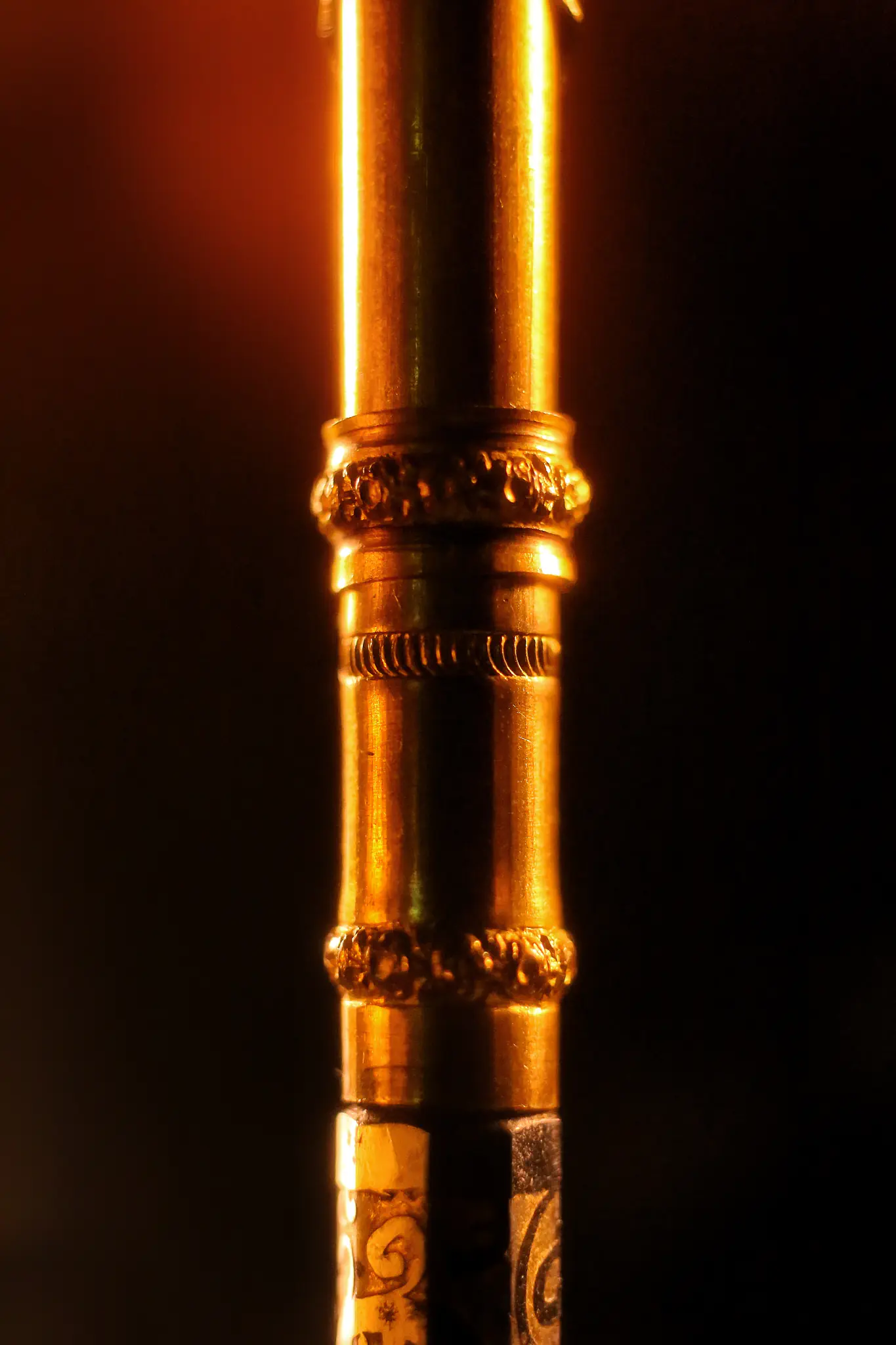
At the front section of the holder, where the elegant faceted body meets the functional grip, a utilitarian metal joint is transformed into a brilliant piece of 19th-century engineering. This transition zone was assembled with meticulous attention to detail, featuring raised ridges and bands that stand out against the polished golden surface to divide the sections of the pen cleanly. The central grip area is covered in a fine knurled pattern of diagonal cuts. These incisions create a lively play of light and shadow, closely resembling classical architectural friezes.
Two chased rings featuring a botanical motif add a distinct charm to this area. Late 19th-century artisans used dimensional chasing techniques here, crafting miniature garlands of stylized leaves and buds with flawless symmetry. Beyond their pure aesthetic value, these raised bands served a highly practical purpose, providing a secure grip to keep the writer’s hand from slipping. The smooth, fluid transitions between the sleek cylinder and the ornate detailing show the incredible skill of the craftsmen who saw even the hidden technical joints as an opportunity to showcase their mastery.
Remarkably, the artisan managed to secure these rings onto the neck without any trace of welding or solder, leaving them free to move. The secret lay in old-world lathe mechanics, as the component was assembled using a multi-step interlocking system. The inner diameter of the ring was made slightly wider than the shaft, yet smaller than the retaining lips lathed directly onto the solid workpiece. The craftsman would slip the piece onto the shaft before shaping the final barriers through turning or cold forging. As a result, the ring achieved a floating fit, allowing it to spin freely and shift slightly along the axis without ever slipping off. This mechanical freedom brought the pen to life and put the artisan’s masterful metalworking skills on full display.
The true value of pieces like this becomes apparent only when considering the technological limitations of the era. Creating such miniature, precise mechanisms in the 19th century, long before the invention of CNC machines, was a monumental feat of craftsmanship. Fine knurling, perfect geometry, and moving parts were all executed using simple foot-powered lathes, hand chisels, and magnifying glasses. Everything relied entirely on a keen eye and decades of experience. Ironically, finding a specialist today who is willing to replicate this kind of micromechanics by hand, without the aid of modern mass production, is incredibly difficult, which is exactly what makes this antique dip pen a rare monument to a bygone culture.
The Crown of the Finial
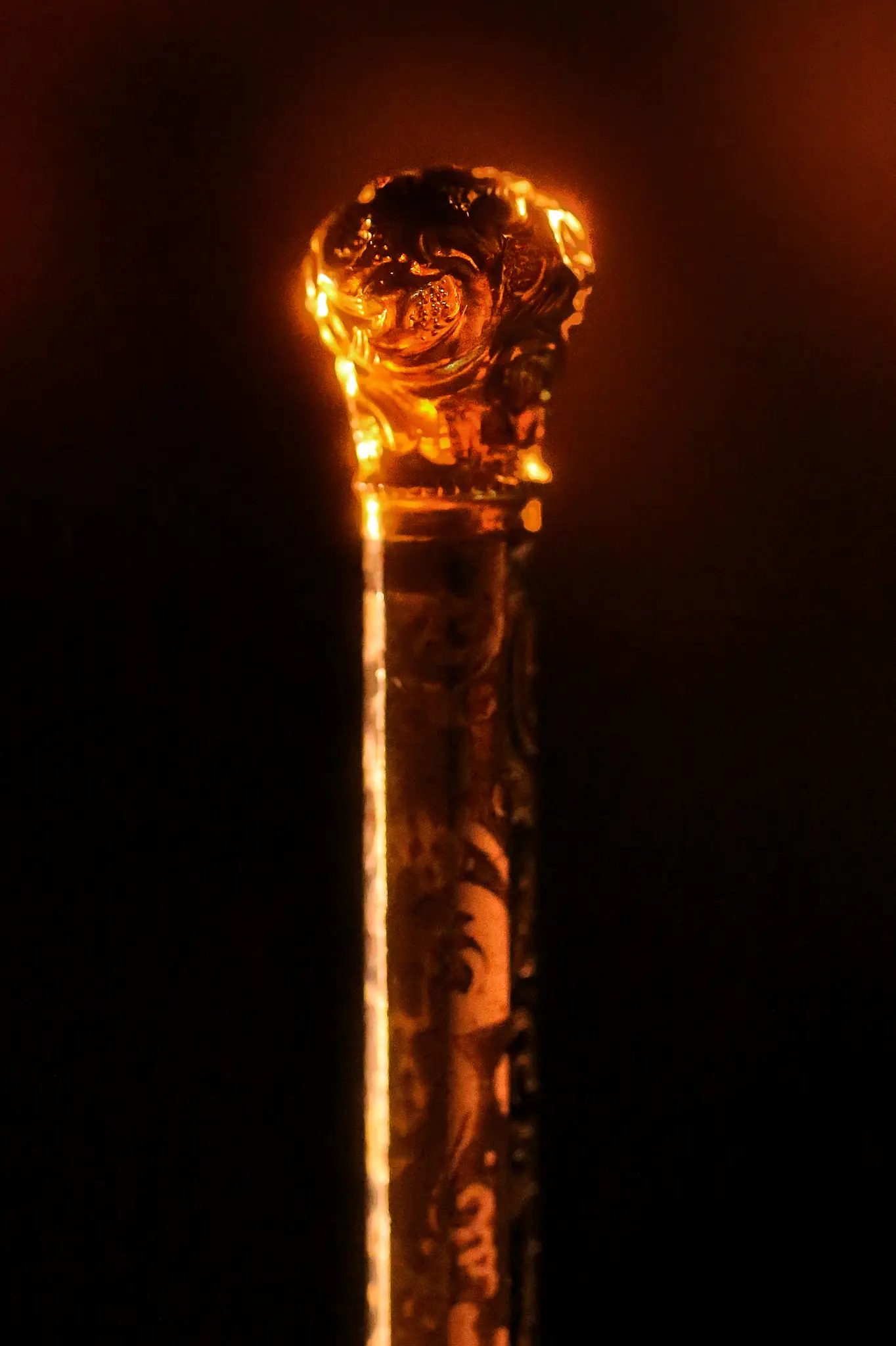
The finial crowning the piece serves as the ultimate anchor for the entire artistic design. This miniature sculpture, cast in metal with a golden finish, derives its impact not from size, but from the dense complexity of its decoration. A closer look at this swirling gold design reveals how seamlessly rich French Baroque aesthetics fit into such a modest space. Stylized rocaille shells, whimsical foliage, and even subtle grotesque masks or mythical creature heads intertwine in an endless dance of lines. The finial feels as though it was lifted straight from the facade of a grand Parisian mansion of the Louis XIV era or the palace interiors of Versailles. It brings a taste of palace luxury right to the writer’s fingertips, lending a grand, monumental presence to the object despite its utilitarian purpose and making the dip pen resemble a miniature scepter.
Crafting an element like this in the 19th century was more than just painstaking work; it was a process akin to fine jewelry making. The production stages closely mirrored the creation of a large-scale monument, only on a miniature scale. First, a master modeler sculpted an exact replica of the finial in wax or clay, refining every detail using magnifying glasses and delicate modeling tools. This prototype was then cast in bronze or brass using the lost-wax method to capture the finest nuances of the relief. The work did not stop there. The raw casting was then handed over to a master chaser. Armed with steel punches and hammers, the artisan manually refined the textures, deepened the shadows, and breathed life and dimension into the forms. It was this hands-on chasing process that gave the metal surface its unique, warm, and deep luster, something completely impossible to achieve through modern mass production. Finally, a decorative coating was applied to give the piece its beautiful, noble golden tone.
Achieving this level of detail demanded exceptional skill from a tightly knit team of specialists. In the workshops of Paris, Lyon, or Bordeaux, cities famous for their artistic casting and metalworking traditions, an entire crew of artisans would collaborate on a single order. This was far from an assembly line, operating instead as a master guild with a strict division of labor. One artisan was responsible for the artistic concept and model, another for the flawless casting, and a third for the fine hand finishing and assembly. Workshop owners fiercely guarded their reputations, ensuring that every finished piece carried the signature craftsmanship of generations of artisans. Although the names of the specific sculptors who sketched these writing instruments have rarely survived, their style remains instantly recognizable today. Heavily inspired by the great architects and decorators of France, the finial of Le Grand French Flair draws a direct line to the ornamental grandeur of the Louvre, the Tuileries Palace, and the countless châteaux of the Loire Valley, where every architectural detail was treated as a work of art.

THE SECOND LIFE
Ultimately, Le Grand French Flair is far more than just an antique writing tool. It is a portal to a bygone era and a tangible embodiment of 19th-century French art de vivre, the art of living. Holding this piece reveals more than just the weight of the metal and the coolness of its smooth barrel, connecting us directly to the very essence of French culture at the time. It speaks to a passion for beauty, a meticulous attention to detail, and a unique ability to elevate an ordinary object into a treasured possession and a status symbol. Every single scratch on the blued barrel and every weathered patch of gold on the chased finial serves as a testament to a life spent in the hands of an intellectual, a writer, a diplomat, or an aristocrat. It stands as a witness to countless letters written, decrees signed, and verses penned. This is the true magic of genuine antiques: they carry the creative energy and memory of past generations, allowing us to share in a grand history of human culture and craftsmanship that has endured long past its era.
It is remarkable that these objects have survived through the centuries. There is something deeply profound about looking at such a piece, imagining the person who once owned it, and pondering their innermost thoughts and aspirations. We often view the 19th century as a distant, abstract past, yet here it is, right before our eyes. We can do more than just look at it; we can touch it. It is fascinating how often people imagine the 19th century as a primitive era, only for those assumptions to shatter when faced with reality. Even a standard dip pen used for everyday writing looks like a true masterpiece crafted with the highest level of skill.
The mission of our home of arts is not merely to tell you about these incredible masterpieces, but to breathe new life into them. Nearly two centuries later, we track down these artifacts, brush away the dust of ages, gently dip them into iron gall ink, and use them to create new works. In doing so, we build a tangible bridge between the ‘long 19th century’ and our modern world. Most importantly, this dip pen is once again fulfilling the exact purpose for which it was created. It is alive again. The labor of the original artisan regains its meaning and continues its journey. This is the true preservation of heritage, and it lies at the very heart of everything we do.