VSELÉNSKYI: XIX-CENTURY DIP PEN

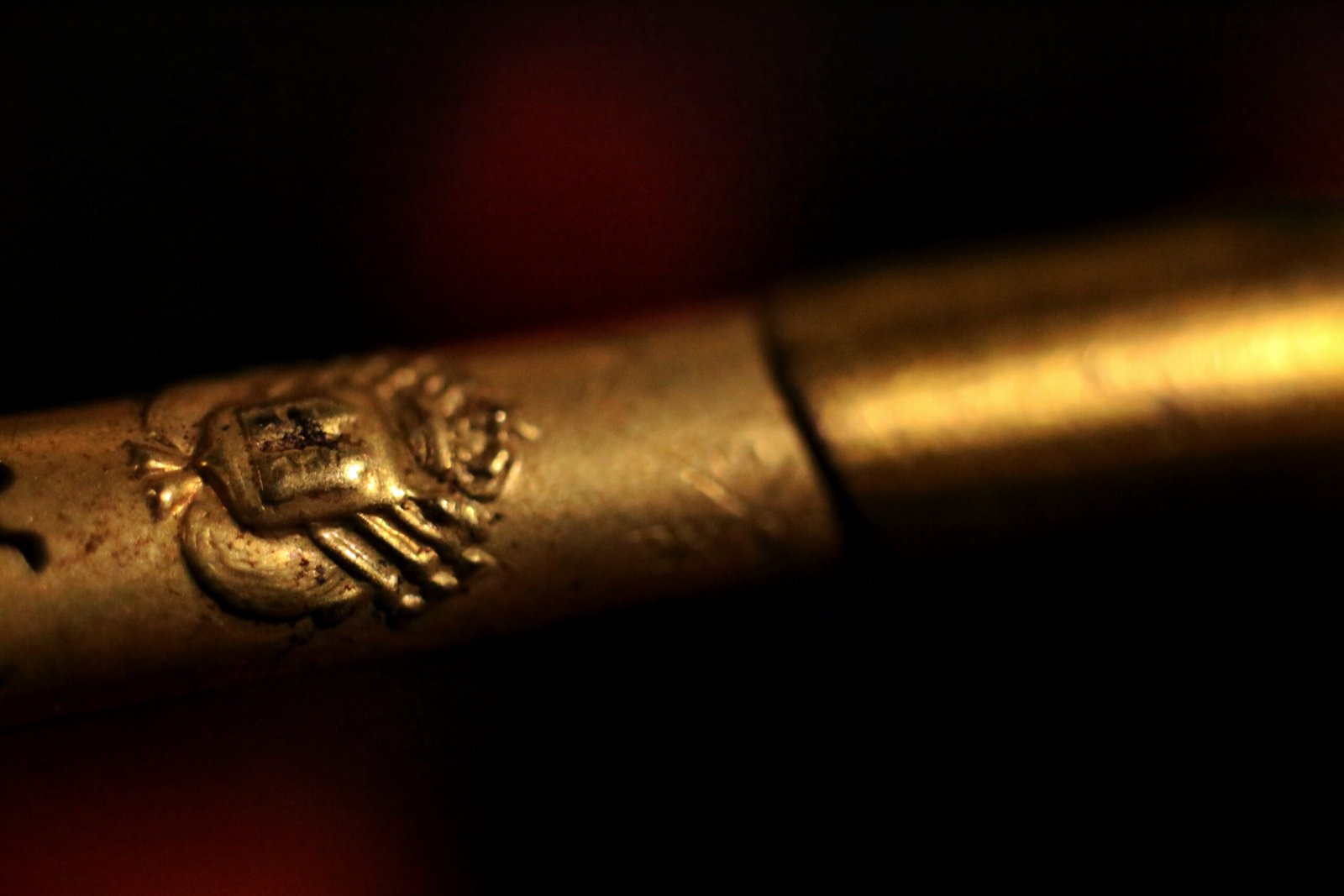
The Artist’s Writing Instrumen
This dip pen is a masterpiece of the 19th century. Crafted in France during the latter half of the 1800s, it embodies the true spirit of an era when every object was an expression of fine art. It is a work of the highest artisanal caliber; it is rare to encounter a dip pen of such incomparable beauty.
This object is the quintessential representation of the 19th-century French bourgeois aesthetic: an exuberance of ornament paired with flawless ergonomics, transforming the simple act of writing into an event.
In the creation of his works, Vselenskyi employs this pen to imbue his writing with the authentic spirit of the 19th century. It is a true museum-grade artifact that no longer gathers dust on a shelf, but instead performs the very function for which it was created.
Acquiring this artifact was no small feat, as such pieces in impeccable condition are exceedingly rare. Collectors and museums alike pursue them relentlessly. Yet, this pen is now in our possession.
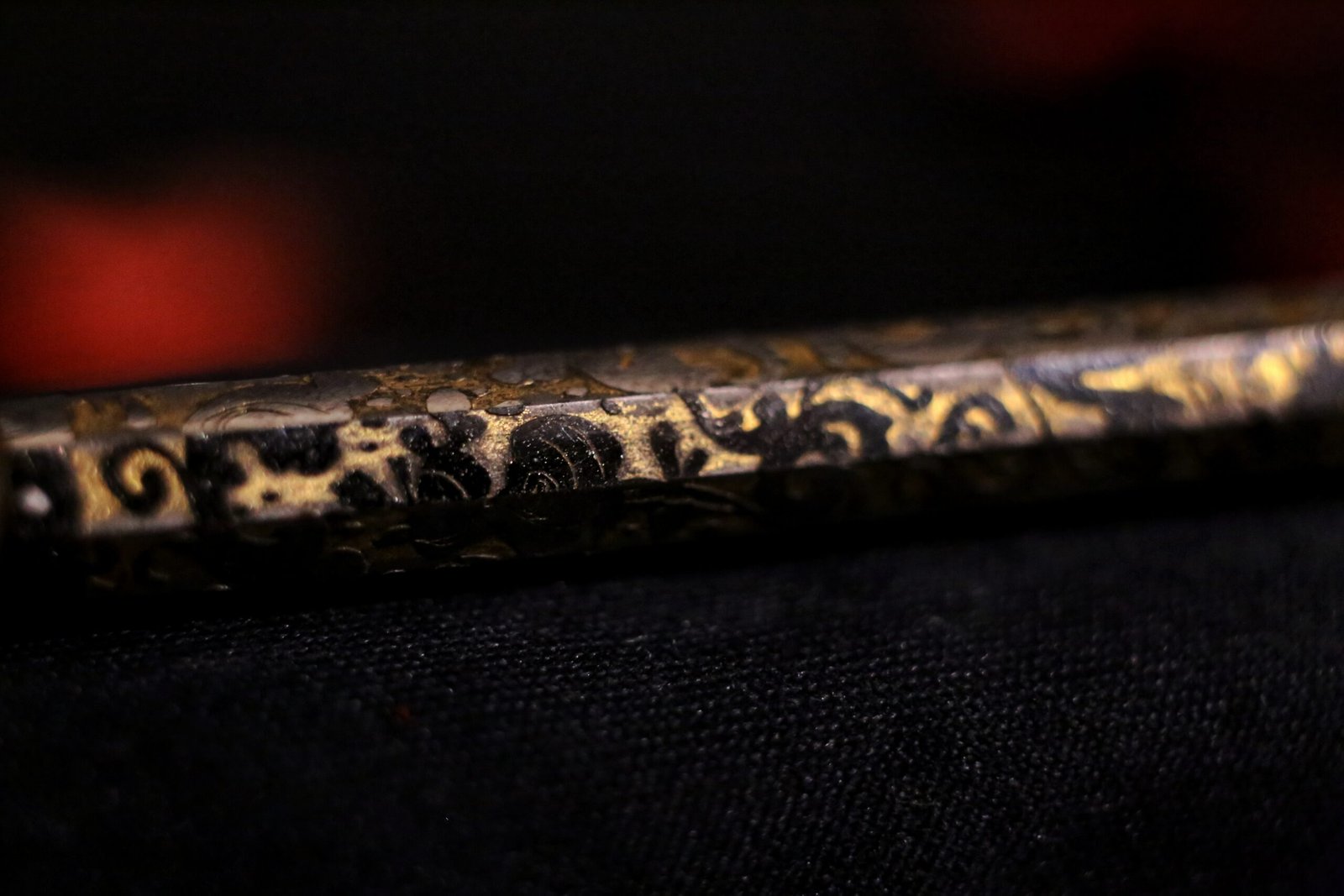
Let us examine it closely to fully appreciate this living piece of the 19th century.
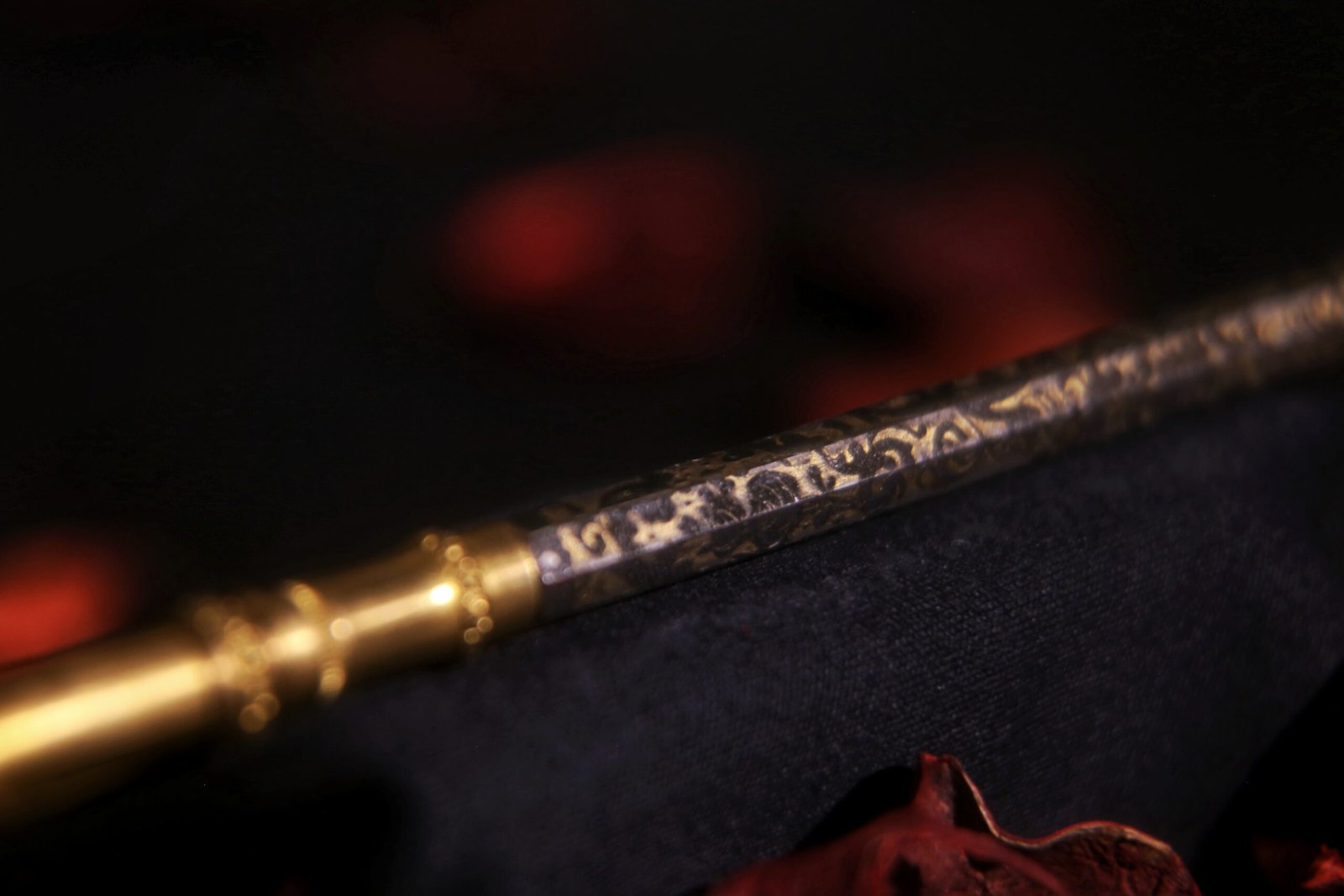
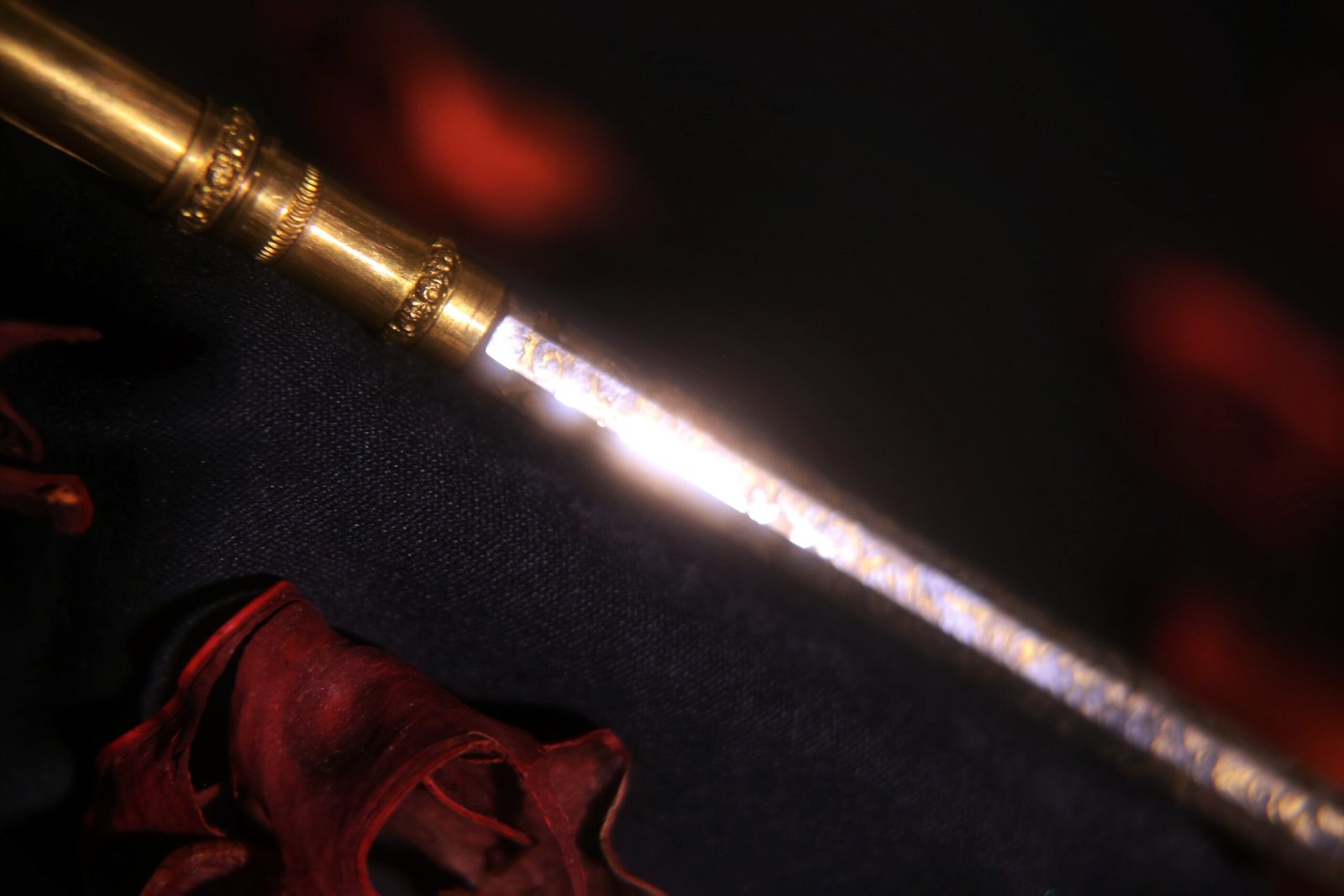
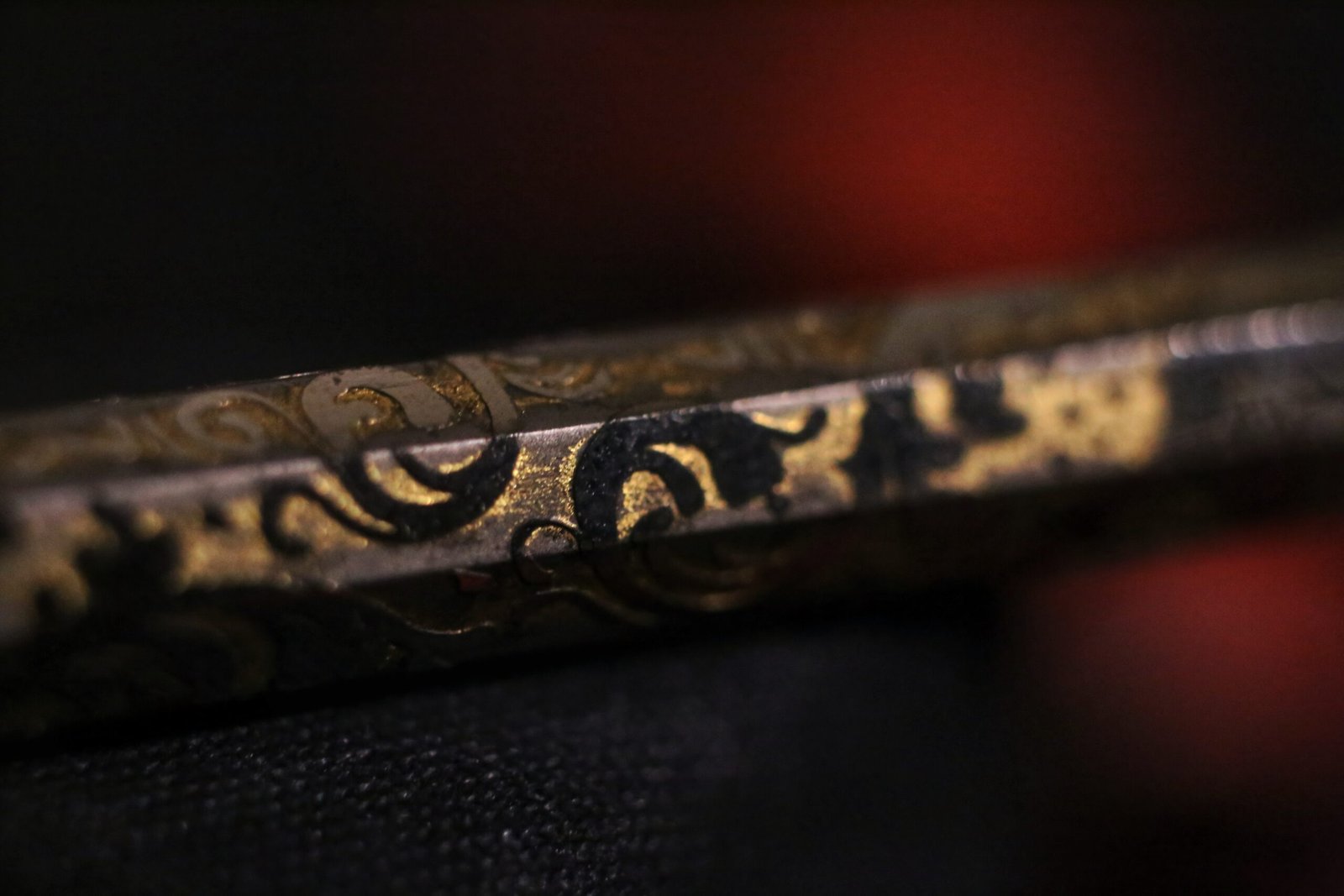
The pen consists of a barrel, connecting elements, a nib holder, the nib itself, and a finial. The barrel features a hexagonal profile, adorned with an intricately engraved and blackened pattern that contrasts strikingly against the golden ground. This ornament was likely executed through damascening or deep engraving followed by niello, lending the object an extraordinary appearance.
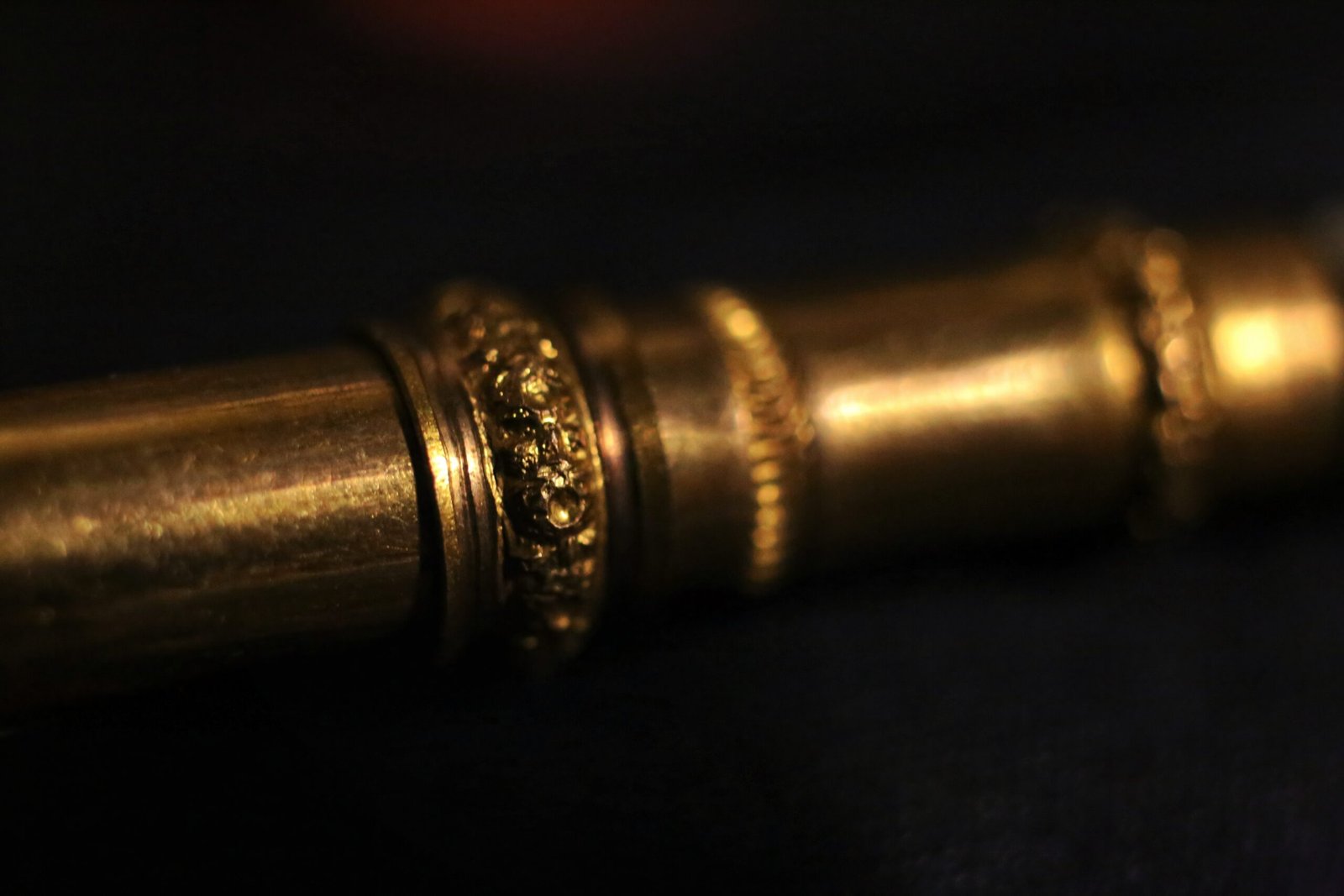
The transitions from the barrel to the nib and the finial are marked by smooth and textured golden metallic elements. These are embellished with detailed relief bands, which add a layer of sophistication and accentuate the seamless junctions of the pen’s components. The pen culminates in a voluminous decorative finial, fashioned as a stylized head or a complex cast element with a distinct granular texture, lending the piece a sense of status and compositional completion.
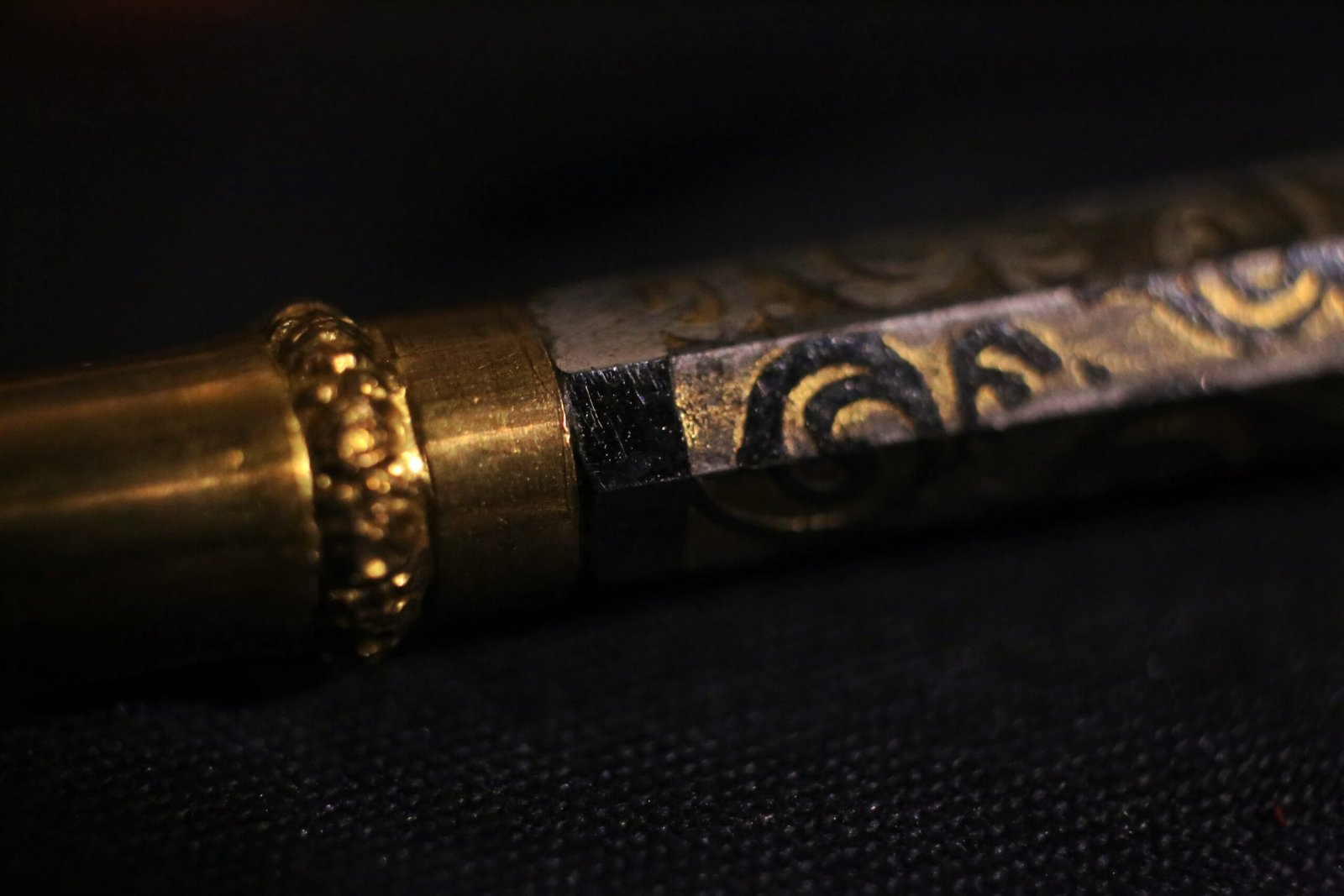
The combination of darkened metal, gilded elements, and intricate engraving confirms that this pen was far more than a mere desk accessory; it was a status symbol for its owner. Observing the patterns, one discerns the superior quality of craftsmanship—from the precise fit of the components to the meticulous rendering of the ornament—all of which testifies to its creation by a master of the highest order.
The fabrication of such a pen requires a colossal and complex effort. It is remarkable how, in our modern age, this instrument has been granted a new life, returning to service just as it did two centuries ago.
Consider that this pen was used for writing before the Second World War, before the First World War, before the invention of photography, and even before the lightbulb. It predates the dawn of the automotive age. Before us lies history in its purest form.
The works of Vselenskyi allow one not merely to admire this history, but to possess a tangible fragment of it. This is the profound significance of our endeavors. When a piece you admire hangs in your study or drawing room, you are forever conscious of the historical weight and the enduring connection to that era.
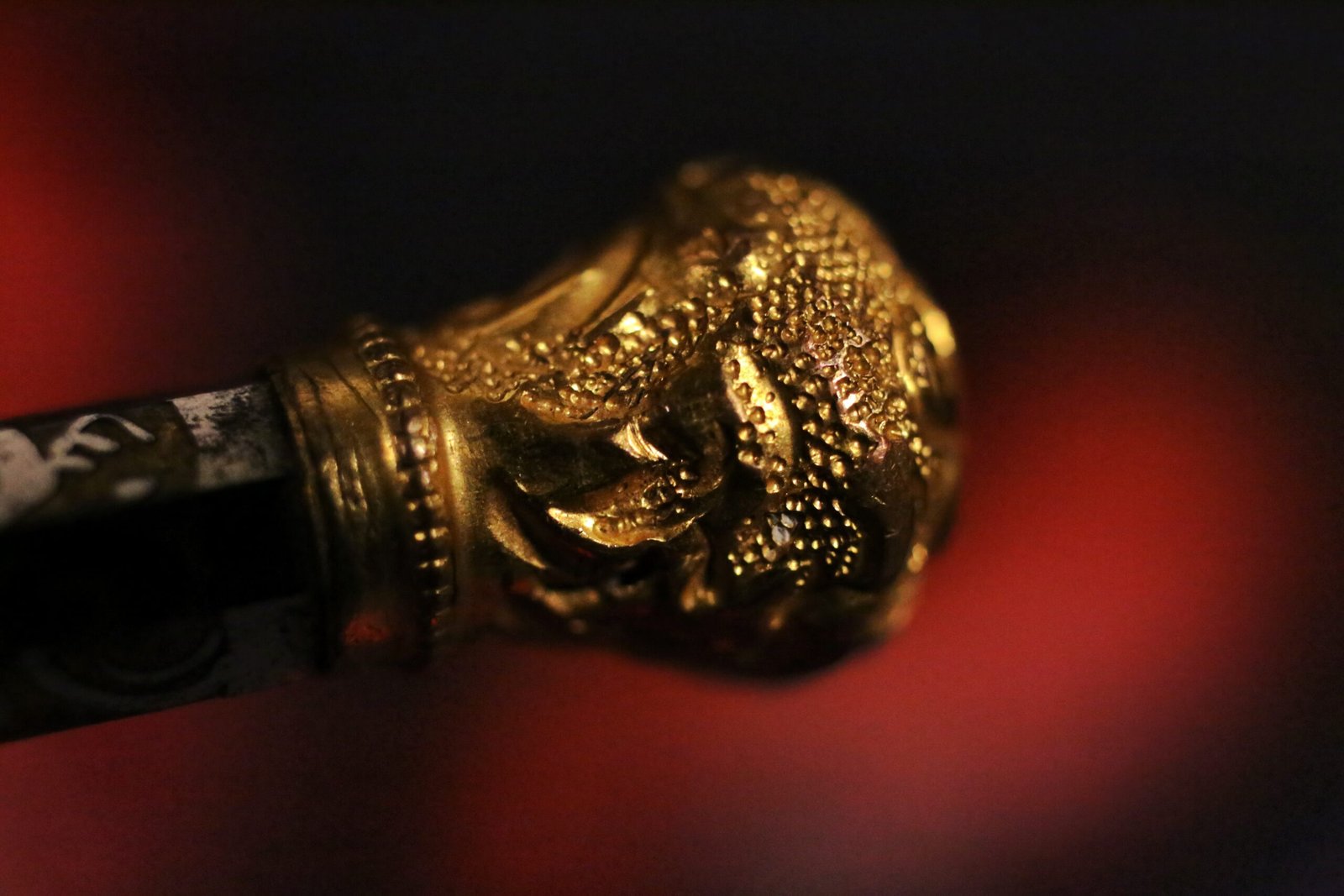
It is remarkable and unique, and you may be certain that such a synthesis of art and history cannot be replicated. This is precisely why the works of Vselenskyi are utterly singular, captivating the imagination of all who encounter them.
Having now become acquainted with the instrument through which Vselenskyi crafts his works, we invite you to our gallery, where you may not only view the art, but also explore the histories and narratives that define them.
DIP PEN GALLERY
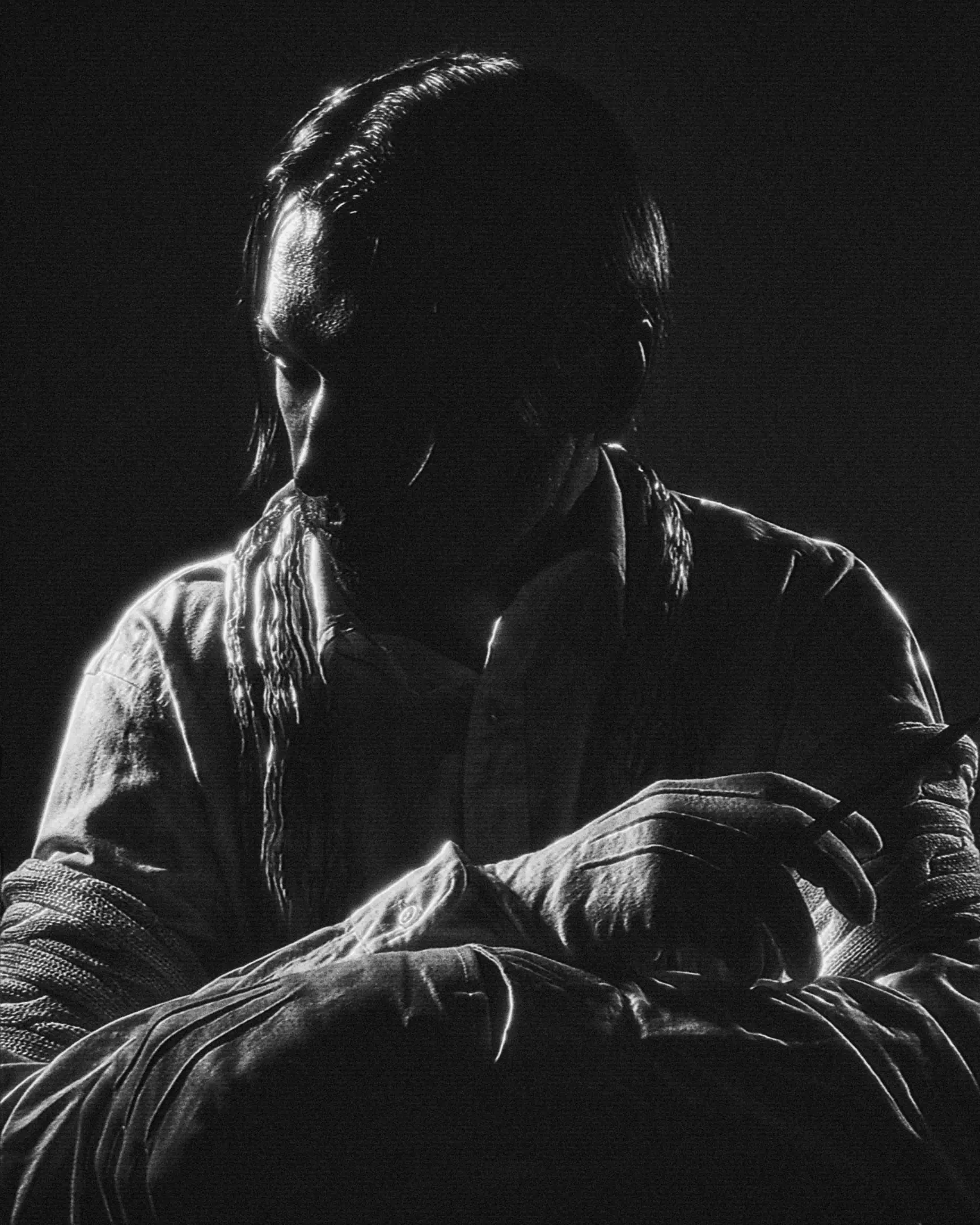
“What is it like to draw with a 19th-century dip pen?”
“As a cultural historian, holding this dip pen feels like touching the very era I study. And using it for my artwork is an incredible sensation. Could I draw with a modern pen holder? Of course! It would even be more convenient. But there is a catch. Someone who wants an incredible art object wants their piece to be created using a pen that existed during the long and golden 19th century. It makes the work not just unique, but absolutely incredible and filled with meaning.”
Vselenkyi