VSELÉNSKYI

SPAZIO D’ARTE

GUIDE: Find a wife (1916) Book

$13,200.00 (tax included)

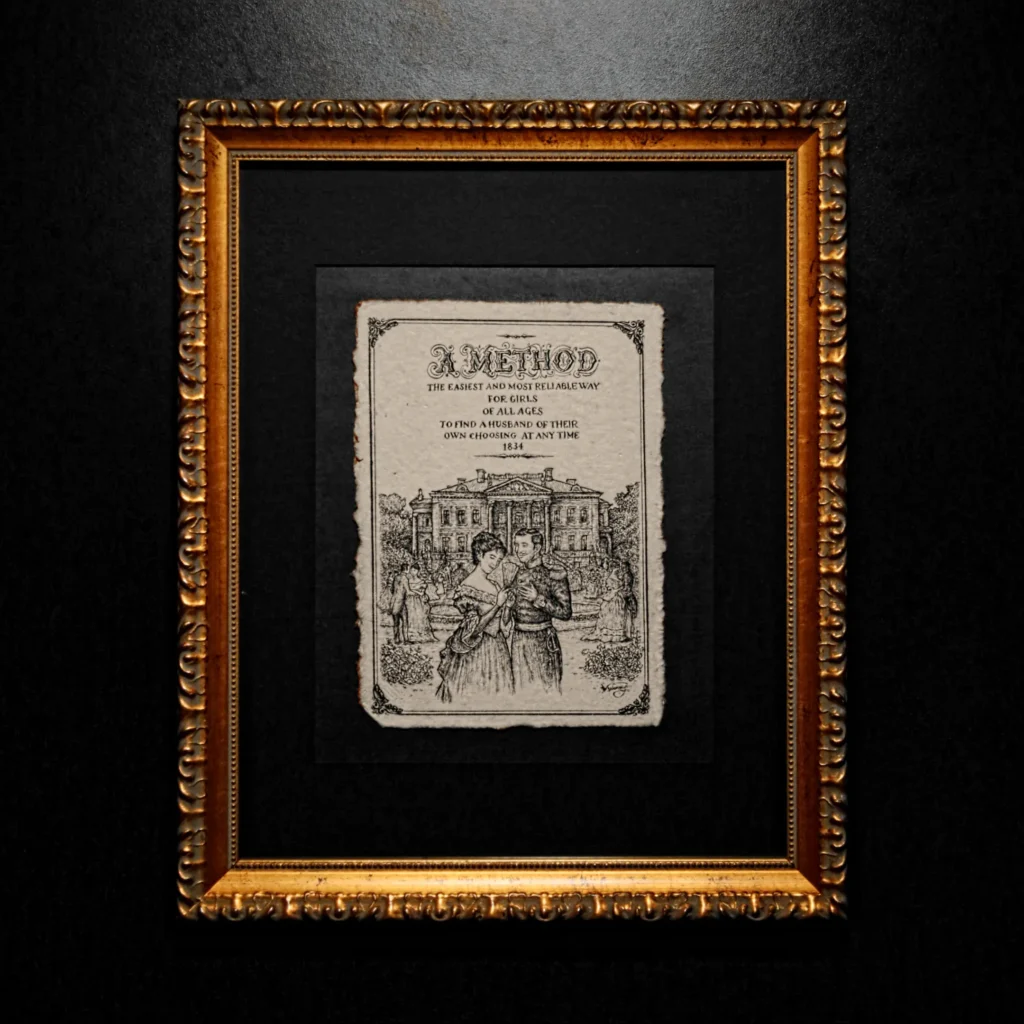
A sophisticated visual interpretation of the 1916 guide, How to Find a Wife. This original work, rendered with a 19th-century dip pen and authentic iron gall ink on 300 gsm Indian paper, captures the fading elegance of the Belle Époque. Housed in a handcrafted frame with UV-protective glass, it carries a 100-year archival guarantee. The piece is part of an exclusive set, featuring a hand-transcribed volume of the 1916 text with scholarly commentary and hermeneutic analysis.

SKU: 302
Category:
Brands:

Technical Profile


Attributes Value
Contents:

• Original Ink Art Object
• The 1916 Manuscript: A Dedicated Hand-Penned Devotion by Vselenskyi
• Certificate of Authenticity
• 15-minute "Making of" short film

Specifications:

• Sketch Size: 5 x 9 in, 12.7 x 22.8 cm
• Frame Size: 11 x 14 in, 27.9 x 35.5 cm
• Weight: 1 kg, 2.2 lbs

Materials & Origin:

• Paper: 300 gsm Handmade Paper (India)
• Frame: Handcrafted Artisan Baguette (Estonia)
• Ink: Authentic Iron Gall Ink (Traditional 19th-century formula)

Style & Artistry:

• Technique: Classic dip pen and ink sketching.
• Originality: A unique, signature composition by the artist.
• Exclusivity: A singular work of art; one of one.
• Heritage: Executed in strict adherence to authentic 19th-century artistic traditions.
• Provenance: Anno Domini 2026.

Longevity:

• 100-Year Archival Display Guarantee (Under UV-protected conditions)


HISTORY OF ART OBJECT

GUIDE: Find a wife (1916) Book


“A satirical glimpse into the heart of the 19th century”

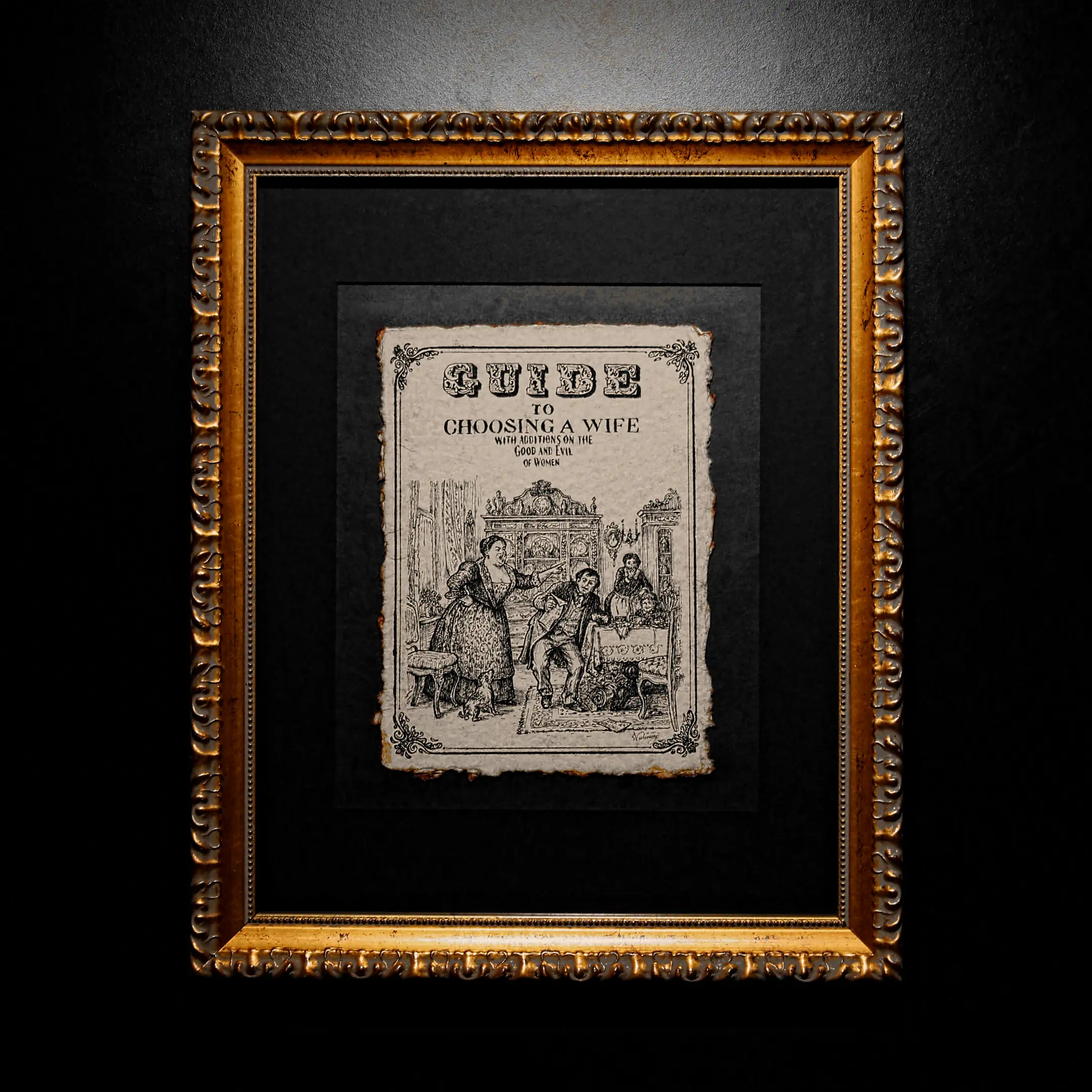
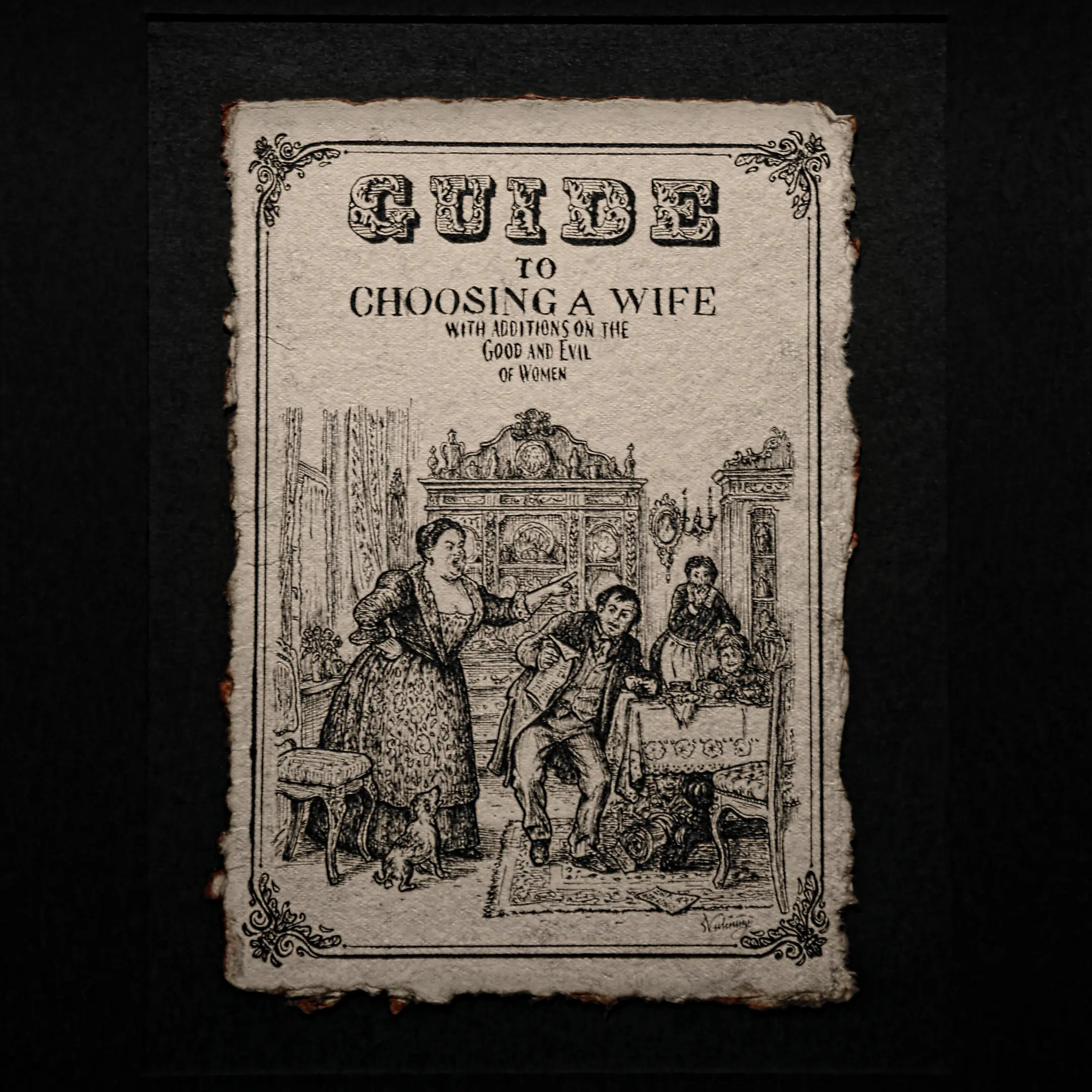
Original ink drawing by Vselenskyi: a humorous 19th-century domestic scene with a dominant wife and a scholar husband on textured handmade paper
Original cover art for the VSELÉNSKYI literary project

The Art of Domestic Narrative: Guide to Choosing a Wife

This original masterpiece is executed by Vselenskyi using a traditional 19th-century dip pen on heavy handmade Indian paper. The artwork serves as the definitive cover illustration for the volume titled “Guide to Choosing a Wife”. Every line of iron gall ink captures the satirical essence of historical social dynamics.

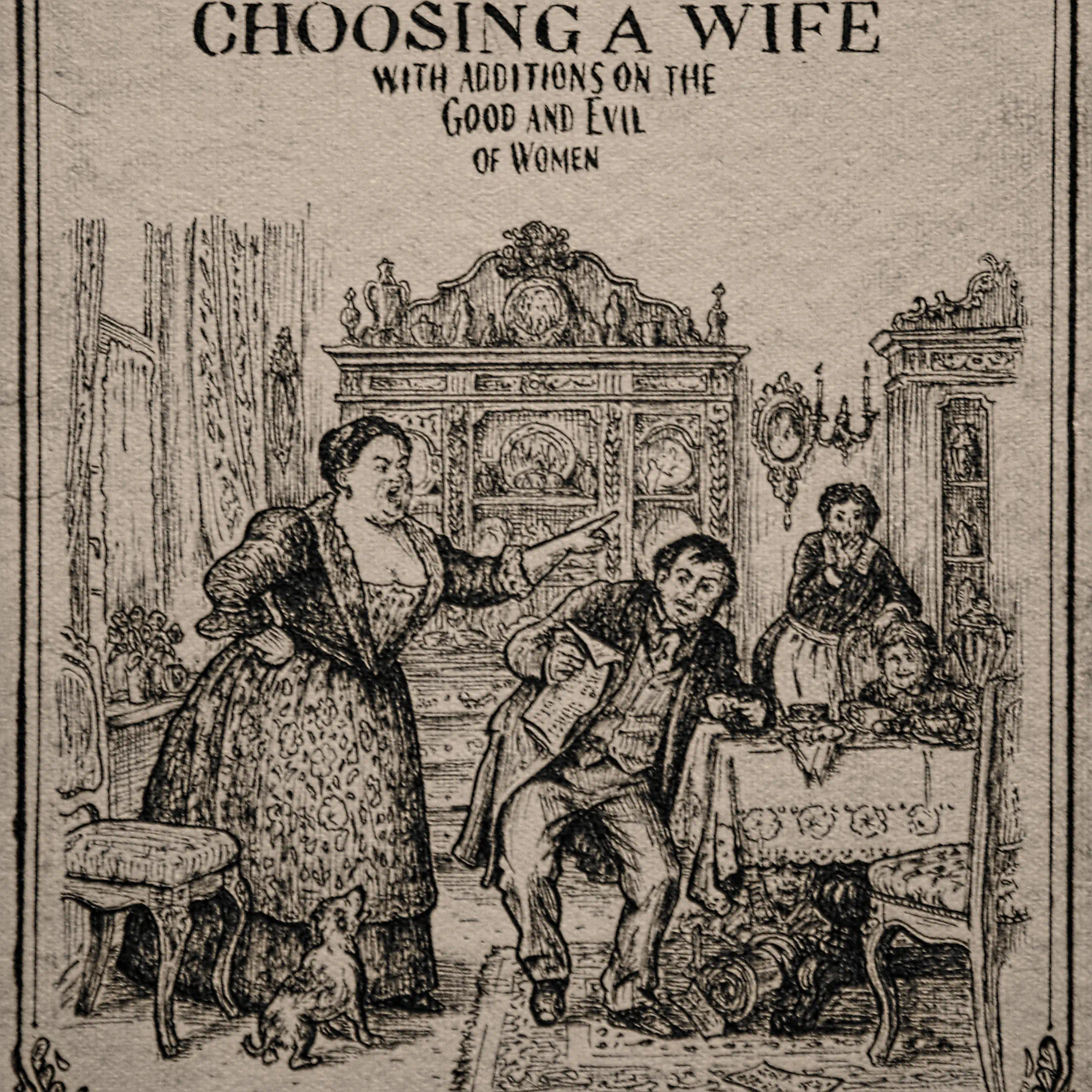
The composition reveals a humorous scene of domestic life within the long 19th century. An opulent woman, draped in fine attire, commands the room with a forceful gesture. Her husband sits in a state of comical surrender, momentarily distracted from his morning gazettes. The visual narrative instantly clarifies the true hierarchy within this noble household.

Surrounding the central figures, the household continues its silent observation. A child sits at the table while a modest maid stands in the shadows. Another child seeks refuge beneath the tablecloth, adding a layer of innocent charm to the chaos. This intricate ink drawing celebrates the “Neoclassical Libretto” through sharp wit and archival materials.

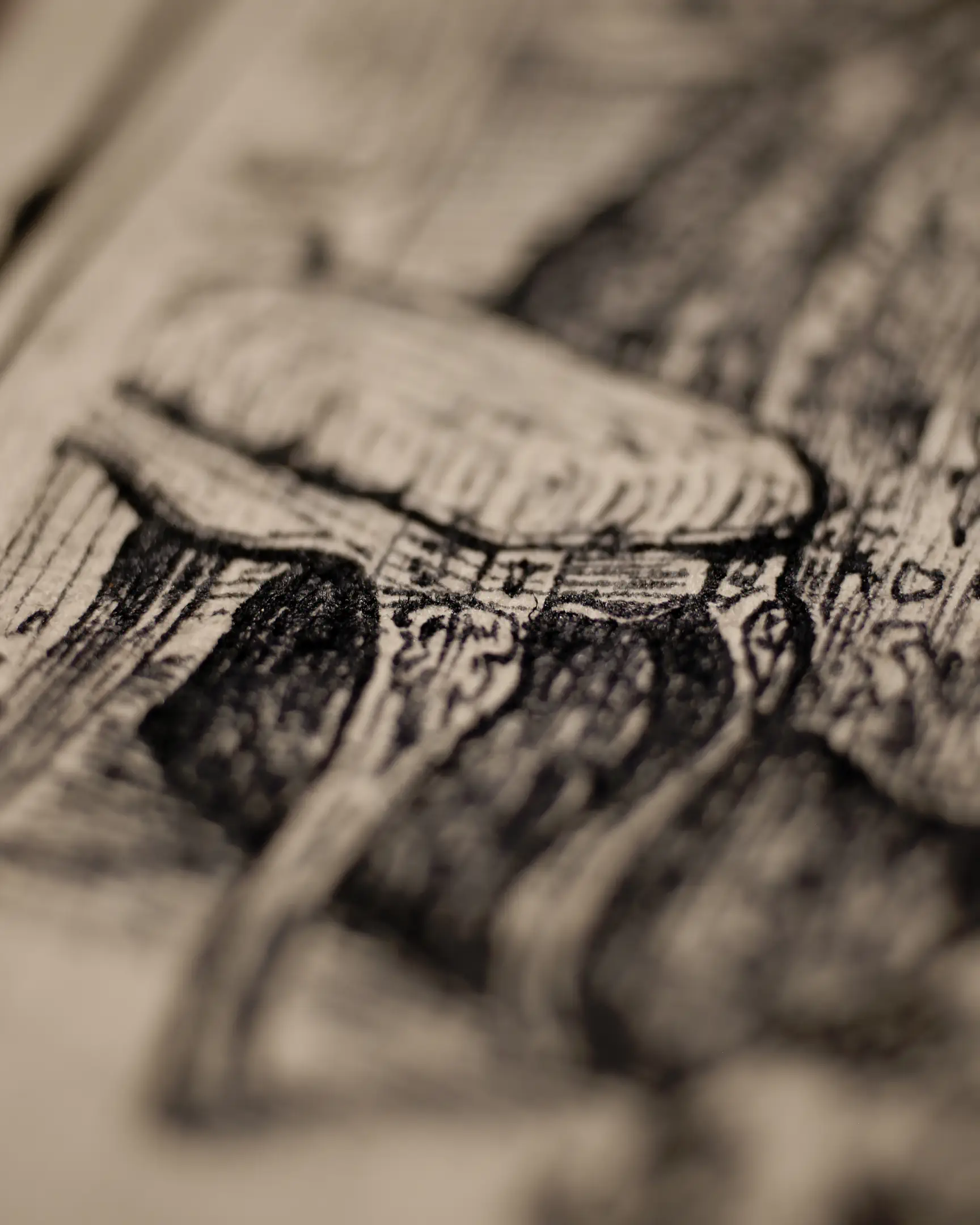
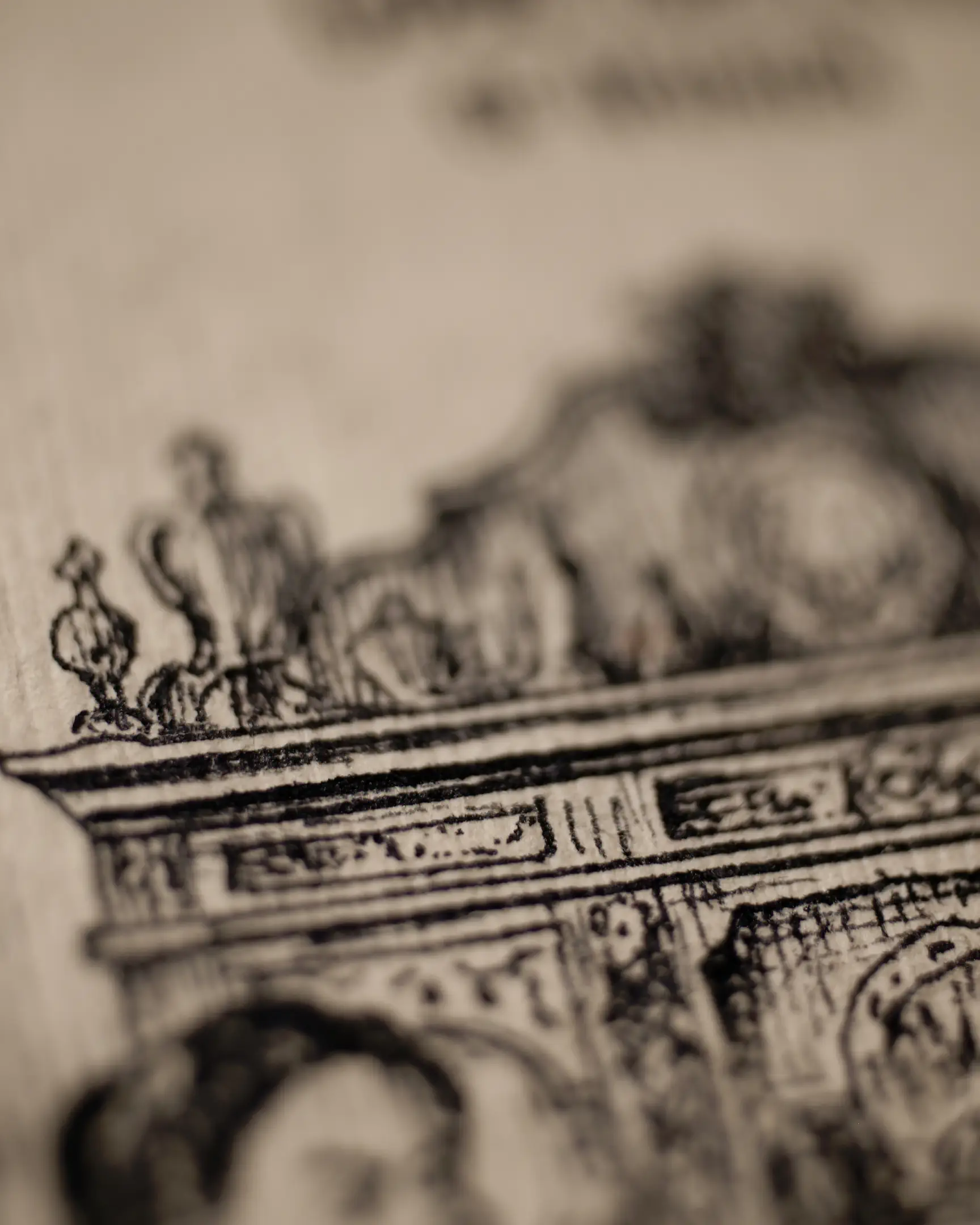
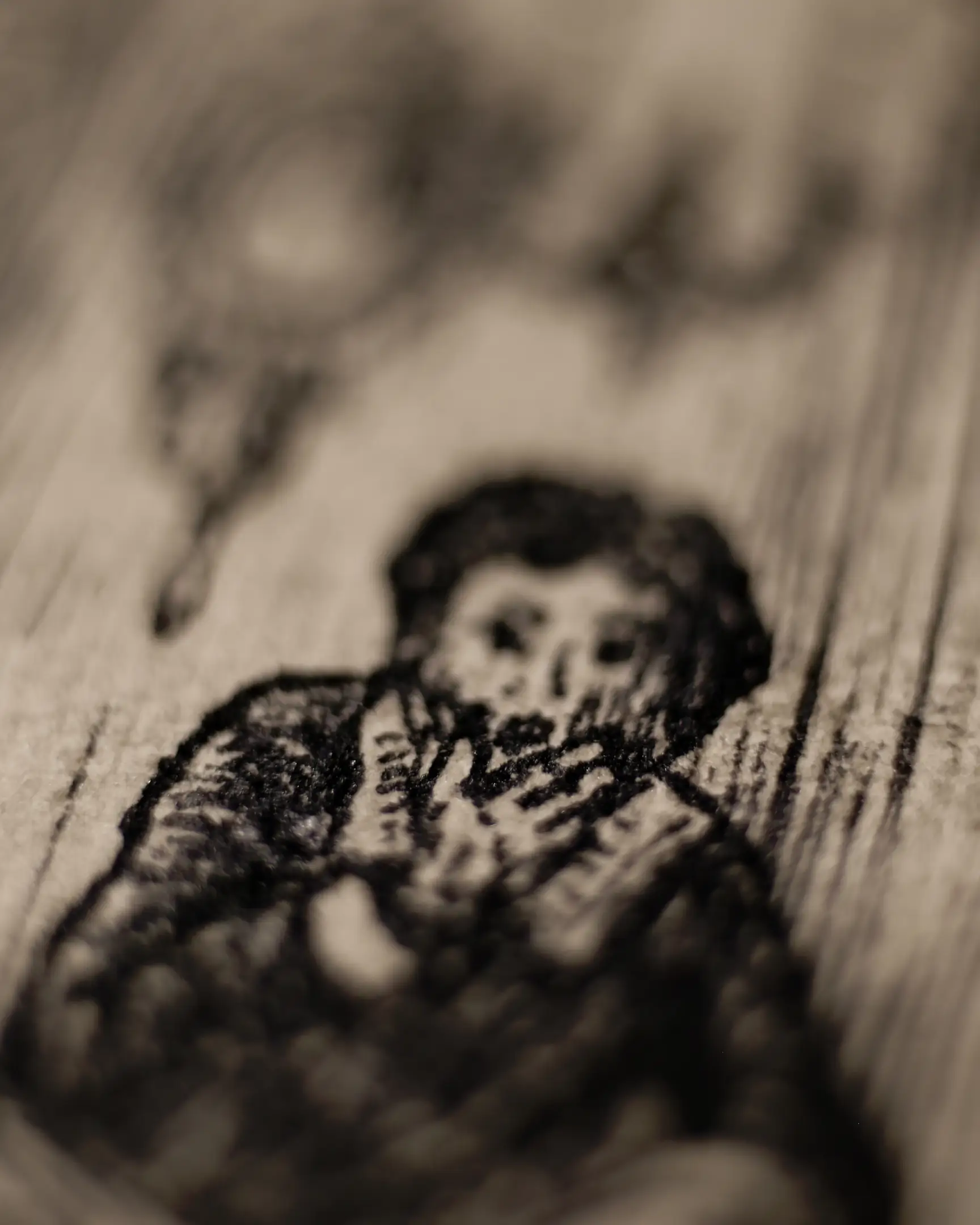
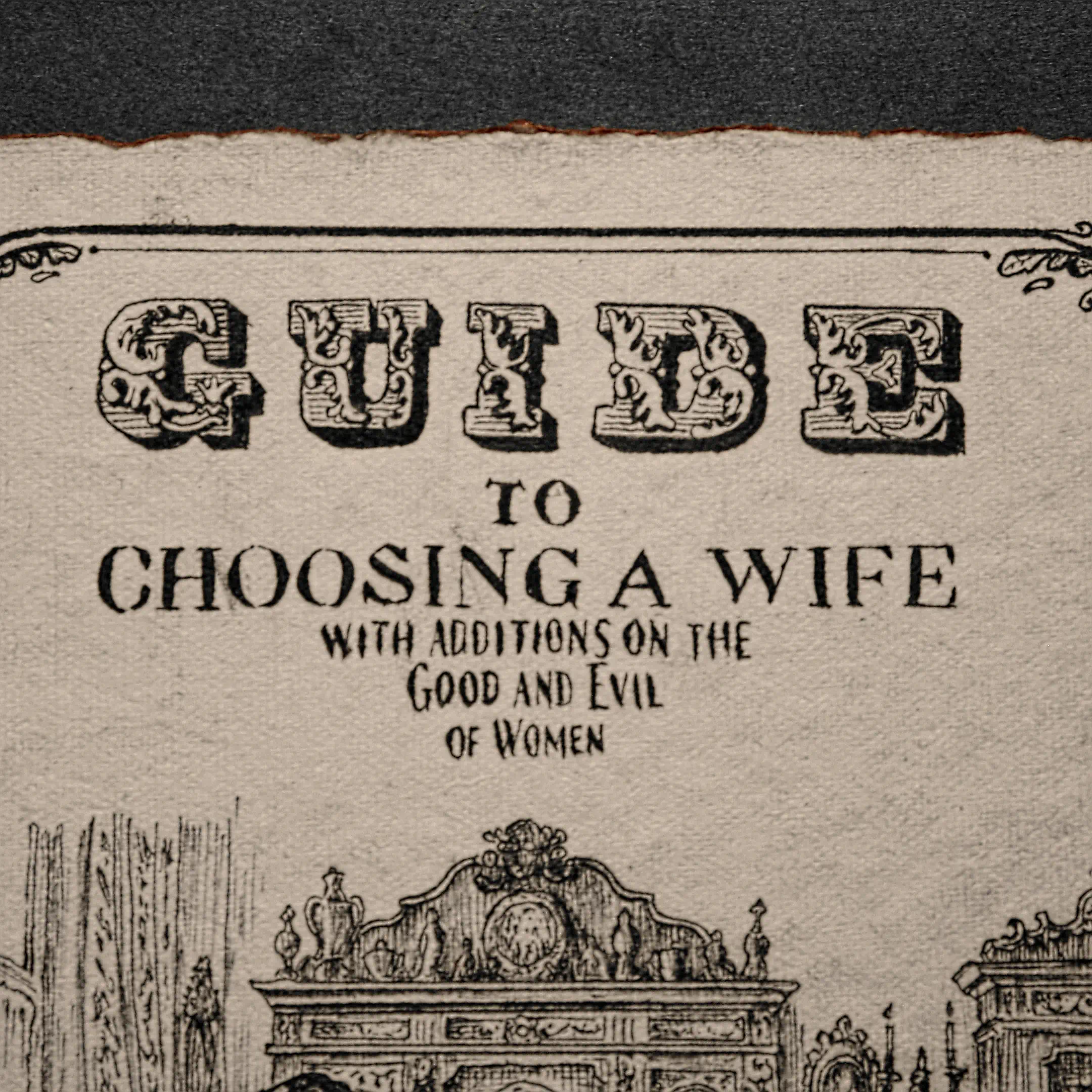
A frontal view of the piece set in a rich ornate frame. The contrast between the light, deckle-edged paper and the deep black matting creates a striking focus on the detailed illustration and early 20th-century typography.A full-view shot of the piece where the central focus is an ironic illustration in the style of a vintage engraving. Special emphasis is placed on the authentic deckle edges of the sheet, creating the effect of a discovered historical artifact against a stark dark mat.A fragment of the upper section of the artwork, showcasing the skillful stylization of antique graphics. The shot captures the top edge of the paper with its natural singed or toned finish, adding historical authenticity and charm to the piece.A focus on the main illustration of the piece. Fine hatching captures the characters' facial expressions, furniture details, and the overall atmosphere of domestic chaos. The work is executed in the style of early-century book graphics, where every element—from the small dog to the cabinet patterns—complements the overall composition.A fragment focusing on the interaction of the two central figures. The crisp rendering of facial expressions, clothing folds, and movement dynamics highlights the illustration's satirical character. The background reveals the meticulously rendered texture of an antique wooden buffet and wallpaper.A three-quarter view shot demonstrating the collectible value of the piece. The gilded ornate frame and deep black matting create a striking contrast, showcasing the graphic canvas as a centerpiece of the interior.
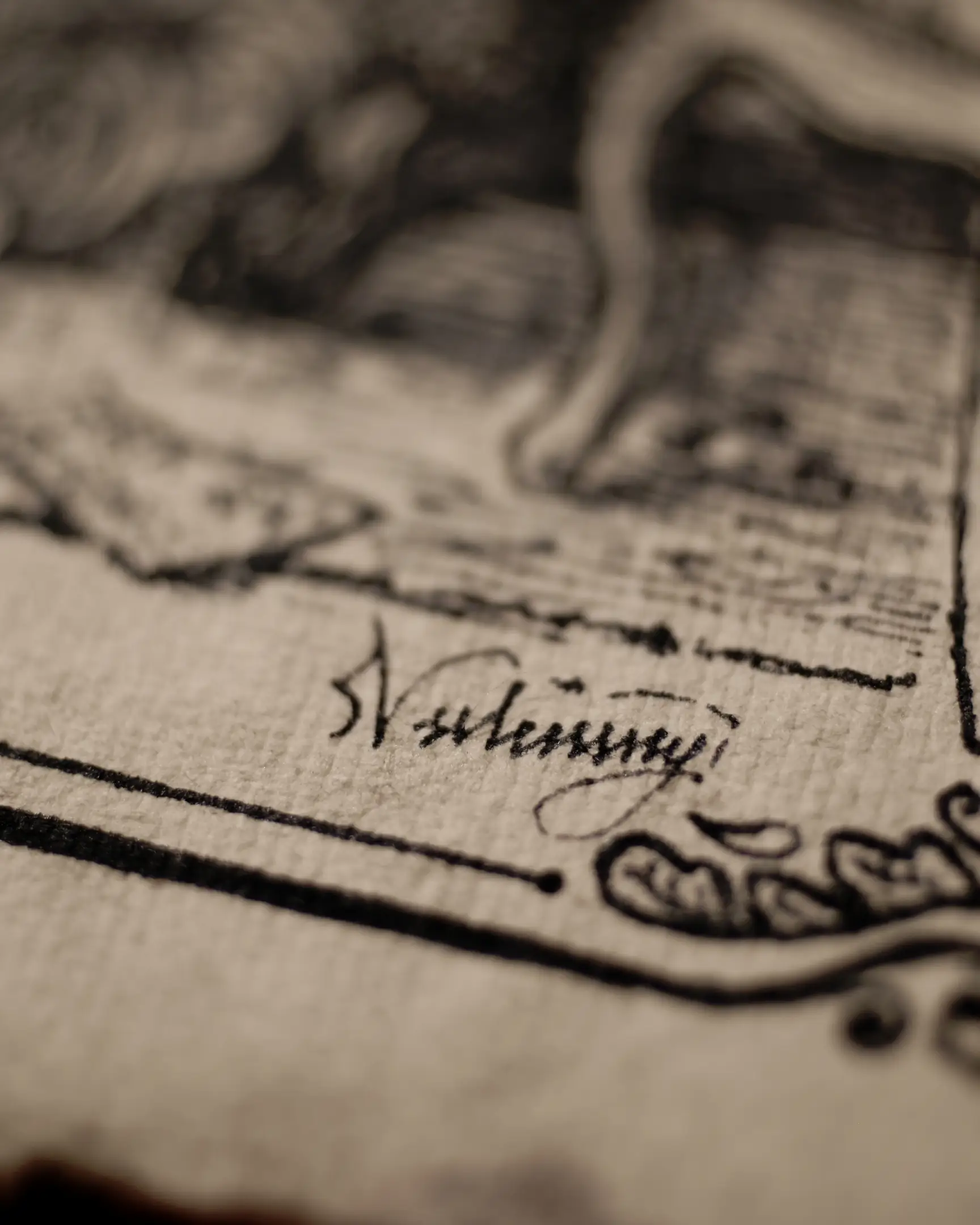
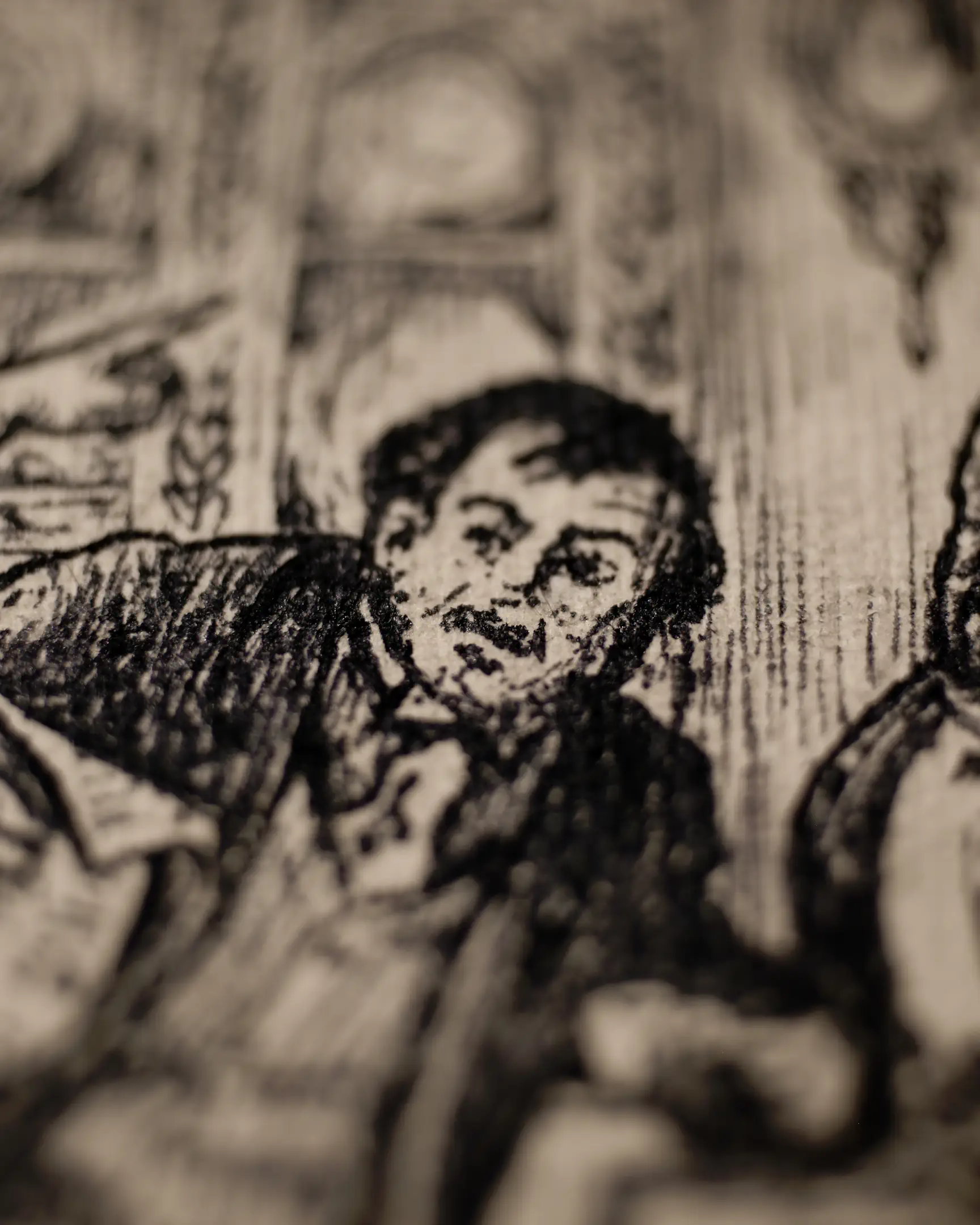
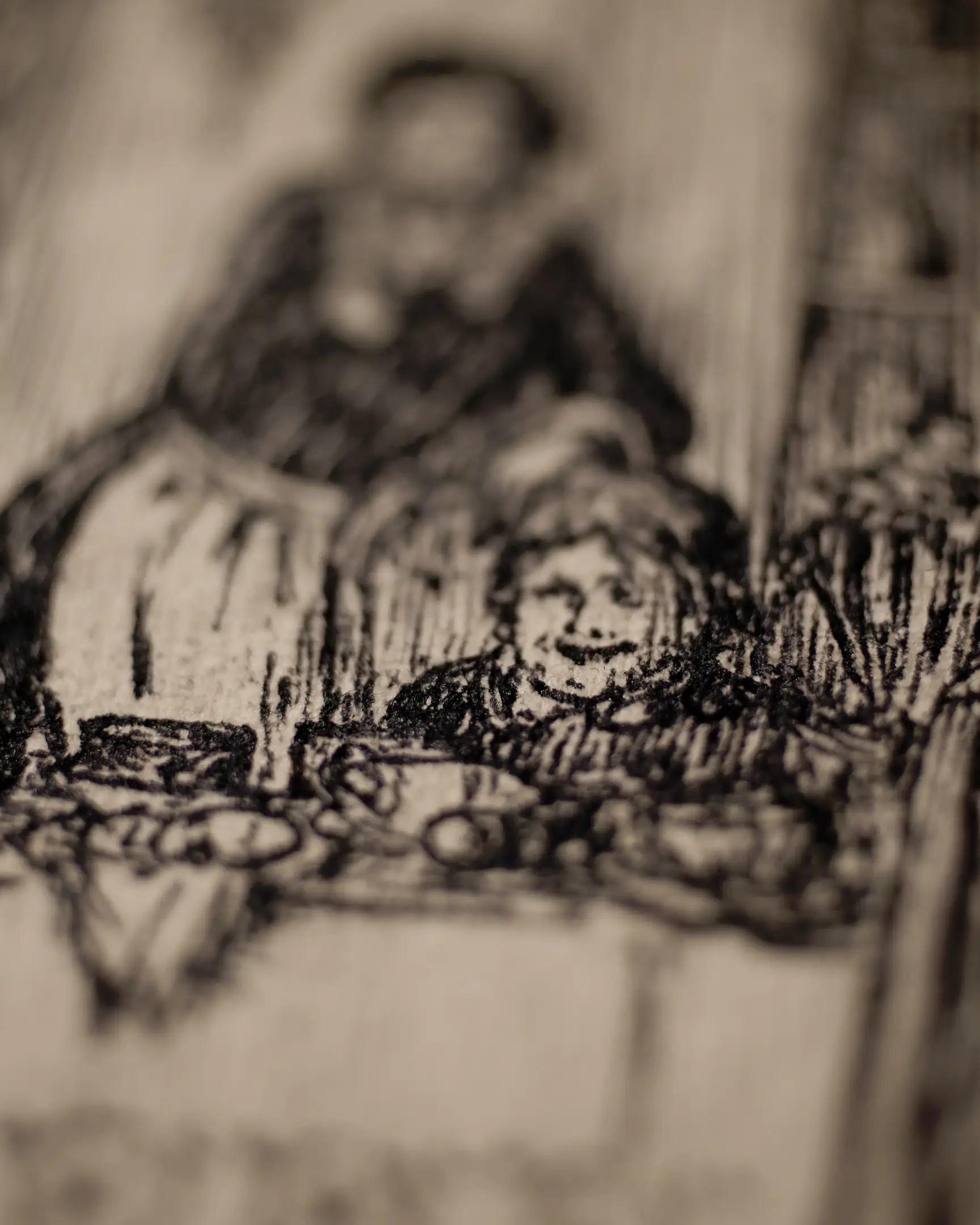
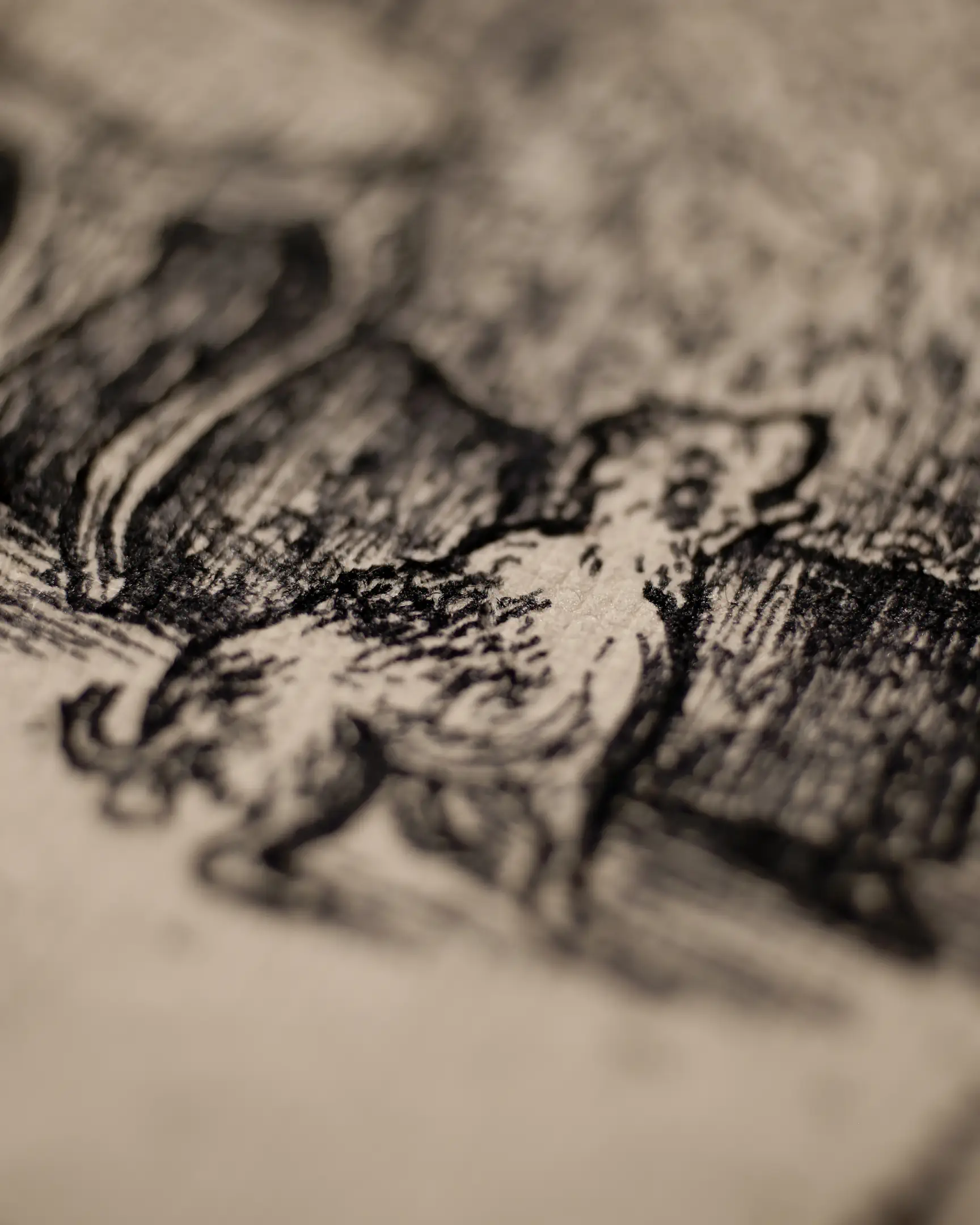
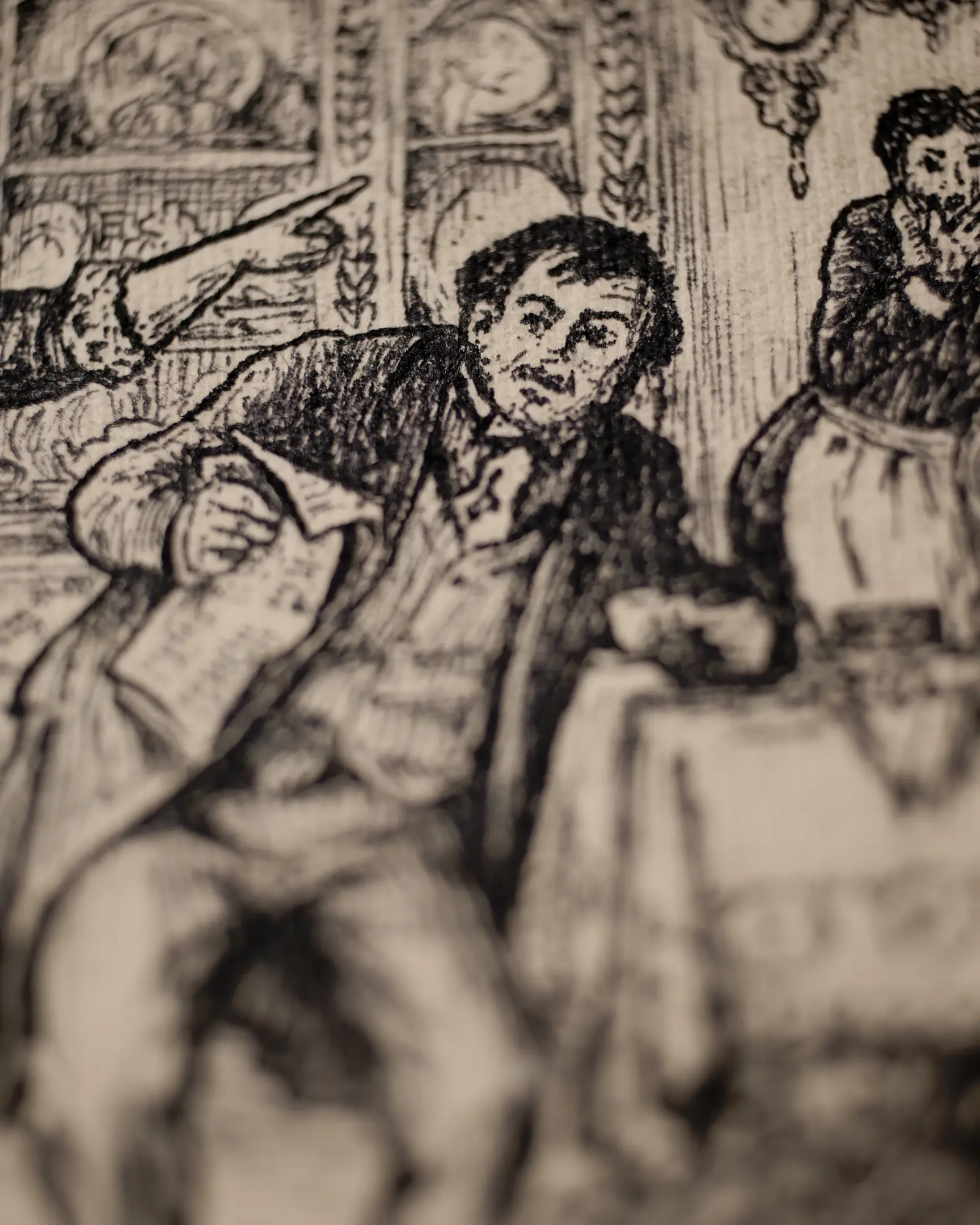
A striking macro shot of the frame's corner, where light plays across the gilded curves of the molding. The focus on the wood texture and patina adds volume to the shot, while the blurred view of the artwork in the background creates a sense of depth and the completeness of the art piece.A shot of the lower edge of the work, focusing on the details: an elegant corner ornament and the artist's personal signature. The angle highlights the uneven, singed edge of the canvas, giving the piece the appearance of a valuable historical document.A macro shot of a canvas fragment, highlighting the artist's skill in conveying human emotions. The use of fine hatching emphasizes the heroine's anger and resolve, while the shallow depth of field separates her from the ornamental interior background, creating a powerful visual focus.This shot highlights the intricate hatching techniques used to define the character's clothing and expression. The man is captured in a moment of contemplation or reading, while the background elements and secondary figures suggest a vibrant, story-driven scene characteristic of early 20th-century illustration.The photograph highlights the phrase "GOOD AND EVIL OF WOMEN" rendered in a vintage style. This close-up emphasizes the tactile quality of the ink and the canvas texture, evoking the feel of an antique document or a classic book plate, further enhanced by the intricate decorative vignette below.This photograph captures the personal signature of Vselenskyi. The macro lens reveals the elegant pen strokes and the way the ink interacts with the textured surface of the paper. This detail serves as a vital marker of the work's authenticity, framed by a decorative vignette in the corner.This shot focuses on the character's face, revealing the artist's skill in creating volume through the density of black strokes. We see the depth of the gaze and distinctive facial features that might seem minor in a wide shot but here become the central element of the narrative.This shot captures a multi-figure fragment of the composition. The focus is on a female character with a gentle smile, contrasting with the more expressive details found in other parts of the artwork. The fine hatching creates a chiaroscuro effect on the tablecloth and clothing, highlighting the piece's style as a classic early 20th-century book illustration.A detailed shot of a dog character, rendered in a distinct and expressive artistic manner. The sharp black ink strokes contrast with the warm, aged paper, bringing this small but vital element of the composition to life.A macro shot focusing on interior elements within the piece. The fine hatching conveys the volume and form of the furniture, showcasing the artist's mastery of line work and attention to compositional detail.
A fragment of the illustration showcasing the intricate furniture ornamentation and placed accessories. Fine lines and hatching emphasize the decorative 1916-era style, evoking a strong sense of the period's atmosphere.A detailed shot demonstrating the importance of detail in Vselenskyi's work. The pointing gesture in the center of the composition directs the eye toward the emotional face of the man, rendered in the artist's characteristic graphic hatching on a textured surface.A detailed shot of the sheet's edge, showcasing the fibrous structure and volume of the material. The contrast between the light paper and the deep black background of the mat highlights the execution technique and the historical charm of the artifact.Focusing on the heroine's face, executed in drypoint or etching, demonstrates the artist's skill in conveying psychological states. The finest hatching emphasizes the emotion, while the shallow depth of field isolates the portrait against the ornamental background.A detailed shot demonstrating the importance of texture in Vselenskyi's work. The man's face, rendered in the artist's characteristic graphic hatching, contrasts with the grainy surface of the base, creating a sense of tactility and depth.A close-up of a secondary character, rendered with incredible tenderness. The child's smile, depicted with fine lines, serves as an emotional counterpoint to the main conflict of the piece. Soft blurring at the edges of the frame focuses the viewer's eye on this bright detail, highlighting the many layers of the artist's narrative.An angled macro shot focusing on a bearded figure. The photograph highlights the depth of the ink strokes and the grainy texture of the medium, evoking the aesthetic of an early 20th-century vintage illustration.

Related products