ORA SEGNATA
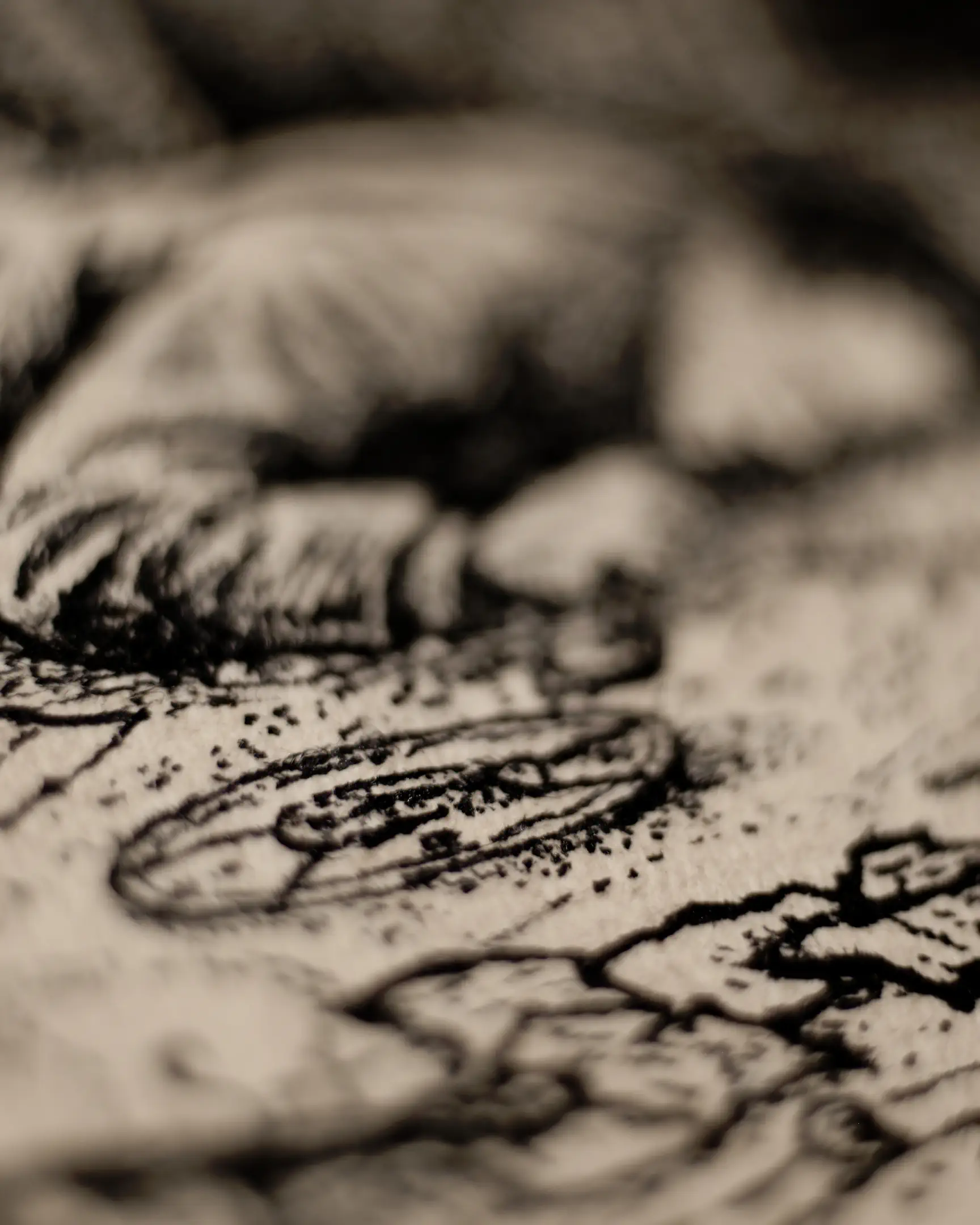
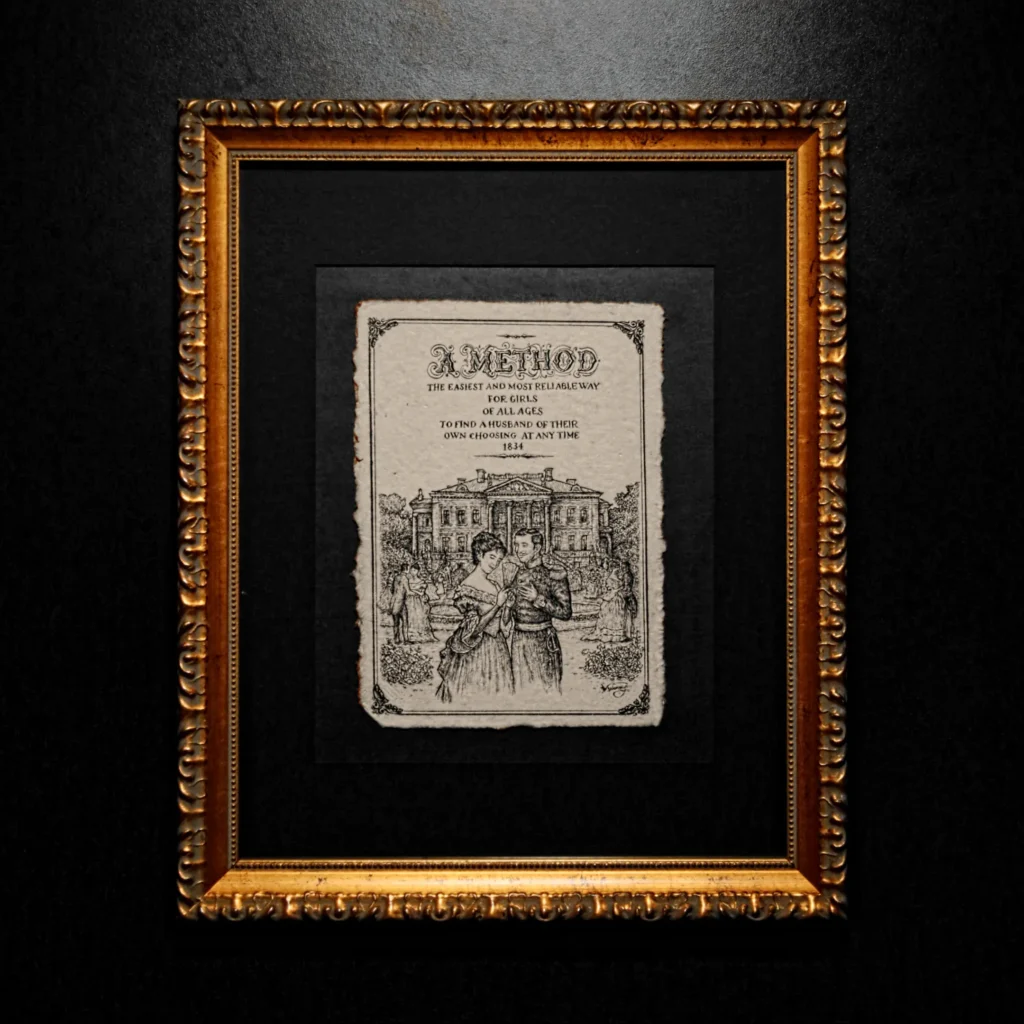
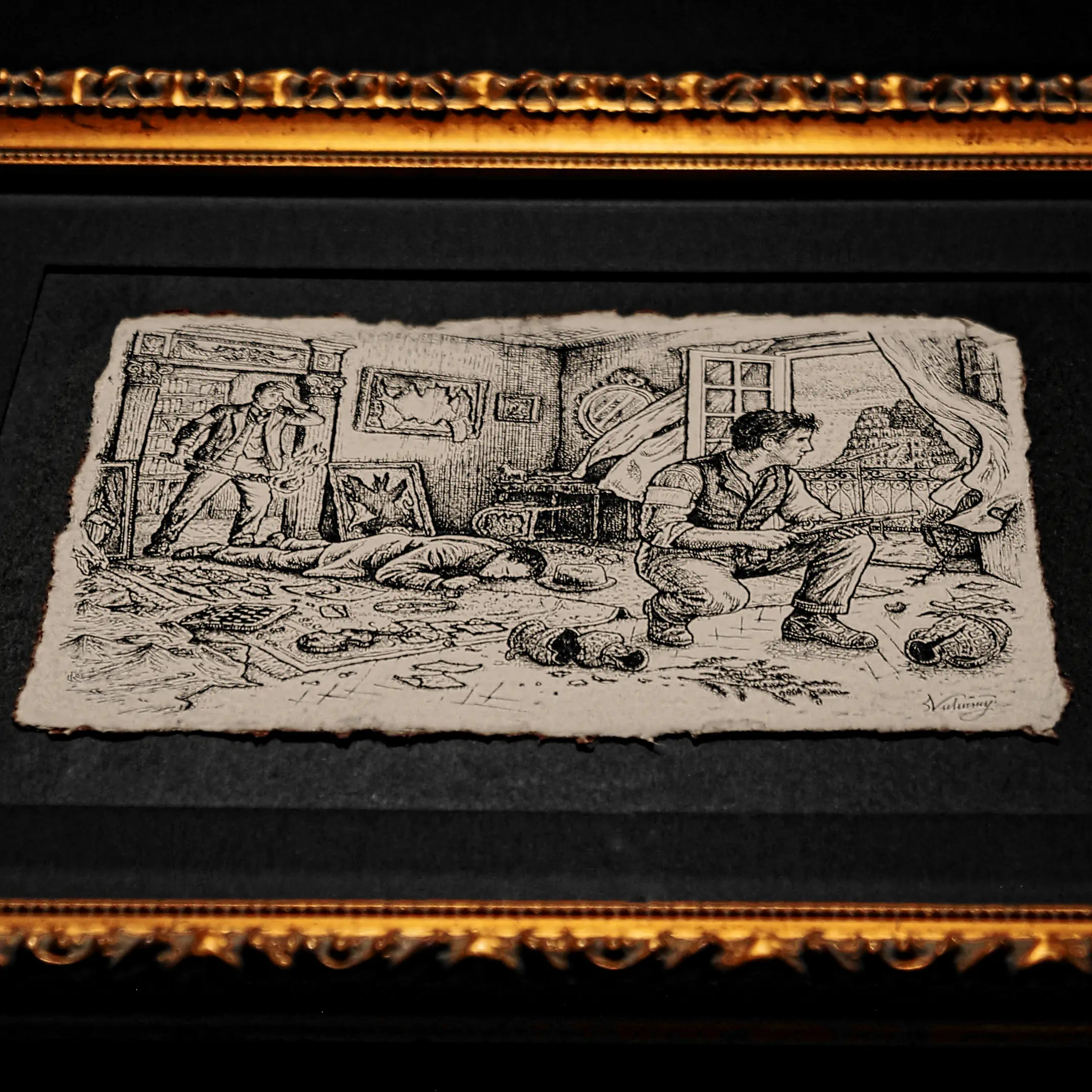
Born from the resistance of a dip pen against 300gsm handmade paper, this work is a physical manifestation of time. The iron gall ink, destined to darken for centuries, is encased in a bespoke museum-grade frame, transforming the artwork into a familial asset. Beyond the tactile lies a brutal narrative of historical rupture and shattered ideals. Every meticulous stroke serves a grander purpose: a complex intellectual puzzle within the “Neoclassical Libretto” genre, where the mystery is yours to solve.
Technical Profile
| Attributes | Value |
|---|---|
| Contents: |
• Original Ink Art Object · Professionally mounted on a museum-grade archival backing using traditional wheat starch and japanese paper hinges (reversible mounting) |
| Specifications: |
• Sketch Size: 5 x 9 in, 12.7 x 22.8 cm |
| Materials & Origin: |
• Paper: 300 gsm Handmade Paper |
| Style & Artistry: |
• Technique: Classic dip pen and ink sketching. |
| Longevity: |
• 100-Year Archival Display Guarantee (Under UV-protected conditions) |
HISTORY OF ART OBJECT
ORA SEGNATA
The day that changed us all

“Tension in the Ink”
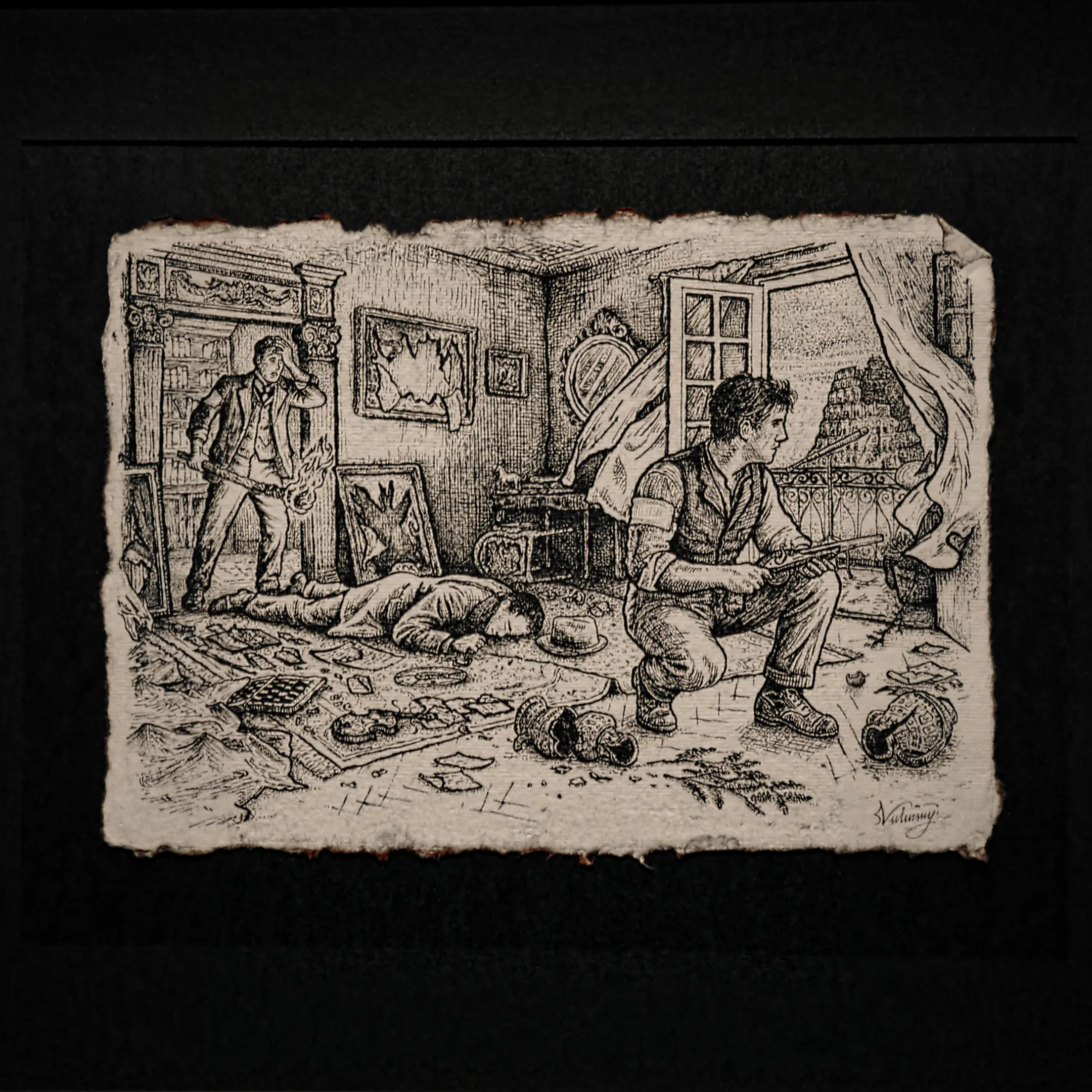
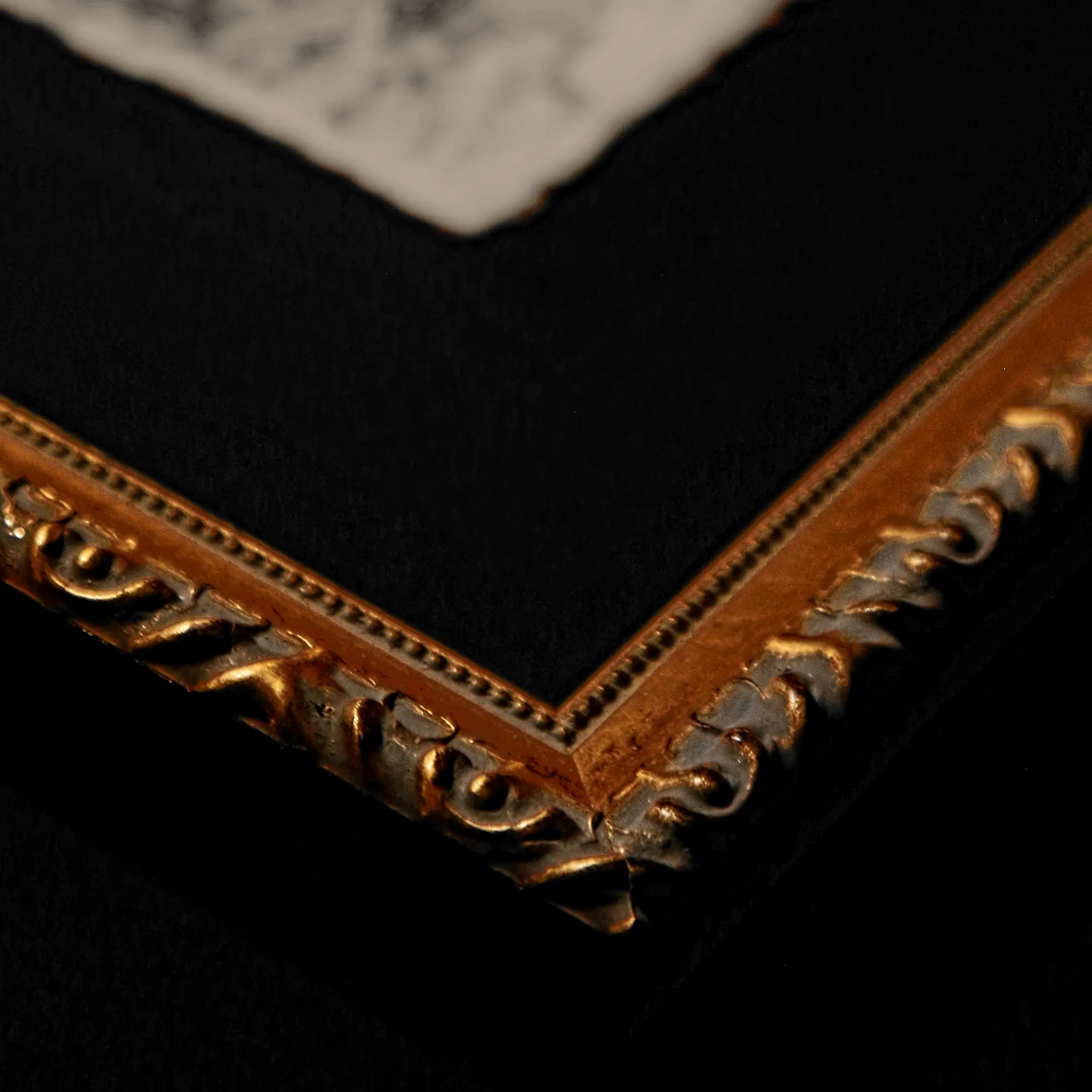
Presented here is one of the most compelling works by Vselenskyi, meticulously crafted on handmade paper using 19th-century steel dip pens and authentic iron gall ink. This particular piece measures 5 by 9 inches and is housed within a bespoke frame designed by the author himself. Furthermore, the artwork belongs to the “Neoclassical Libretto” genre, accompanied by a dedicated explanatory letter that provides a profound analysis of every stroke and narrative arc.
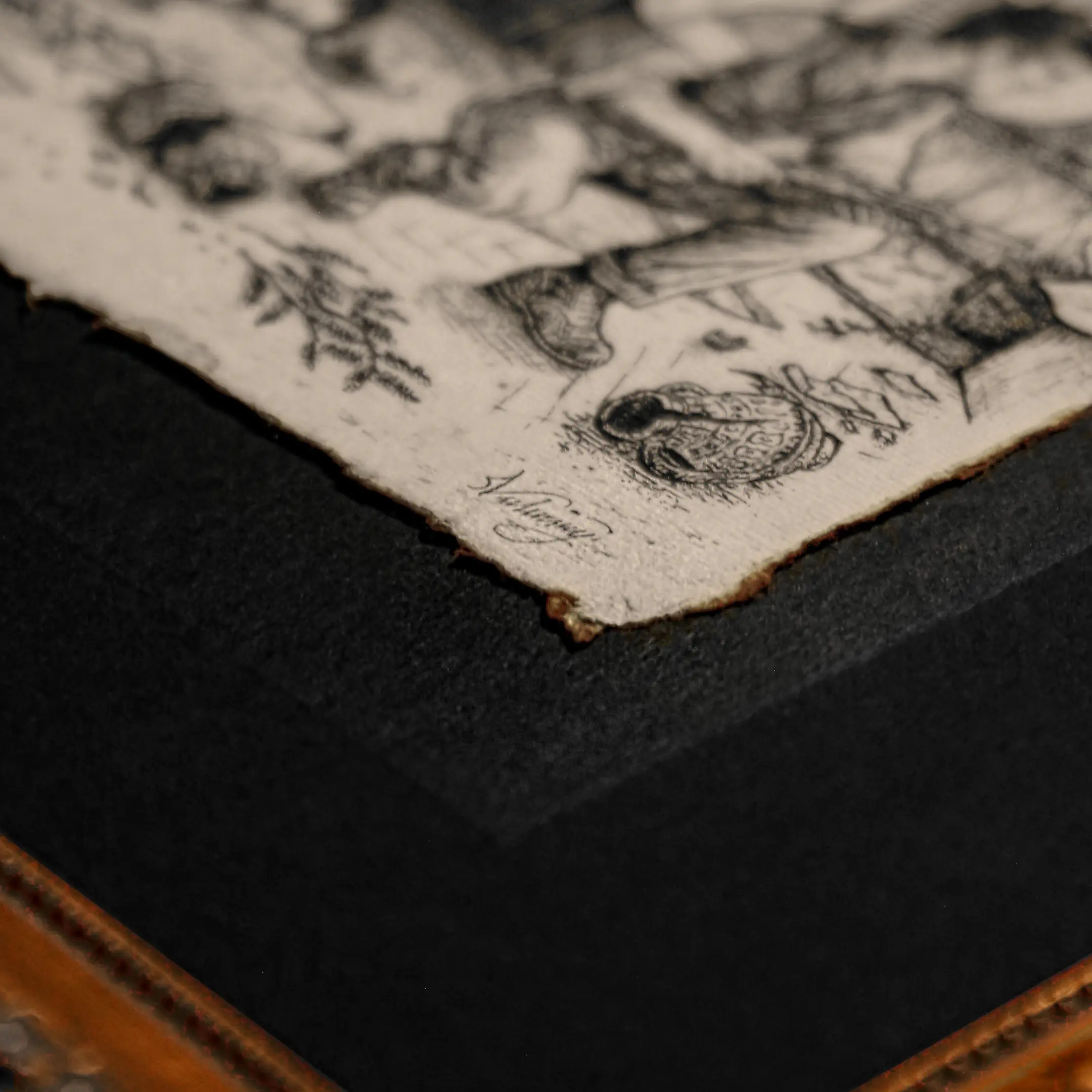
Beyond its visual appeal, the creation process serves as a testament to technical mastery because the entire composition was executed without any preliminary sketches or pencil drafts. The medium consists solely of paper and ink prepared according to a legendary 18th-century recipe. Historically, iron gall ink has been favored by figures such as Leonardo da Vinci and Johann Sebastian Bach due to its unique chemical property of etching into the fibers of the paper. Consequently, this archival substance does not merely sit on the surface but grows darker and more durable with each passing decade.
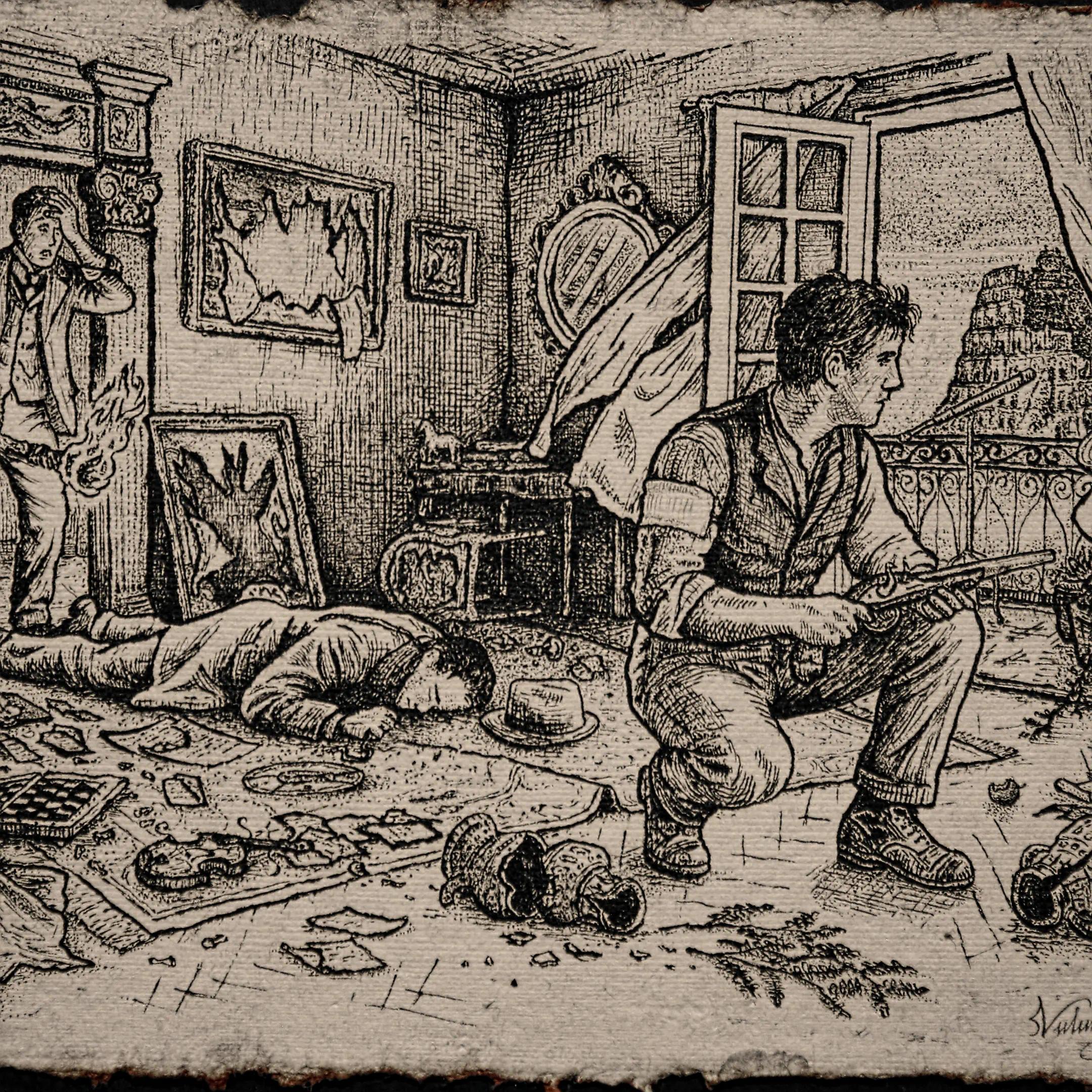
Regarding the visual style, the drawing is defined by an intricate level of detail balanced against a deliberate, light negligence. This specific contrast evokes a sense of fleetingness, making the entire scene feel like a sudden, singular flash of memory captured in time. In light of this aesthetic approach, we invite you today to engage with this remarkable painting and reflect upon the complex imagery depicted within its borders.
Rather than revealing every secret hidden within the narrative of this canvas, we prefer to treat the work as a vast puzzle that demands a slow and meditative reading. The composition is saturated with exhaustive minute details and hidden figures that emerge only upon closer inspection. Instead of a literal breakdown, our focus shifts toward the profound emotions and the atmosphere of suspense that this masterpiece unfailingly awakens in the viewer.

“The Protagonist”
Undoubtedly, this work captures a day that fundamentally alters the course of human history. It depicts a moment of rupture and a point of breaking, representing a singular instant after which nothing will ever be the same. Such tension glides effortlessly through the entire plot, manifesting within the smallest details as well as the primary narrative line.
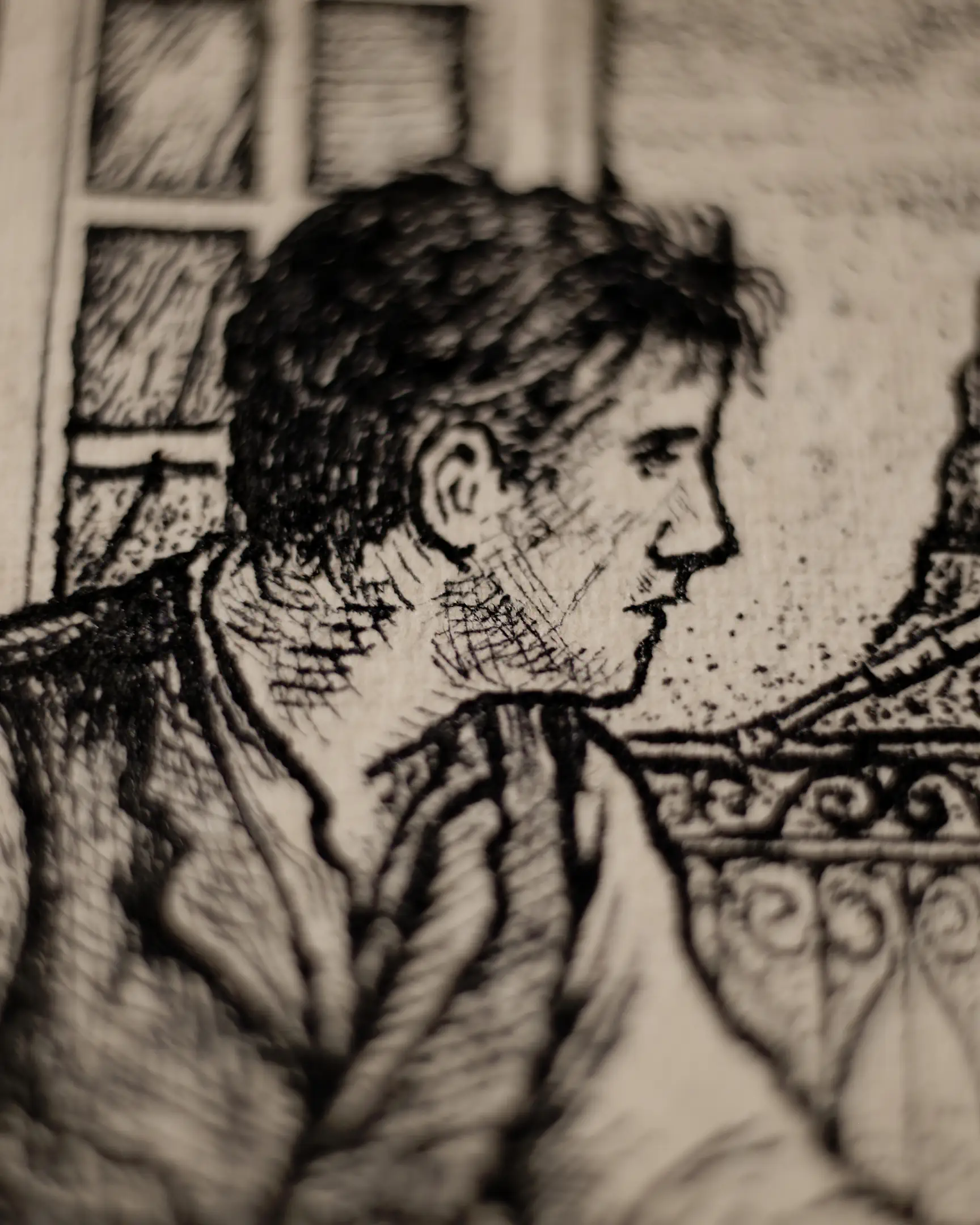
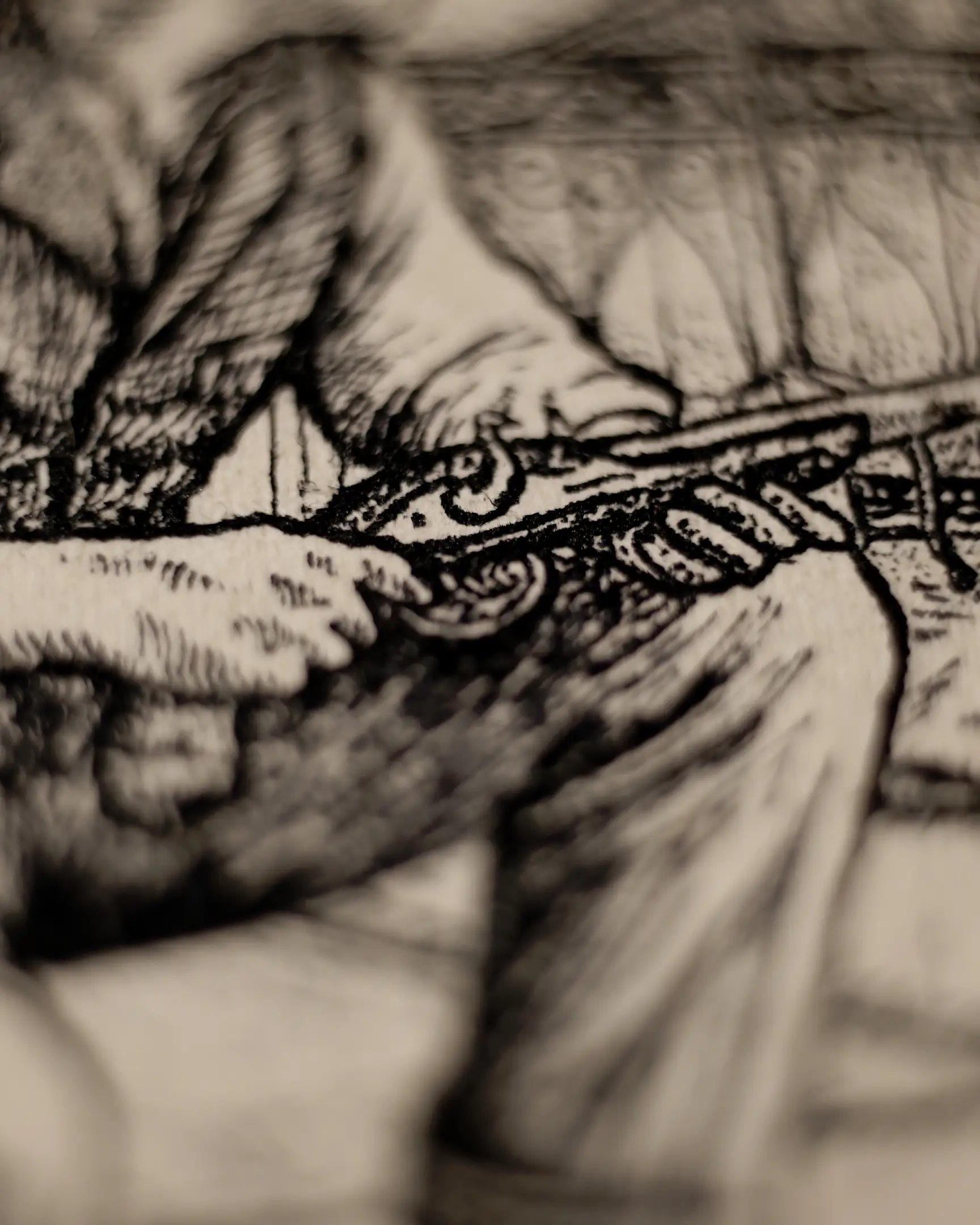
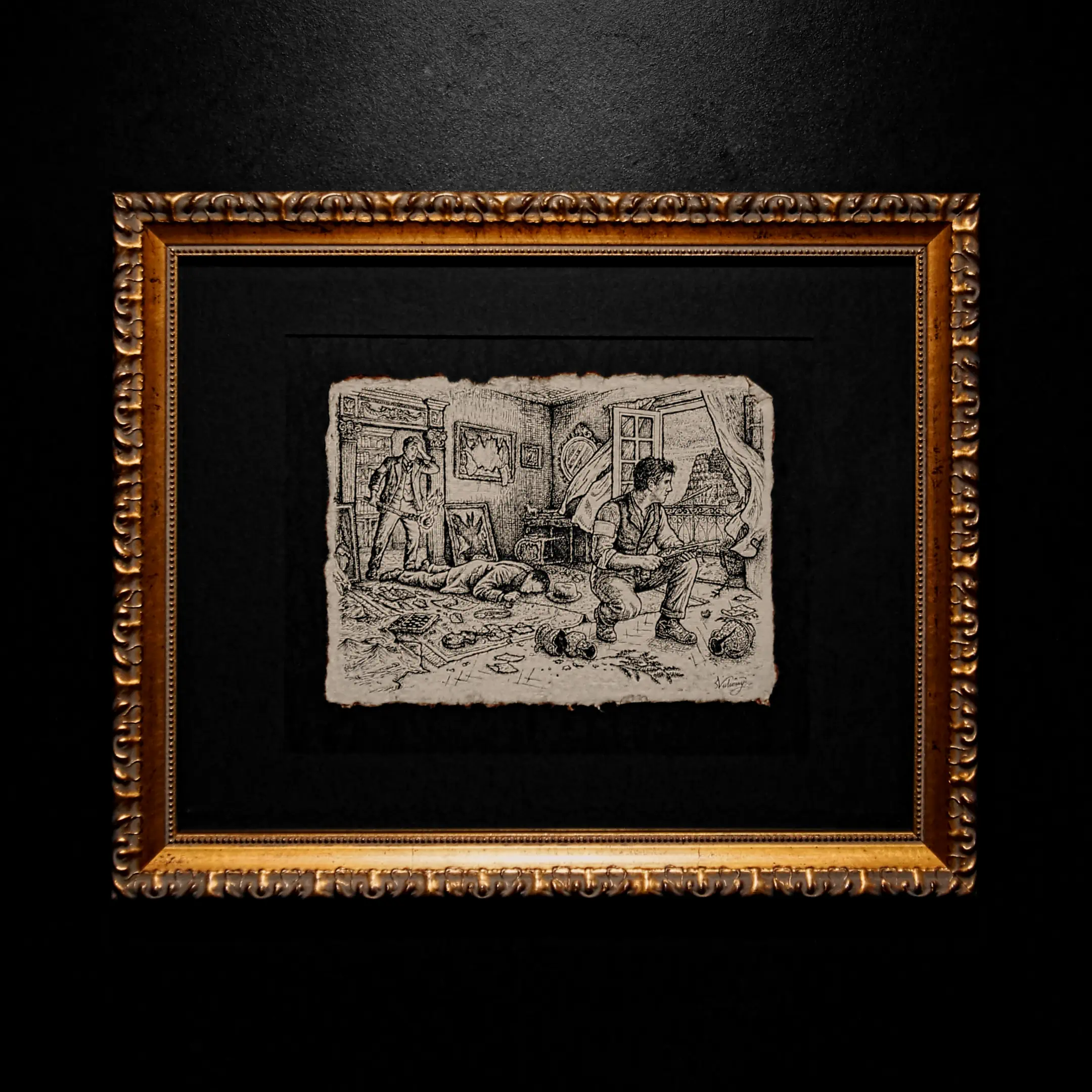
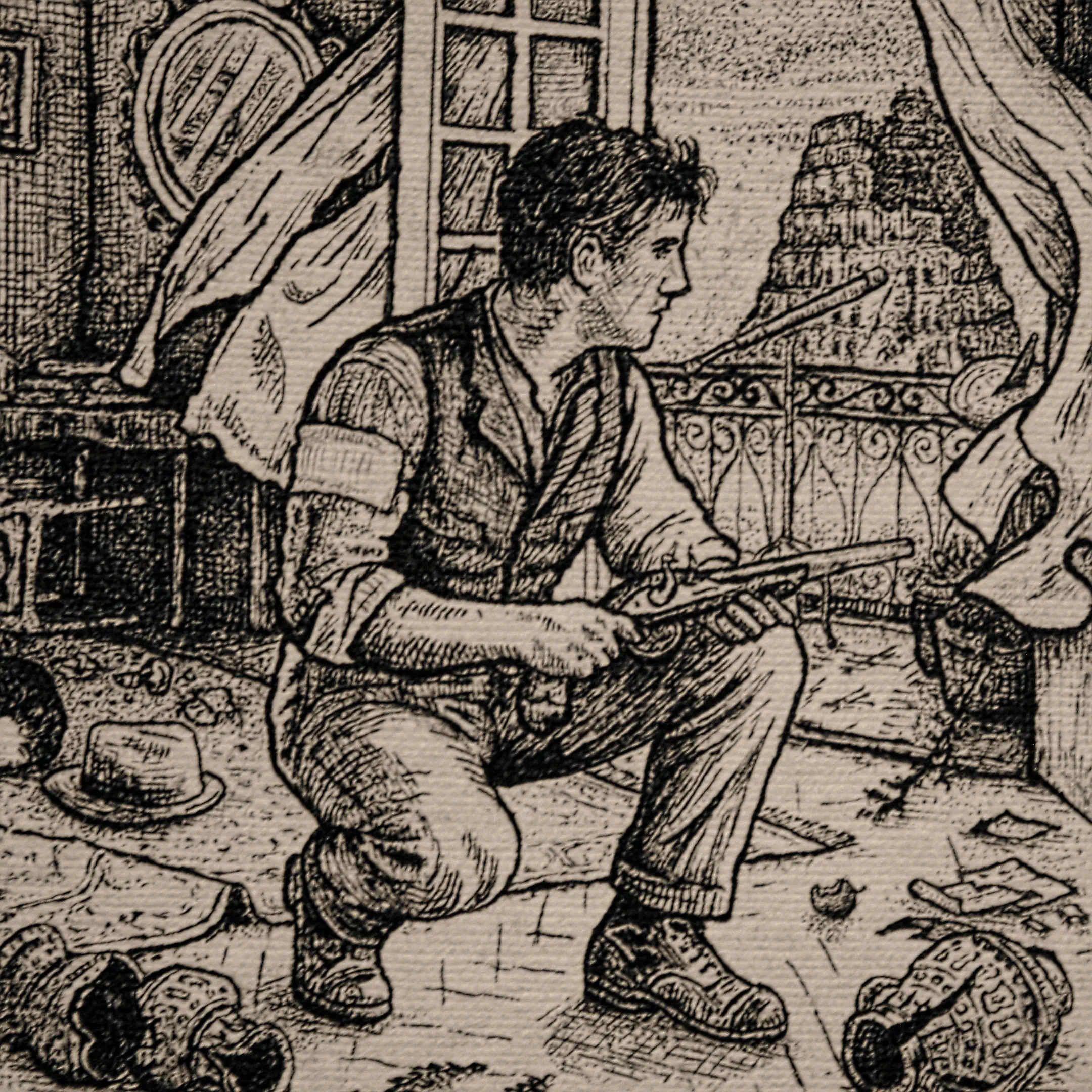
Regarding the focal point, a state of suspense and profound anxiety is personified by the protagonist who serves as the central element of the canvas. Gripping a 19th-century firearm, he remains frozen by an open window while casting a sharp gaze toward the street. He appears to be between thirty and thirty-five years of age. Furthermore, his sleeves are rolled up to the elbows, and he wears leather boots that seem better suited for an archaeological excavation than for ordinary city life. Clad in a simple shirt and vest, his hands remain taut and his posture alert as he stands ready for immediate action. Nevertheless, one perceives a sense of somber thoughtfulness rather than blind confidence.
Although the protagonist does not yet know exactly how to proceed, he clearly realizes that he must fulfill his destiny on this long-awaited day. His physical stance closely resembles that of a predator who has successfully caught the scent of its prey. Even though he refuses to look back at the room, he already understands the gravity of what has transpired behind him. Consequently, while the viewer remains in the dark about the specific events, the hero is already mentally prepared for the inevitable consequences.
“Nothing Will Be the Same”
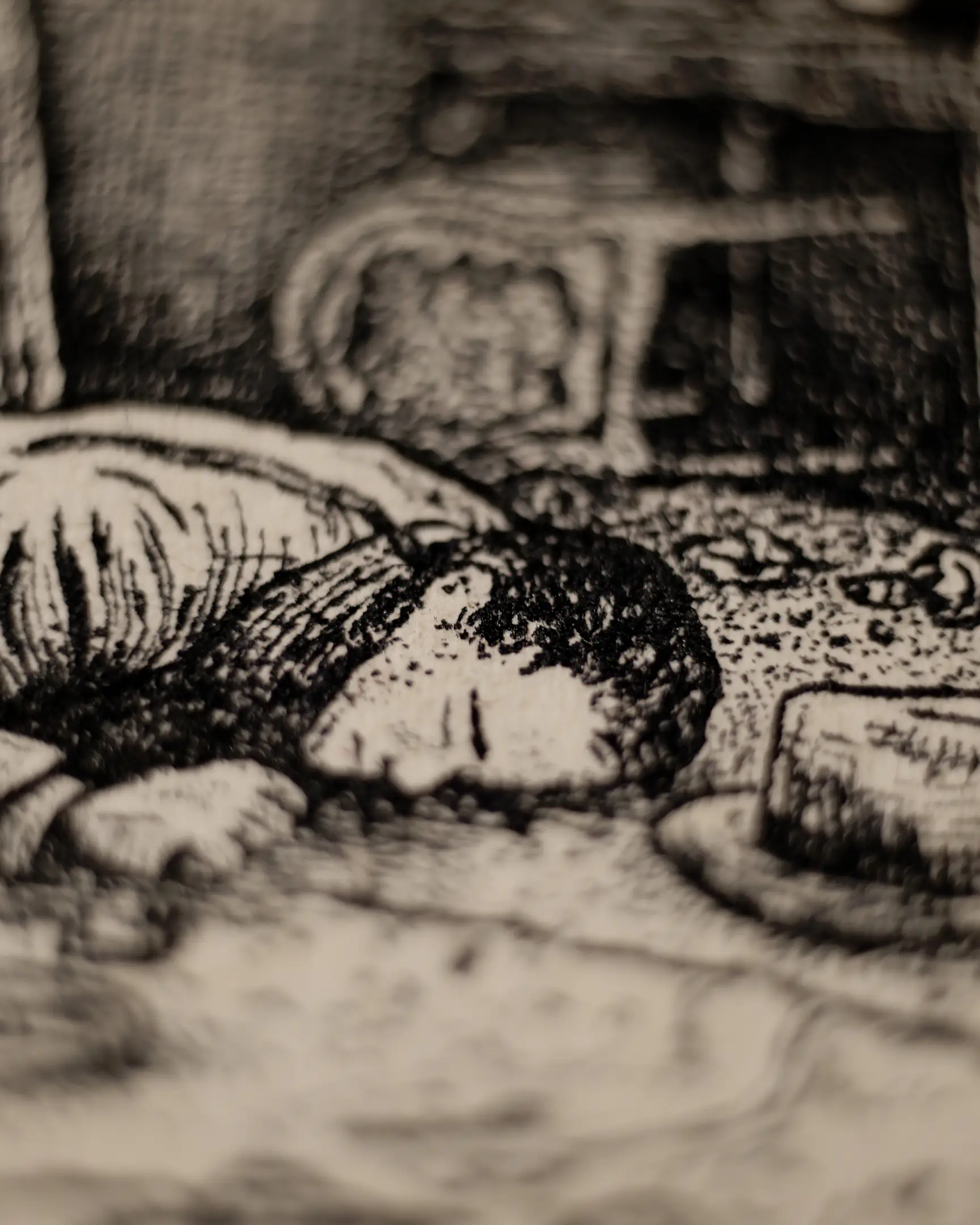
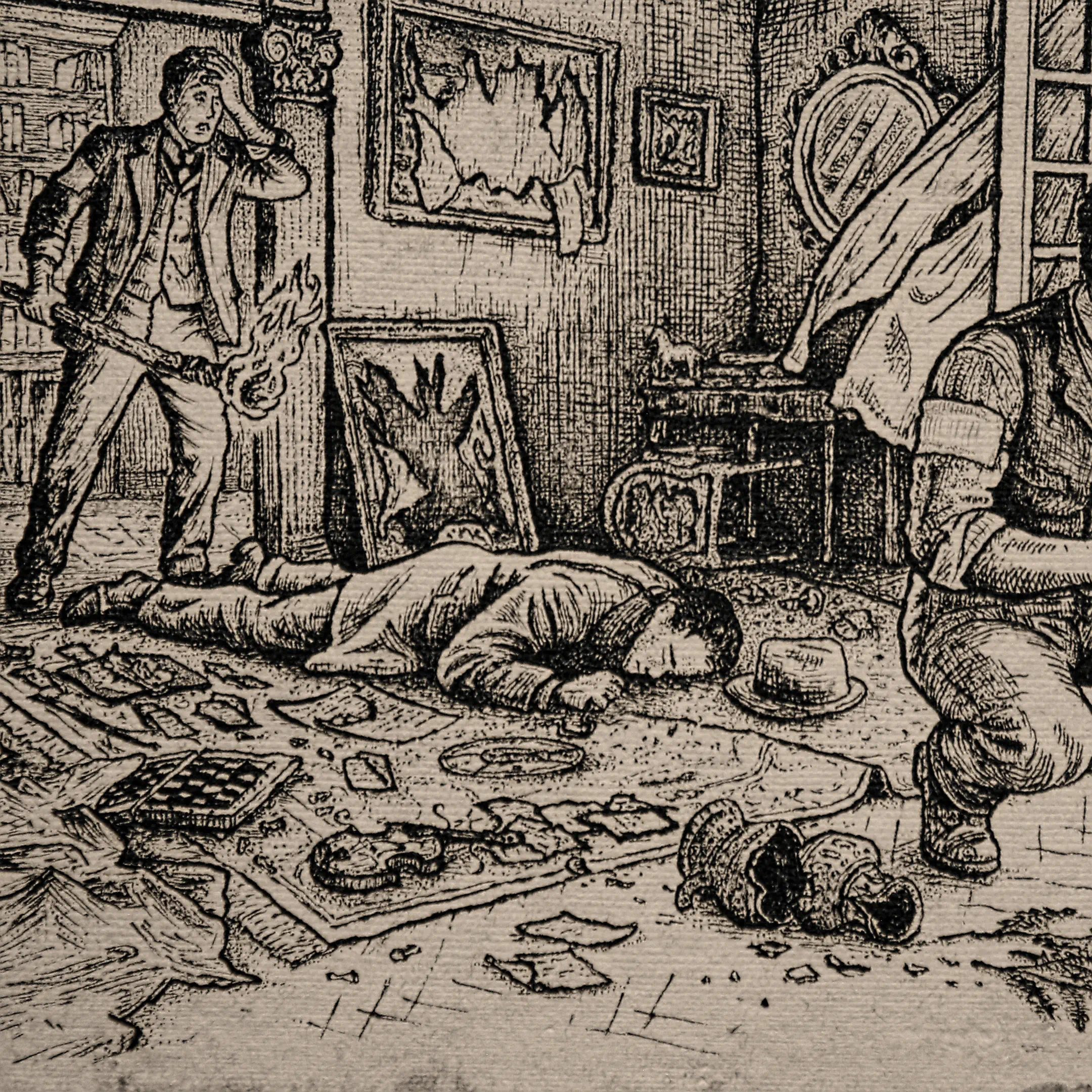
Moving toward the center of the canvas, the eye encounters absolute chaos and a figure prone upon the floor. A man wearing a heavy cloak lies breathless, face down. Nearby, his hat sits surrounded by scattered belongings, leaving the viewer to speculate on the tragic events that occurred in this room. While an observer might initially suspect a mafia-related struggle, a closer examination of the painting suggests that this was not the work of a human hand.
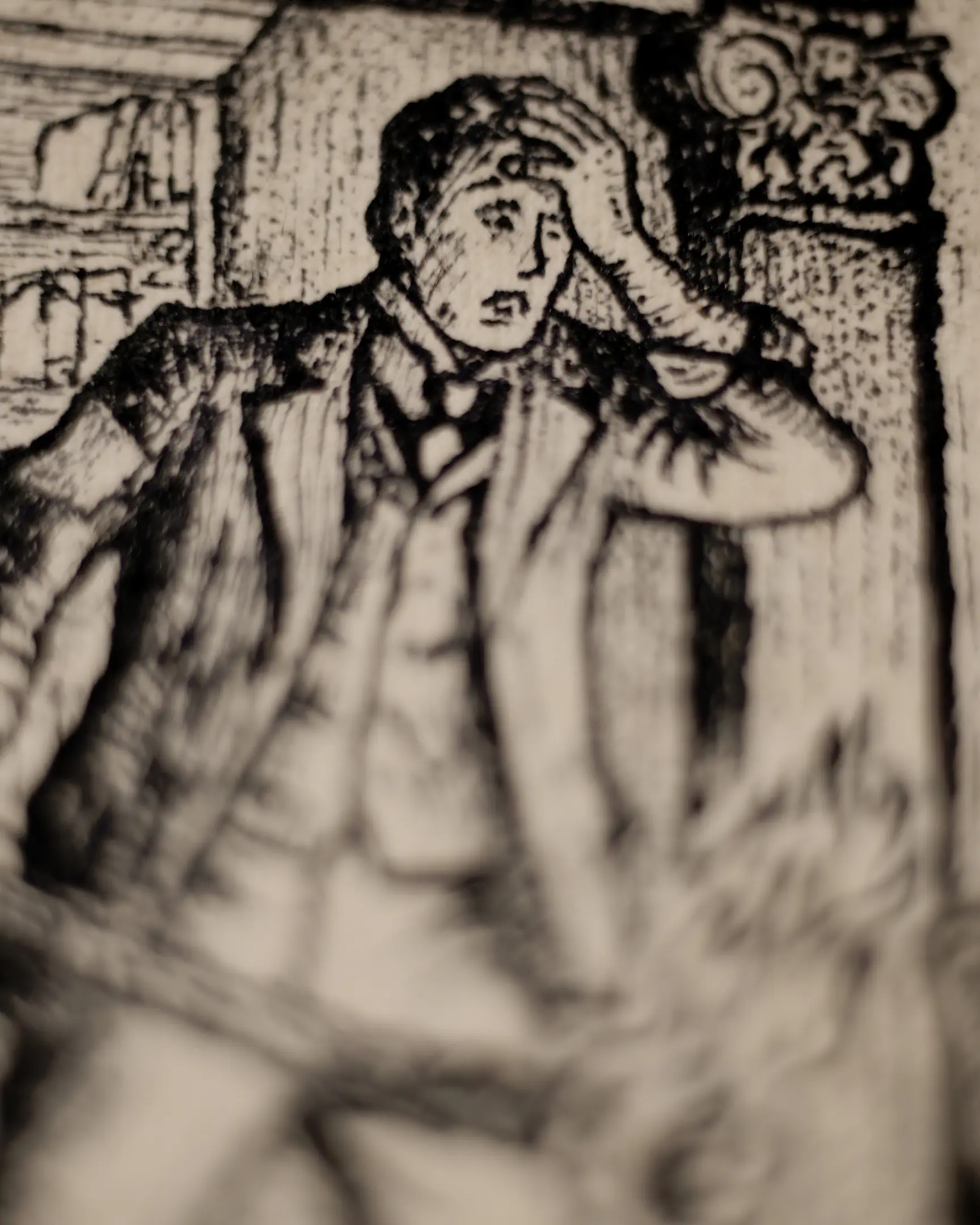
Within the left side of the composition, a third figure holds a torch while clutching his head in utter despair. This young man, appearing to be in his early twenties, is dressed in a jacket and vest with a necktie visible over his shirt. A pocket watch chain glints from his clothing, yet his sleeves are rolled up just like the protagonist’s. Such a detail implies that he is not a mere office worker but someone actively engaged in movement. It seems as though he was suddenly torn from a quiet life and forced into this horrifying scene. Moreover, the presence of a torch in his hands leaves the audience wondering about the backstory of the plot.
Upon further inspection, one notices a distinct armband on the sleeve of the man with the torch. This same emblem is visible on the main character gripping the firearm. Consequently, it becomes clear that both individuals are members of the same clandestine organization. These brothers-in-arms arrived simultaneously, yet they were ultimately too late to prevent the unfolding horror. A palpable contrast exists between the two companions: while one remains cold and calculating, the other is paralyzed by shock. Despite their different reactions, both realize that the day they feared has finally arrived. Each man is haunted by the same undeniable truth: nothing will ever be the same again.

“The Silent Protagonist”
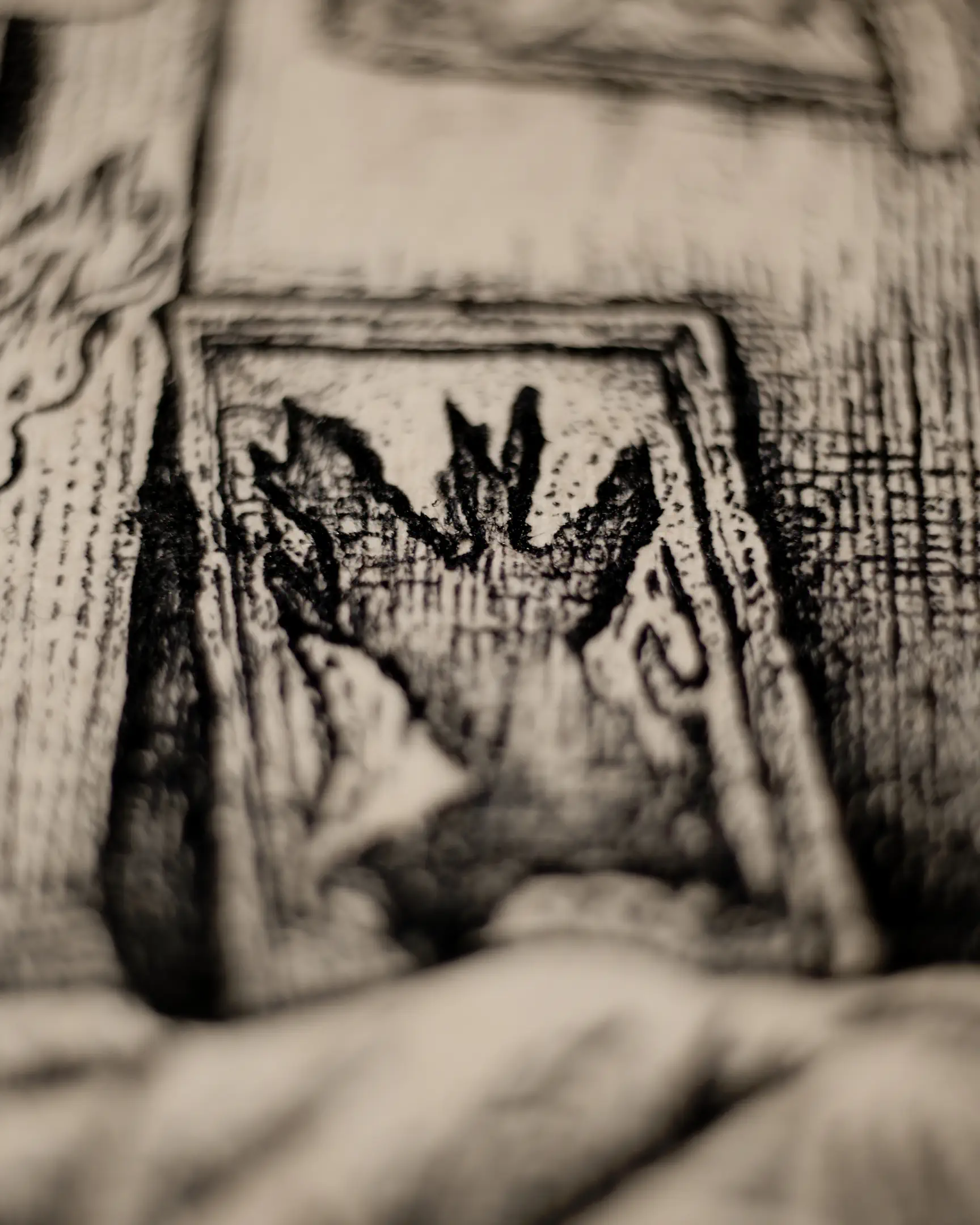
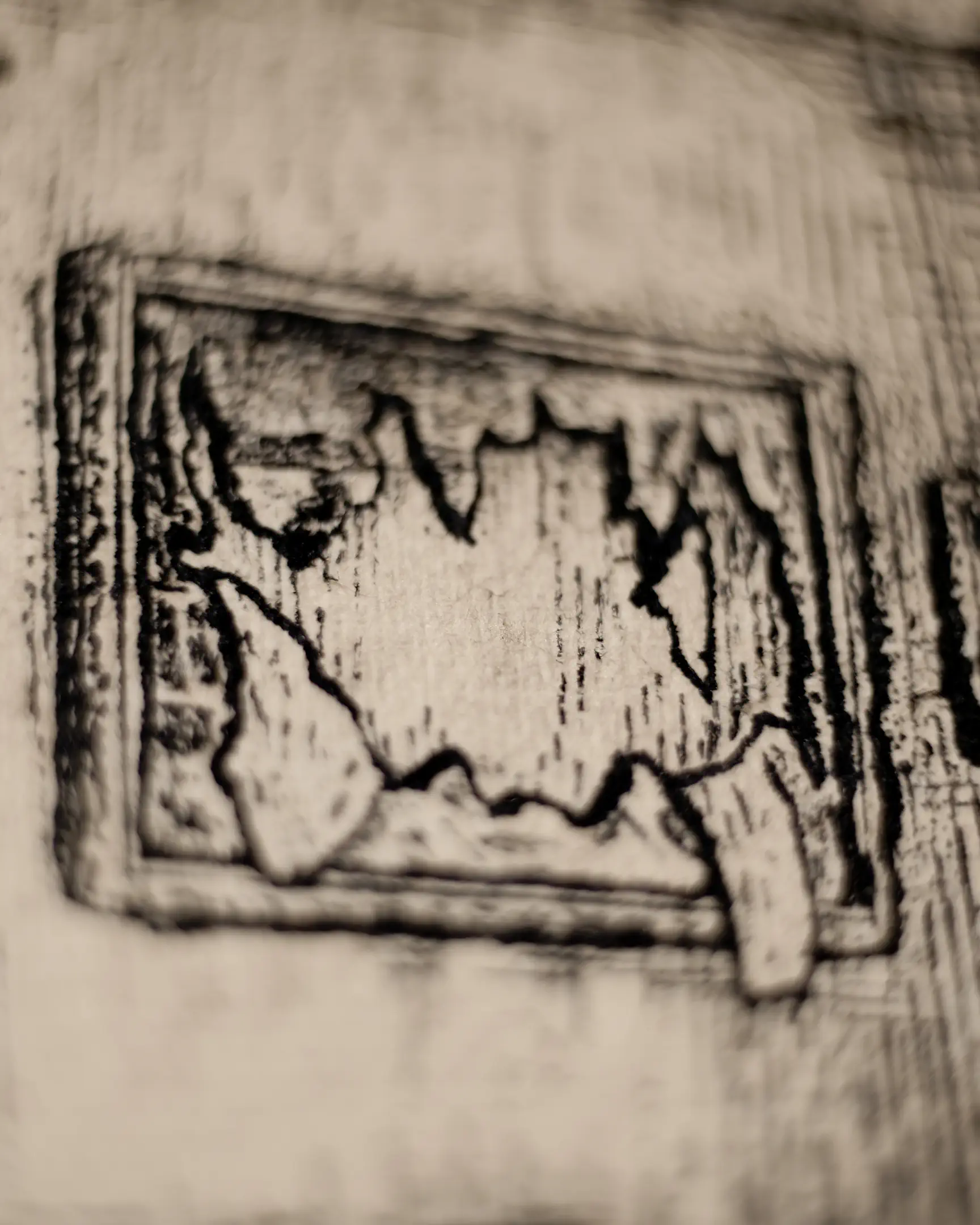
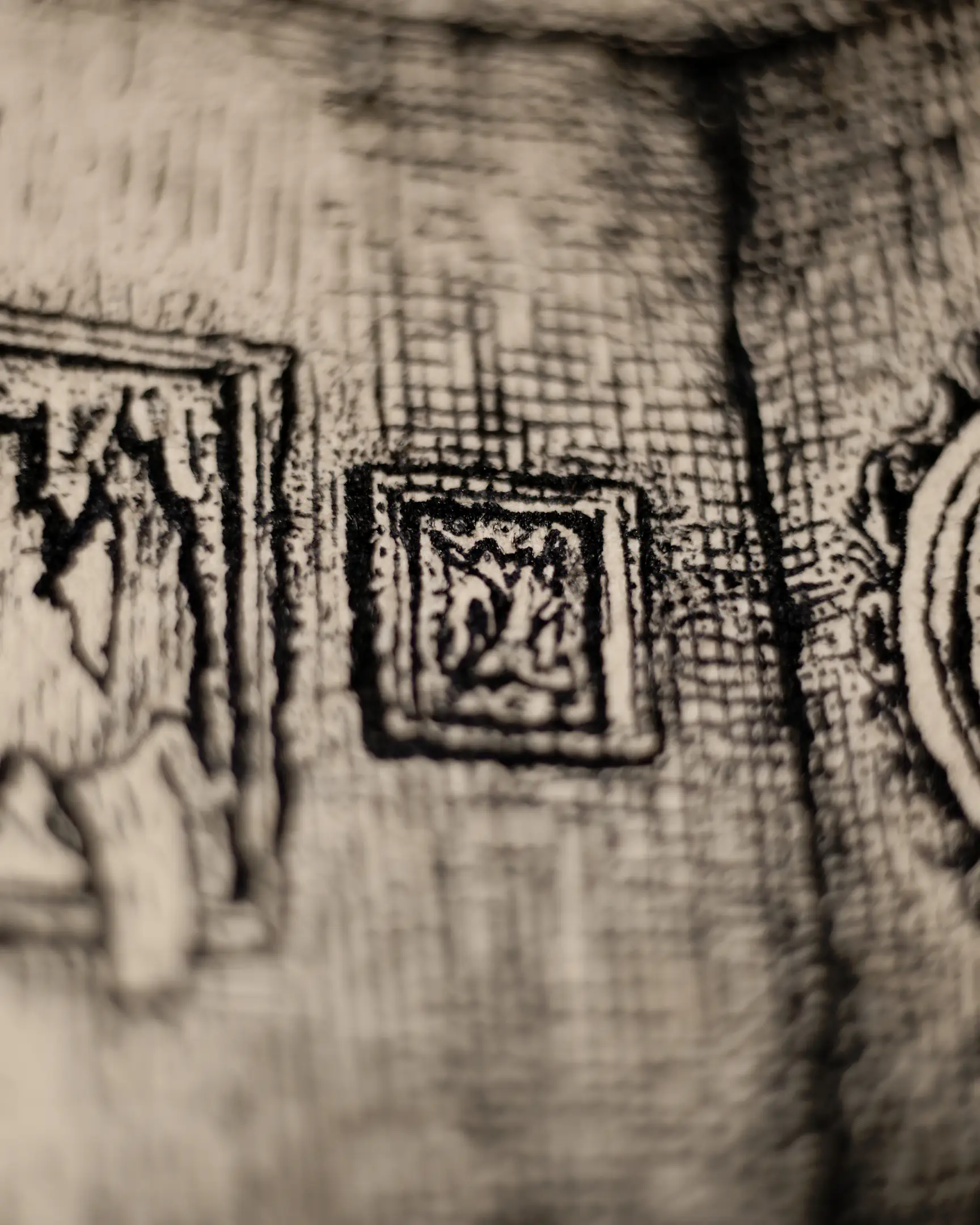
Beyond the human figures, the third living character within this narrative is undoubtedly the room itself. A massive bookcase stands within the hallway, while two imposing columns frame the entrance to the main chamber. Inside, the absolute disarray paints a vivid picture of the preceding struggle. Four antique paintings have been ruthlessly slashed, with canvases hanging in tattered pieces. This suggests that the primary objective of the attack was the systematic destruction of these historic masterpieces.
To the right of the doorway hangs a fragment of Pieter Bruegel the Elder’s “The Triumph of Death,” originally painted around 1562. This panoramic work depicts an army of skeletons seizing the world as a grim reminder of human equality before eternity. Unfortunately, all that remains now are jagged remnants of the canvas. Further to the right, near the adjacent wall, sits a small frame that once held Johannes Vermeer’s “The Lacemaker” from 1670. Although the original work is celebrated for its absolute silence and sacred focus on a single thread, this sublime creation has also been heartlessly destroyed.
Positioned lower on the floor is the fallen frame of Hubert Robert’s “Ruins of a Triumphal Arch” from 1786. His composition once showcased a masterful combination of majestic ruins and tiny figures engaged in daily life. Consequently, the sight of this fully ruined painting reinforces the scale of the devastation. To the left of the entrance, the edge of another canvas remains visible, identified as Henry Fuseli’s “The Nightmare” from 1781. While the original featured an incubus sitting upon a sleeping woman, only the fragment of an elbow is left to witness the horror.
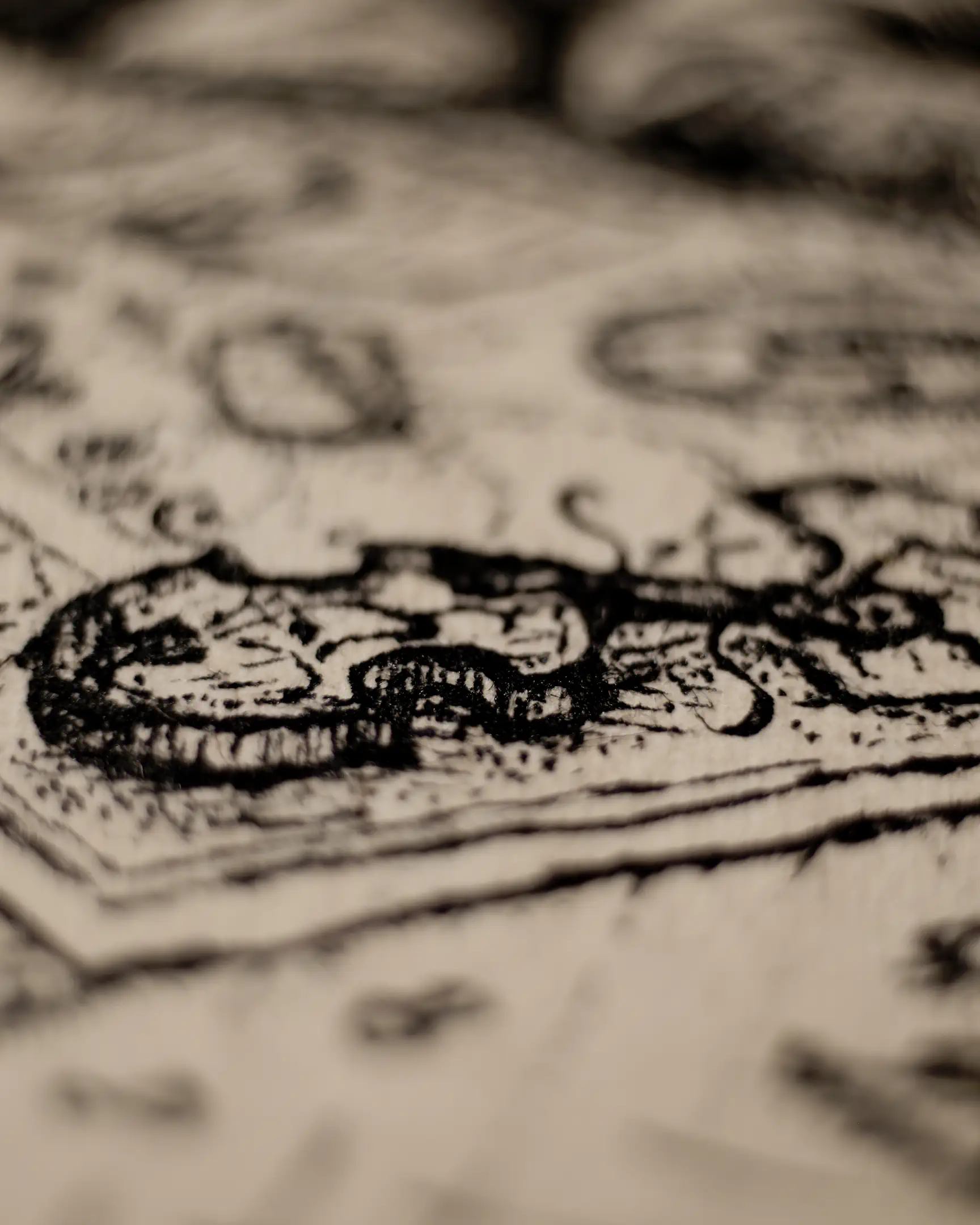
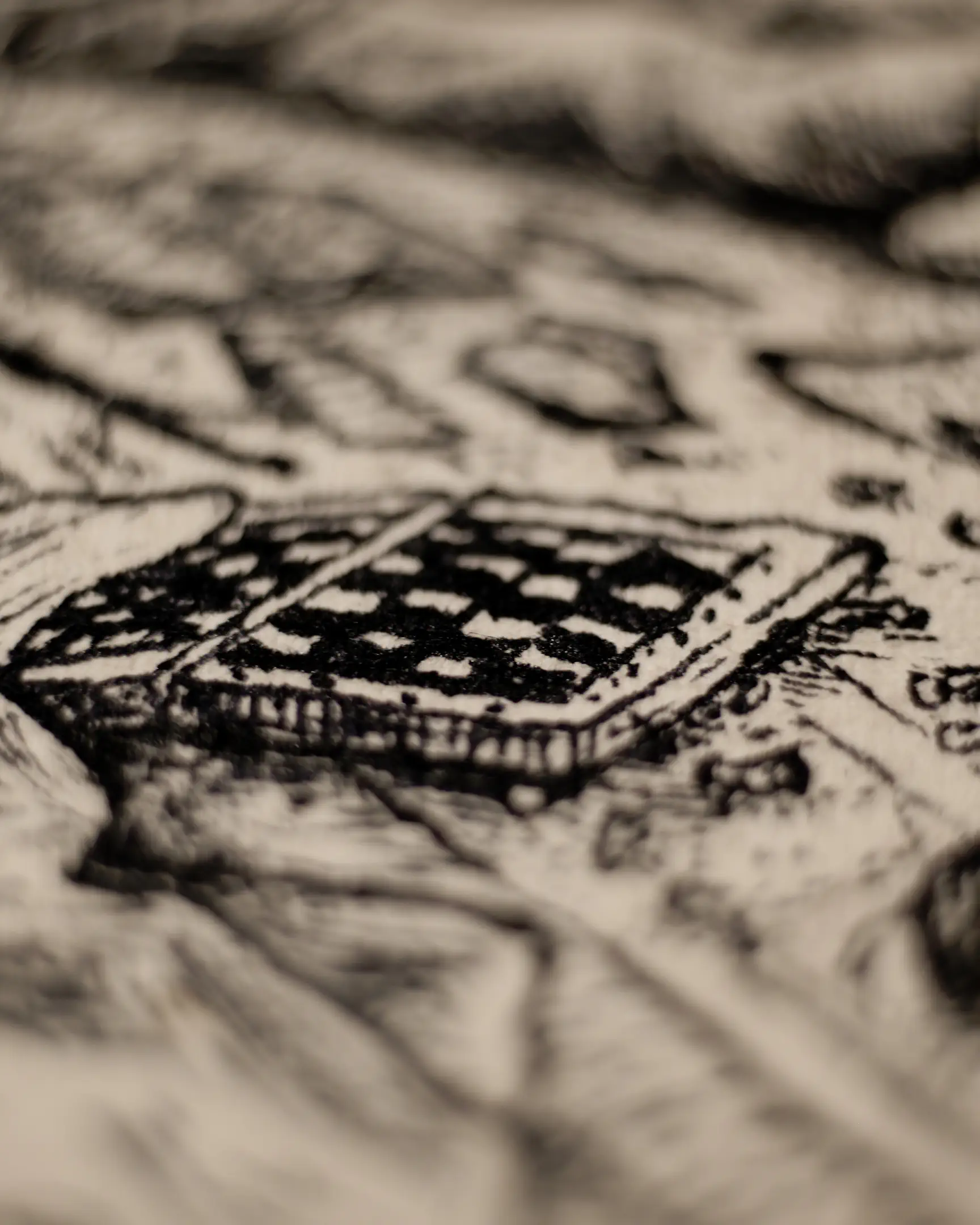
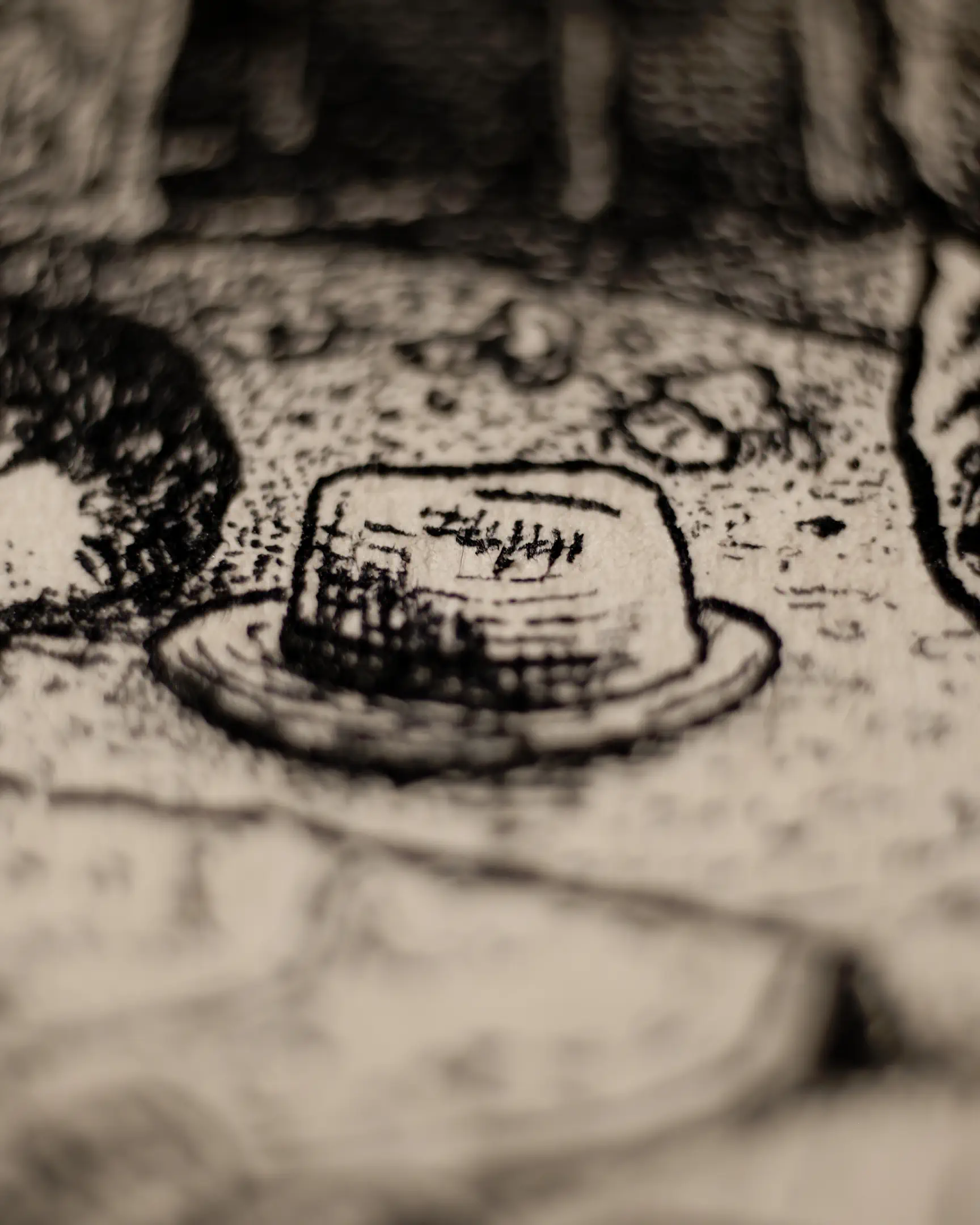
Directly to the right, a solitary white horse figurine stands as the only survivor on a cluttered table. An antique chair lies nearby, torn and shattered against the floorboards. In light of the broken candelabra lying next to it, the absence of a fire seems almost miraculous. Perhaps this is because our protagonists arrived mere moments after the catastrophe occurred. Moving past the fallen man on the carpet, one encounters a book with its pages brutally ripped out. Nearby, the remnants of a refined life appear as a broken violin bow, scattered papers, and a discarded chessboard with its pieces strewn about.
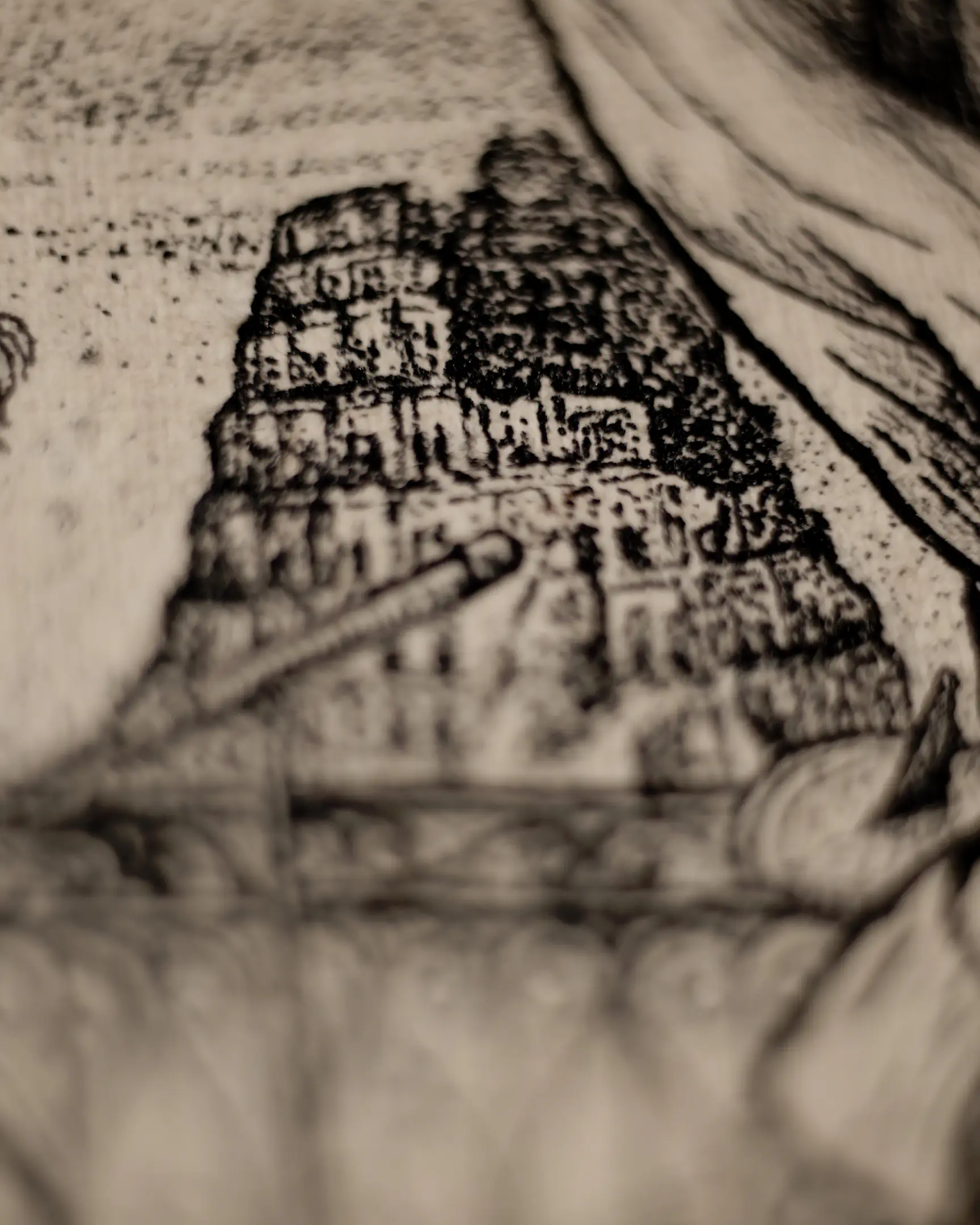
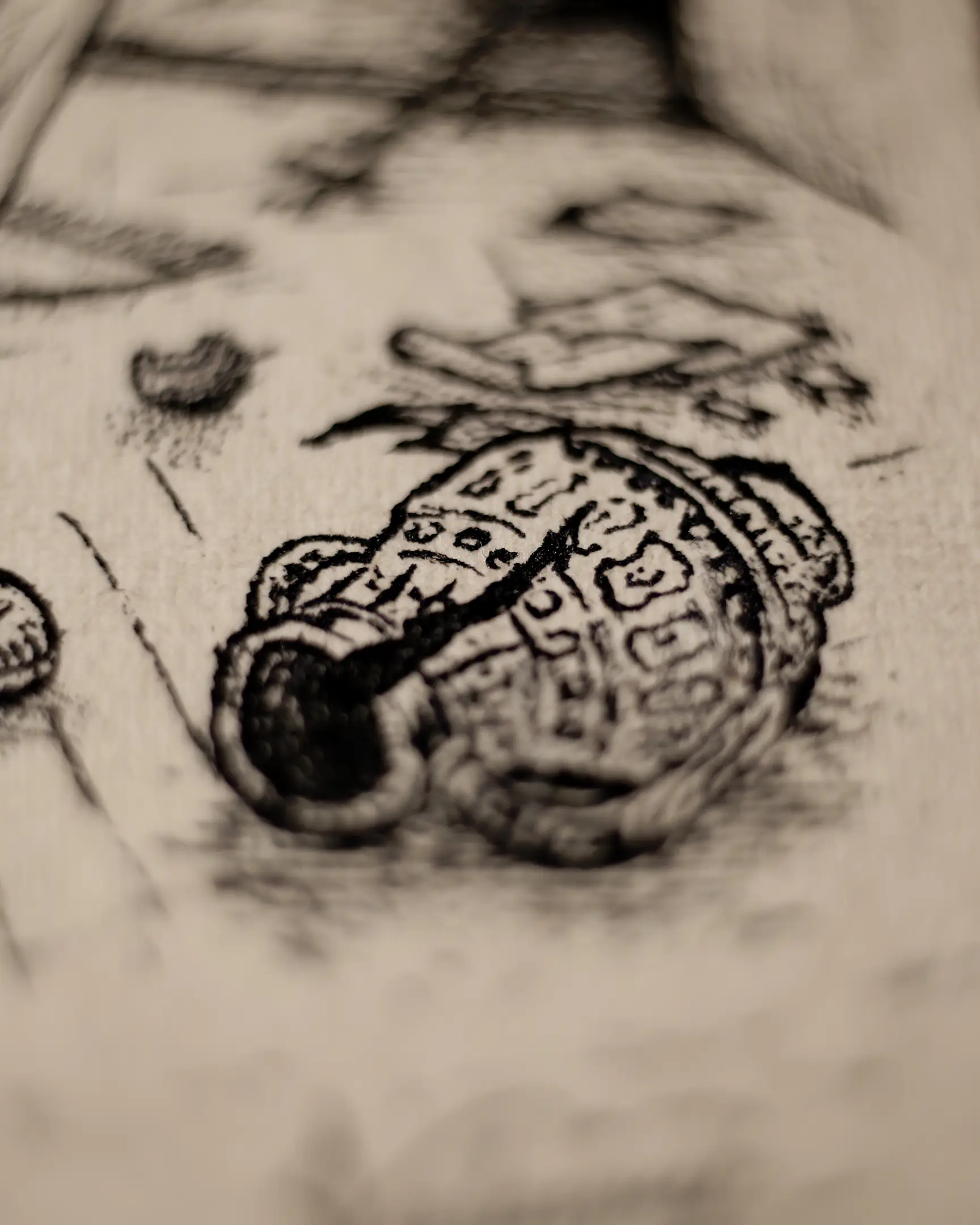
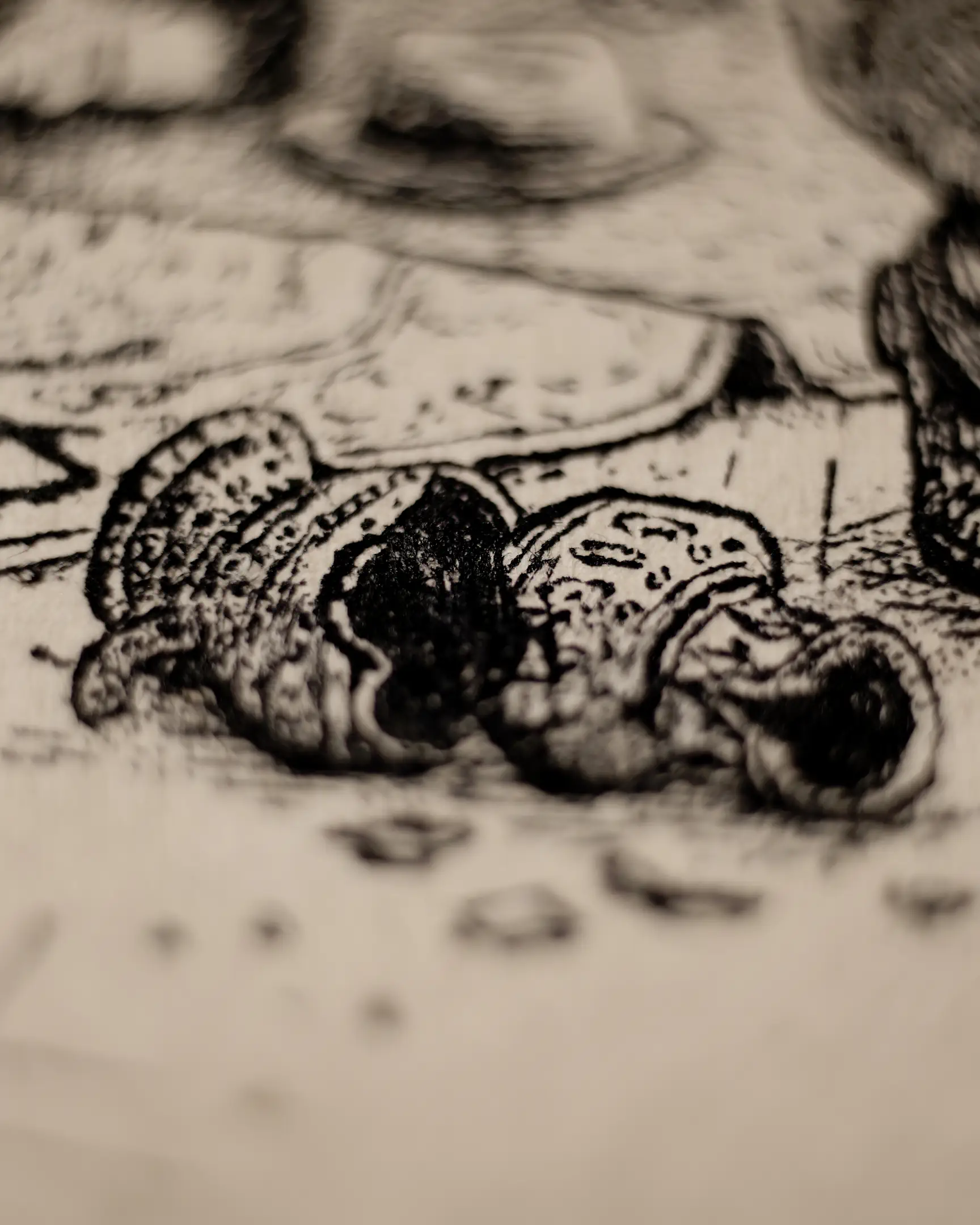
Amidst this wreckage, a shattered antique vase lies with fallen acacia branches spilling onto the floor. Another broken vessel, more torn documents, and a partially eaten apple complete the scene of total chaos. At this point, the viewer’s attention is captured by billowing curtains caught in a hot summer wind. Since the balcony doors stand wide open, the intruder likely escaped into the night through this passage. Telescopes and sundials stand silently among potted flowers on the balcony. Finally, the gaze converges on a massive structure emerging from the distance: the legendary Tower of Babel…

“The Day Everyone Awaited”
Ultimately, this painting remains a profound enigma, and every viewer must find an individual path toward its resolution. One might wonder if it depicts a forgotten past or perhaps a looming future. It captures a pivotal turning point that affects not just a single settlement but global society and the world at large. Within this context, the fate of the protagonists hangs in the balance. Will they succumb to overwhelming panic, or does our main hero already envision the next strategic step?
Rather than providing clear answers, this work focuses entirely on provocative questions. What lies ahead for us, and can these figures successfully fulfill their mission? Perhaps the most critical inquiry remains whether our heroes can withstand humanity’s boundless and often reckless ambition to build structures that reach the heavens. In light of such themes, the works of Vselenskyi in the “Neoclassical Libretto” genre transcend mere craftsmanship, serving instead as narrative vessels for eternal discussions.
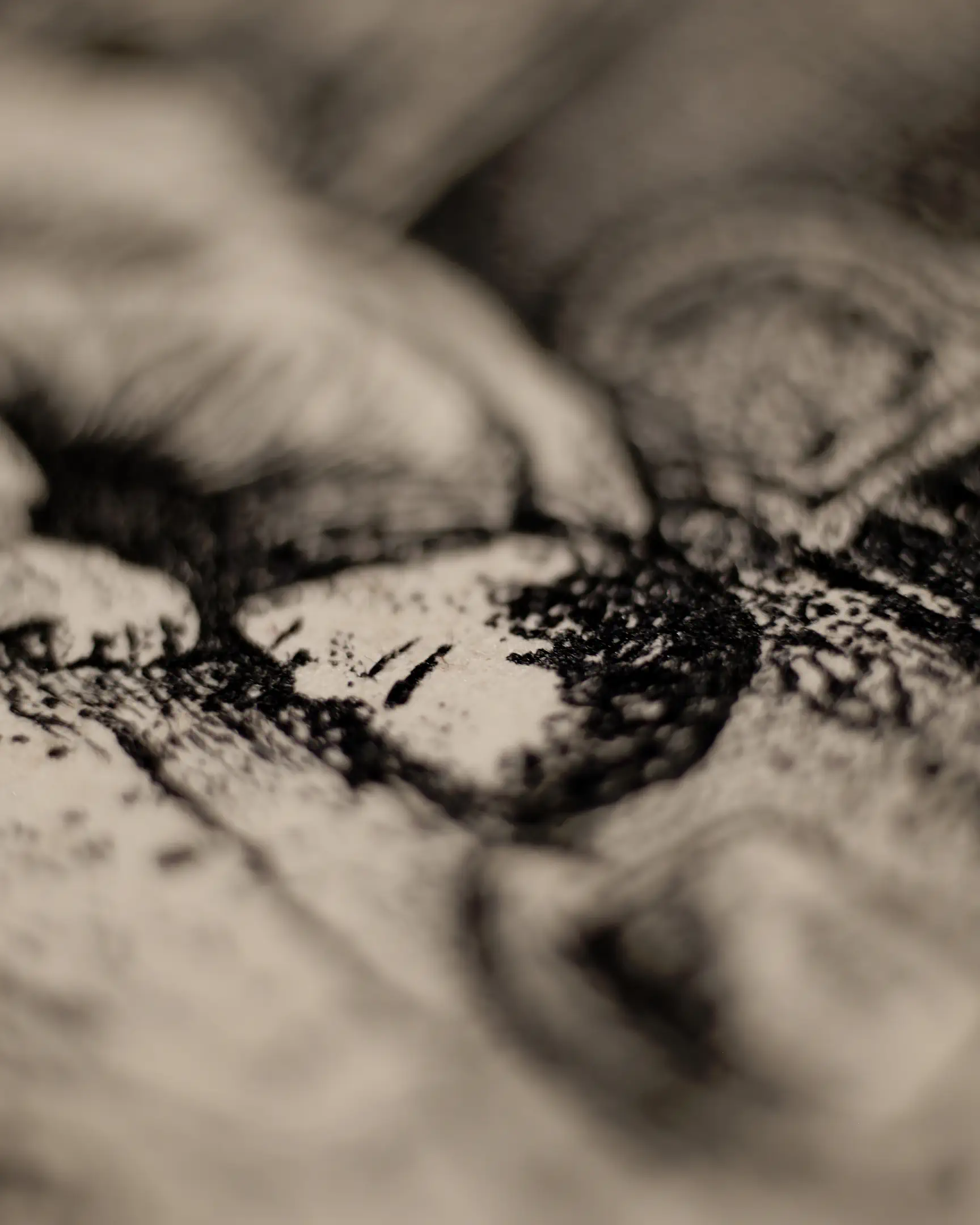
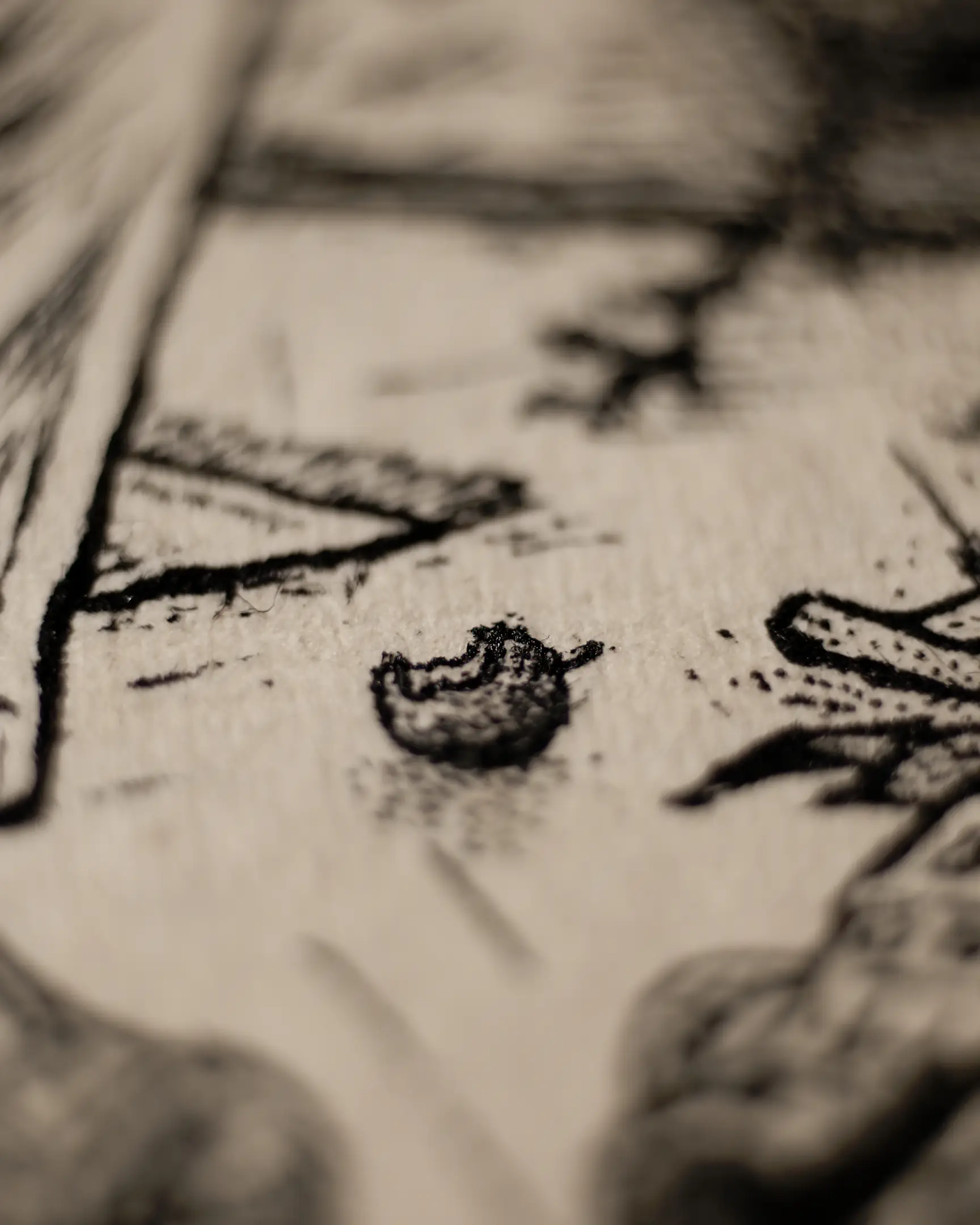
Regarding the technical execution, each masterpiece is created exclusively with dip pens on exceptionally rigid paper. Perfect lines are impossible here because every stroke is born through significant effort. Consequently, the fibers, scuffs, and deliberate scratches grant the viewer a unique sensory experience born from the marriage of craft paper and iron gall ink. Every completed work represents a solitary prayer for the author, embodying a labor of absolute obsession.
Furthermore, the entire composition was realized without a single draft or preliminary pencil sketch. The medium consists solely of paper and iron gall ink, a substance that will grow darker with every passing year. As the ink matures, it carries these haunting questions into the unknown future of both the heroes and our modern world.
GALLERY