PANE NERO
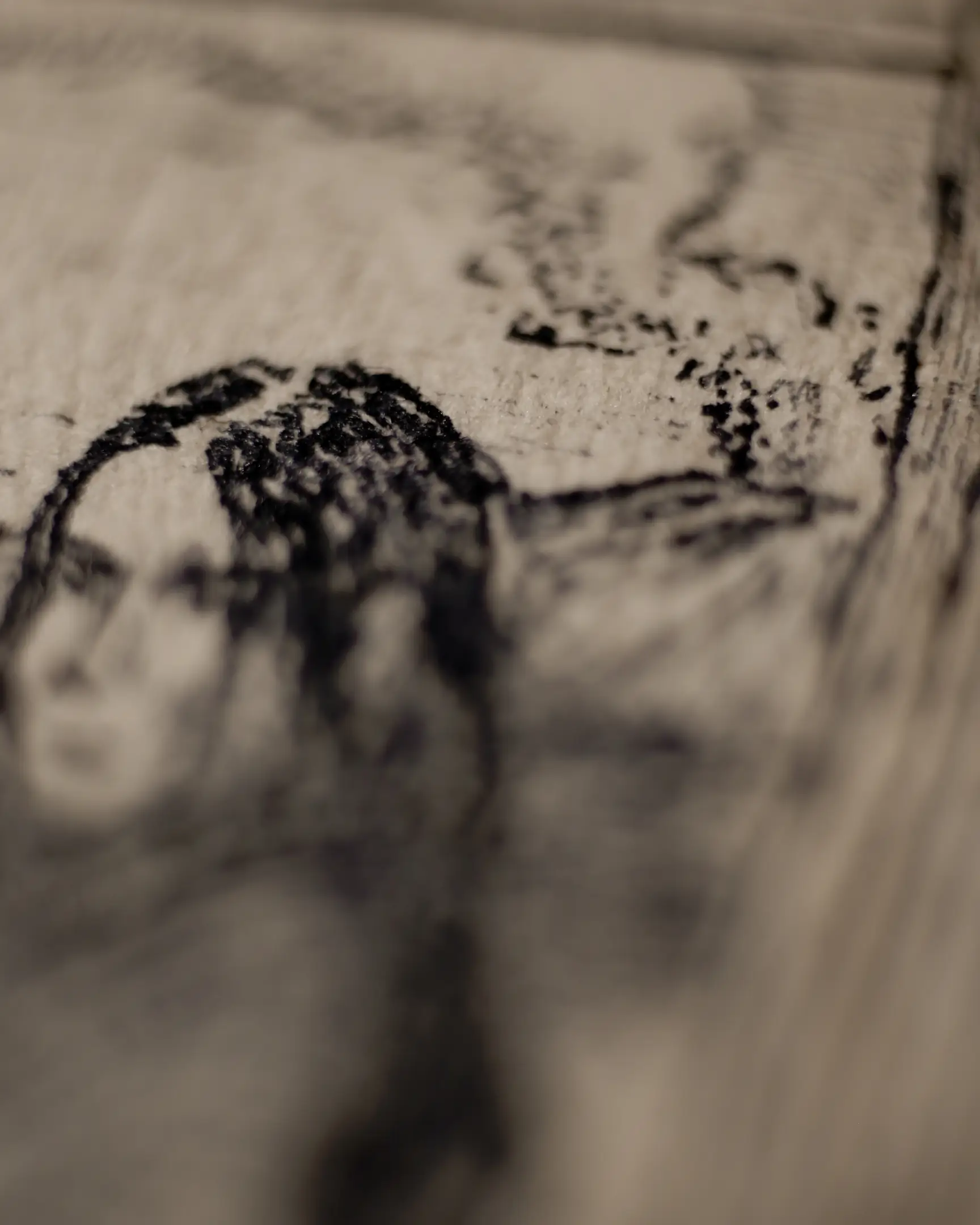
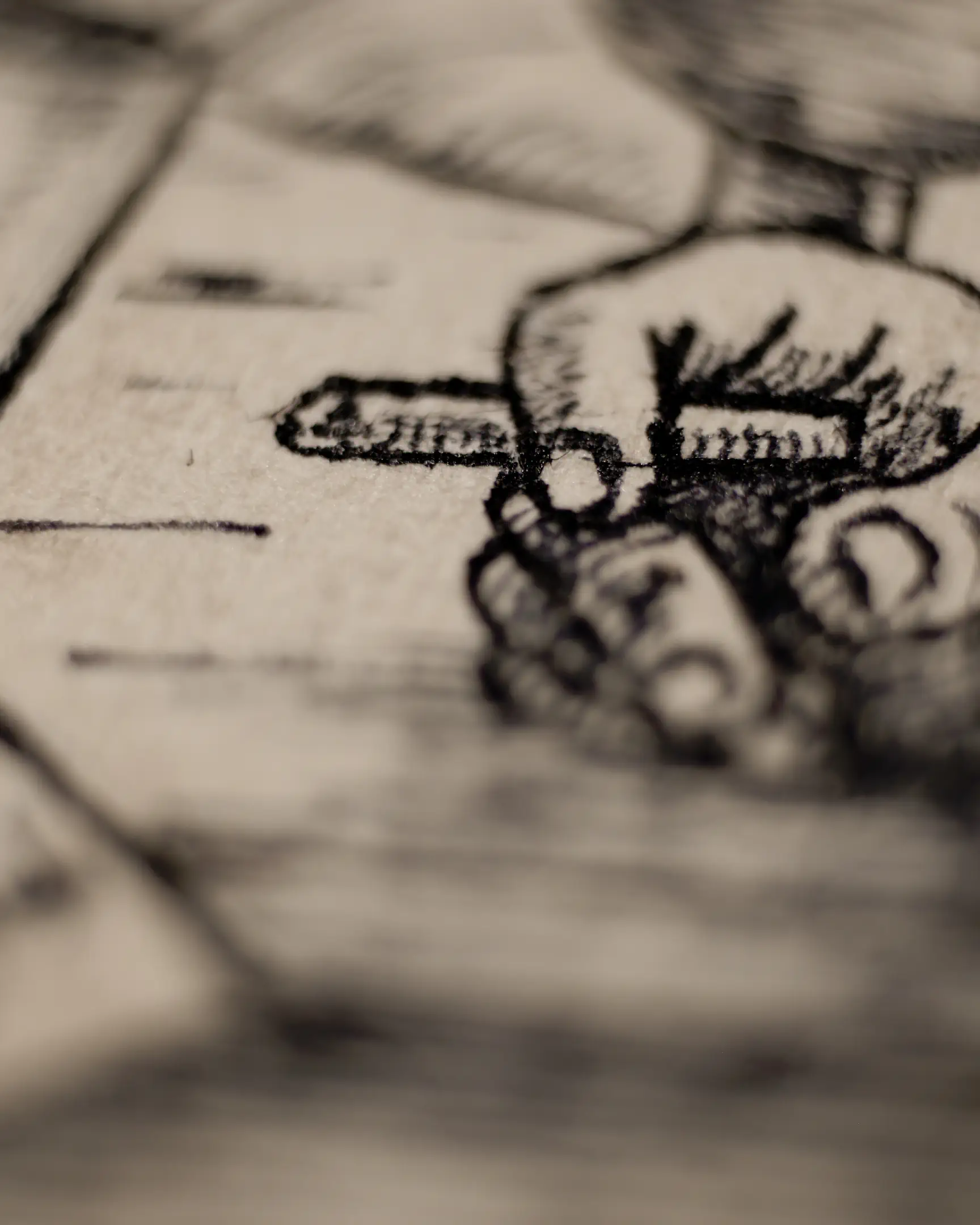
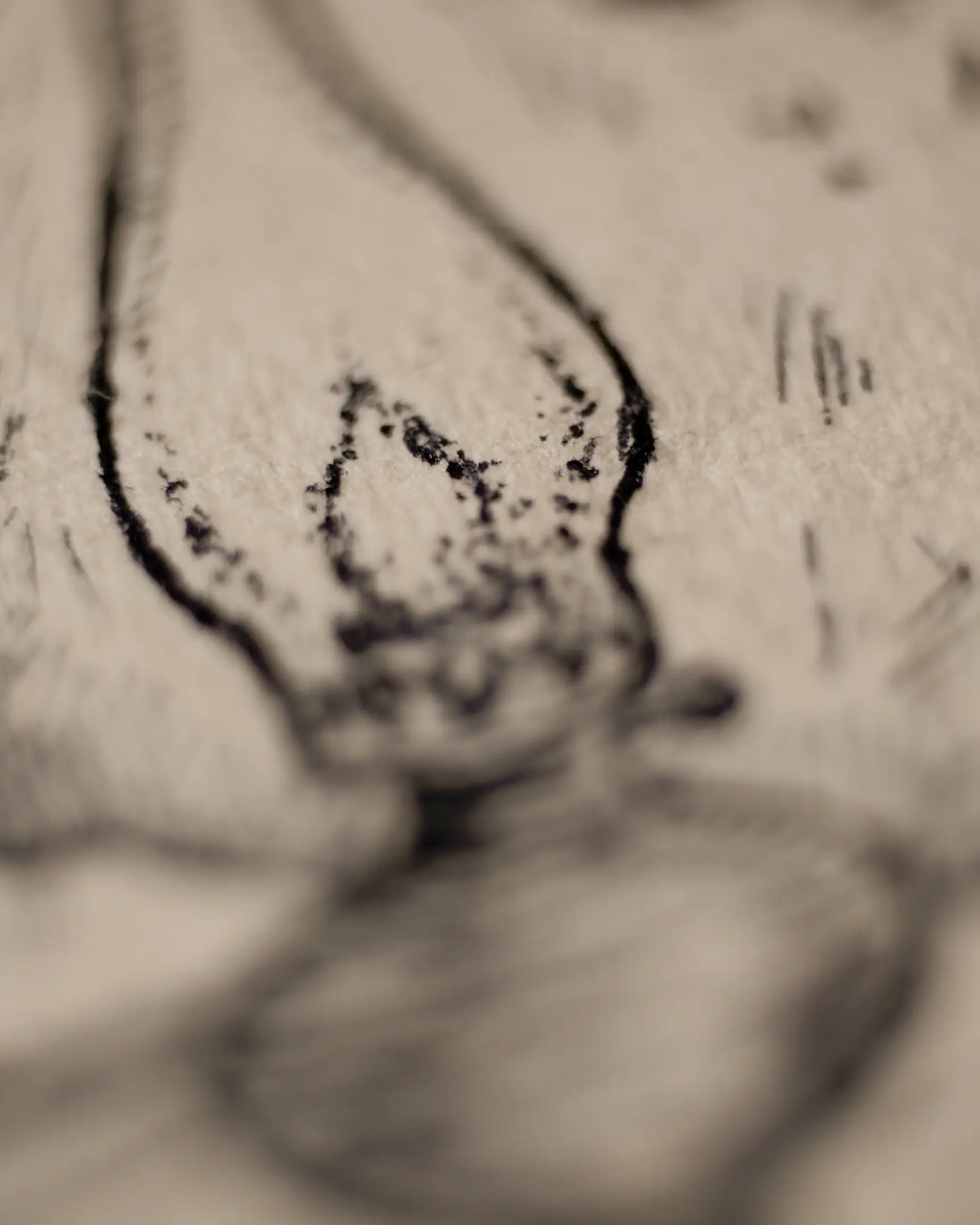
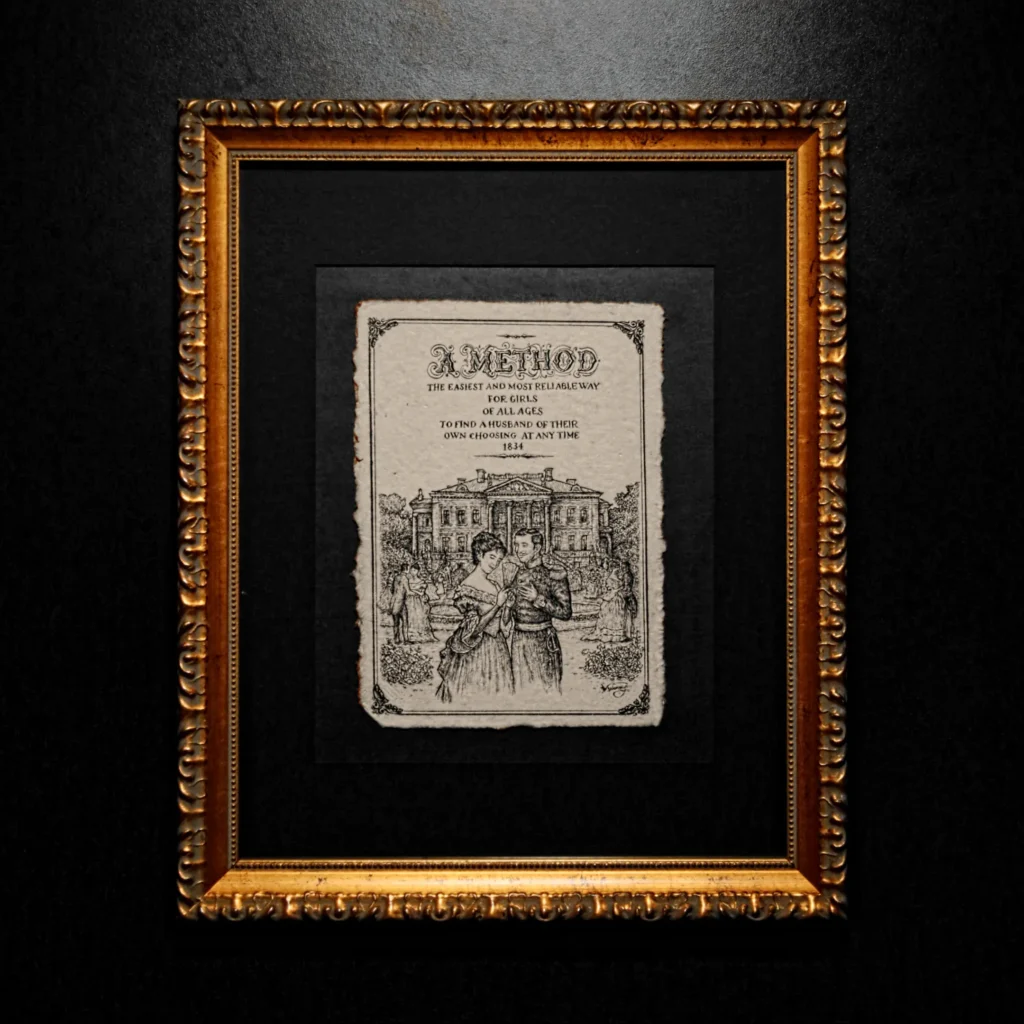
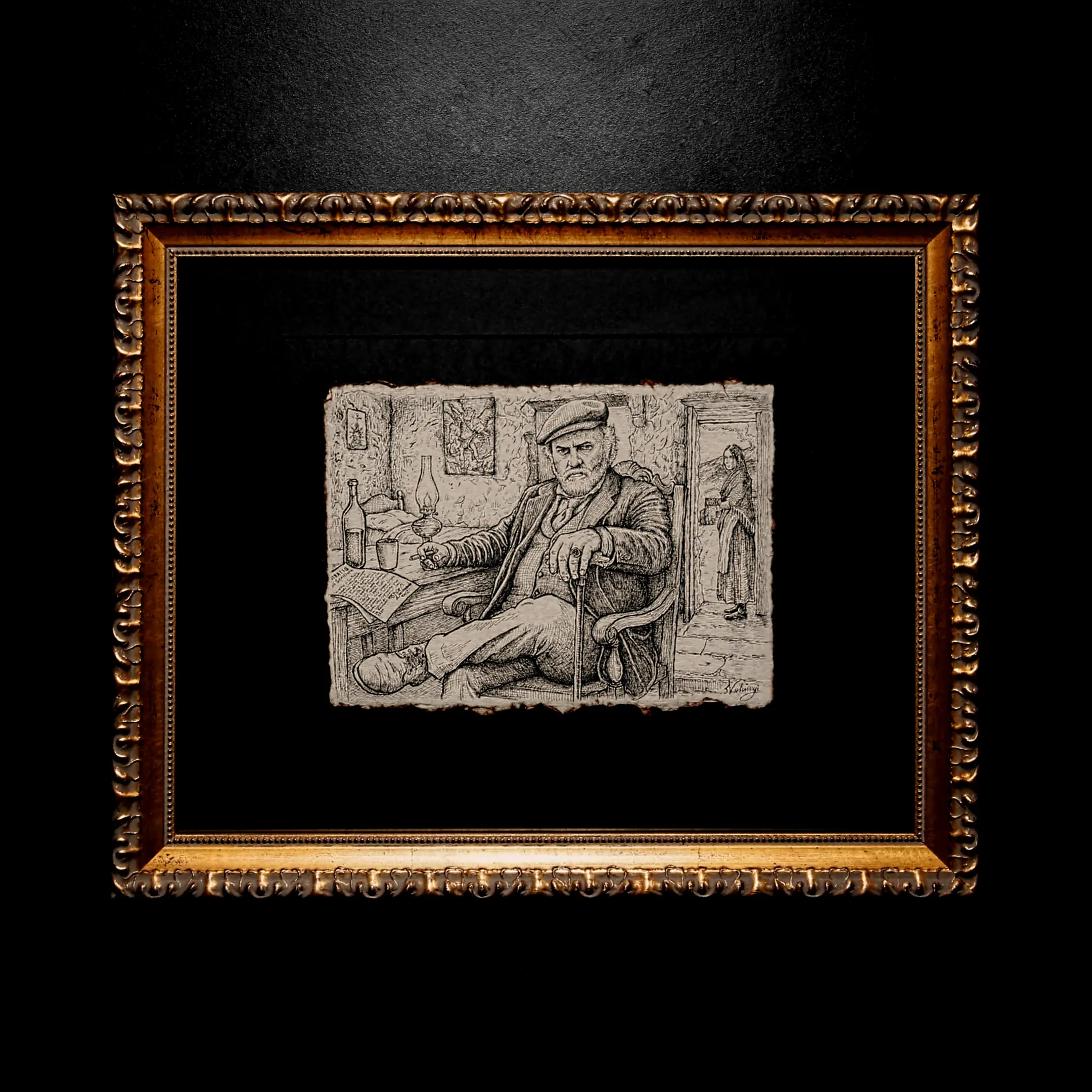
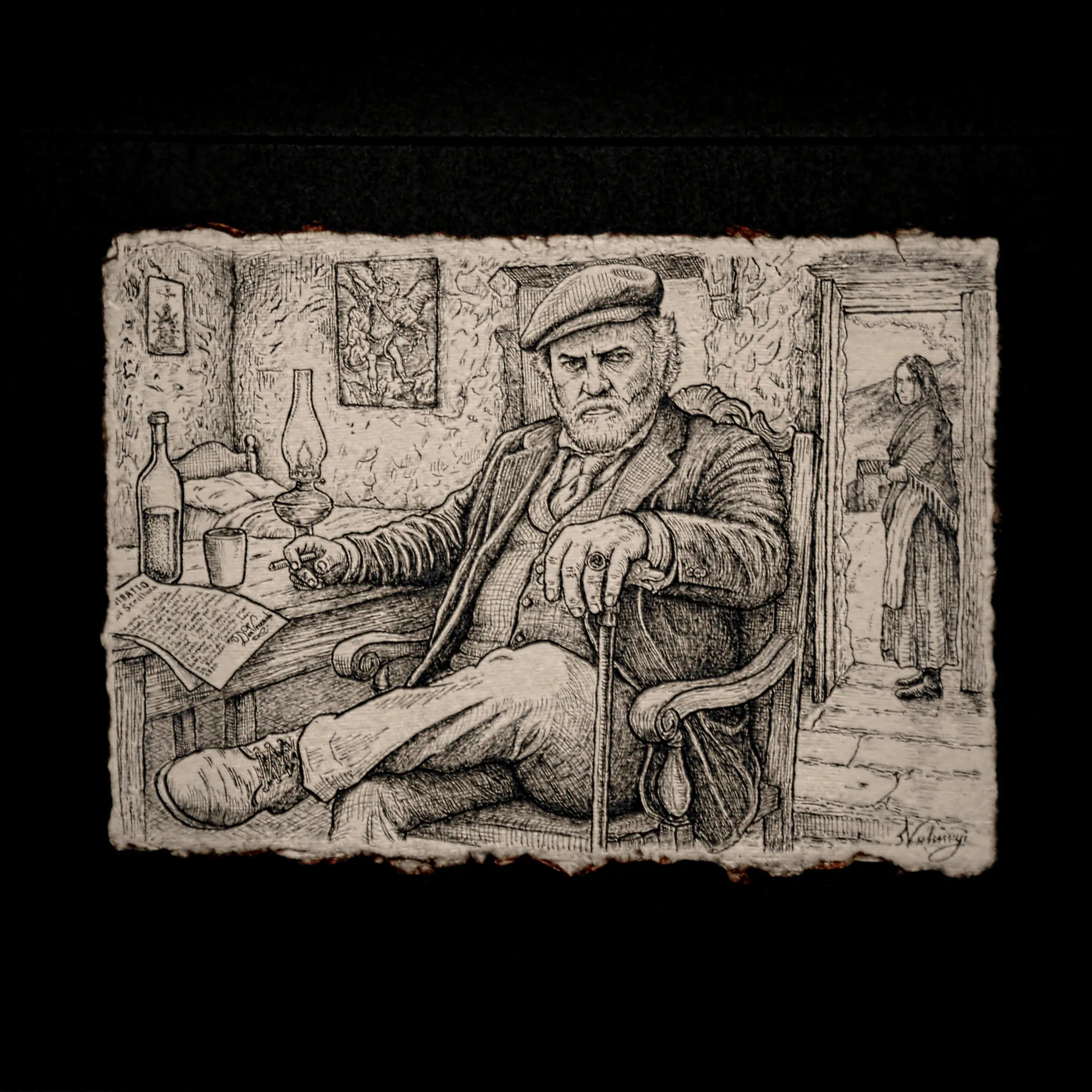
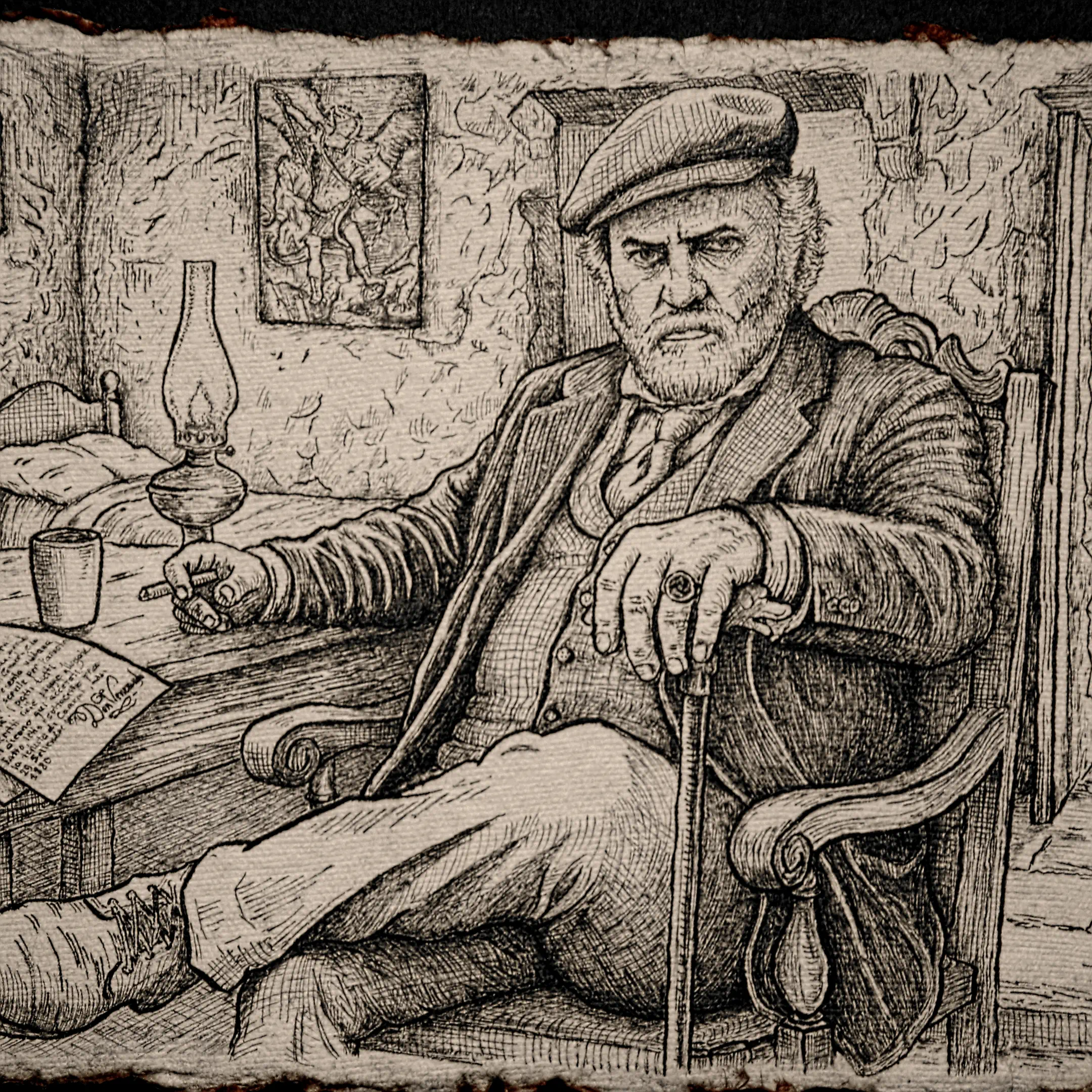
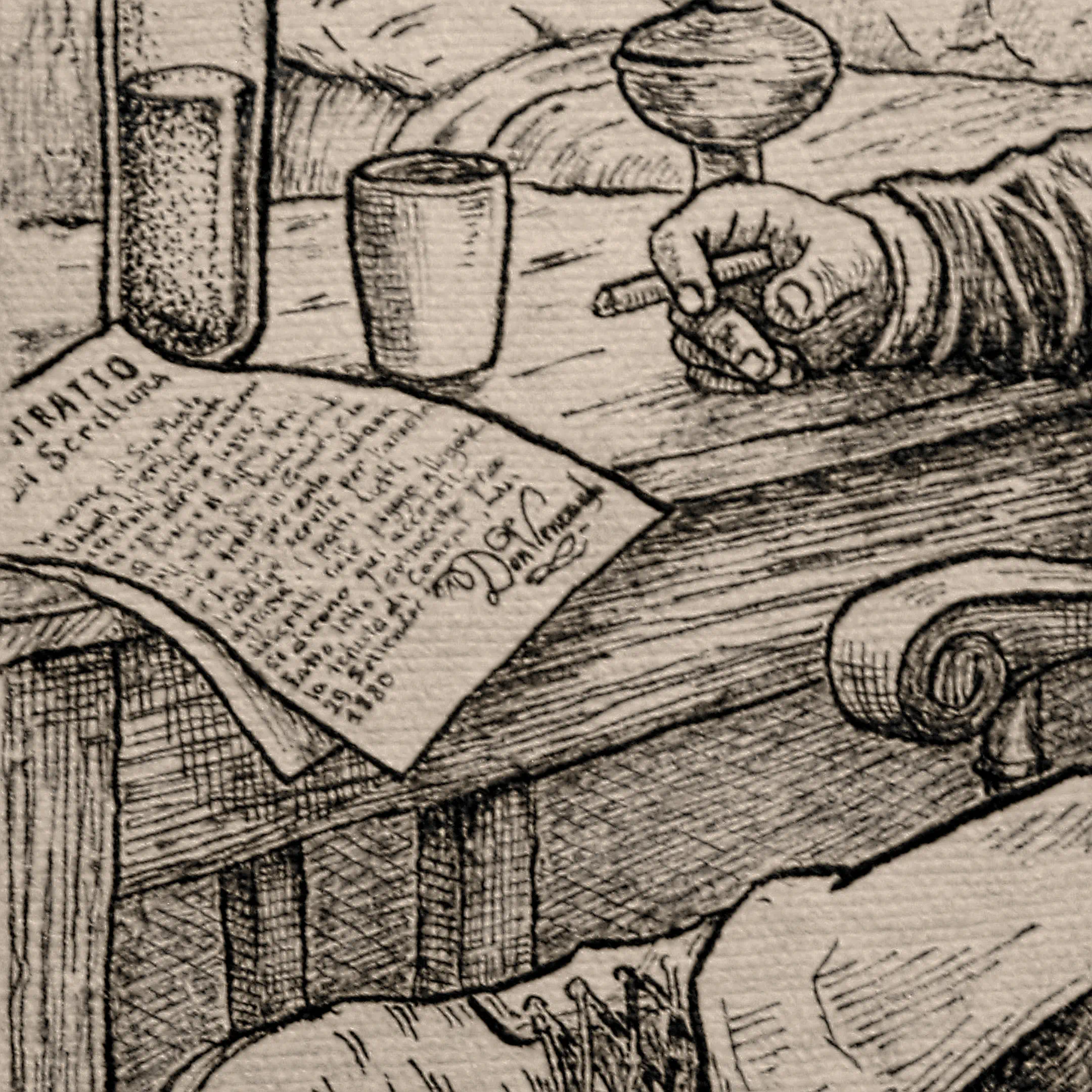
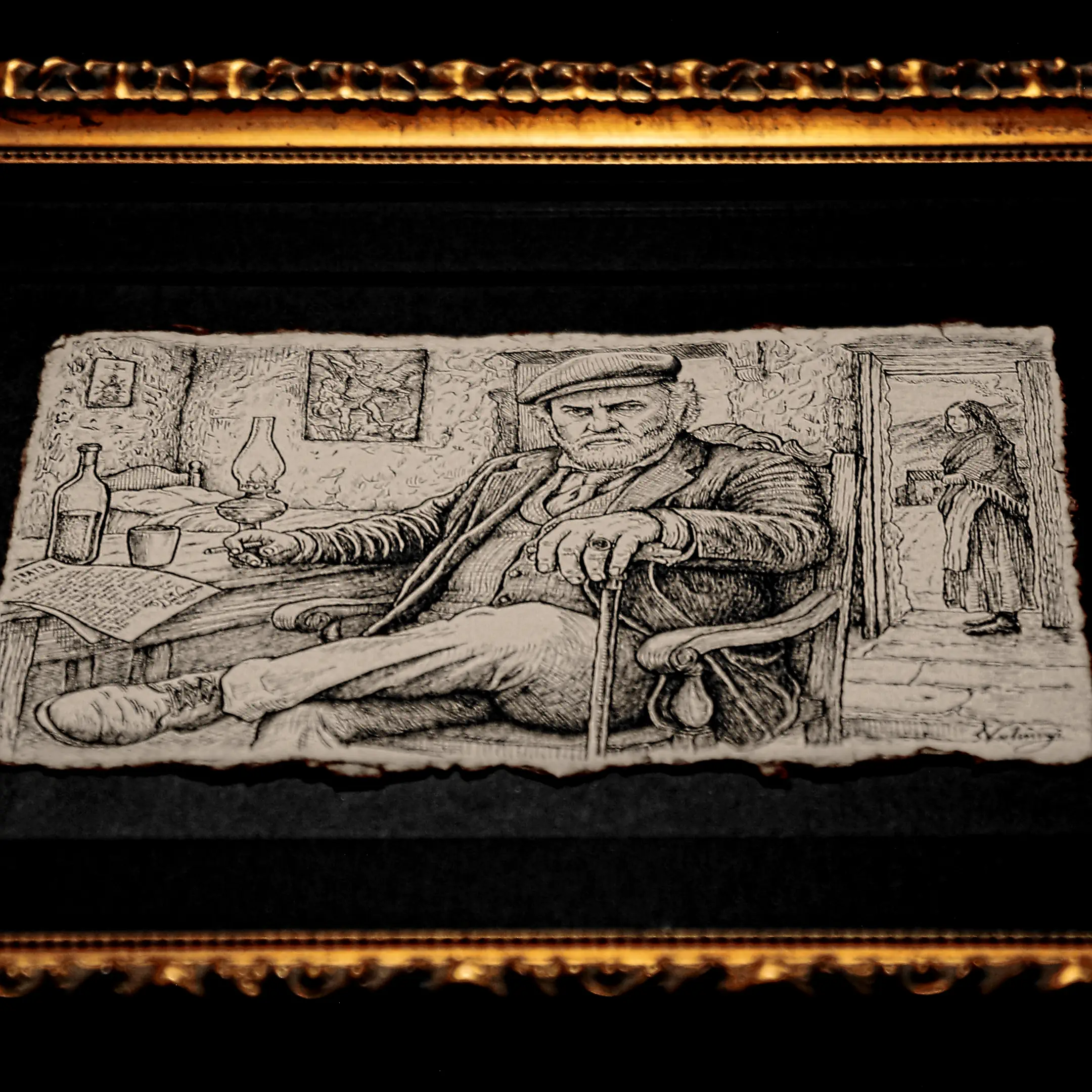
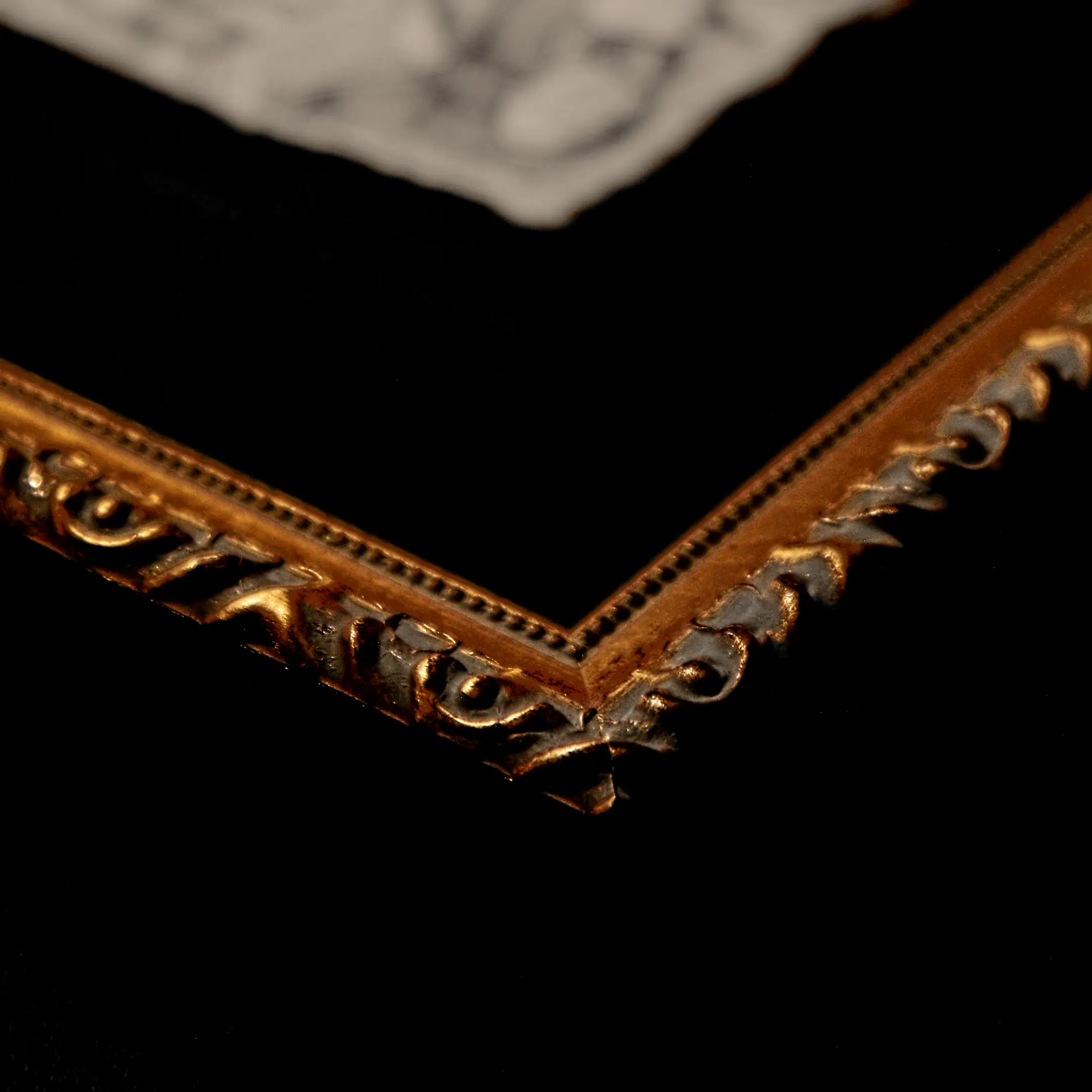
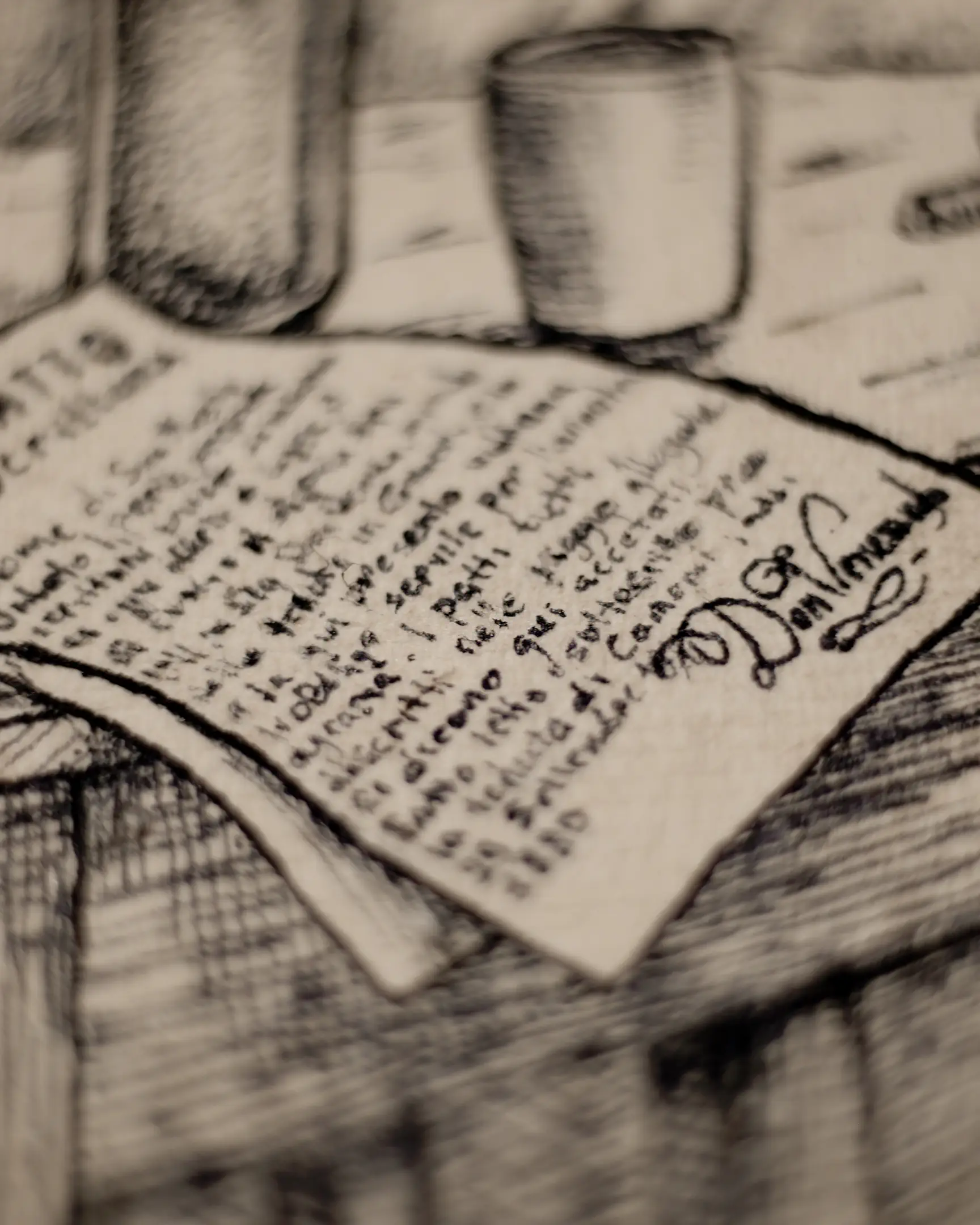
A unique portrait of raw, enduring authority. The subject is Don Fernando from the novella ‘Pano Nero’ by Giovanni Verga. Rendered on heavy 300 gsm handmade paper with iron gall ink and a dip pen, this singular object anchors the viewer with a gaze of absolute certainty. The composition includes 19th-century Sicilian icons and a finalized contract – a visible, undeniable pact of intent. Zero corrections were allowed; every mark is an irreversible statement of finality. Fully encased in a museum-grade archival housing for a century of display.
Technical Profile
| Attributes | Value |
|---|---|
| Contents: |
• Original Ink Art Object · Professionally mounted on a museum-grade archival backing using traditional wheat starch and japanese paper hinges (reversible mounting) |
| Specifications: |
• Sketch Size: 5 x 9 in, 12.7 x 22.8 cm |
| Materials & Origin: |
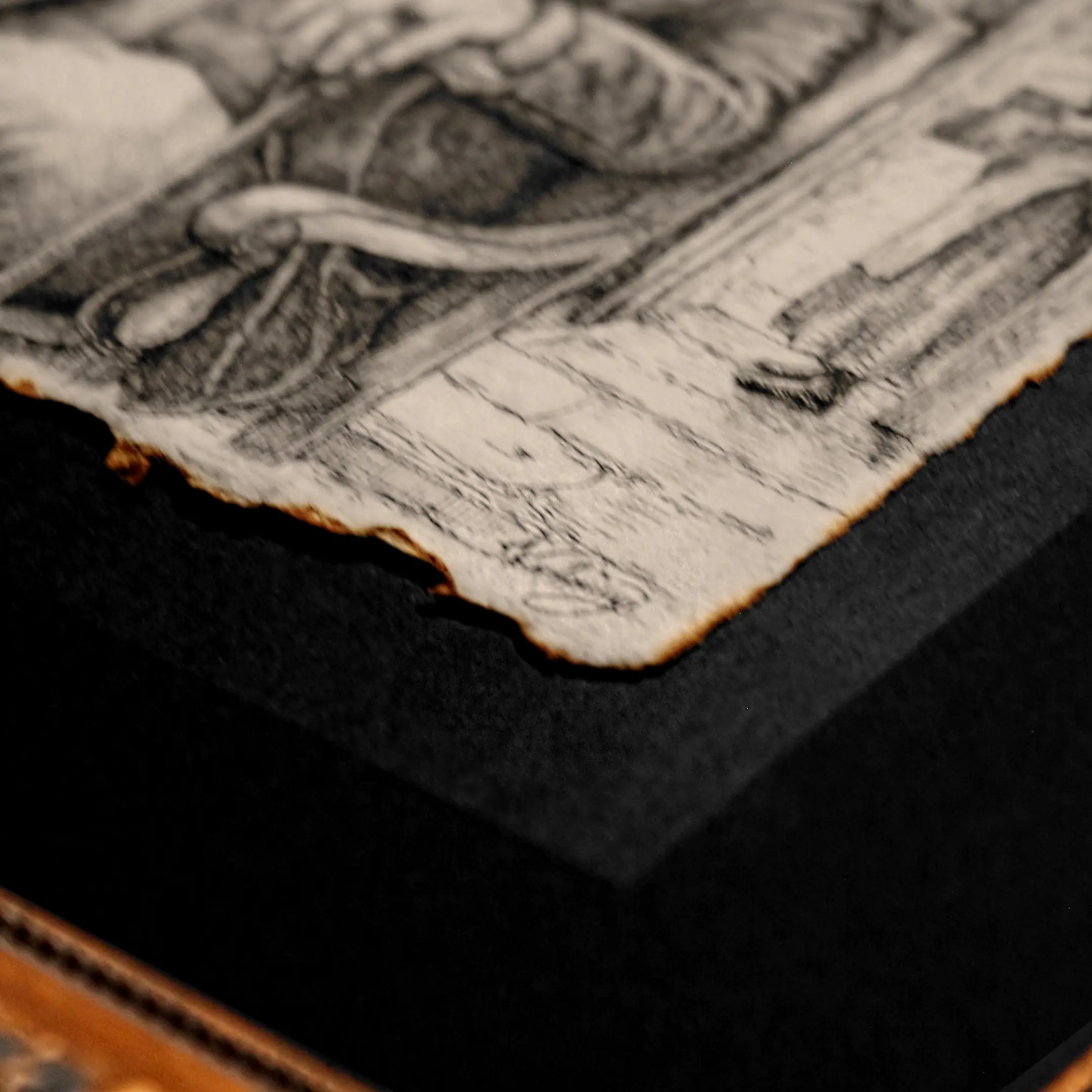
• Paper: 300 gsm Handmade Paper |
| Style & Artistry: |
• Technique: Classic dip pen and ink sketching. |
| Longevity: |
• 100-Year Archival Display Guarantee (Under UV-protected conditions) |
HISTORY OF ART OBJECT
PANE NERO
“19th-Century Sicily with the Bitterness of Lemon”

The Grandeur of the Don
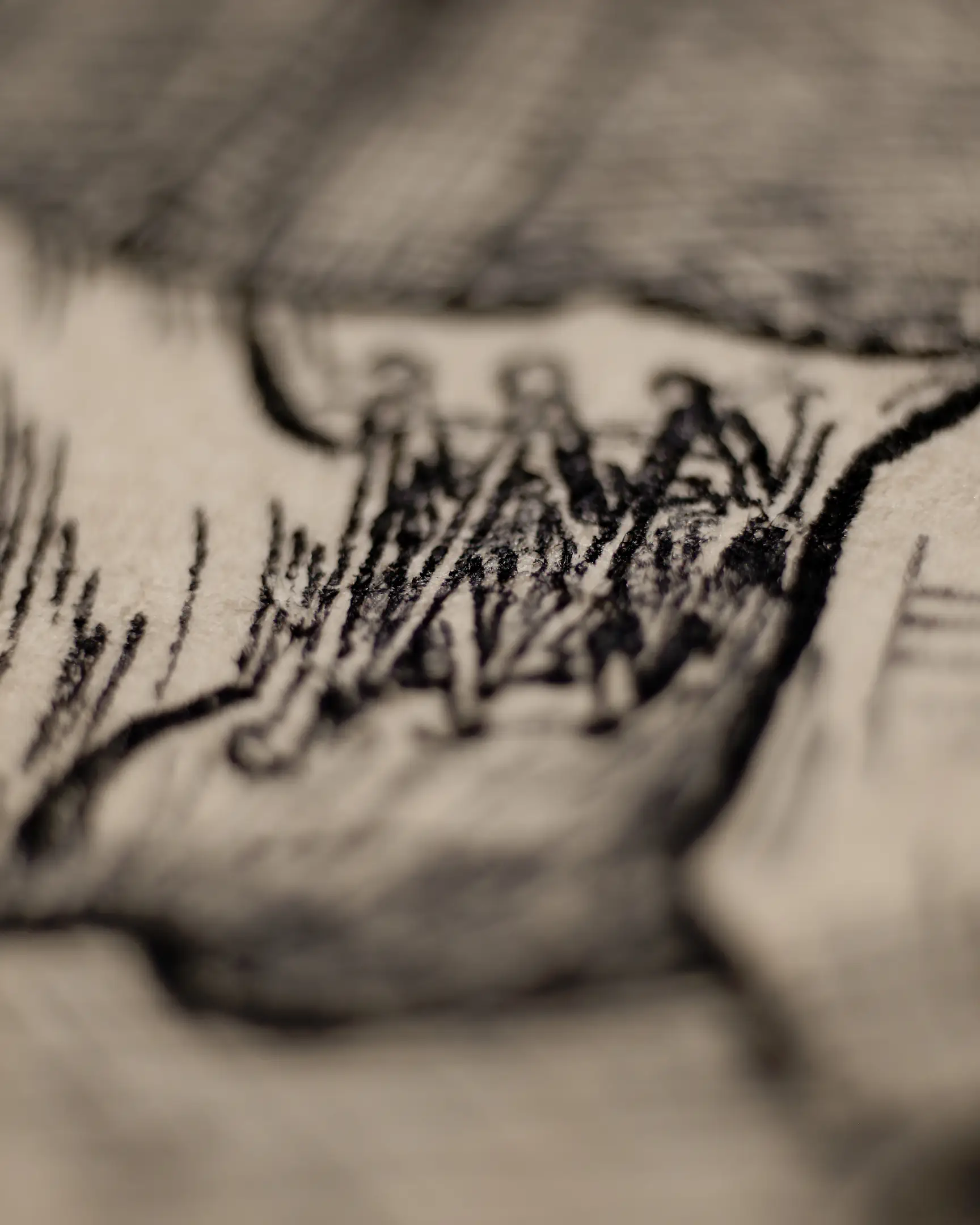
This is one of Vselenskyi’s most profound works, executed with ink prepared according to a 19th-century recipe. This is an authentic masterpiece, created using a traditional dip pen and ink with no preliminary pencil sketches. Every mark on the paper is pure ink – waterproof iron gall ink applied with a 19th-century French nib. A singular, handcrafted original, it serves as the fourth and final work in the artist’s MONUMENTA collection.
The painting offers a visual meditation on Giovanni Verga’s “Pane Nero” (Black Bread), set in Sicily in 1880. Late 19th-century Sicily is a space frozen in time, where the dazzling Mediterranean sun contrasts with the deep shadows of social injustice. It is a land of rugged cliffs and scorched fields, where ancient traditions of honor and faith intertwine with harsh economic realities. In the 1880s, the island endured an era of transition while remaining under the rule of unspoken laws and a centuries-old order where land was the only measure of life and death.
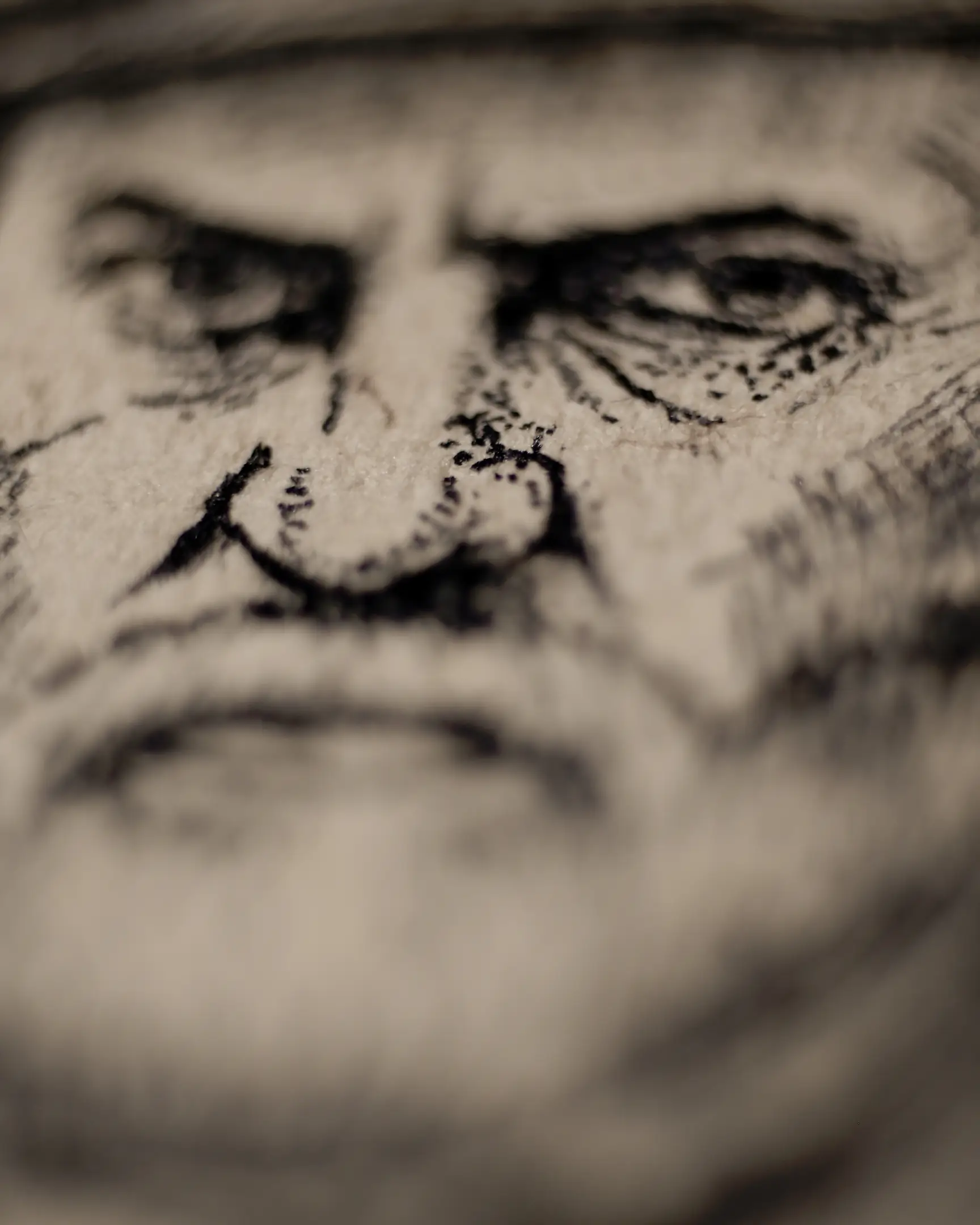
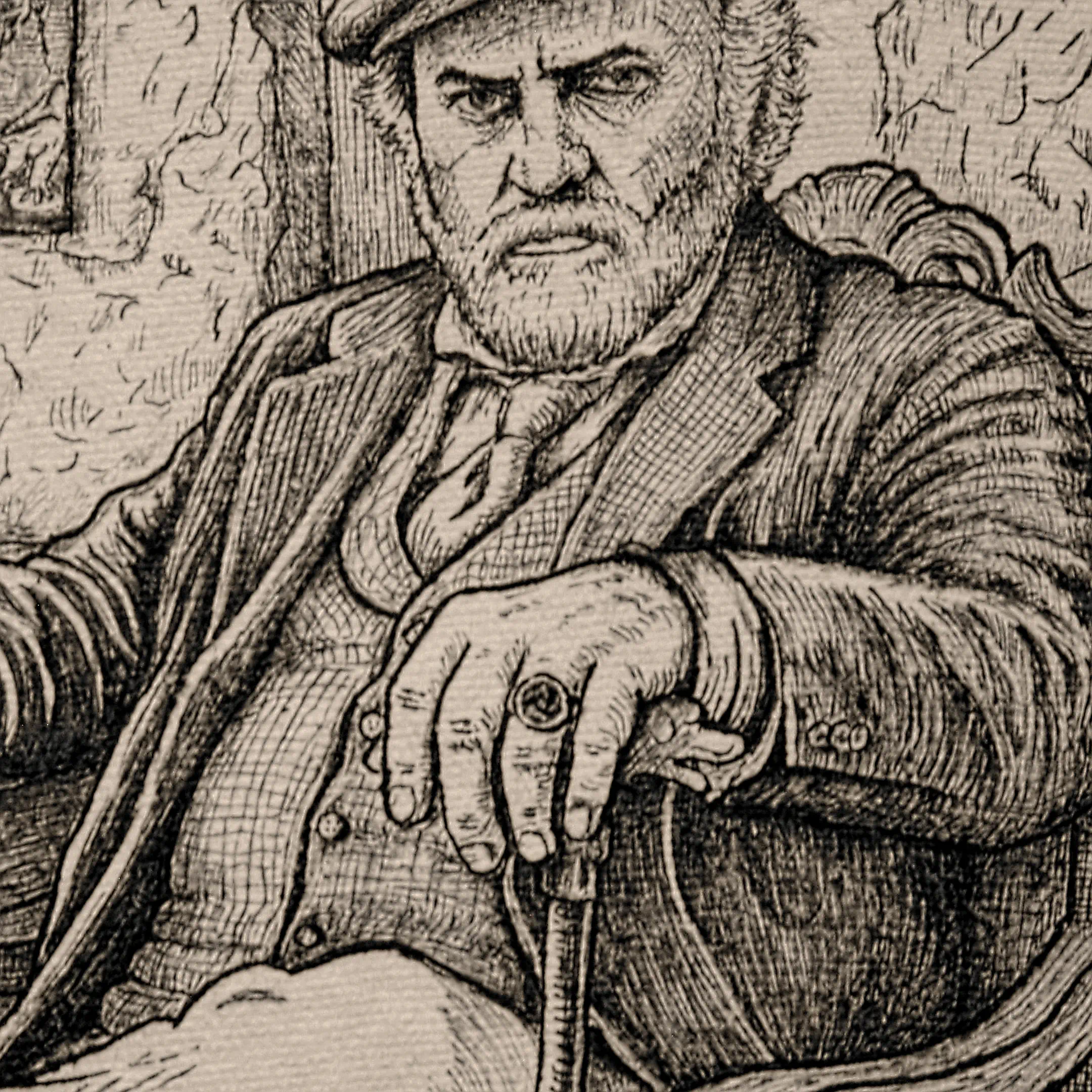
At the heart of the composition is a Sicilian farm estate where we see Don Venerando, the embodiment of local authority. His expensive boots, jacket, tie, and cane speak to his power and the path he has traveled. One can read notes of arrogance and self-assurance in his features, yet they rest on a solid foundation of wealth. At the same time, Don Venerando is not a wasteful man – he counts every coin. Thus, his estate appears modest for a man of such means, a testament to his austere functionality.
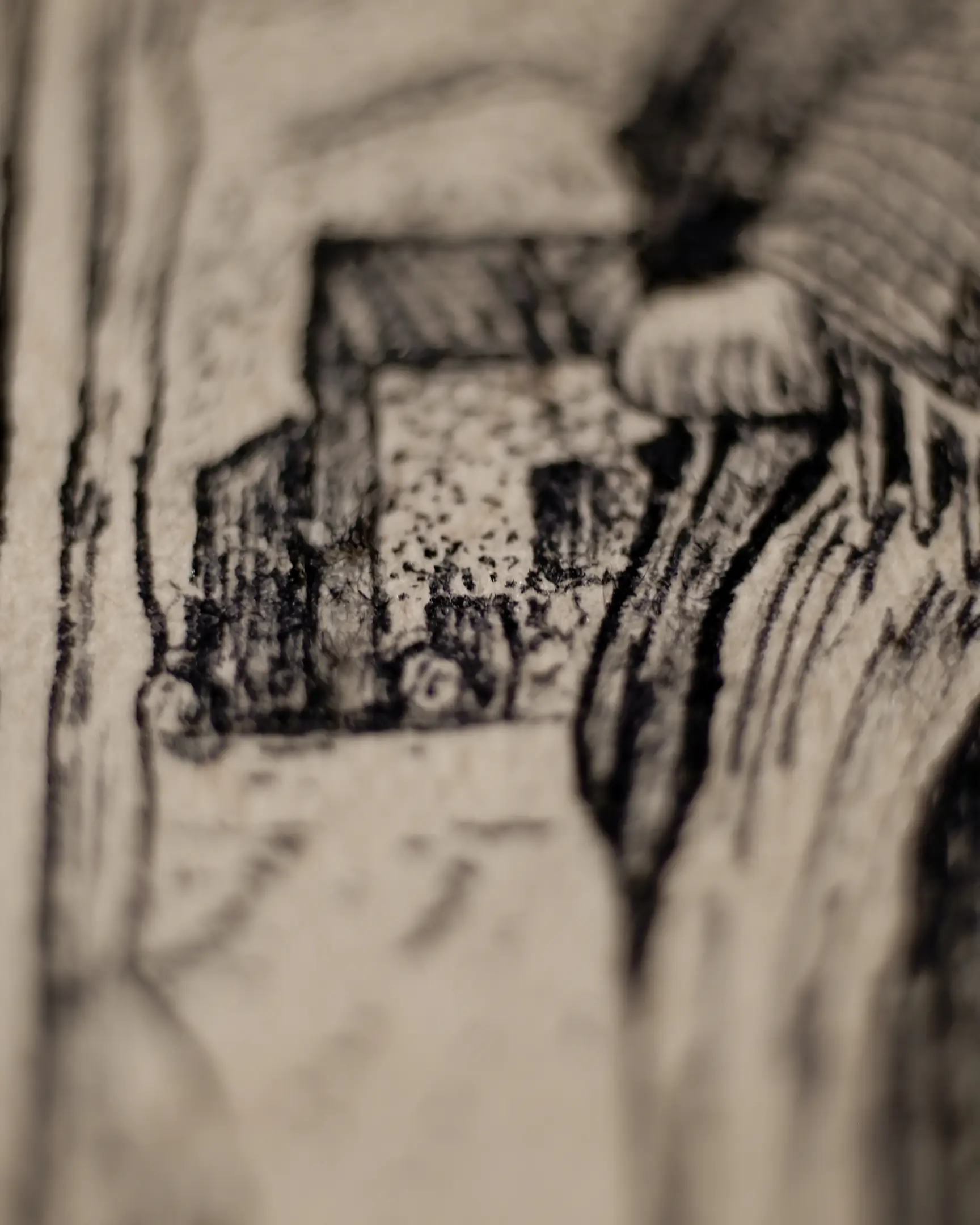
The estate is a fortress of practicality. Thick stone walls designed to hold the cool air are devoid of excessive decor. Every object serves a purpose: the darkened, hand-hewn ceiling beams and humble furnishings emphasize a character for whom luxury is not found in gilding, but in the right of ownership over every stone and every ear of grain.
The Sicilian Household Way of Life
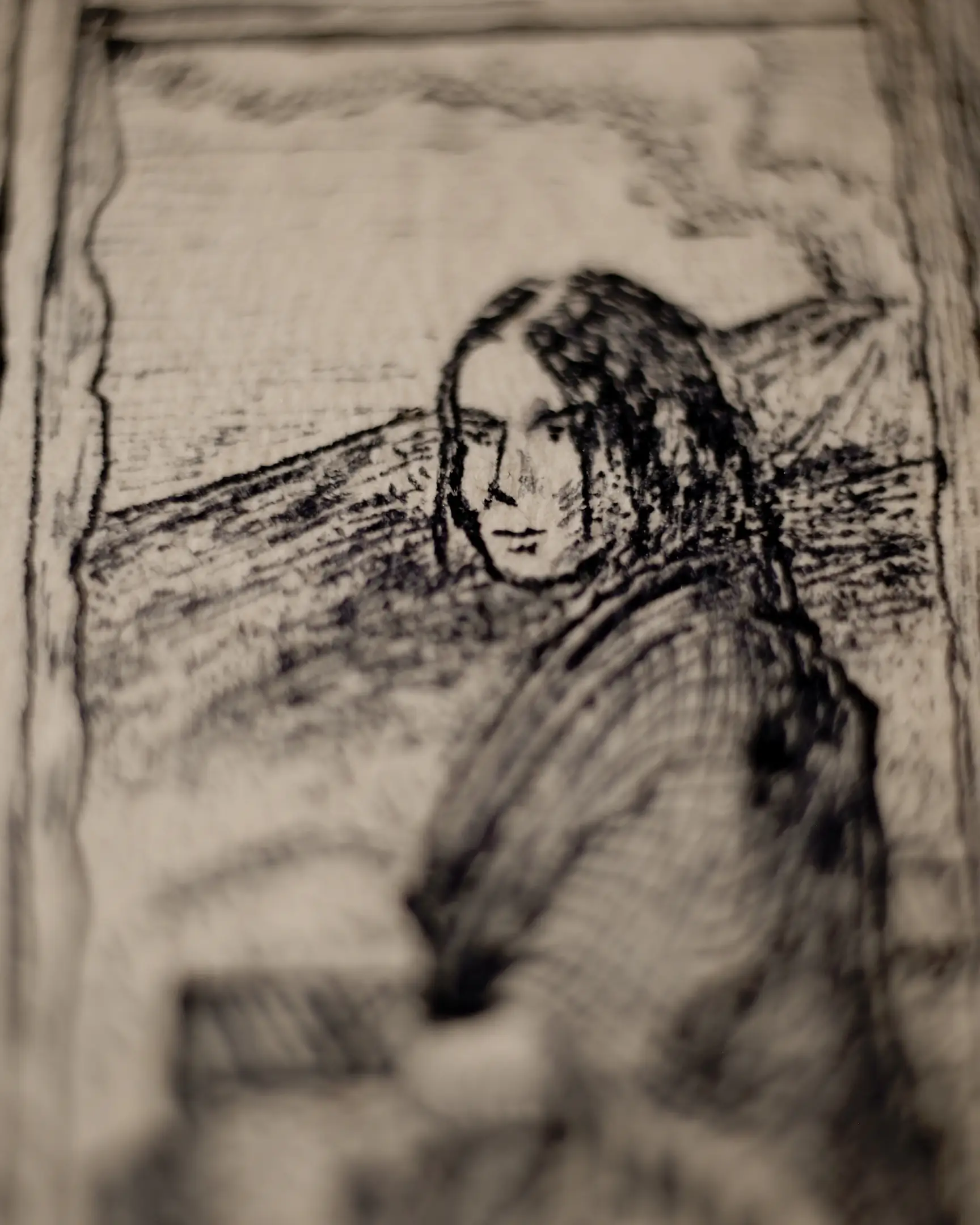
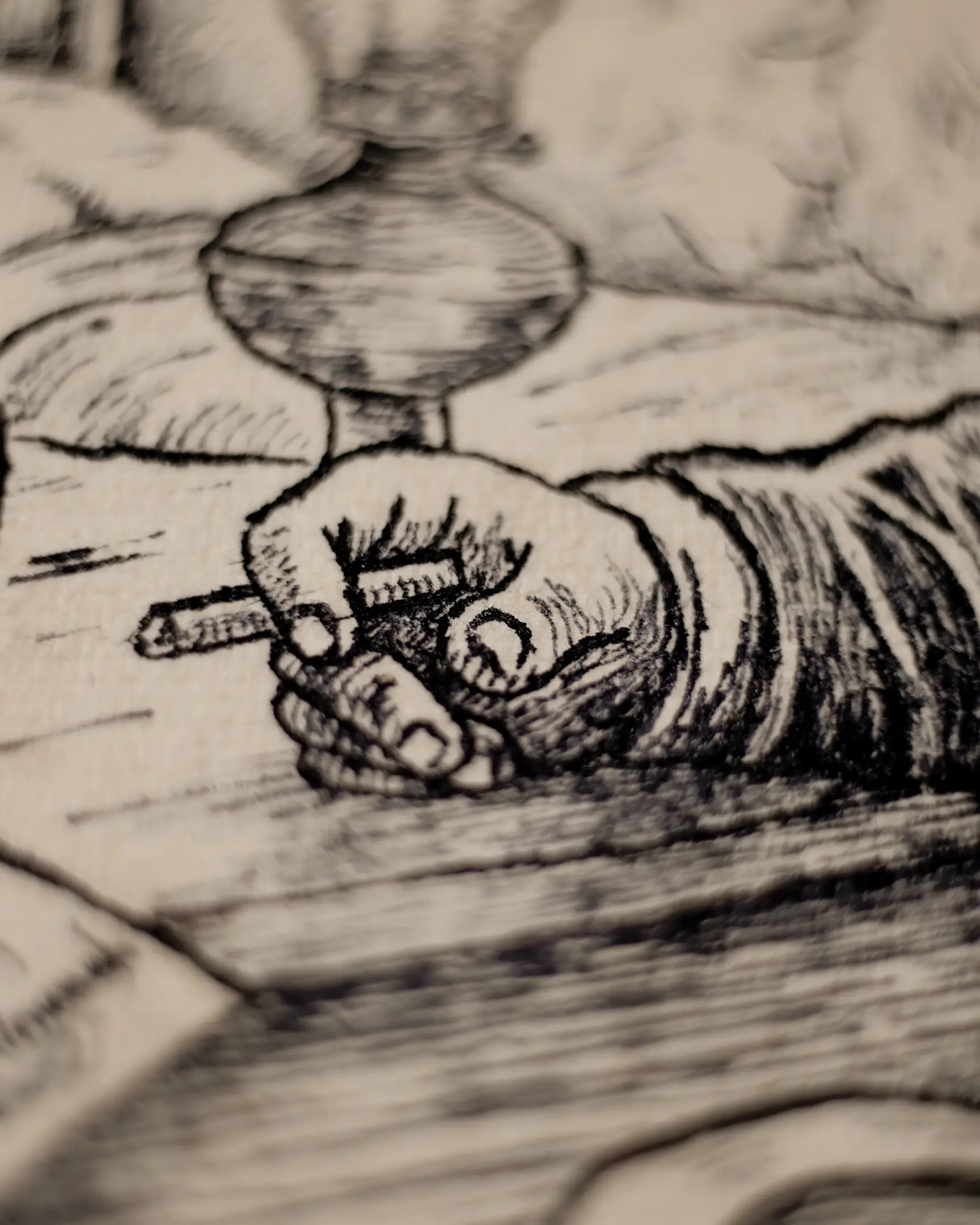
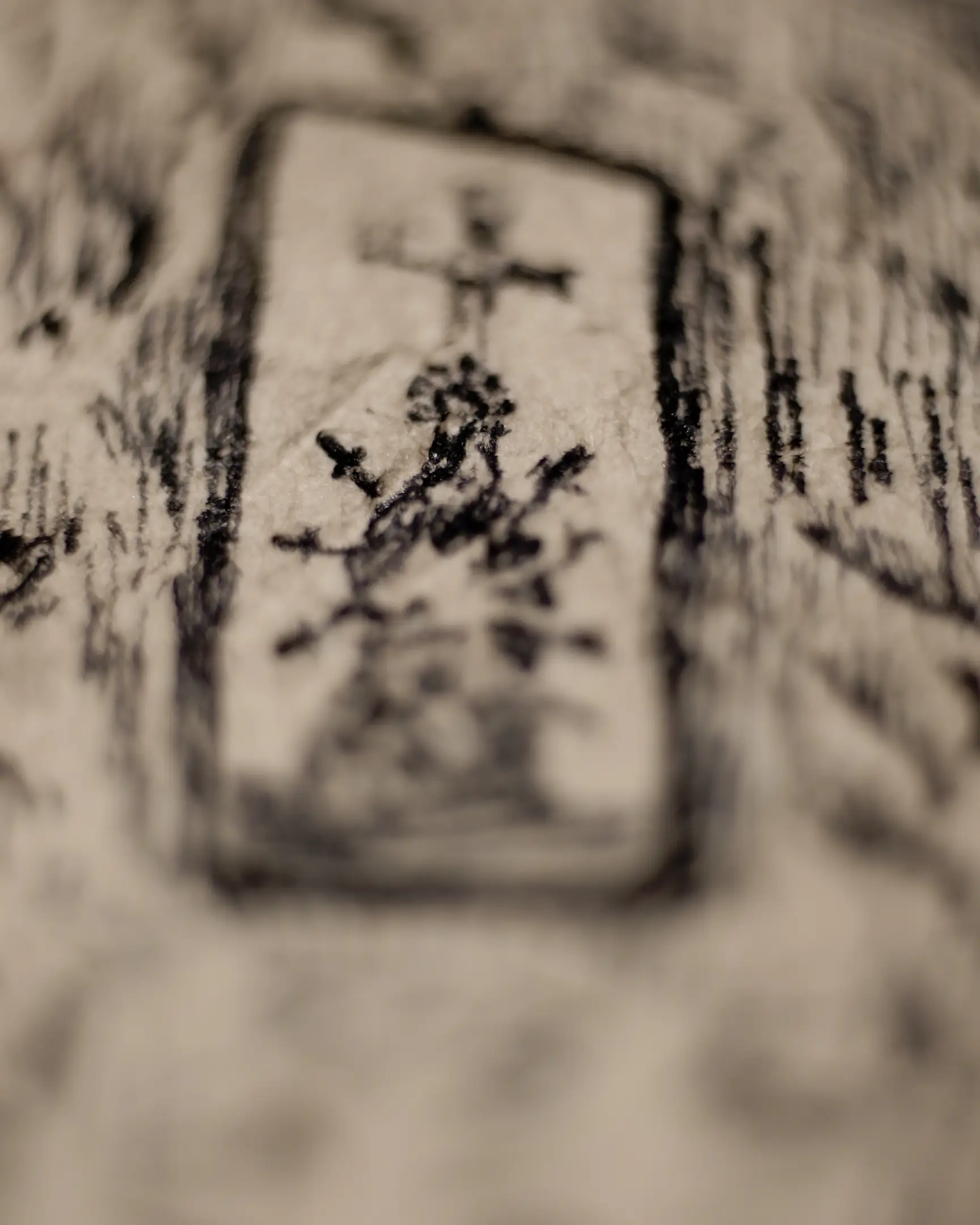
The room contains a bottle of wine, a kerosene lamp, and two traditional Sicilian icons. To the left is the Sorrowful Mother (Mater Dolorosa), and to the right, Archangel Michael trampling Satan. Their presence is a manifesto of the Don’s worldview. The Mater Dolorosa represents the acceptance of suffering, which serves as the padrone’s justification for the hardship of his servants. Archangel Michael symbolizes the triumph of order over chaos and the iron hand of authority. Hanging beside the contract, these images transform a mundane deal into a form of divine predestination.
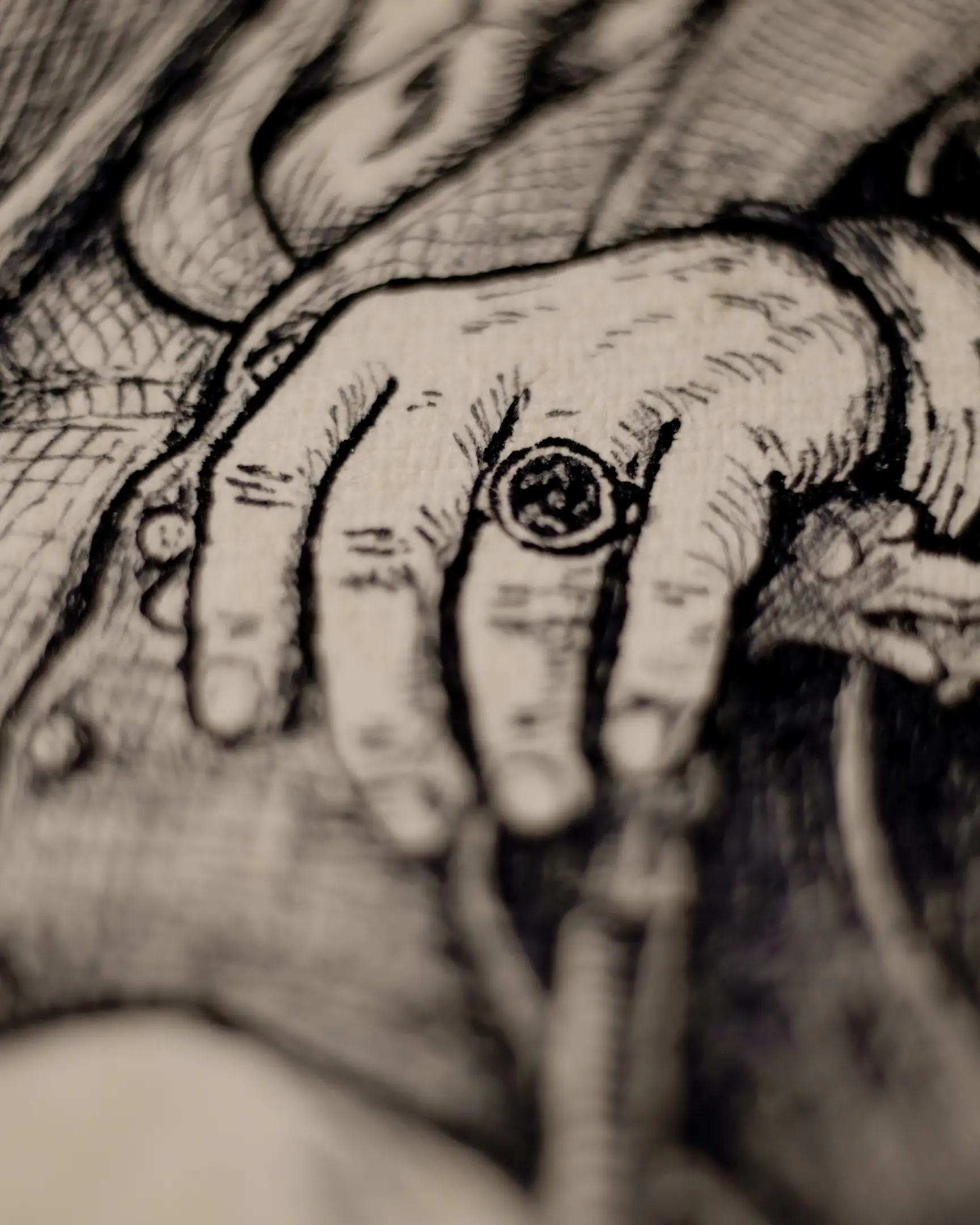
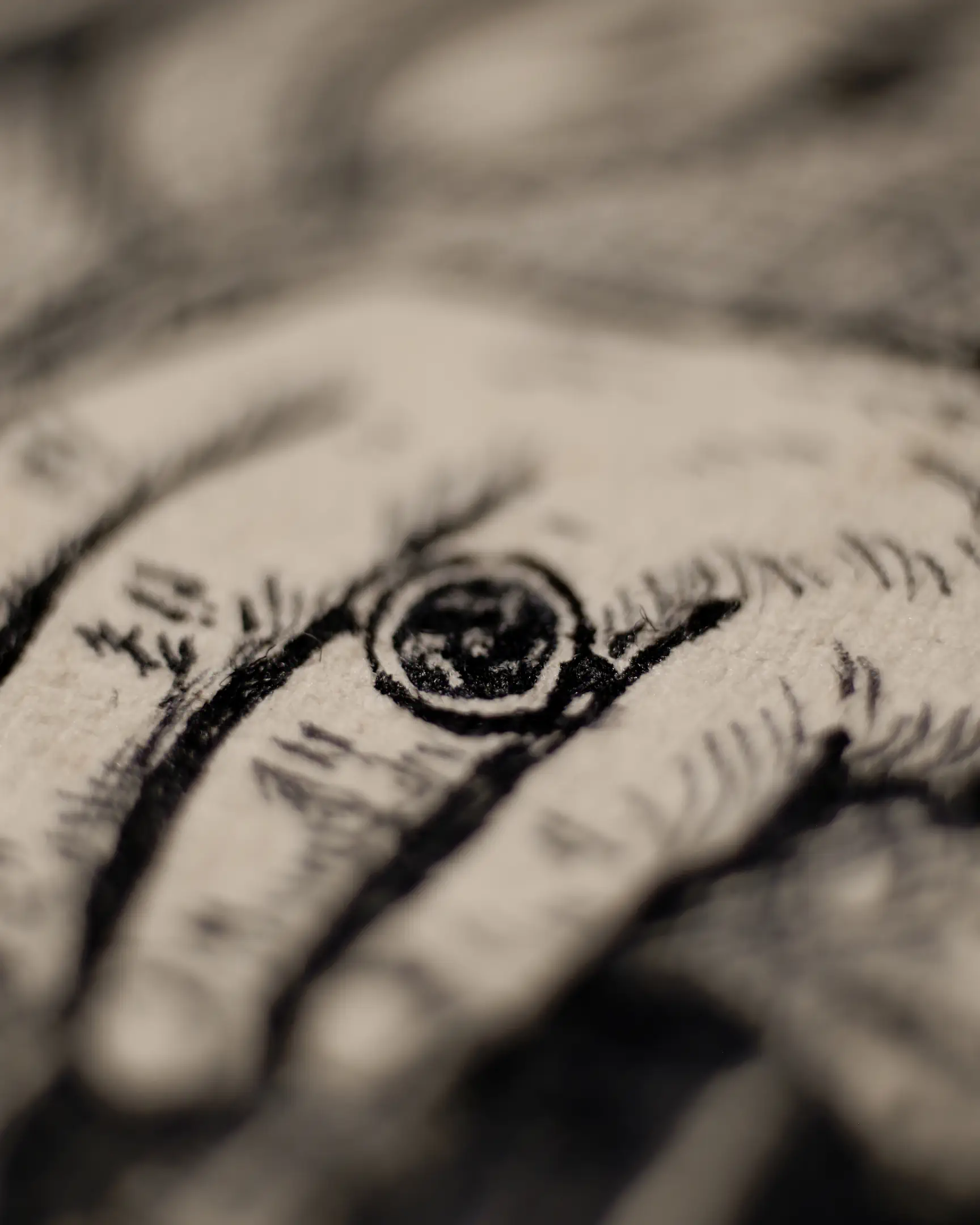
On Don Venerando’s finger is a ring bearing the “Sicilian Trinacria.” This ancient symbol of Medusa’s head with three running legs signifies eternal movement and protection. It serves as a seal of his connection to the roots, myths, and rugged nature of the island.
The Duality of the Painting
This work captures the atmosphere of 1880s Sicily – the social inequality and the struggle for survival. It is a study of duality in all things:
Duality in wealth and austerity
Duality in the predatory contract and the will to survive
Duality in authority and compassion
Duality in the silence of the room and the storm of internal decisions
Duality in the sanctity of icons and the ruthlessness of the deal
Duality in the fragility of paper and the eternity of the ink trace
Acquisition Details: This work is offered as a complete set, including: the original drawing in a professional frame with assembly and care instructions, a certificate of authenticity, a 40-minute documentary film on a memory card, and Vselenskyi’s book “Sicilian History,” featuring a full analysis and translation of Giovanni Verga’s “Pane Nero.”
Should you require custom framing, a light-colored frame, or a vertical format, please let us know. We specialize in a strictly individual approach.
GALLERY