VSELÉNSKYI

SPAZIO D’ARTE

SFORZO

$18,600.00 (tax included)

Own a monumental piece of the Neoclassical Libretto genre. This original masterpiece, executed with a 19th-century dip pen, captures the raw tension of a soul seeking wisdom. The iron gall ink, destined to darken over centuries, is layered upon 300gsm handmade Indian paper with an incredible rough texture. Presented in a bespoke museum-grade frame, this artwork is not merely a drawing, but a familial legacy and a cornerstone for any elite collection.

SKU: 851
Category:
Brands:

Technical Profile


Attributes Value
Weight 1 lbs
Contents:

• Original Ink Art Object · Professionally mounted on a museum-grade archival backing using traditional wheat starch and japanese paper hinges (reversible mounting)
• Archival Housing Kit · Handcrafted artisan baguette with Museum-grade UV-filter glass and a neutral-pH black mount (passe-partout).
• Certificate of Authenticity · A formal document confirming the provenance and uniqueness of the work.
• The Cinematic Chronicle · A 40-minute "Making of" short film delivered on a physical SD card.
• Restoration & Reversal Protocol · A detailed guide on the archival mounting technique and instructions for safe removal of the artwork from its backing without damage.
• Assembly & Preservation Guide · Step-by-step instructions for the final assembly of the frame and recommendations for long-term display.

Specifications:

• Sketch Size: 5 x 9 in, 12.7 x 22.8 cm
• Frame Size: 11 x 14 in, 27.9 x 35.5 cm
• Weight: 1 kg, 2.2 lbs

Materials & Origin:

• Paper: 300 gsm Handmade Paper (India)
• Frame: Handcrafted Artisan Baguette (Estonia)
• Ink: Authentic Iron Gall Ink (Traditional 19th-century formula)

Style & Artistry:

• Technique: Classic dip pen and ink sketching.
• Originality: A unique, signature composition by the artist.
• Exclusivity: A singular work of art; one of one.
• Heritage: Executed in strict adherence to authentic 19th-century artistic traditions.
• Provenance: Anno Domini 2026.

Longevity:

• 100-Year Archival Display Guarantee (Under UV-protected conditions)


HISTORY OF ART OBJECT

SFORZO


The truth hidden within pages

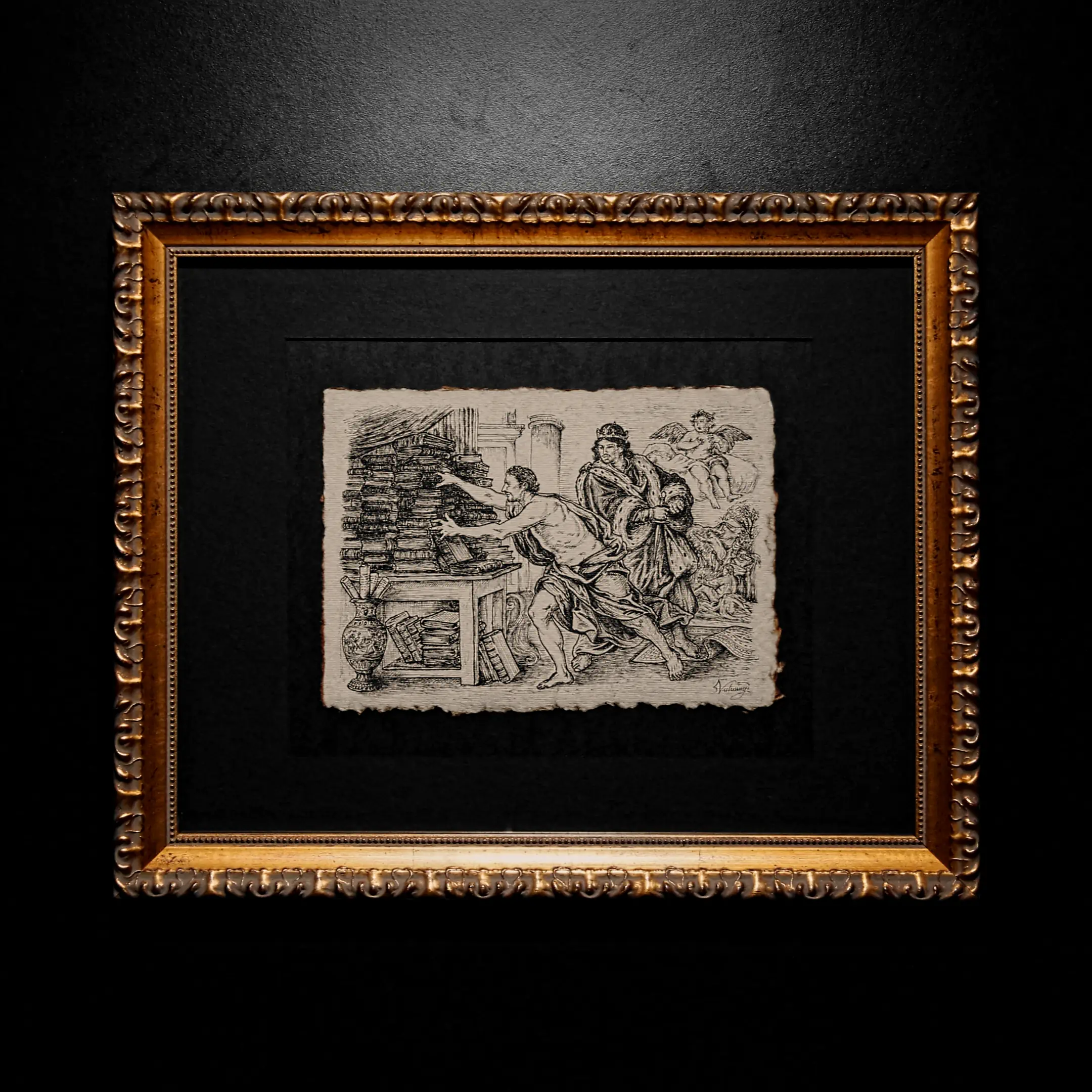
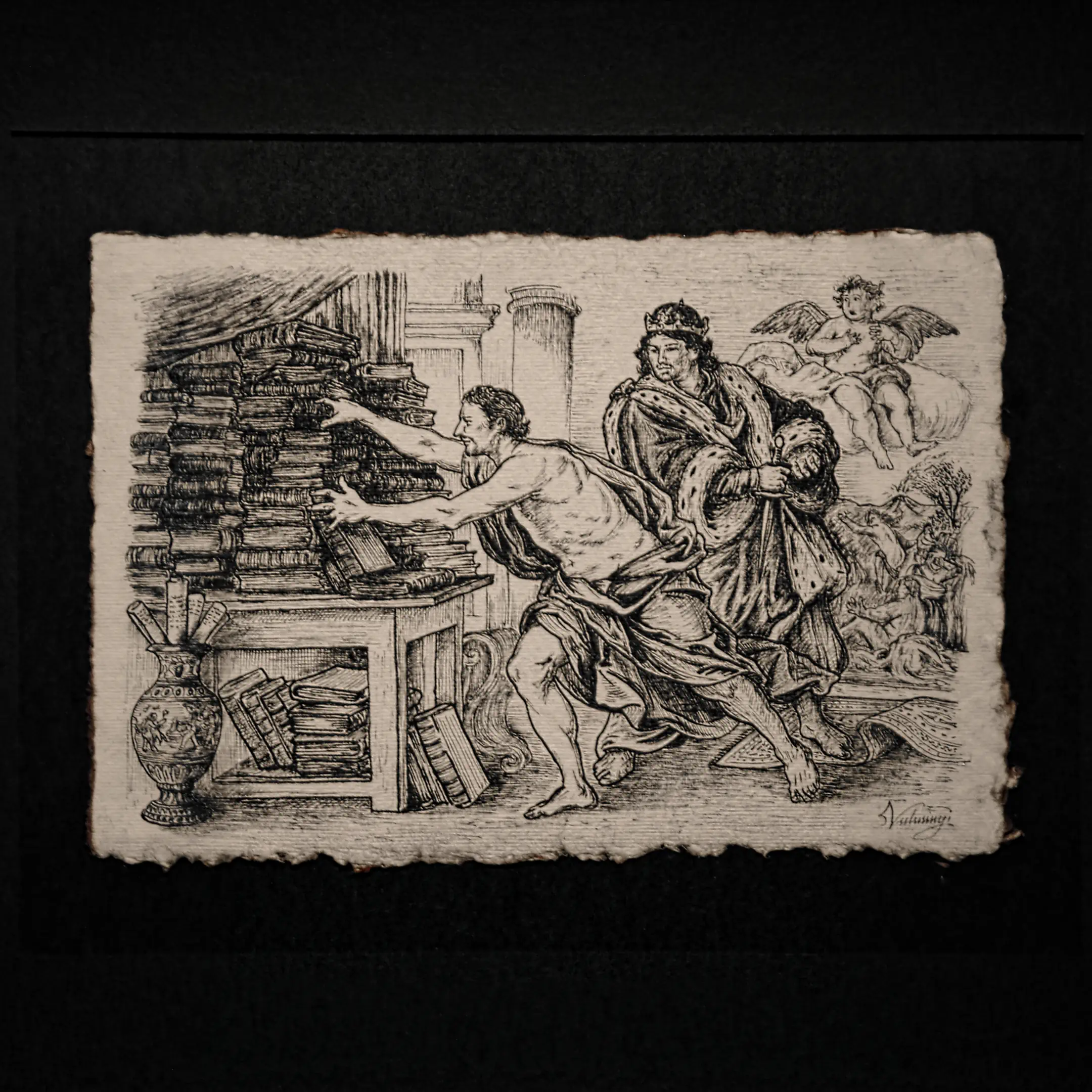
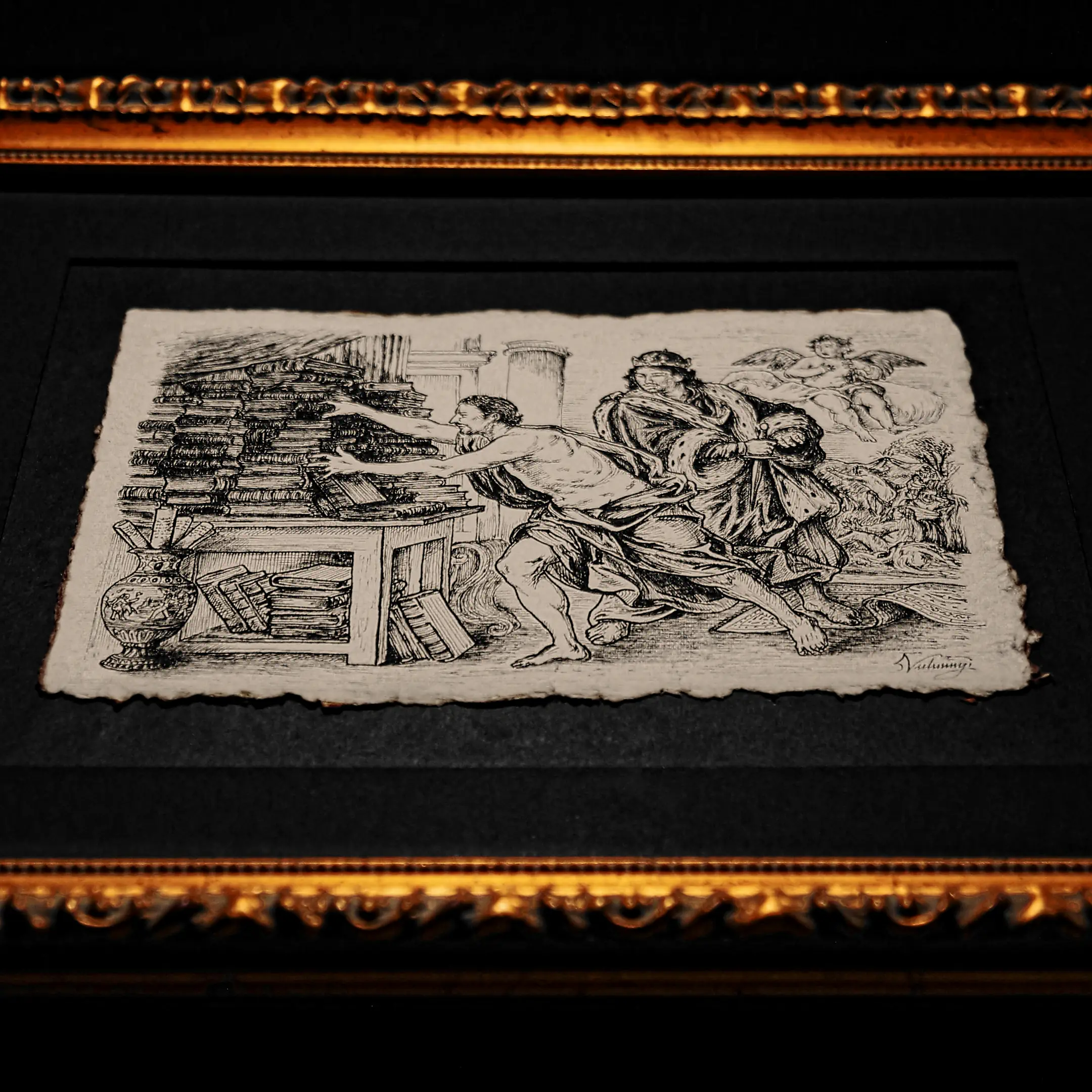
Original ink drawing SFORZO by Vselenskyi: a King with a dagger confronts a man reaching for leather-bound books on handmade paper
SFORZO. Iron gall ink on 300 gsm handmade Indian paper

The Essence of Knowledge

This masterpiece stands as the inaugural creation of the MONUMENTA series. It initiates a profound cycle dedicated to the eternal questions of human existence. The artwork emerges from the union of iron gall ink and handmade Indian paper.

This unique medium possesses an extraordinary, raw texture of 300gsm density. Working with ink on such surface resembles painting with oils upon ancient stone paths. This inherent defiance of the material defines the very soul of the VSELÉNSKYI style.

Each stroke represents a deliberate victory over the resistance of the heavy fibers. The pen clings to the textured surface, capturing the spirit of true imperfection. These irregular lines bestow an authentic honesty that resonates deeply with the discerning viewer.

Vselenskyi employs only the traditional 19th-century dip pen for his monumental illustrations. This technique reveals the intentional negligence found in classical marginalia of ancient manuscripts. Every living line breathes life into the narrative, making the scene vibrate with energy.

Iron gall ink remains one of the most demanding mediums for a professional artist. Yet, its use is justified by a magnificent, evolving archival quality. The pigments darken with each passing year, gaining profound depth and historical weight.

Beyond the ink lies a sanctuary of meaning far greater than a mere drawing. Within this shadows, we observe monumental plots unfolding in their silent, eternal grandeur. The House of VSELÉNSKYI invites you to witness this intellectual and physical triumph.

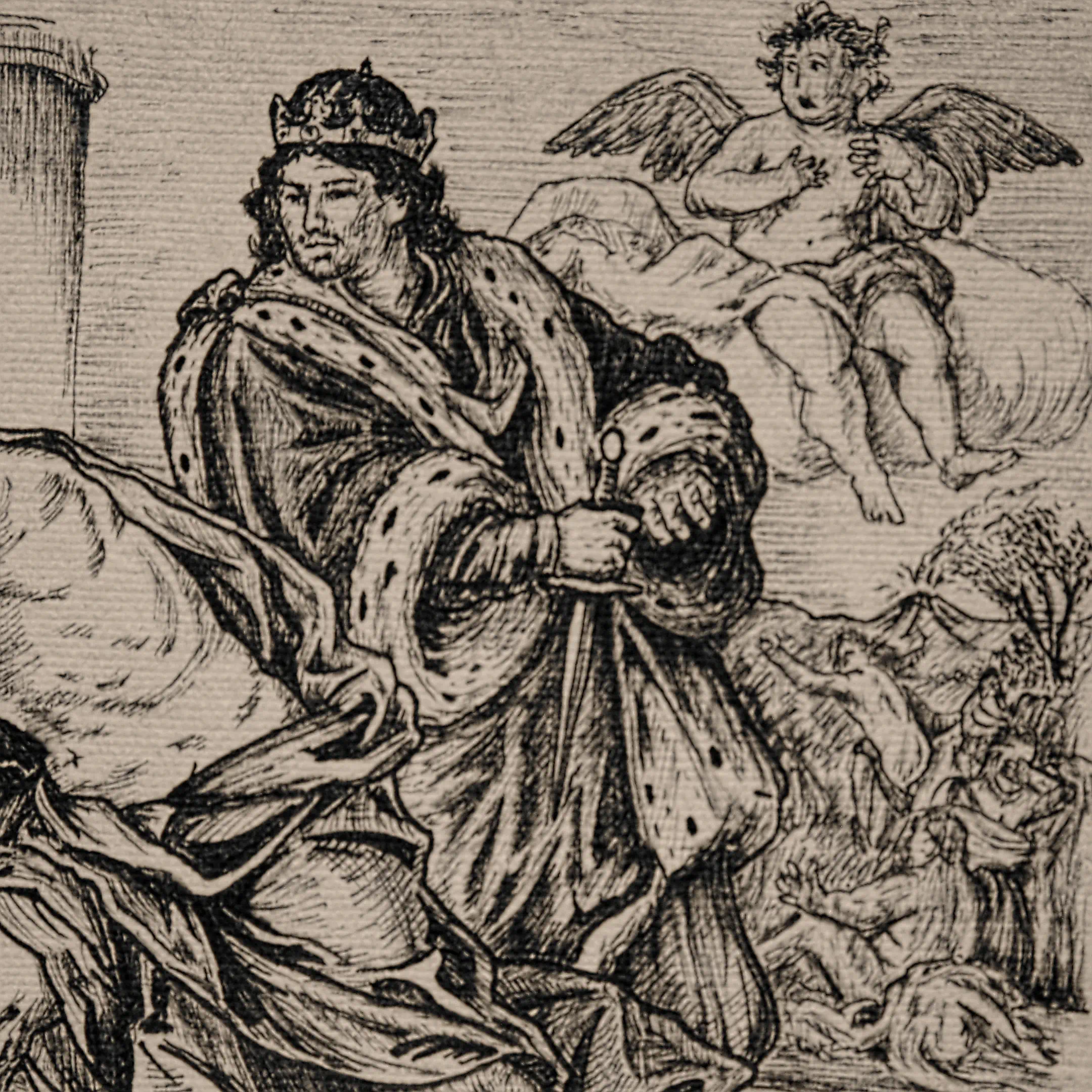
Detailed ink illustration of a crowned King holding a dagger, with a celestial angel and erupting volcano in the background
Fragment: The King’s Dagger and the Celestial Witness

Wealth and Penury

The canvas presents a narrative scene for our profound contemplation. In the center, we observe a man with bare feet. He wears a light cloak, his posture captured in dynamic motion. Our gaze follows his desperate reach toward a mountain of books. These volumes lie in endless heaps upon a grand table.

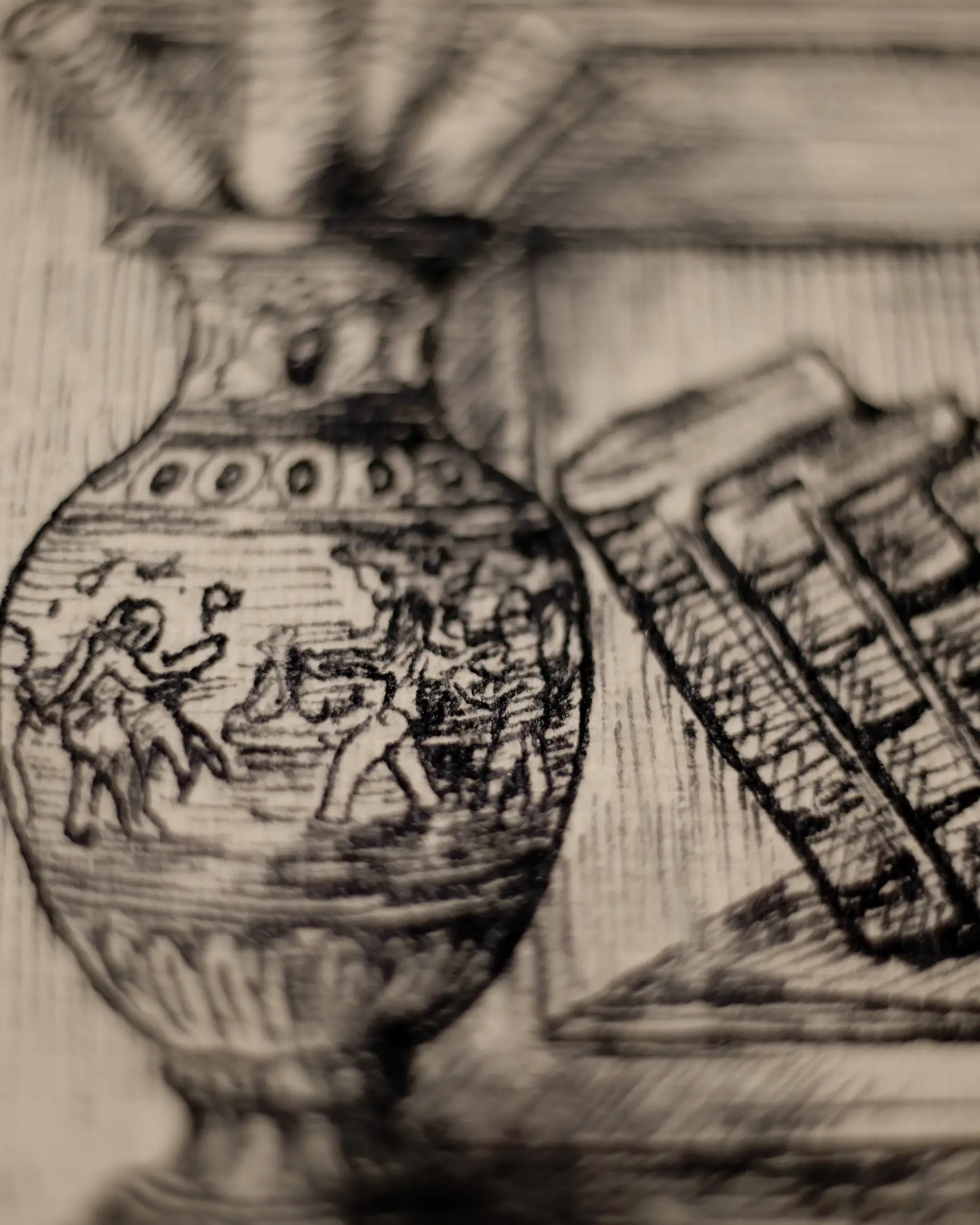
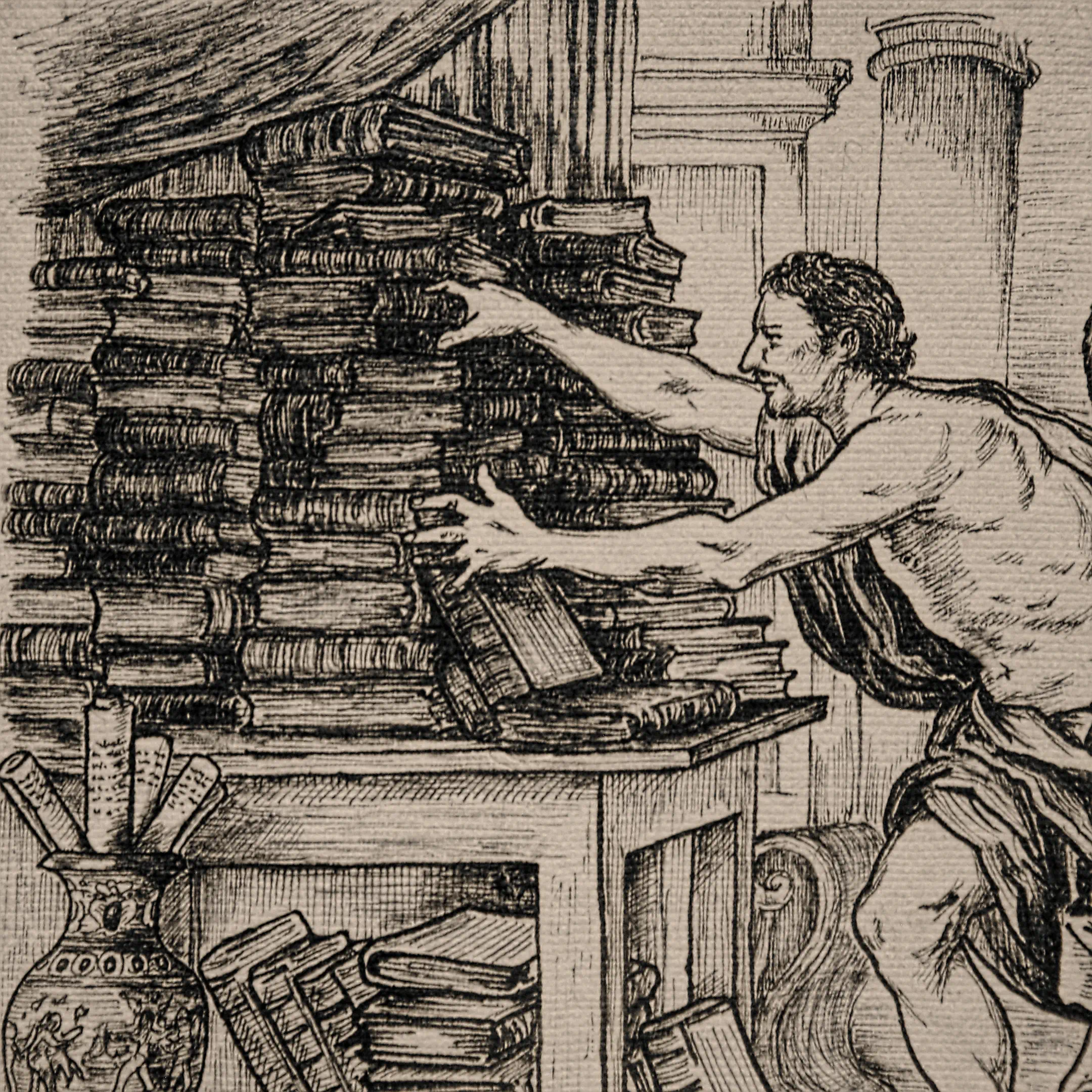
Stacks of leather-bound masterpieces occupy every corner of the chamber. Beneath the table, more records of history rest in silence. To the left, an antique vase holds sacred ancient papyri. The man reaches for these treasures with an undeniable hunger. Does he intend to steal or perhaps destroy them?

His open posture suggests a sincere yearning for enlightenment. These books and papyri serve as eternal symbols of Knowledge. At the heart of this drama is a soul seeking truth. Now, let us turn our gaze toward the right edge. Here, the vibrant world of nature unfolds before us.

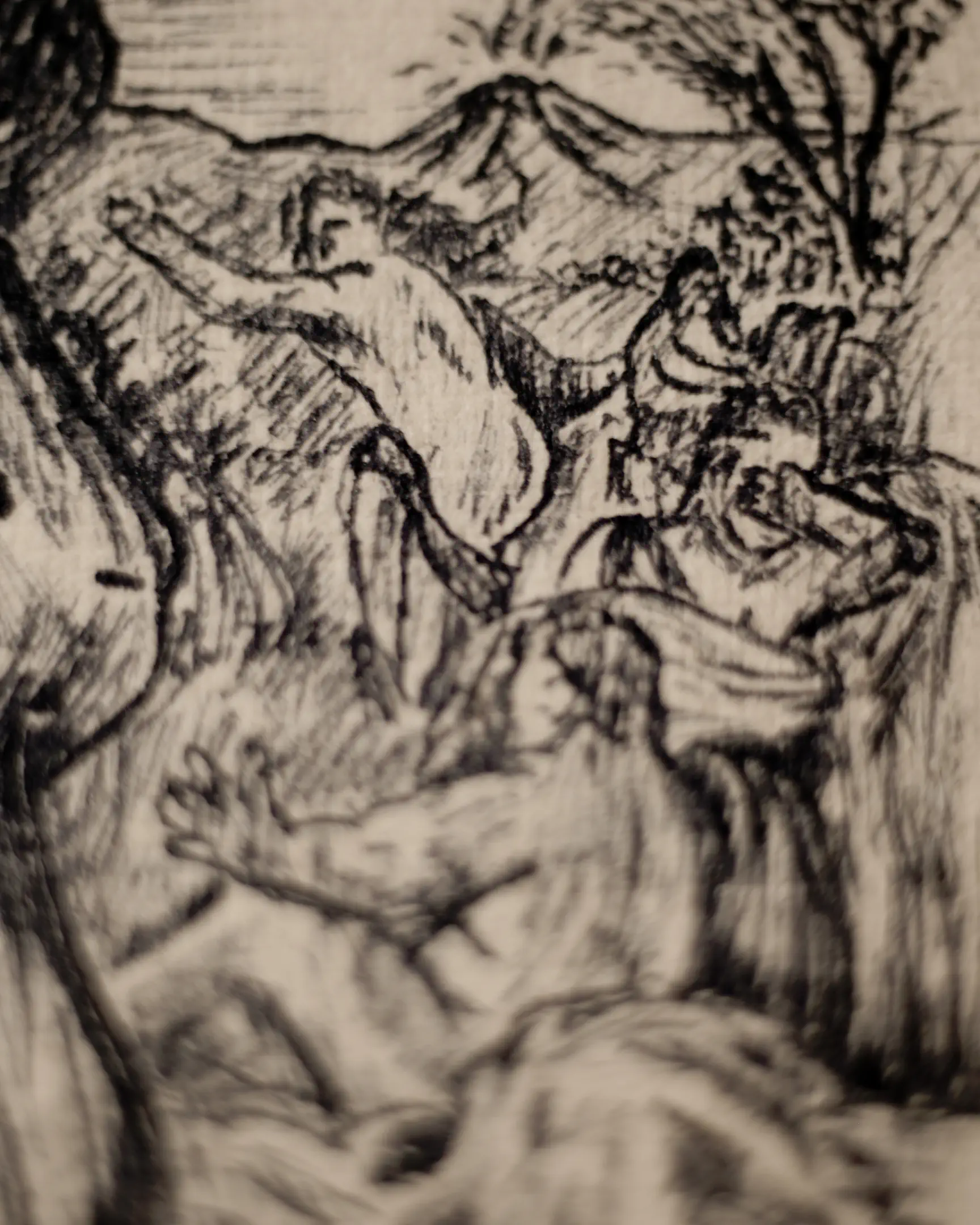
A multitude of figures indulge in outdoor festivities and feasts. They revel in the open air, consumed by mindless pleasure. Farther in the distance, a volcano erupts in terrible fury. This scene reveals a humanity celebrating amidst impending catastrophe. They remain indifferent to the shadows of the future.

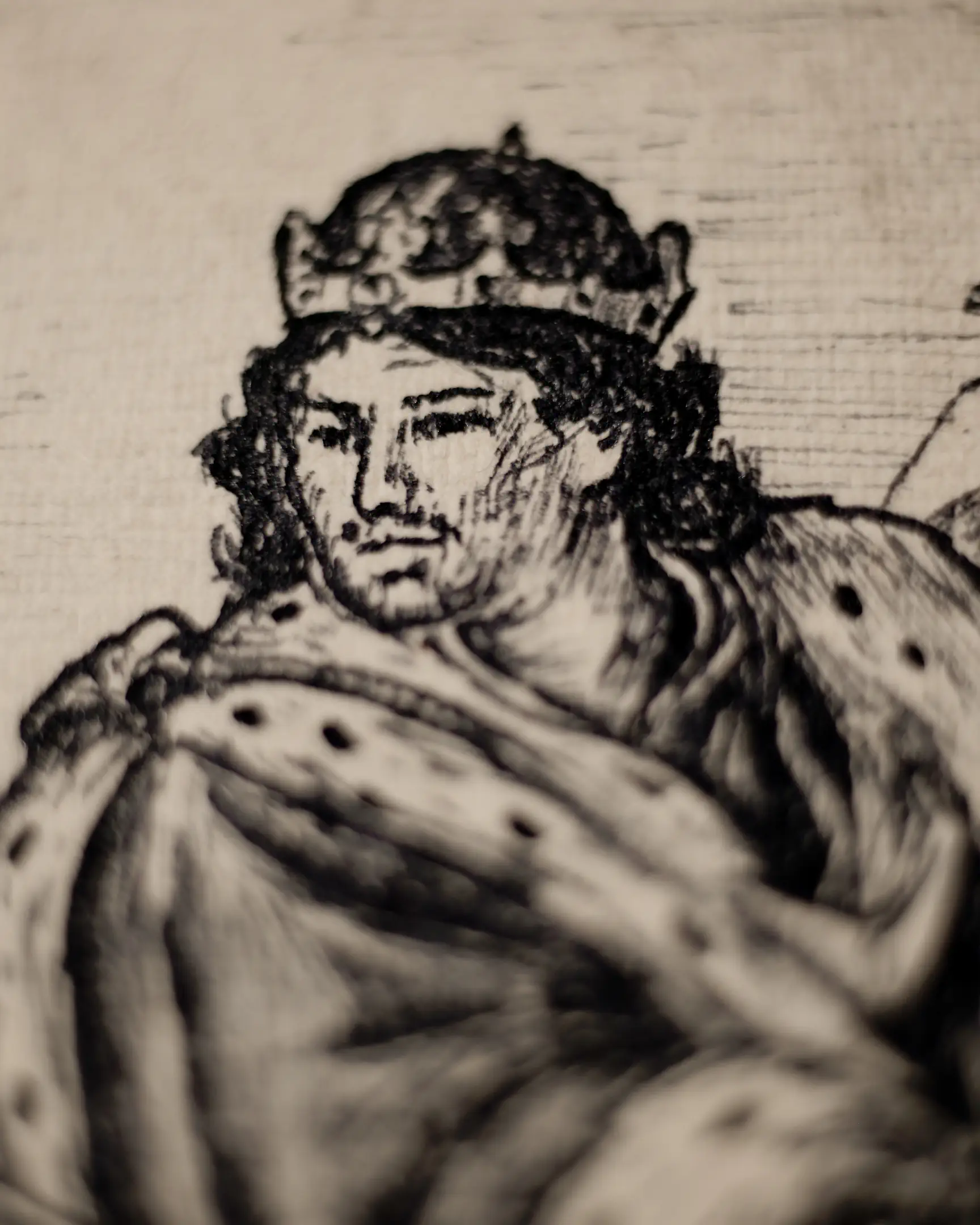
In the absolute center, the figure of a King emerges. He is draped in opulent furs with a crown gleaming. He watches the seeker with a cold, predatory intensity. Our eyes descend to find a dagger held firmly. The true plot of this masterpiece is finally revealed.

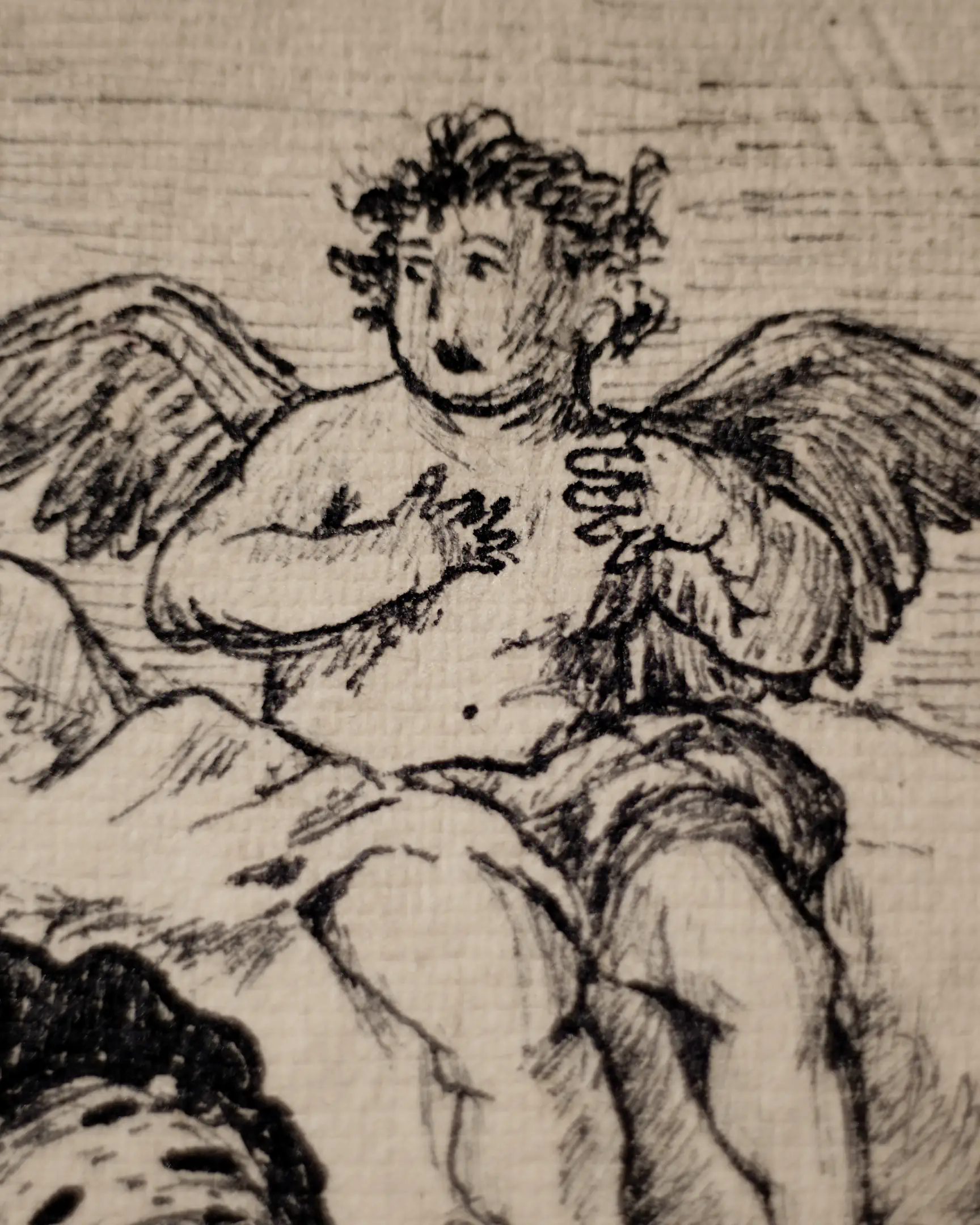
The King prepares to strike, defending the hoard of wisdom. He chooses violence to keep the man from the light. To the right of the King, an angel appears. The celestial messenger remains frozen in absolute, divine horror. This visual puzzle defines the “Neoclassical Libretto” genre perfectly.
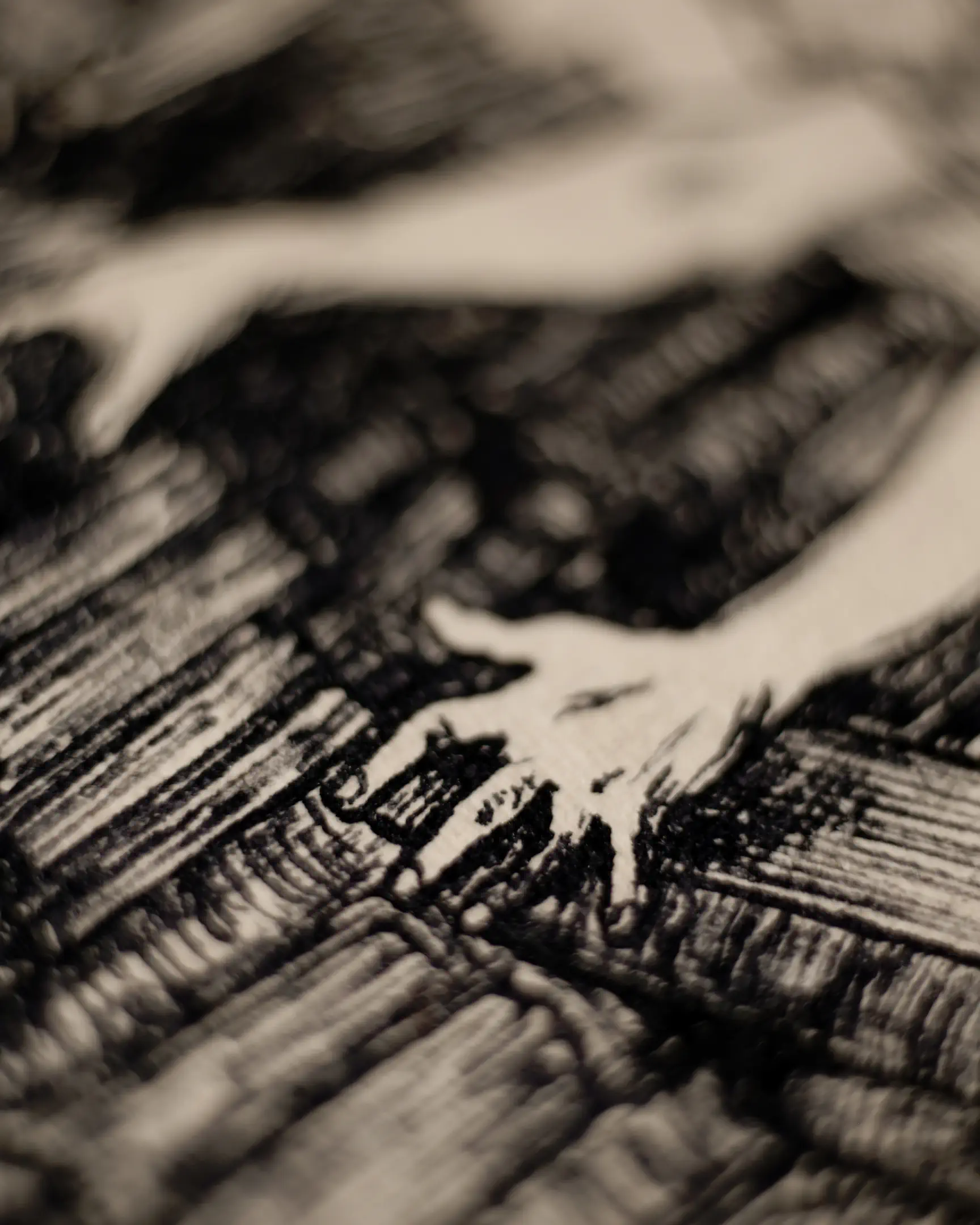
Macro photography of ink drawing showing detailed texture of handmade paper and a hand reaching for a stack of ancient books
Detail: The resistance of ink on 300 gsm handmade paper

The Genesis of MONUMENTA

This masterpiece stands as the inaugural work in the MONUMENTA series. It raises a formidable question regarding the hunger for enlightenment. This creation invites the viewer to move beyond simple contemplation. It demands a profound intellectual dialogue and rigorous self-reflection.

Does the pursuit of truth justify a mortal risk? Is it perhaps wiser to succumb to collective hedonism? The King watches with a gaze of cold, imperial fear. He might forgive the theft of fruit from his table. Yet, he draws his dagger at the sight of wisdom.

Knowledge remains the most dangerous weapon against a tyrant’s throne. The angel stands paralyzed by a divine and ancient shock. Does he fear the impending violence of the King? Or is he stunned by the audacity of human spirit? This scene depicts the struggle for a new intellectual era.

Within this intricate puzzle, every line is a moral choice. The “Neoclassical Libretto” genre reveals itself through these silent questions. Vselenskyi creates a landscape where the past and future collide. This artwork is a testament to the heavy price of light.

The House of VSELÉNSKYI presents this as a familial legacy. It is a beacon for those who dare to seek. The mysteries of the plot await your discerning judgment. Welcome to the first chapter of a monumental journey.

GALLERY
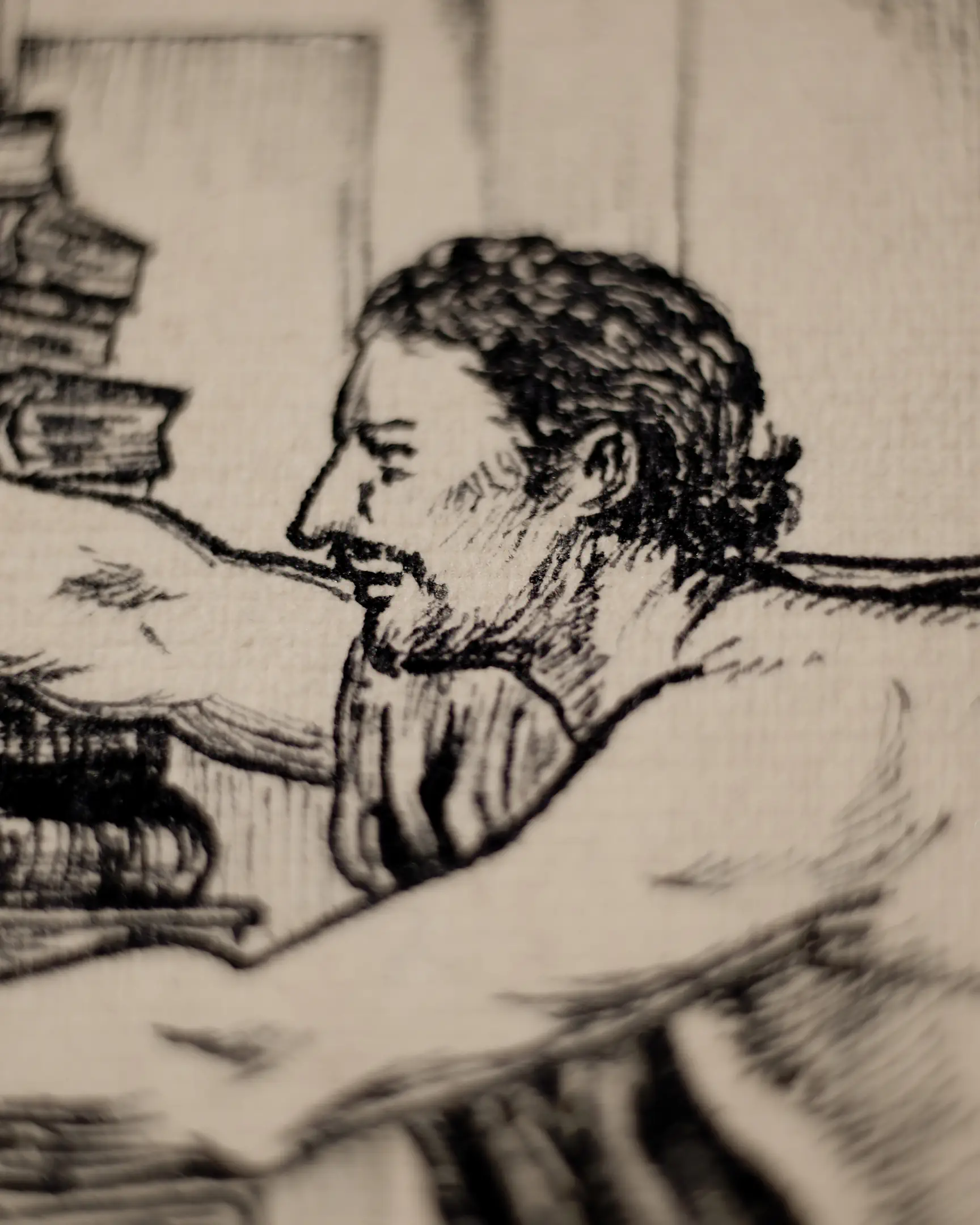
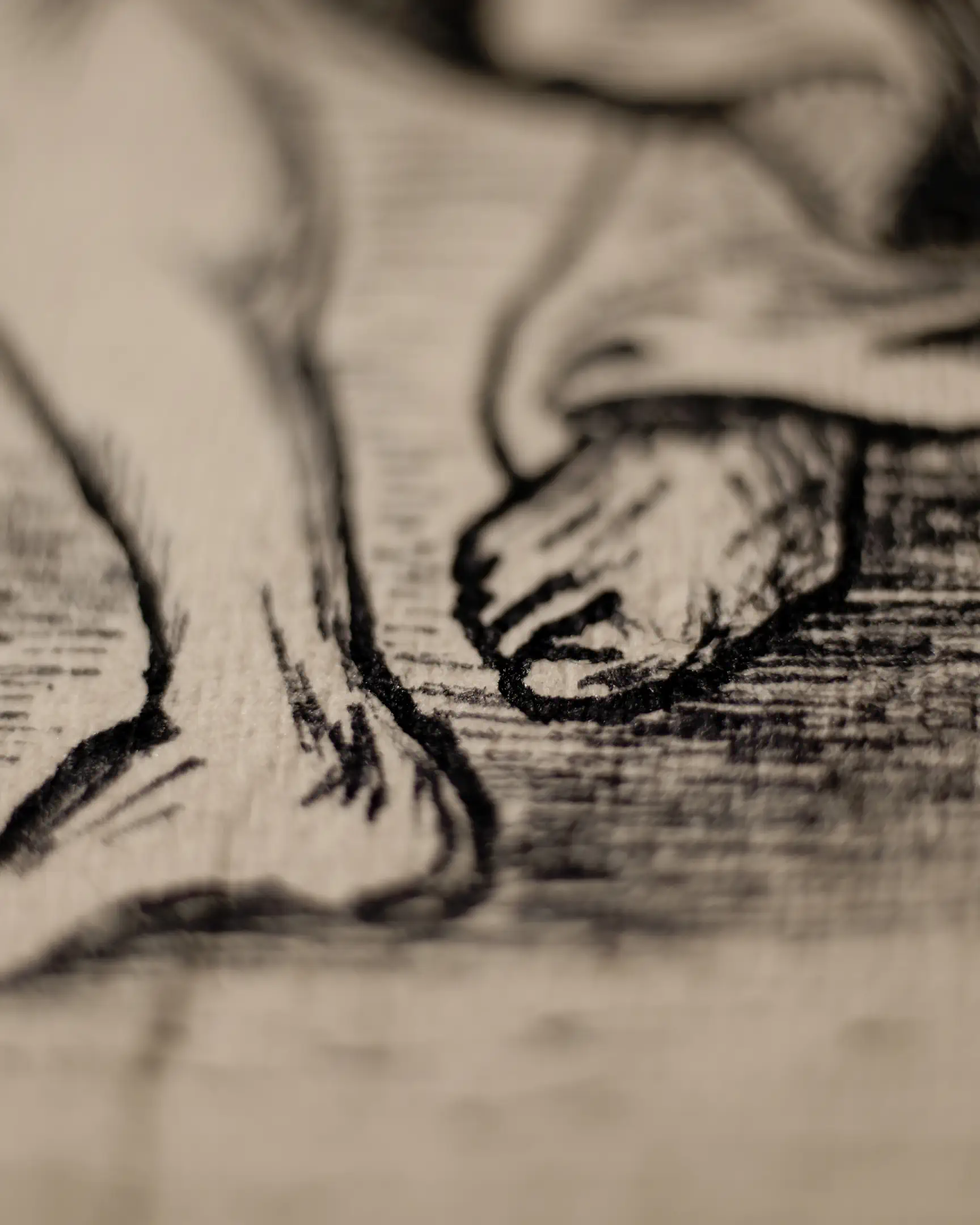
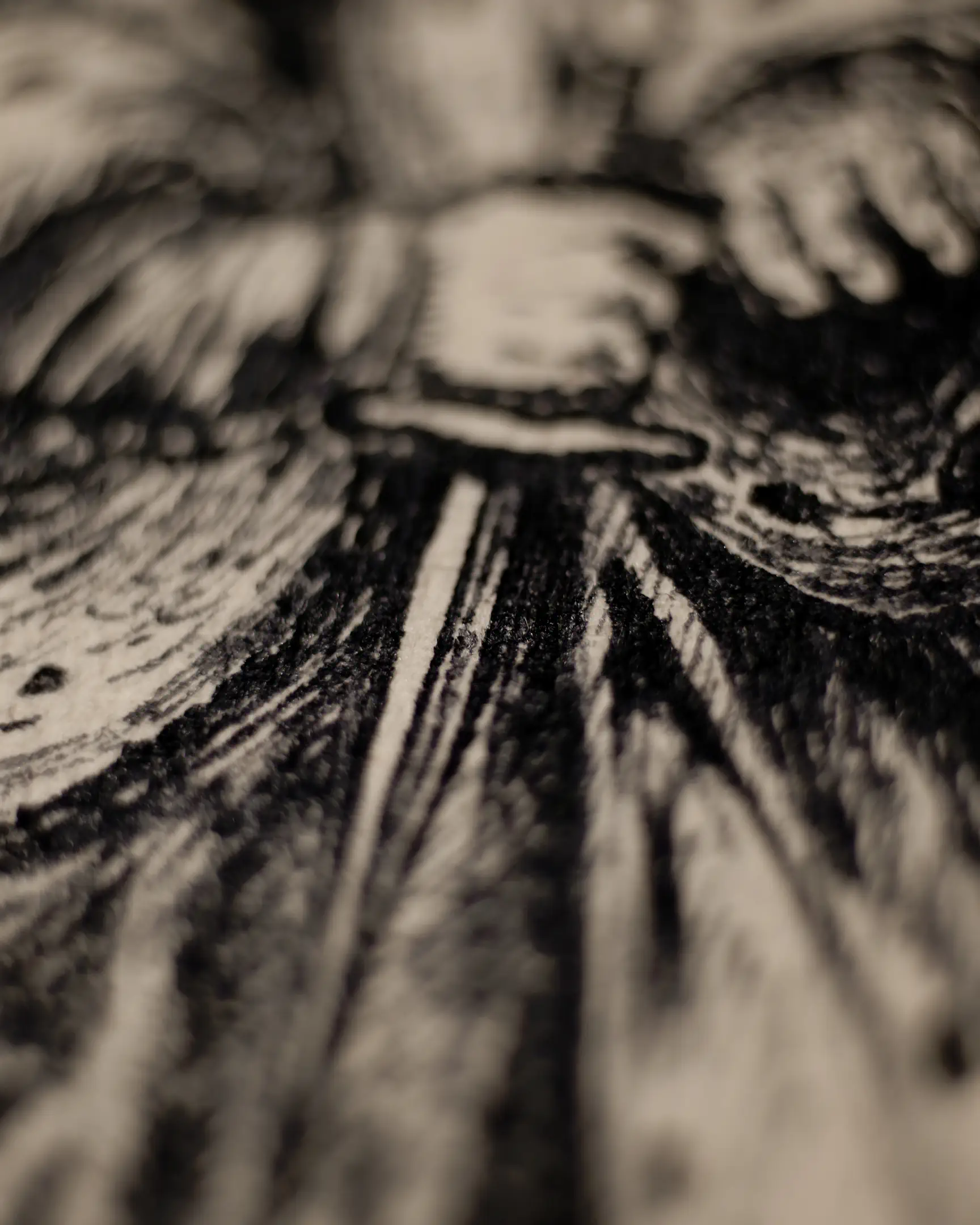
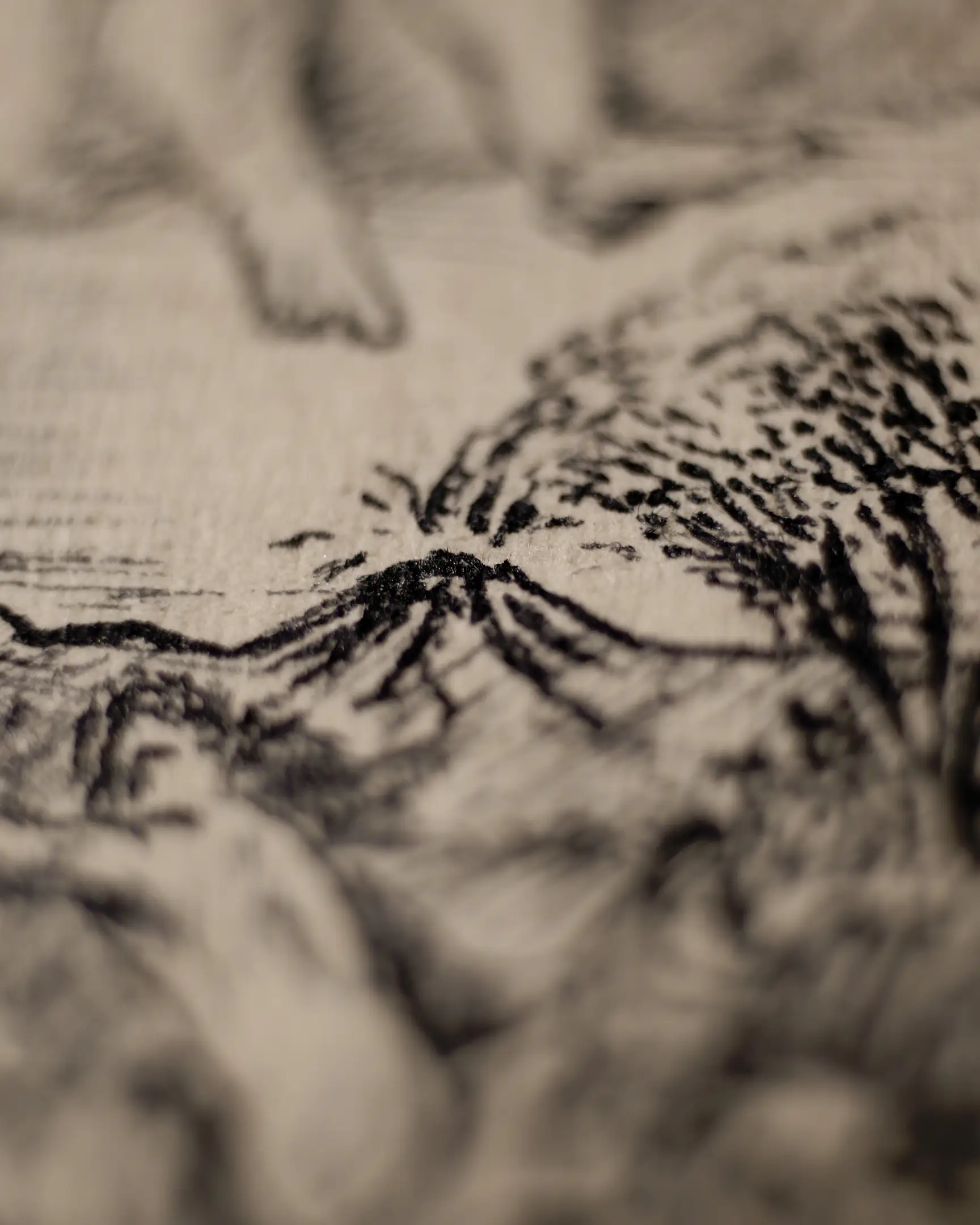
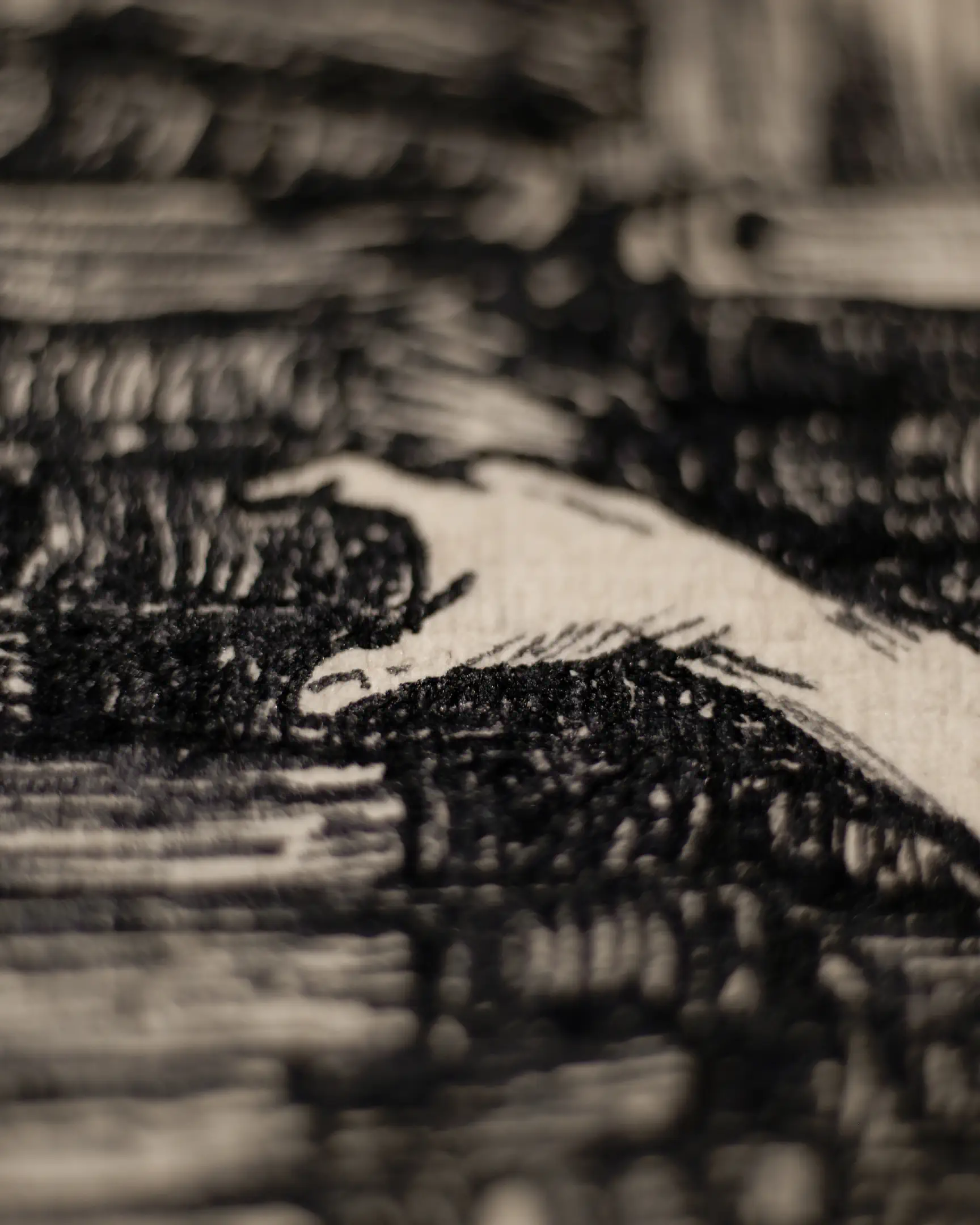
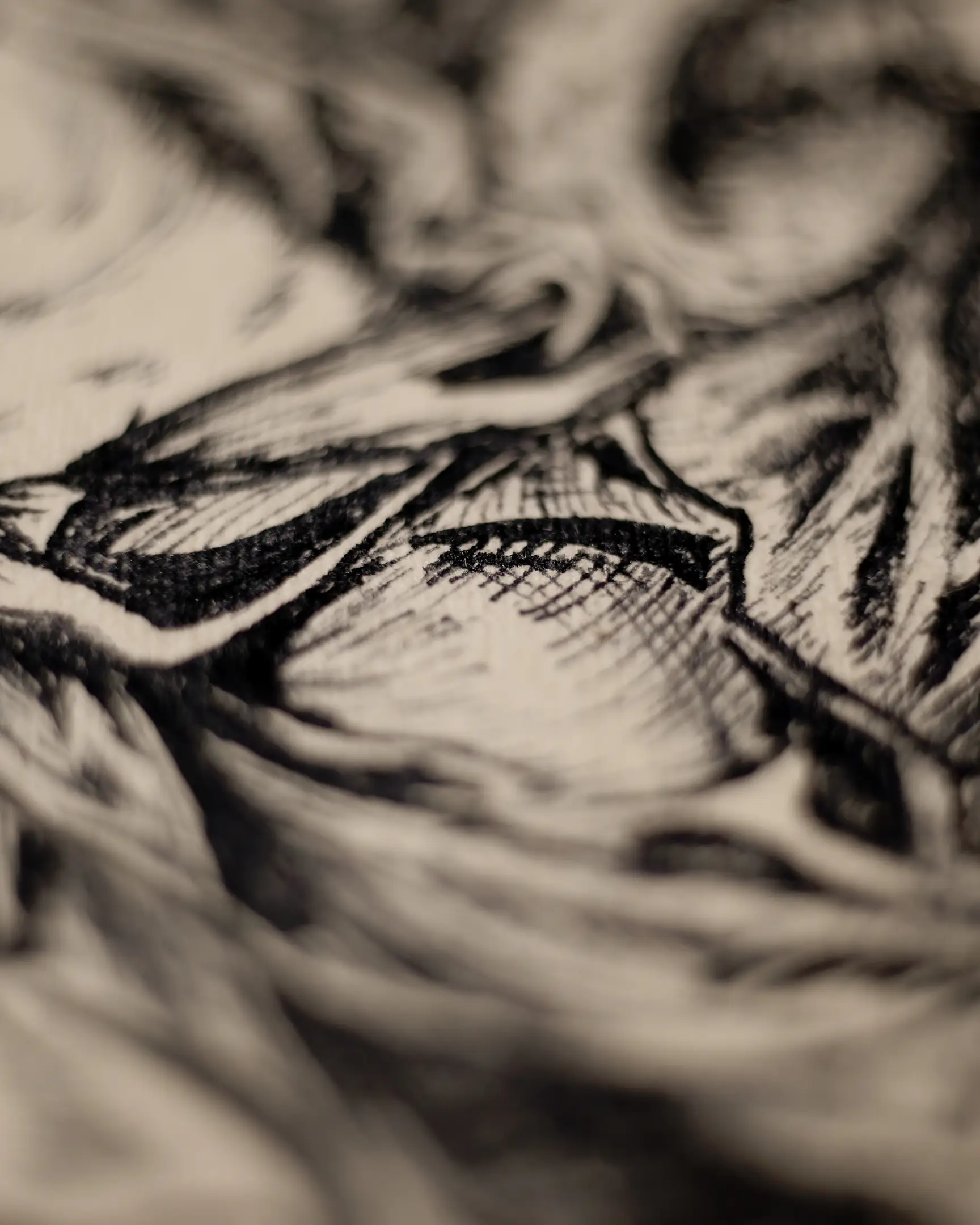
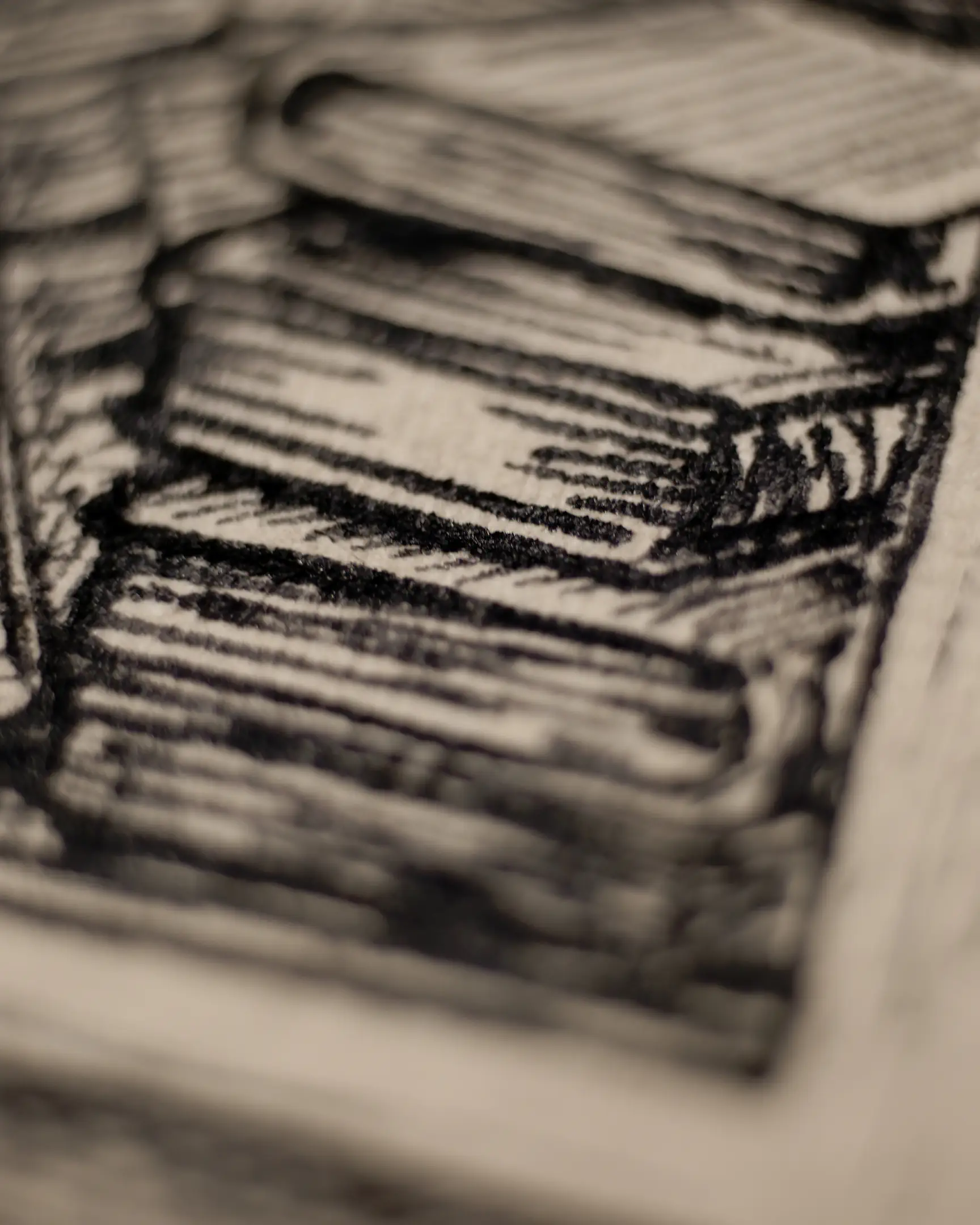
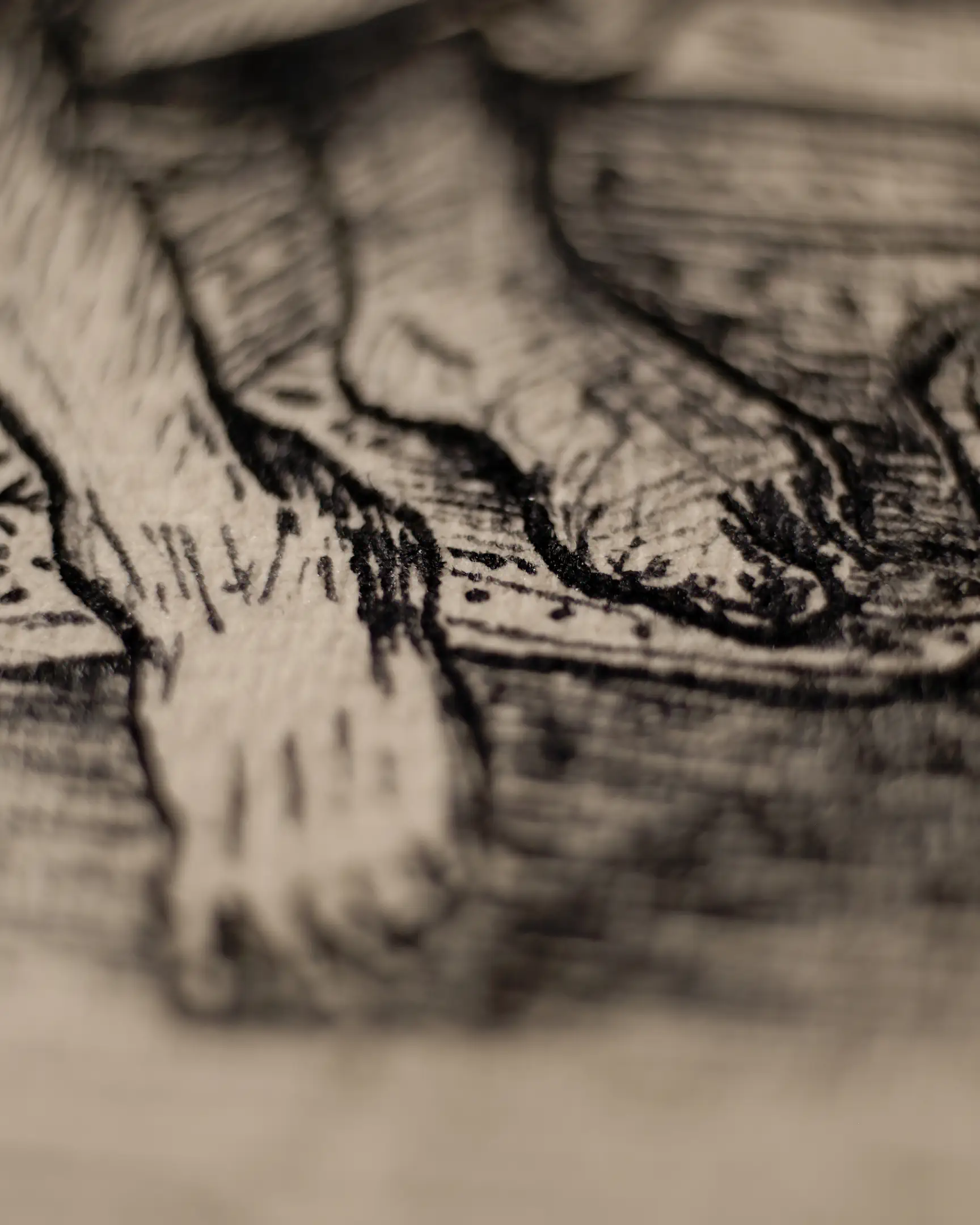
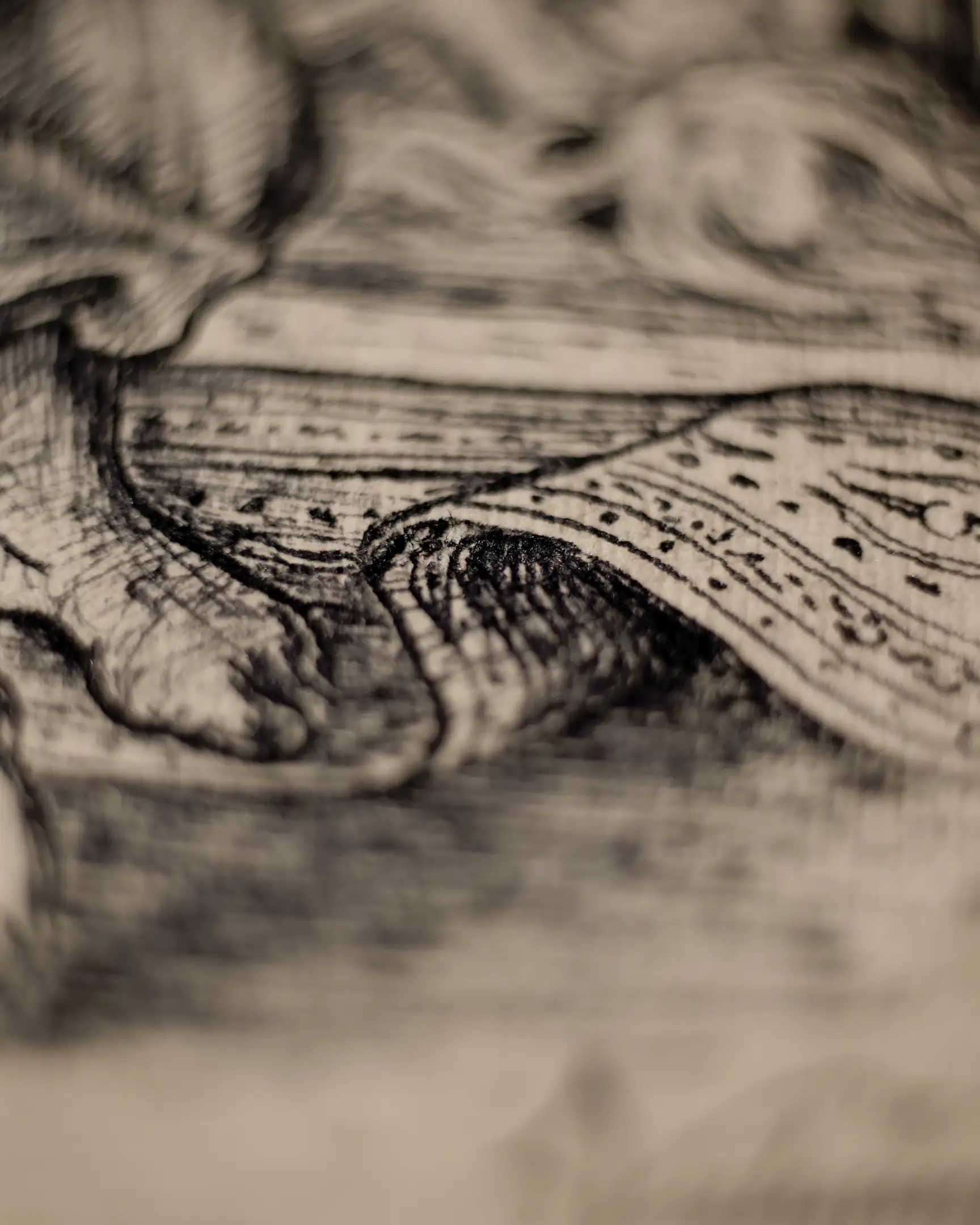
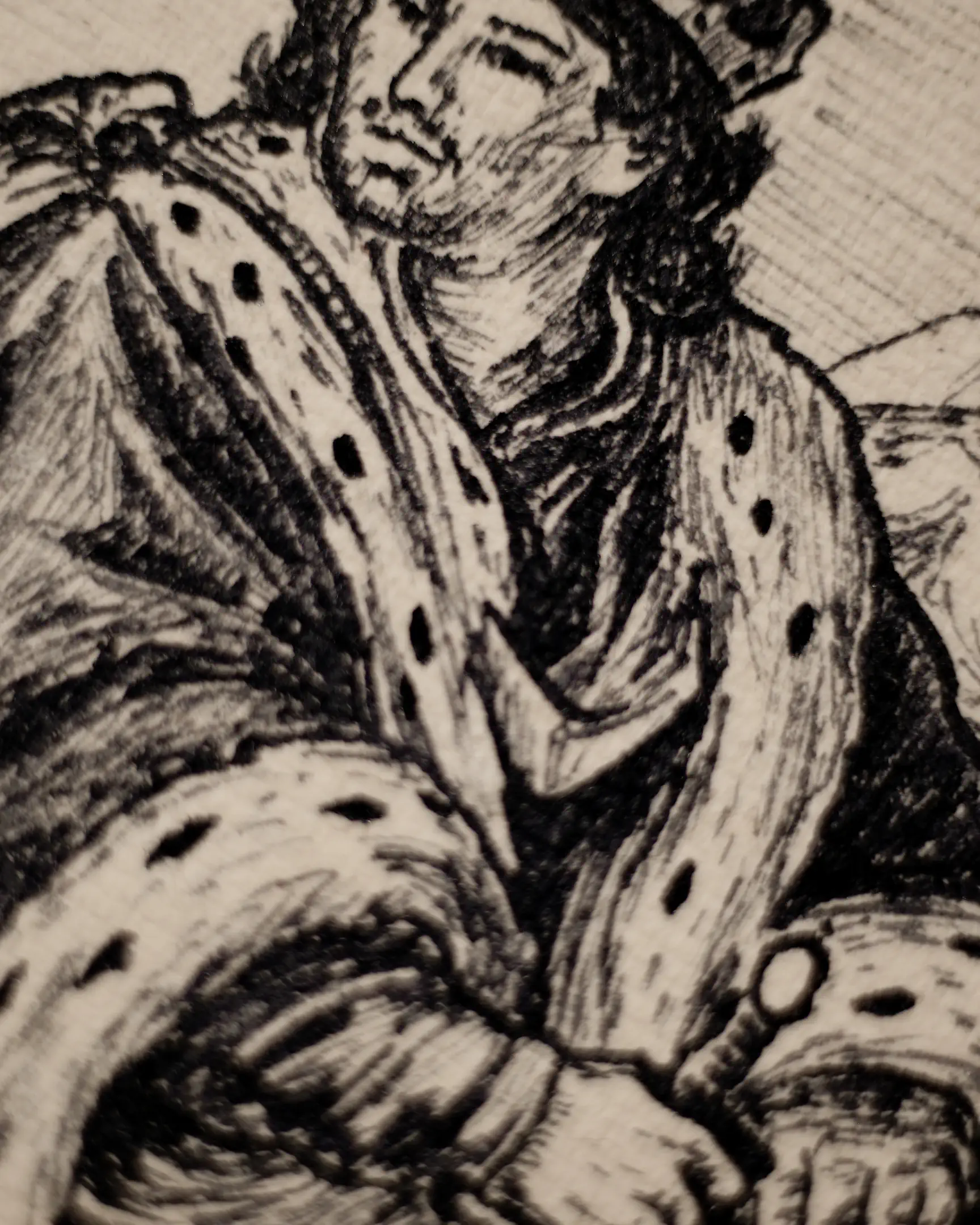
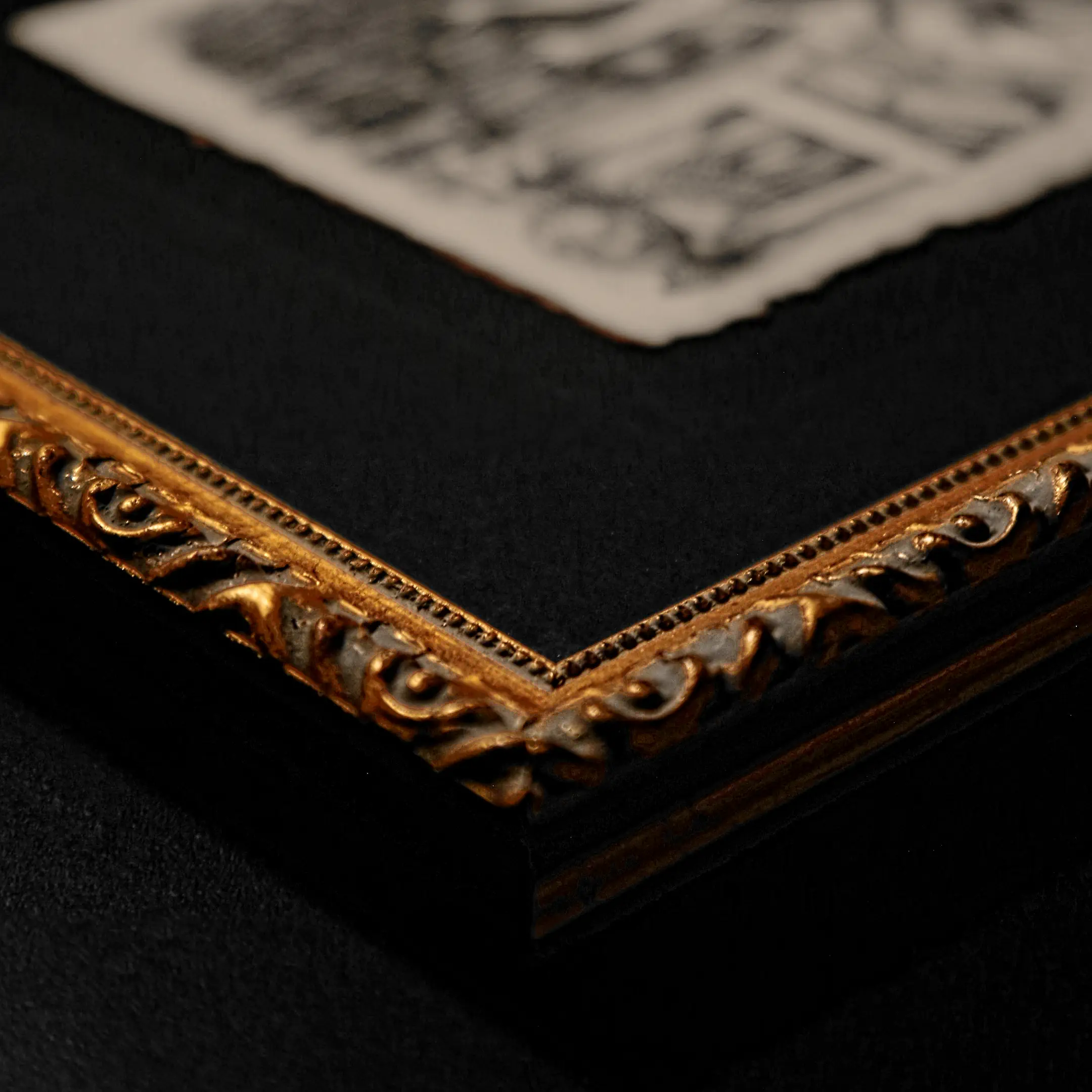
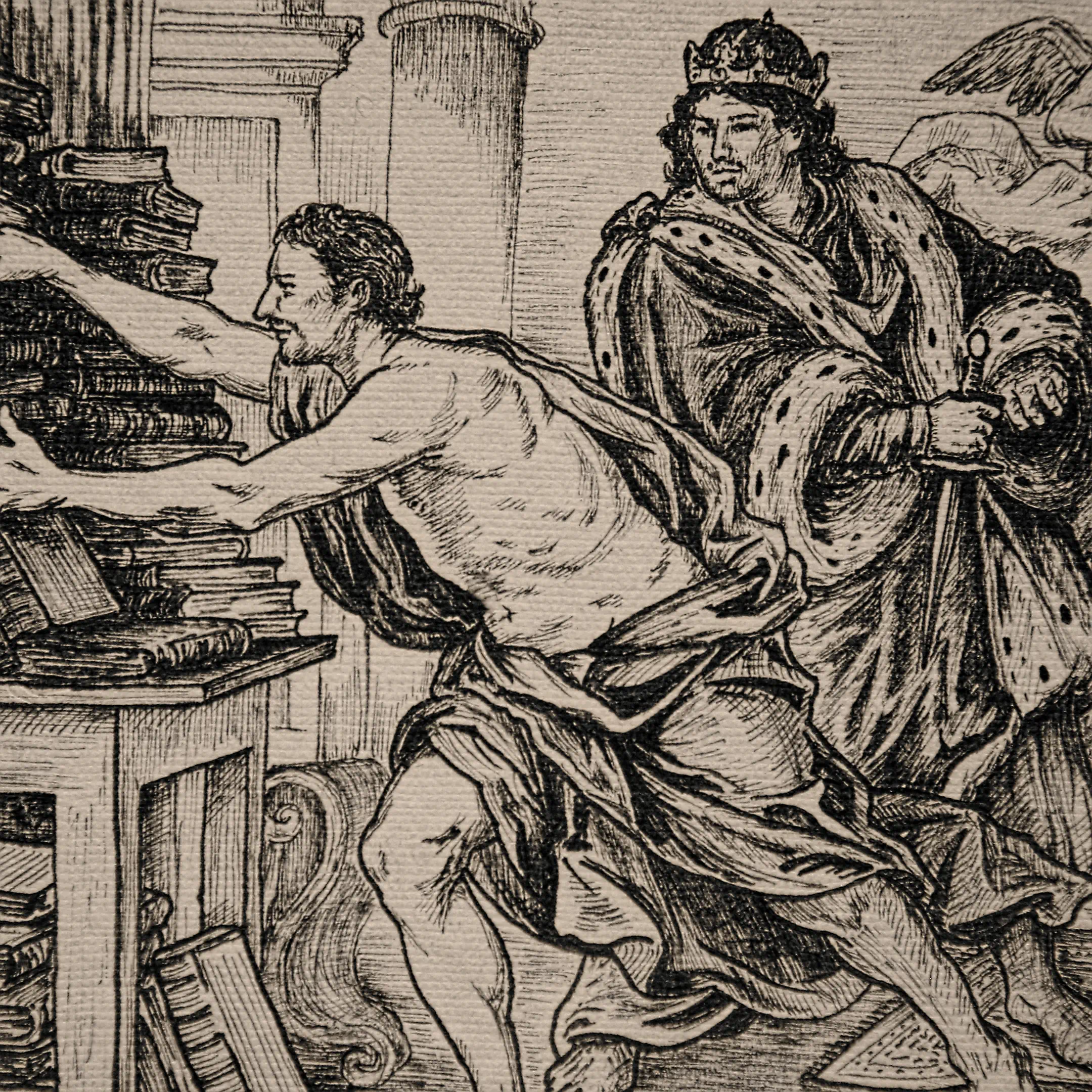
This masterfully executed ink illustration explores the social and spiritual divide between material wealth and intellectual hunger. The protagonist's dynamic pose conveys a desperate, almost physical need for the wisdom contained within the manuscripts. In stark contrast, the regal figure behind him represents a world where such striving is viewed with bewilderment. The use of traditional ink techniques and the distressed edges of the paper lend the piece a museum-quality, archival aesthetic.This focused, close-up shot of the work by VSELÉNSKYI highlights the intricate paper texture and the precise cross-hatching of the ink drawing. Central to the frame is the intense contrast between the desperate determination of the striving commoner and the cold, detached gaze of the wealthy observer. Vselenskyi's distinct calligraphic line work brings to life the struggle for enlightenment. The subtle presence of the guardian angel adds a layer of spiritual validation to the intellectual pursuit.This macro shot cuts away all distractions, leaving the viewer alone with the central theme of the piece—an irresistible urge for enlightenment. VSELÉNSKYI® uses deep hatching to convey the volume of the heavy tomes and the tension in the subject's hands. The composition highlights the contrast between the haphazardly stacked books and the character's decisive gesture. The absence of other figures in this specific crop enhances the sense of intimacy and the gravity of a personal intellectual quest.In this fragment, VSELÉNSKYI masterfully clashes two worlds. The semi-nude figure on the left embodies a primal, almost physical need for truth, while the heavy, monumental figure of the monarch on the right symbolizes the inertia of power. Attention is drawn to the wealthy man's face: his gaze reveals not just misunderstanding, but deep alienation. The nobleman's hand on his sword hints at a hidden threat or an attempt to protect his familiar world from the changes that knowledge brings.This macro shot highlights the monumentality of the wealthy figure in VSELÉNSKYI®'s interpretation. Delicate ink hatching conveys the complex texture of the ermine fur on the mantle and the ornamentation on the crown. The character's pose is full of static grandeur, and his hand resting on the sword hilt emphasizes his earthly power. The presence of the angel, hovering in the background, adds a mystical subtext, suggesting that even in moments of earthly triumph or misunderstanding, there is a higher, spiritual observer above the character. The absence of other figures enhances the sense of power's isolation.This image showcases the work not merely as a drawing, but as an artifact. The chosen angle emphasizes the "living" deckled edge of the paper, reminiscent of ancient manuscripts. The gilded frame acts not just as a border, but as a threshold between modern space and the timeless narrative of a human striving for truth. The shadows created by the perspective add extra drama to the composition and underscore the elite craftsmanship of the piece.This photograph showcases the high standard of presentation for VSELÉNSKYI works. The camera focus is centered on the bottom left corner of the gilded frame, revealing the rich texture of the carving and the noble luster of the gold leaf. The deep black matting creates a dramatic contrast, bringing the ink drawing on archival paper to the forefront. This angle emphasizes the collectible value of the piece, transforming a simple drawing into a monumental object of interior art.
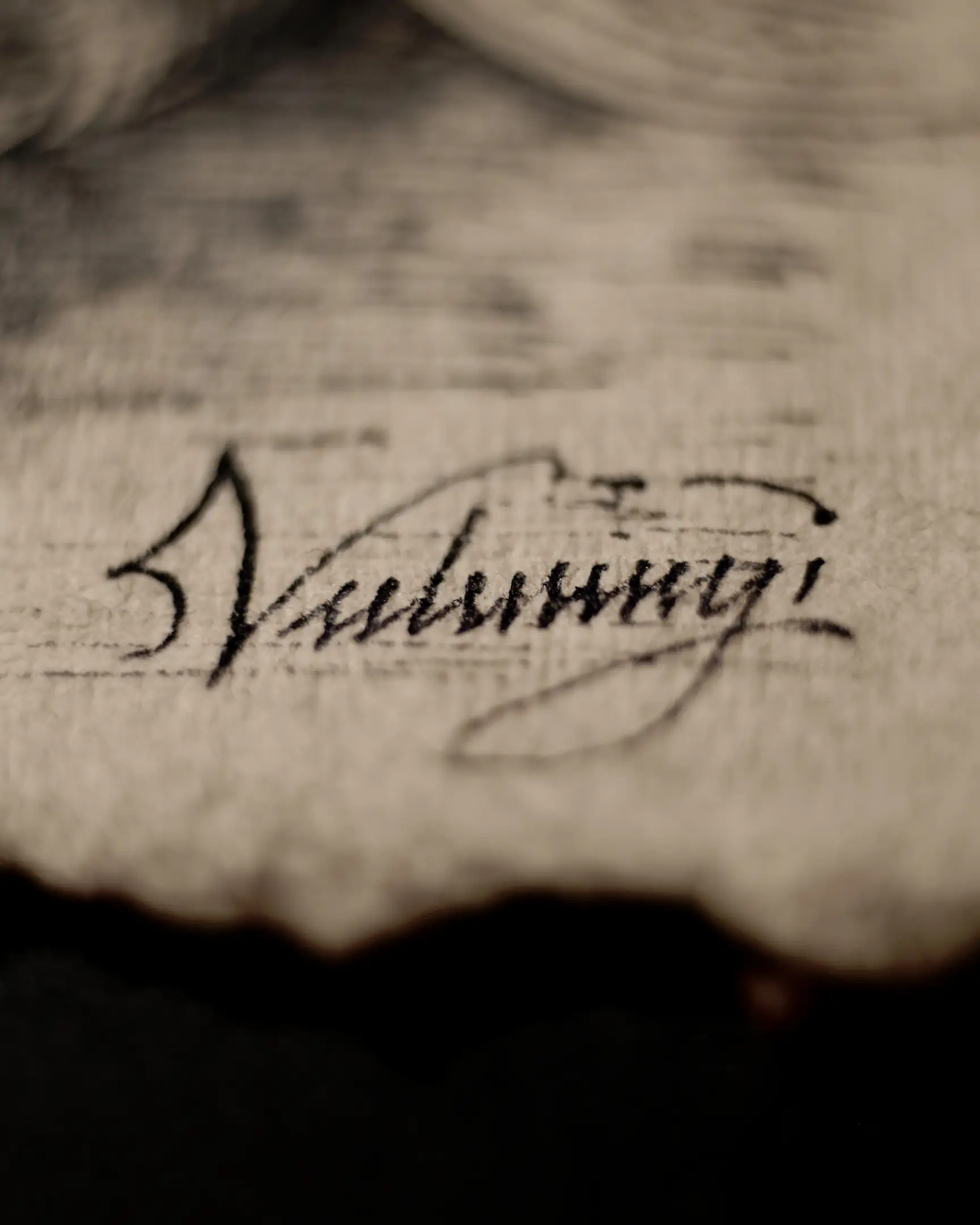
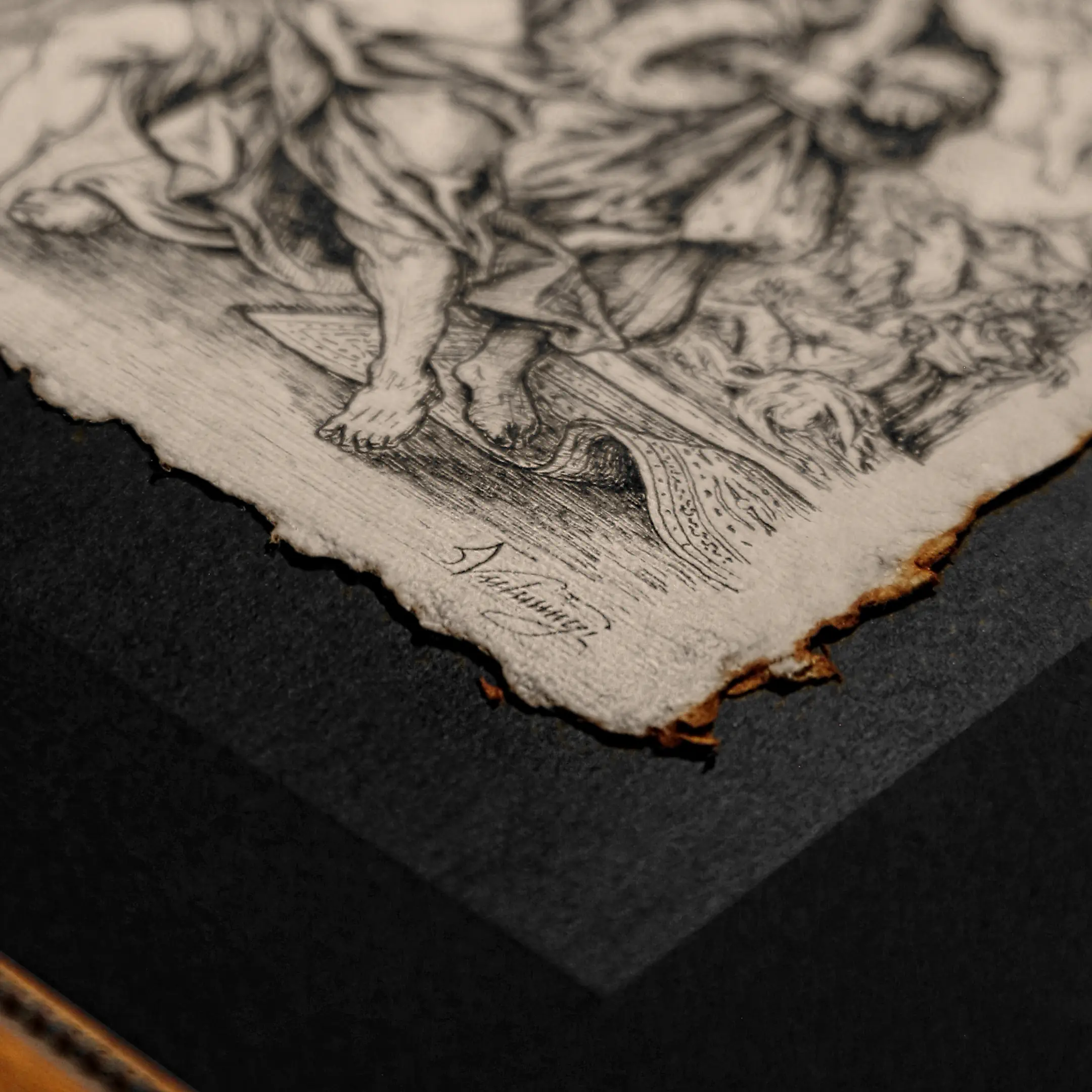
This macro shot makes the signature itself the central element, emphasizing the authenticity and collectible value of each VSELÉNSKYI® piece. The camera captures the texture of the handmade paper and the precise lines of the ink forming the author's name. This specific angle cuts out the narrative, leaving the viewer alone with the proof of craftsmanship and the artist's personal seal. This image is ideal for a catalog or a certificate of authenticity.This fragment allows for an appreciation of VSELÉNSKYI's masterful technique in depicting human emotion. The macro shot captures the focused gaze and tense facial features of a hero for whom knowledge has become a vital necessity. We see every stroke of ink that creates volume and character. The blurred background with books emphasizes that, at this moment, nothing exists for the seeker but his goal. The texture of the paper provides historical authenticity to the portrait, turning it into a living testament to intellectual struggle.This fragment captures the head of the protagonist in profile, looking upwards and to the right. He wears a dark, pointed hood with dense, vertical ink hatching. The lighting highlights the weathered features of his face, his open eye, and the intense expression of longing. The background is composed of dark, blurry textures of the artwork's paper and inkThe image captures a small, curly-haired figure with two feathered wings emerging from its back. The character appears to be sitting or reclining on a cloud-like shape. One hand is placed near the chest, and the head is turned slightly to the side. The entire figure is rendered with expressive ink strokes and hatching.This close-up captures a group of figures rendered with energetic ink strokes. In the foreground, a figure is seen from behind with an outstretched arm. Above and to the right, other smaller figures appear to be moving or interacting within a landscape that includes rolling hills, a distant peak, and a stylized tree. The work uses dense hatching to create form and depth on the textured surface.This fragment features a large, decorated vase as the focal point. The body of the vase is adorned with small figures engaged in action, reminiscent of classical Greek pottery. To the right of the vase, a stack of books is visible, leaning against a surface. The background and objects are defined by meticulous vertical and diagonal hatching, creating a sense of weight and historical atmosphere.This fragment isolated the lower limbs of a figure. Two stylized bare feet are depicted, with the toes and heels defined by strong, expressive ink outlines. The focus is specifically on the form of the feet, which rest on a surface covered in dense, parallel horizontal hatching. The drawing technique highlights the play of light and shadow on the anatomical shapes against the rough paper texture.This fragment shows a hand firmly gripping a horizontal bar, which appears to be the hilt of a sword or a handle. The background and the area below the hand are filled with dense, vertical and diagonal ink hatching. The lighting emphasizes the depth of the ink on the textured surface, and the shallow depth of field keeps the focus strictly on the point of contact between the hand and the object.This close-up captures the moment of a volcanic eruption. Dark, dense ink strokes and stippling emerge from the jagged crater of the mountain, representing smoke, ash, and volcanic material being cast into the air. Beside the volcano, a tree with heavy foliage is visible, its form created by a mass of fine dots. The shallow focus emphasizes the raw energy of the eruption against the textured grain of the paper.This shot captures a pale hand with extended fingers reaching toward a very dark, heavily hatched area. The contrast between the blank paper of the hand and the deep black ink around it creates a sense of tension. The shallow depth of field keeps the focus on the hand, while the surrounding background consists of blurred, horizontal and diagonal ink strokes on textured paper.This macro shot cuts away all distractions, leaving the viewer alone with the central theme of the piece—an irresistible urge for enlightenment. The camera captures the seeker's hands, whose muscles are strained in a gesture that can be interpreted as a blessing or as an attempt to protect the knowledge. Deep ink hatching conveys the volume of the heavy tomes and the tension in the subject's hands. The composition highlights the contrast between the haphazardly stacked books and the character's decisive gesture. The absence of a face in this specific crop enhances the sense of intimacy and the gravity of a personal intellectual quest. The texture of the handmade paper provides historical authenticity to the portrait, turning it into a living testament to intellectual struggle. This image is ideal for a catalog or a certificate of authenticity.
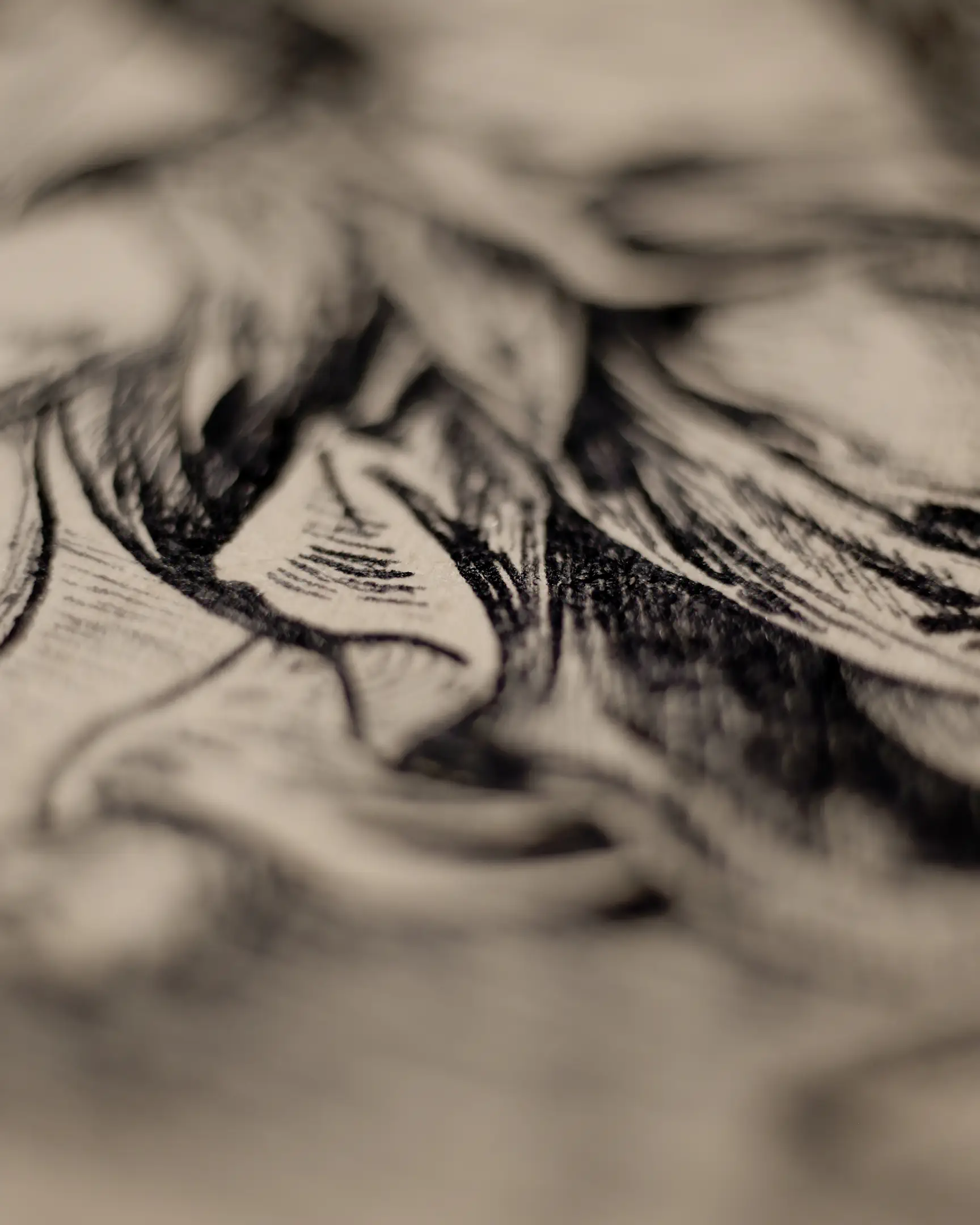
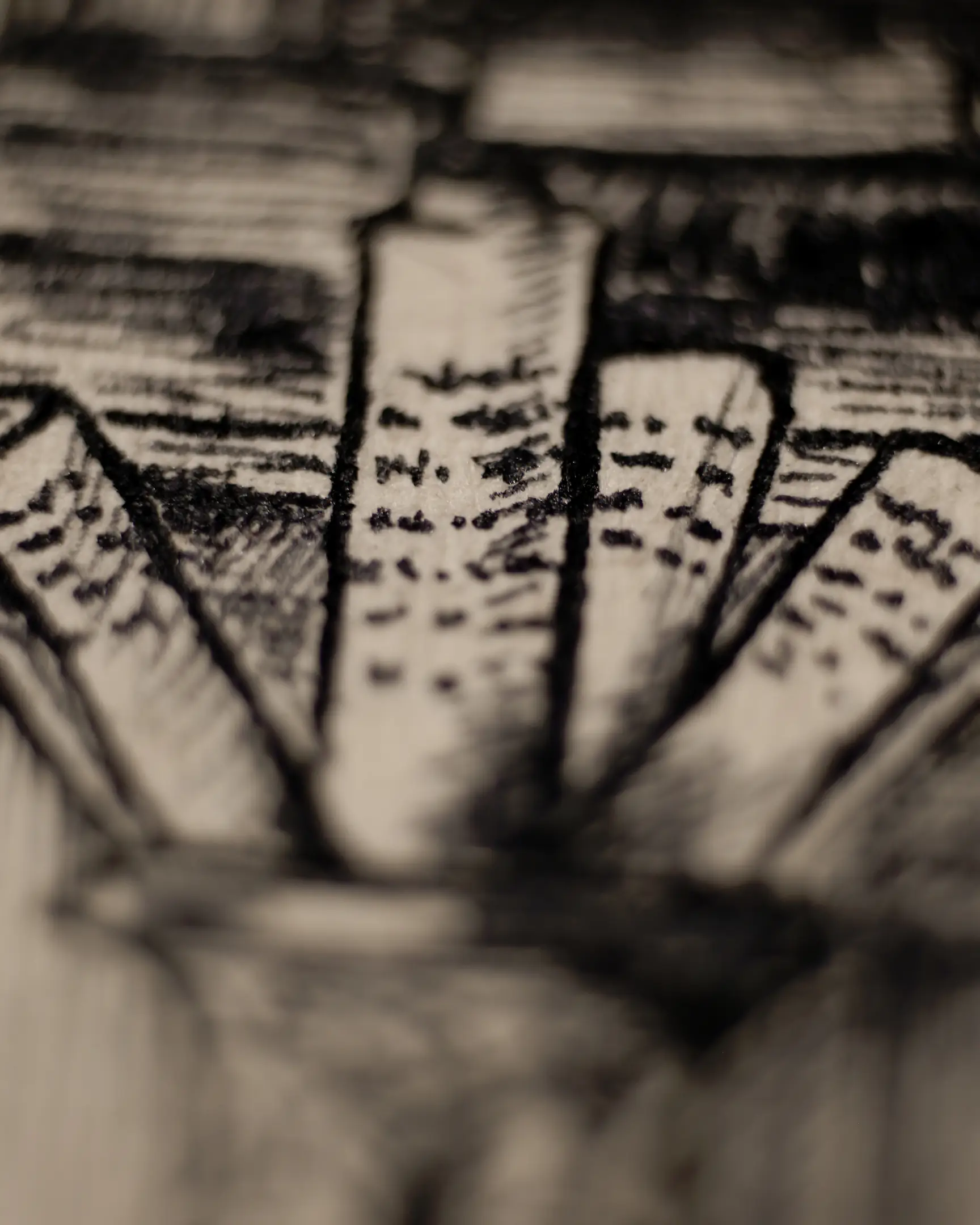
This macro shot cuts away all distractions, leaving the viewer alone with the central theme of the piece—an irresistible urge for enlightenment. We see the naked essence of the drama on the uneven, textured surface of the paper. The close-up emphasizes the dynamics of the gesture, conveying an almost physical effort to reach the books. Deep ink hatching conveys the volume of the heavy tomes and the tension in the subject's hands. The absence of a frame creates an effect of direct presence, as if we are looking at a sketch in the artist's workshop, where every ink line and the paper fiber is visible. This image is ideal for a catalog or a certificate of authenticity.This shot focuses exclusively on the source of wisdom—monumental stacks of folios. The composition cuts away all distractions, leaving the viewer alone with the accumulated experience of humanity, materialized as endless spines and pages. We see masterful detail in the ink hatching: every binding and every shadow is drawn with striking precision. The absence of characters in this frame transforms the books from background into protagonists, creating a sense of silence and sacred awe before the power of knowledge. The fragment perfectly demonstrates the paper texture and the density of VSELÉNSKYI's graphic technique.This fragment emphasizes the vulnerability and grounded nature of the character. The fine graphic lines allow the viewer to appreciate the texture of the paper and the mastery of the pen, conveying the weight of the protagonist's life journey.In this perspective, the focus shifts to the action itself. Contrasting lines highlight muscle tension and the texture of coarse clothing, creating a visual rhythm that guides the viewer's eye along the character's movement toward his goal.The aesthetics of this shot are built on the contrast between the elegant lines of the signature and the raw, almost tactile texture of the material. It is more than just a name; it is the final stroke confirming the author's commitment to the traditions of academic mastery and classical graphics.This close-up view focuses on a dramatic moment. The focus on the clenched hand and dagger symbolizes the tension and hidden threat that permeate this scene. The texture of the robe and the sharpness of the hand's hatching emphasize the importance of this direct interaction, which stands out against the backdrop of richly dressed yet passive figures in the blurred background.This shot is completely abstract from the narrative, focusing on the artwork's materiality. The focus is on the masterful control of the stroke: from the deep, dense shadows created by cross-hatching to the light, barely perceptible touches of the needle. The image allows appreciation of the interaction between the ink and the paper's surface, revealing its fibrous structure and tactile texture, emphasizing the authenticity of the antique printing technique.This close-up captures the intricate ink work and the physical depth of the strokes. The books represent the "light of knowledge" that the protagonist strives for—a stark contrast to the indifference of the elite. The play of focus draws the viewer's eye to the density of the lines, emphasizing that knowledge is a hard-won and solid foundation.

Related products